The right enclosure can turn a spare internal SSD into fast, portable storage for backups, file transfers, game libraries, or system migrations. Windows users need to match the enclosure to the drive type, connector, and available USB bandwidth.
This roundup covers 10 SSD enclosures for Windows, including compact NVMe adapters, 2.5-inch SATA cases, and larger enclosures for desktop drives. Use the guide below to narrow the choices by speed, compatibility, durability, and intended use.
Best 10 SSD Enclosures for Windows Picks for 2026
Best Dual-Protocol Pick
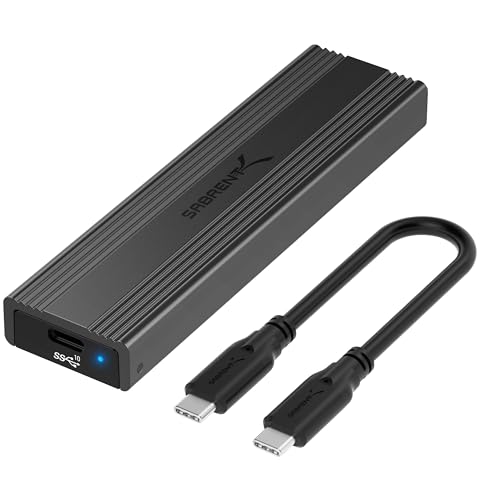
- Supports NVMe and SATA M.2 drives
- Tool-free installation
- 10Gbps USB-C connection
Best For: Windows users with different M.2 drive types
Best Budget 2.5-Inch Option

- Fits 2.5-inch SATA SSDs and HDDs
- Up to 5Gbps with UASP
- Supports drives up to 6TB
Best For: Reusing older 2.5-inch SATA storage
Best NVMe-Only Pick
Tool-Free 10Gbps M.2 Enclosure
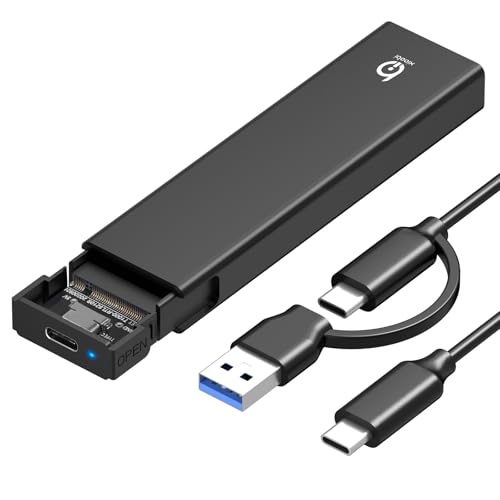
- Supports four common NVMe sizes
- 10Gbps USB 3.2 Gen 2
- Aluminum body with thermal pad
Best For: Bare M-Key or B+M Key NVMe SSDs
Best Aluminum 2.5-Inch Pick
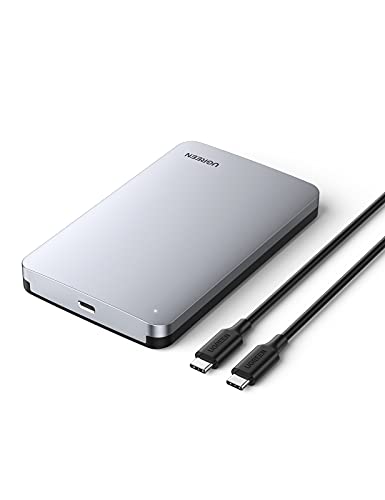
- Fits 2.5-inch SATA drives up to 6TB
- Aluminum body with heat-dissipating chipset
- Tool-free USB-C connection
Best For: USB-C users reusing 2.5-inch SATA storage
Best Compact NVMe Pick

- USB 3.2 Gen 2 with up to 10Gbps theoretical speed
- Supports 2230/2242/2260/2280 M.2 NVMe drives
- Tool-free design with USB-C and USB-A connectivity
Best For: Portable Windows use with compatible M.2 NVMe SSDs
Best SATA Drive-Bay Pick
SABRENT 2.5/3.5-Inch SATA Enclosure
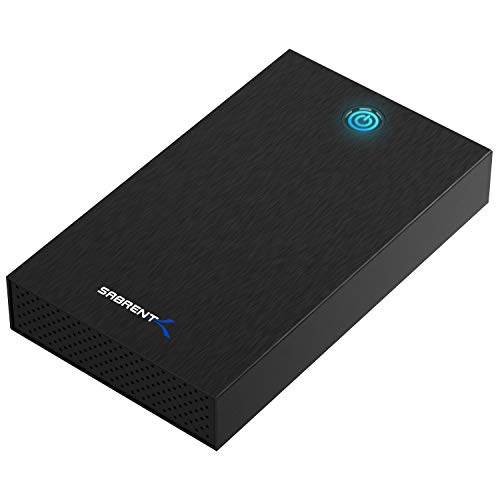
- Fits 2.5-inch and 3.5-inch SATA HDDs and SSDs
- Tool-free setup with USB 3.0 and UASP
- Includes a 12V/2A adapter for external power
Best For: Desktop use with full-size SATA drives
Best Protected NVMe Pick
UGREEN USB-C M.2 NVMe Enclosure
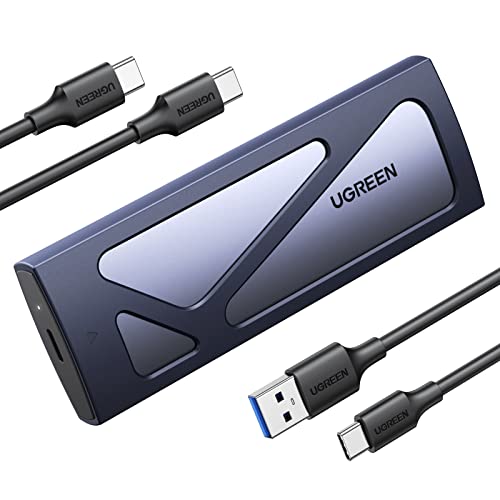
- 10Gbps USB 3.2 Gen 2 connectivity
- Supports NVMe sizes 2230 through 2280 and up to 8TB
- Includes silicone case, thermal pad, and two cable options
Best For: Portable Windows use with protected M.2 NVMe storage
Best with Extra Features
Sabrent Tool-Free SATA Enclosure
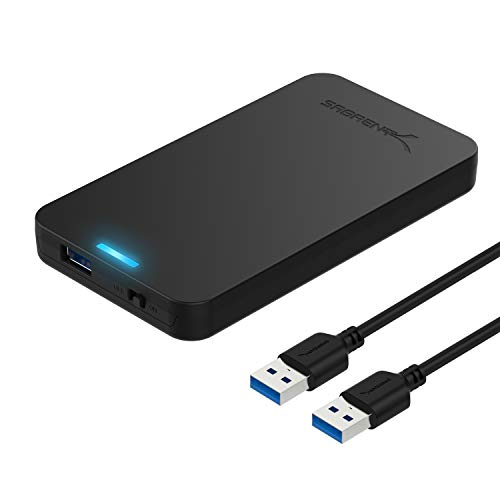
- Tool-free 2.5-inch SATA drive installation
- USB 3.0 supports up to 5 Gbps
- Plug-and-play Windows compatibility
Best For: Simple Windows setups using 2.5-inch SATA drives
Best High-Speed M.2 Pick
SSK 10Gbps NVMe/SATA Enclosure

- Supports compatible NVMe and SATA M.2 SSDs
- USB 3.2 Gen 2 reaches up to 10 Gbps
- Includes USB-C and USB-A cables
Best For: Fast, portable M.2 storage on compatible Windows systems
Best Cable Flexibility
BENFEI Tool-Free 2.5-Inch Enclosure

- Works with USB Type-C and Type-A connections
- Supports 2.5-inch SATA drives up to 6TB
- Tool-free setup with 18-month warranty
Best For: 2.5-inch SATA drives used across USB-C and USB-A devices
Best Dual-Protocol Pick – Tool-Free M.2 SSD Enclosure
For shoppers comparing ssd enclosures for windows, the SABRENT EC-SNVE is a flexible choice when you need one compact case for both M.2 NVMe and SATA drives. Its tool-free design, USB 3.2 Type-C interface, and support for Windows 7 or later make it practical for upgrades, backups, and drive transfers.
Best For: Windows users who work with both M.2 NVMe and M.2 SATA SSDs.
Pros:
- Supports M.2 NVMe and SATA SSDs in 2242, 2260, and 2280 lengths.
- Tool-free installation lets you insert or remove a drive in seconds.
- USB 3.2 Type-C supports up to 10Gbps, with a slim aluminum build and thermal pad.
Cons:
- SSD storage is not included.
- Does not support 2.5-inch SATA drives, mSATA, or SSDs with pre-installed heatsinks.
The EC-SNVE stands out for compatibility, but verify your drive type and clearance before buying. It includes a USB-C cable and requires no external power supply or drivers.
Best Budget 2.5-Inch Option – USB 3.0 SATA Drive Enclosure
The UGREEN 2.5-inch enclosure is a straightforward option among ssd enclosures for windows when you want to reuse a standard SATA SSD or hard drive. It supports 7mm and 9.5mm 2.5-inch drives, includes UASP support, and works with Windows, Linux, and macOS.
Best For: Connecting or recovering a 2.5-inch SATA SSD or HDD through a USB-A computer port.
Pros:
- Supports 2.5-inch 7mm and 9.5mm SATA SSDs and HDDs up to 6TB.
- USB 3.0 provides up to 5Gbps transfers, with UASP support on compatible computers.
- Plug-and-play design includes protective EVA foam and a detachable cable.
Cons:
- It is an enclosure only; the SSD or HDD is not included.
- Designed for 2.5-inch SATA drives, not M.2 or mSATA storage.
- Drives with screws may need those screws removed to fit.
This model is best suited to older SATA storage and USB-A systems rather than newer NVMe drives. Its protection features and compatibility with game consoles and routers add versatility.
Best NVMe-Only Pick – Tool-Free 10Gbps M.2 Enclosure
The Xiaobi M.2 enclosure is a focused choice for ssd enclosures for windows if your drive is PCIe NVMe rather than SATA. Its USB 3.2 Gen 2 interface, tool-free installation, and aluminum housing with a silicone thermal pad are aimed at fast, portable transfers.
Best For: Windows users with an M-Key or B+M Key NVMe SSD in a supported M.2 size.
Pros:
- Supports NVMe M.2 drives in 2230, 2242, 2260, and 2280 sizes.
- USB 3.2 Gen 2 offers up to 10Gbps and works backward with older USB standards.
- Tool-free buckle design and aluminum housing with a thermal pad simplify installation and cooling.
Cons:
- Does not support SATA (NGFF) or mSATA SSDs.
- SSD heatsinks are not supported.
- Actual transfer speeds depend on the SSD, USB port, computer, and NVMe type.
This is a good match when you know you have a bare NVMe drive and want a compact external reader. Confirm the interface and remove any heatsink before installation.
Best Aluminum 2.5-Inch Pick – USB-C SATA SSD Enclosure
For a durable-feeling option among ssd enclosures for windows, the UGREEN 2.5-inch USB-C enclosure pairs a SATA interface with an aluminum body and ASM235CM chipset. It is designed for portable storage, system upgrades, backups, and data recovery from compatible 2.5-inch drives.
Best For: Users who want to connect a 2.5-inch SATA SSD or HDD to a USB-C-equipped Windows PC or laptop.
Pros:
- Supports most 2.5-inch SATA I, II, and III SSDs and HDDs up to 6TB.
- USB 3.1 Gen 2 and UASP support enable fast transfers, while SATA supports up to 6Gbps.
- Tool-free installation, aluminum construction, and included USB-C-to-USB-C cable.
Cons:
- It does not include an SSD or HDD.
- Built for 2.5-inch SATA drives, not M.2 NVMe storage.
- USB-A-only devices require a separate USB-C-to-USB-A cable.
This enclosure is a strong fit for modern USB-C systems and older 2.5-inch storage alike. Its no-driver design also supports Linux, macOS, consoles, smart TVs, and routers, provided the connection and drive are compatible.
Best Compact NVMe Pick – FIDECO M.2 NVMe Enclosure
For shoppers comparing SSD enclosures for Windows, the FIDECO M.2 NVMe enclosure is a compact option for compatible NVMe drives. It supports M and M+B Key SSDs in 2230, 2242, 2260, and 2280 sizes, with USB 3.2 Gen 2 connectivity and UASP support for transfers up to 10Gbps in theory.
Best For: Windows users who need a portable, tool-free enclosure for M.2 NVMe SSDs.
Pros:
- Supports several common M.2 NVMe sizes and M or M+B Keys.
- USB 3.2 Gen 2 supports transfer speeds up to 10Gbps in theory.
- Tool-free sandwich design helps simplify installation and thermal-pad contact.
- Includes a USB-C cable with an attached USB-A adapter.
Cons:
- Does not support M.2 SATA SSDs.
- New SSDs must be initialized before the computer can recognize them.
The FIDECO is a practical choice when portability and broad NVMe size support matter. Confirm that your drive is NVMe rather than SATA before buying, and remember that real-world performance depends on the SSD and host port.
Best SATA Drive-Bay Pick – SABRENT 2.5/3.5-Inch SATA Enclosure
Among SSD enclosures for Windows, the SABRENT EC-KSL3 stands out for users who need to connect a full-size SATA drive. It accommodates 2.5-inch and 3.5-inch SATA HDDs or SSDs, uses USB 3.0 with UASP, and includes a 12V/2A power adapter for desktop drives.
Best For: Windows users repurposing 2.5-inch or 3.5-inch SATA drives as external storage.
Pros:
- Supports both 2.5-inch and 3.5-inch SATA HDDs and SSDs.
- Tool-free slide-and-click installation makes drive swaps straightforward.
- Plug-and-play support for Windows 10/11, macOS, and Linux.
- Aluminum housing and an internal shock-absorbing ABS tray aid durability and heat dissipation.
Cons:
- Requires a wall outlet because the included 12V/2A adapter provides external power.
- Uses USB-A; computers with only USB-C ports need an adapter, not included.
- Not compatible with M.2, NVMe, SAS, IDE/PATA, or other non-SATA drives.
This enclosure is better suited to stationary or desktop use than travel. Check your drive type and dimensions first, especially with some 4TB-and-larger 3.5-inch models, and note that S.M.A.R.T. diagnostics are unavailable through the USB bridge.
Best Protected NVMe Pick – UGREEN USB-C M.2 NVMe Enclosure
For SSD enclosures for Windows, the UGREEN USB-C M.2 NVMe enclosure combines 10Gbps USB 3.2 Gen 2 connectivity with a compact aluminum body and included silicone case. It supports M/B&M Key NVMe drives in 2230, 2242, 2260, and 2280 sizes, but it does not support SATA NGFF or mSATA SSDs.
Best For: Windows users seeking a portable NVMe enclosure with included protection and cables.
Pros:
- Supports USB 3.2 Gen 2 transfer rates up to 10Gbps when paired with a suitable cable and port.
- Supports M/B&M Key NVMe SSDs from 2230 through 2280, up to 8TB.
- Tool-free buckle design enables quick installation without drivers.
- Includes a silicone case, thermal pad, USB-C-to-C cable, and USB-C-to-A cable.
Cons:
- Does not support SATA NGFF or mSATA SSDs.
- 10Gbps performance requires a USB-C 3.2 Gen 2 data cable and compatible host connection.
The UGREEN is a well-rounded travel option for compatible NVMe drives, particularly if you want both USB-C and USB-A connection options. Verify the SSD protocol and your computer’s port standard to get the expected performance.
Best with Extra Features – Sabrent Tool-Free SATA Enclosure
For shoppers comparing ssd enclosures for windows, the Sabrent EC-UASP is a straightforward option for a standard 2.5-inch SATA SSD or notebook hard drive. Its tool-free design, plug-and-play setup, and USB 3.0 support make it practical for everyday file transfers and drive reuse.
Best For: Windows users who need a simple enclosure for a 2.5-inch SATA SSD or HDD.
Pros:
- Tool-free installation with hot-swappable, plug-and-play operation.
- Supports USB 3.0 transfer rates up to 5 Gbps and UASP SATA III.
- Works with Windows 7, 8, Vista, and XP without additional drivers.
Cons:
- Only supports 2.5-inch SATA drives, not M.2 SSDs.
- USB 2.0 connections are limited to up to 480 Mbps.
This is a sensible low-complexity choice when your drive uses the familiar 2.5-inch SATA format. Confirm the drive form factor and available USB port before buying.
Best High-Speed M.2 Pick – SSK 10Gbps NVMe/SATA Enclosure
The SSK SHE-C325 PRO is designed for shoppers seeking versatile ssd enclosures for windows with faster USB connectivity. It accepts compatible NVMe PCIe and SATA M.2 drives in 2242, 2260, and 2280 sizes, while its USB 3.2 Gen 2 interface can reach up to 10 Gbps.
Best For: Windows users with compatible M.2 NVMe or SATA SSDs who want a compact, high-speed enclosure.
Pros:
- Supports compatible NVMe PCIe and SATA M.2 drives in three common lengths.
- USB 3.2 Gen 2 provides up to 10 Gbps, with USB-A and USB-C cables included.
- Aluminum shell, thermal pads, UASP, and TRIM support aid portability and performance.
Cons:
- Does not support M.2 PCIe AHCI drives, mSATA, Wi-Fi cards, or other non-M.2 devices.
- Full speed depends on a compatible USB-C Gen 2 or Thunderbolt 3 connection.
- The SSD is not included and may need formatting before use.
Among these options, this is the most flexible choice for M.2 storage, but compatibility deserves careful checking. Verify both the SSD key type and the host port before ordering.
Best Cable Flexibility – BENFEI Tool-Free 2.5-Inch Enclosure
The BENFEI enclosure is a convenient fit for Windows users choosing among ssd enclosures for windows and wanting both USB Type-C and Type-A connection options. It supports 2.5-inch SATA I/II/III SSDs and HDDs, with tool-free installation and UASP support for transfers up to 5 Gbps.
Best For: Users who want a 2.5-inch SATA enclosure that can connect to USB-C or USB-A devices.
Pros:
- USB Type-C/Type-A plug design offers flexible connection options.
- Tool-free, plug-and-play installation with hot-swappable operation.
- Supports 2.5-inch drives up to 6TB and UASP SATA III transmission.
- Includes an 18-month unconditional warranty.
Cons:
- Limited to 2.5-inch SATA drives rather than M.2 SSDs.
- Designed for drives 7mm or 9.5mm thick.
- Transfer performance depends on the connected USB port.
This enclosure stands out when connection flexibility matters more than M.2 support. Check your drive’s thickness and capacity, then choose the appropriate USB connection for your Windows device.
How We Picked These SSD Enclosures for Windows
We selected enclosures across the most common Windows storage formats: M.2 NVMe, M.2 SATA, 2.5-inch SATA SSDs, and 3.5-inch SATA drives. We also considered interface speed, connector flexibility, installation method, cooling potential, portability, and compatibility with both USB-C and USB-A systems.
Models supporting USB 3.0 or faster are suitable for everyday storage, while USB 3.2 Gen 2 enclosures can provide substantially higher transfer rates when paired with a compatible SSD and computer port. Tool-free designs are useful for frequent drive swaps, whereas aluminum housings may help with heat dissipation during sustained transfers.
Quick Comparison
| Drive type | Best suited for | Typical interface | What to check |
|---|---|---|---|
| M.2 NVMe | High-speed portable storage | USB 3.2 Gen 2 | NVMe support, M-key or compatible notch, thermal management |
| M.2 SATA | Older M.2 upgrades and recovery | USB 3.0 or USB 3.2 | SATA protocol support; NVMe-only cases will not work |
| 2.5-inch SATA | Affordable SSD or laptop-drive reuse | USB 3.0 or USB-C | Drive thickness, cable type, UASP support |
| 3.5-inch SATA | Desktop HDD or large-capacity storage | USB 3.0 | External power requirement and enclosure size |
Key Buying Factors for SSD Enclosures for Windows
Drive and Protocol Compatibility
First identify whether your drive is NVMe, M.2 SATA, or 2.5-inch SATA. M.2 is a physical size standard, not a protocol, so an NVMe-only enclosure may not recognize an M.2 SATA drive. Check the connector key and supported capacities before buying.
USB Speed and Connector Type
USB 3.0 is generally adequate for basic backups and media storage. USB 3.2 Gen 2, often advertised at 10Gbps, is the better choice for large files and fast NVMe drives. Confirm that your Windows computer has a matching high-speed port; an enclosure cannot exceed the speed of the host connection.
Heat, Build, and Installation
NVMe SSDs can become warm during sustained writes. Aluminum bodies, thermal pads, and ventilation can help maintain performance. Tool-free access is convenient for drive swaps, while a more secure screw-mounted design may be preferable for a drive that will remain installed.
Power and Portability
2.5-inch SSD enclosures typically draw power from USB. 3.5-inch hard drives generally require a separate power adapter. For travel, prioritize a compact enclosure, a sturdy cable, and protection against accidental movement or loose drive connections.
Who Should Buy Which SSD Enclosures for Windows?
- Choose an NVMe enclosure if you want the fastest portable storage or are repurposing a modern M.2 SSD.
- Choose an M.2 SATA/NVMe dual-protocol model if you have several spare drives or are unsure which M.2 standard you own.
- Choose a 2.5-inch SATA enclosure for a simple, economical way to reuse a laptop SSD or hard drive.
- Choose a USB-C model for newer Windows laptops, tablets, and desktops, especially if you regularly transfer large files.
- Choose a 3.5-inch enclosure when capacity matters more than portability and you need to reuse a desktop hard drive.
Before ordering, verify the SSD protocol, enclosure dimensions, included cables, and your computer’s USB port specification. Those checks prevent most compatibility and performance surprises.