The best hard drive docking stations for small businesses make it easier to access bare SATA drives, clone disks, manage backups, and recover data without installing each drive inside a computer.
This roundup compares 10 single-, dual-, four-, and five-bay options, including USB-A and USB-C models, offline cloning features, and higher-capacity docks for growing storage workflows.
Best 10 Hard Drive Docking Stations for Small Businesses Picks for 2026
Best Dual-Bay Cloner

- Dual bays for 2.5-inch and 3.5-inch SATA drives
- Offline cloning without a computer
- USB 3.0 speeds up to 5Gbps
Best For: Drive migration and two-drive business workflows
Best Simple SATA Reader
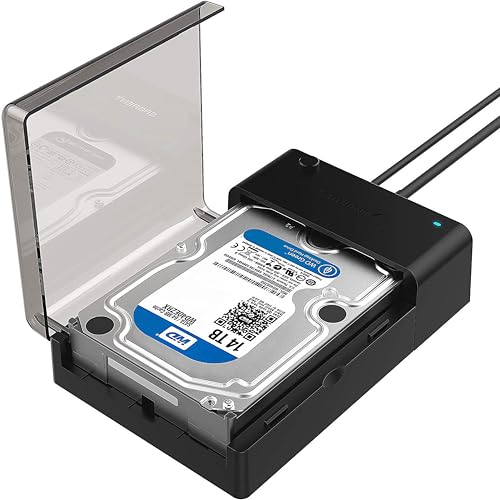
- Single bay for 2.5-inch and 3.5-inch SATA drives
- Tool-free hot-swapping
- Includes 12V adapter for 3.5-inch drives
Best For: Straightforward SATA drive access and file transfers
Best High-Capacity Dual Dock

- Dual bays support 2.5-inch and 3.5-inch SATA drives
- Up to 32TB per drive
- Offline cloning and USB-C cable included
Best For: Large-capacity storage work and two-drive cloning
Best 10Gbps USB-C Dock

- 10Gbps USB 3.2 Gen 2x1 connection
- Supports 2.5-inch and 3.5-inch SATA drives
- Includes USB-A and USB-C cables
Best For: USB-C workstations and faster single-drive transfers
Best Dual-Bay Clone Dock
BENFEI USB-C Hard Drive Docking Station

- Dual-bay support for 2.5-inch and 3.5-inch drives
- PC-free offline cloning with one button
- 5Gbps USB-C connectivity and 18-month warranty
Best For: Small offices handling regular backups and drive migrations
Best Versatile Dual-Bay Dock
ORICO USB-C SATA Docking Station

- USB-C and USB-A host connectivity
- Supports offline cloning and up to 22TB drives
- Compatible with major desktop and mobile operating systems
Best For: Teams needing flexible connections across mixed devices
Best High-Capacity Multi-Drive Dock

- Four bays for simultaneous SATA drive access
- Trayless design supports quick drive changes
- Offline cloning with LED progress indicators
Best For: Offices and technicians managing several drives at once
High-Capacity Choice

- Offline 1:4 duplication without a computer
- Supports five SATA drives up to 100TB total
- Aluminum vertical design with USB-C connectivity
Best For: Small teams handling large media libraries and multi-drive backups
Compact Cloning Pick

- Offline 1-to-1 cloning without a computer
- Reads and writes two SATA drives at once
- Tool-free, hot-swappable design for Windows and Mac
Best For: Small offices needing simple two-drive cloning and transfers
Flexible Budget Option

- Offline cloning with no computer required
- Supports two SATA drives up to 20TB each
- Compatible with multiple desktop and mobile platforms
Best For: Small teams needing affordable dual-drive backup and transfers
Best Dual-Bay Cloner – Sabrent EC-HD2B
For small businesses that need to access, duplicate, or transfer drives regularly, the Sabrent EC-HD2B is a practical choice among hard drive docking stations for small businesses. Its dual bays accept bare 2.5-inch and 3.5-inch SATA HDDs or SSDs, while offline cloning lets you duplicate drives without connecting to a computer.
Best For: IT workstations, drive migration, and businesses that need two-drive access or offline cloning.
Pros:
- Supports two 2.5-inch or 3.5-inch SATA drives or SSDs.
- Offers offline cloning without requiring a computer.
- USB 3.0 transfer speeds reach up to 5Gbps.
- Plug-and-play operation requires no drivers.
Cons:
- Supports SATA drives rather than M.2 or IDE formats.
- Offline cloning is listed at up to 60Mbps.
- Its dual-bay design takes more desk space than a single-drive dock.
The EC-HD2B is a strong fit when cloning and two-drive workflows matter more than a compact footprint. Support for drives up to 10TB and a stated 20TB storage capacity also gives it room for common business backup tasks.
Best Simple SATA Reader – Sabrent EC-DFLT
The Sabrent EC-DFLT keeps drive access straightforward for small businesses that need to read or swap one bare SATA drive at a time. This single-bay dock supports 2.5-inch and 3.5-inch SATA HDDs and SSDs, with tool-free hot-swapping and no driver installation on Windows 10/11, macOS, or Linux.
Best For: Occasional drive recovery, file transfers, and offices needing a simple SATA-only reader.
Pros:
- Accepts both 2.5-inch and 3.5-inch SATA I/II/III drives.
- Tool-free bay supports drive swapping without rebooting.
- Includes a 12V adapter required for 3.5-inch drives.
- UASP support and USB 3.0 provide up to 5Gbps interface speed.
Cons:
- Does not support IDE/PATA, M.2, NVMe, SAS, or enclosed USB drives.
- Uses a USB Type-A host cable rather than USB-C.
- S.M.A.R.T. diagnostics do not pass through the USB bridge.
This dock is a sensible budget-oriented option when the business uses standard bare SATA drives and has a USB-A computer port. Confirm the drive connector and available ports before ordering, particularly if your systems use USB-C only.
Best High-Capacity Dual Dock – UGREEN CM198
Businesses managing multiple large SATA drives may appreciate the UGREEN CM198, a dual-bay option among hard drive docking stations for small businesses. It supports simultaneous 2.5-inch and 3.5-inch SATA drives, offline cloning, and capacities listed up to 32TB per bay.
Best For: High-capacity storage management, two-drive transfers, and offline cloning with USB-C connectivity.
Pros:
- Supports two 2.5-inch or 3.5-inch SATA drives simultaneously.
- Lists capacity support up to 32TB per drive.
- Offline cloning works without connecting to a computer.
- Includes a USB-C cable and 12V/3A power adapter.
Cons:
- Cloning requires the destination drive to be at least as large as the source.
- Supports SATA drives, not M.2 or other drive interfaces.
- The USB 3.0 interface is limited to a maximum stated speed of 5Gbps.
The CM198 stands out for businesses that need two-drive capacity and a USB-C cable in the box. Its cooling features, dust cover, and anti-slip pads add practical protection for repeated desktop use.
Best 10Gbps USB-C Dock – Sabrent DS-UC1B
The Sabrent DS-UC1B is designed for businesses that want a faster USB connection and flexible compatibility with modern computers. This single-bay dock accepts 2.5-inch and 3.5-inch SATA HDDs or SSDs, supports USB 3.2 Gen 2×1 speeds up to 10Gbps, and includes both USB-A and USB-C cables.
Best For: USB-C-equipped workstations, faster SATA transfers, and tool-free drive swapping.
Pros:
- Supports 2.5-inch and 3.5-inch SATA HDDs and SSDs.
- Offers a 10Gbps USB 3.2 Gen 2×1 interface.
- Includes both USB-A and USB-C to USB-C cables.
- Tool-free, hot-swappable design includes a retractable dust cover.
Cons:
- Single bay supports one drive at a time.
- Actual performance depends on the SATA drive and host system.
- It is intended for SATA drives and does not list support for M.2 or IDE formats.
Choose the DS-UC1B when your office hardware can take advantage of its 10Gbps connection and you want broad USB cable flexibility. Its included power adapter also supports reliable operation with 3.5-inch drives.
Best Dual-Bay Clone Dock – BENFEI USB-C Hard Drive Docking Station
For small businesses seeking hard drive docking stations for small businesses, the BENFEI dual-bay dock combines USB-C connectivity, tool-free drive access, and offline cloning. It supports simultaneous work with two 2.5-inch or 3.5-inch SATA HDDs or SSDs and reaches transfer speeds up to 5Gbps with UASP support.
Best For: Small offices that regularly back up, migrate, or duplicate drives without tying up a computer.
Pros:
- Supports two 2.5-inch or 3.5-inch HDDs or SSDs at the same time.
- One-button offline cloning works without a PC, provided the target drive is equal to or larger than the source.
- USB 3.1 Gen 1, UASP, and a dedicated 12V/2.5A adapter support dependable transfers and dual-drive operation.
- Includes an 18-month BENFEI warranty.
Cons:
- Offline cloning requires the target drive to be at least as large as the source.
- Users should switch off the dock before inserting or removing drives.
With two bays, a protected power supply, and a longer-than-one-year warranty, this is a practical choice for routine storage maintenance and drive replacement workflows.
Best Versatile Dual-Bay Dock – ORICO USB-C SATA Docking Station
The ORICO dual-bay dock is a flexible option among hard drive docking stations for small businesses, offering USB-C and USB-A connectivity for 2.5-inch and 3.5-inch drives. It supports UASP and TRIM, offline cloning, simultaneous transmission, and capacities up to 22TB per drive according to the supplied specifications.
Best For: Small teams that need broad device compatibility, dual-interface connectivity, and occasional computer-free cloning.
Pros:
- Works with Windows, macOS, Linux, iPadOS, Android, PCs, laptops, and additional devices.
- Includes a USB-C and USB-A 2-in-1 cable for flexible host connections.
- Supports offline cloning and simultaneous dual-drive transfers at up to 5Gbps.
- Auto-sleep after 10 minutes can help reduce energy use.
Cons:
- Offline cloning requires the target disk capacity to be greater than the source.
- Its included warranty is one year.
The ORICO stands out when a business values compatibility and connection flexibility as much as basic cloning and backup capability. Its compact, non-slip design also suits shared workspaces.
Best High-Capacity Multi-Drive Dock – SABRENT 4-Bay USB 3.0 Dock
For businesses managing several drives, the SABRENT 4-bay model offers more capacity than typical dual-bay hard drive docking stations for small businesses. Its trayless design accepts up to four 2.5-inch or 3.5-inch SATA HDDs or SSDs, while USB 3.0 provides transfers up to 5Gbps and offline cloning handles drive-to-drive duplication.
Best For: Small businesses, technicians, and offices that need simultaneous access to multiple SATA drives from one station.
Pros:
- Four bays allow access to multiple 2.5-inch or 3.5-inch SATA drives from one dock.
- Trayless, tool-free insertion simplifies setup and drive maintenance.
- Offline cloning works without a computer, with LED indicators showing clone progress.
- External power adapter supports operation with multiple installed drives.
Cons:
- Uses USB 3.0 rather than USB-C for the host connection.
- The supplied warranty is a one-year limited warranty.
- Offline cloning is presented as drive-to-drive cloning rather than a multi-drive cloning workflow.
The four-bay layout is the main reason to choose this SABRENT dock. It can reduce desk clutter and repeated swapping when a small business needs to inspect, back up, or manage several SATA drives.
High-Capacity Choice – ORICO 5-Bay Hard Drive Dock
For small businesses managing large media libraries, backups, or multiple SATA drives, the ORICO 5-bay dock is a high-capacity option among hard drive docking stations for small businesses. It holds up to five 2.5-inch or 3.5-inch SATA SSDs or HDDs, with a stated maximum capacity of 100TB.
Best For: Professional users, photographers, and small teams needing multiple-drive access and offline duplication.
Pros:
- Offline 1:4 duplication can create four copies with one button press, without a computer.
- Supports up to five SATA drives with a stated maximum capacity of 100TB.
- Aluminum-alloy construction and vertical design support heat dissipation.
- Includes USB-C-to-C and USB-C-to-A connectivity for a range of computers and devices.
Cons:
- Offline duplication overwrites the target disks, so backups are required beforehand.
- It is limited to SATA drives rather than M.2 or NVMe storage.
- USB 3.2 Gen 1 performance may not match newer, faster USB standards.
The ORICO is the most expandable option here and stands out when a small business needs several drives connected at once. Its four-copy offline duplicator is useful for repeatable backup workflows, provided the overwrite behavior is carefully managed.
Compact Cloning Pick – SABRENT Dual-Bay USB-C Dock
The SABRENT EC-CH2B is a straightforward choice for small businesses that need to clone or access two SATA drives. As one of the more compact hard drive docking stations for small businesses, it supports tool-free, hot-swappable 2.5-inch and 3.5-inch SATA HDDs and SSDs.
Best For: Small offices needing simple two-drive cloning, file transfers, or temporary drive access.
Pros:
- Offline 1-to-1 cloning works without a connected computer.
- Both bays appear as separate drives when connected over USB.
- Supports hot-swapping and tool-free installation for 2.5-inch and 3.5-inch SATA drives.
- Plug-and-play operation works with Windows and Mac without drivers.
Cons:
- Supports only SATA drives and does not work with IDE/PATA, M.2, or NVMe drives.
- The included cable is USB-C on the dock end; a USB-C-to-A cable may be needed for some computers.
- Offline cloning is limited to up to 60MBps and requires a target drive the same size as or larger than the source.
Choose the SABRENT when a two-bay setup is sufficient and ease of use matters more than large-scale expansion. Its clear drive separation during computer-connected use also suits routine file movement between two SATA disks.
Flexible Budget Option – WAVLINK Dual-Bay SATA Dock
The WAVLINK dual-bay dock provides a practical way for a small business to access, back up, and transfer files between two SATA drives. It supports 2.5-inch and 3.5-inch SATA I, II, and III HDDs or SSDs, with capacity support up to 2x20TB.
Best For: Small teams wanting an affordable dual-bay dock with offline cloning and broad device compatibility.
Pros:
- Offline cloning works without a computer, with a target drive capacity equal to or greater than the source.
- Supports two SATA drives up to 20TB each.
- UASP and USB 3.0 support provide advertised transfer rates up to 5Gbps.
- Works with Windows, Mac, Chrome OS, Linux, and Android OTG devices.
Cons:
- It supports SATA drives only and does not provide M.2 or NVMe compatibility.
- The plastic enclosure is less premium than an aluminum design.
- Offline cloning requires careful attention to source and target capacity before starting.
The WAVLINK is a versatile fit for businesses that want dual-drive access without moving to a larger multi-bay enclosure. Its fixed bezels add drive stability, while the included adapter broadens compatibility with USB-C-equipped devices.
How We Picked the Best Hard Drive Docking Stations for Small Businesses
We focused on docks that support common 2.5-inch and 3.5-inch SATA HDDs and SSDs, since those formats remain widespread in desktops, laptops, NAS upgrades, repair work, and backup systems. We also considered connection type, advertised transfer speed, bay count, offline cloning, tool-free installation, power requirements, and the practical capacity each design can accommodate.
For a small business, the right dock should reduce setup time and make routine storage tasks predictable. A dual-bay model can be more useful than a faster single-bay dock when employees regularly clone drives or copy data between disks. Multi-bay units may be better for technicians, creative teams, and offices managing several backup drives.
Quick Comparison
| Best For | Recommended Configuration | Why It Matters |
|---|---|---|
| Occasional drive access | Single-bay SATA dock | Compact and usually less expensive |
| Cloning and routine backups | Dual-bay dock with offline clone support | Copies one drive to another without a computer |
| Modern laptops and desktops | USB-C dock | Convenient compatibility with newer systems |
| Multiple-drive workflows | Four- or five-bay dock | Reduces repeated drive swapping |
Key Buying Factors for Hard Drive Docking Stations for Small Businesses
Drive Compatibility and Capacity
Confirm that the dock supports both 2.5-inch and 3.5-inch SATA drives if your business uses mixed hardware. Check the manufacturer’s maximum capacity claims as well, especially when working with large modern HDDs or high-capacity SSDs.
Interface and Real-World Speed
USB 3.0 and USB 3.1-class connections are sufficient for many backup tasks, while USB-C models may offer faster performance or simpler connection to newer computers. A 10Gbps rating describes the interface ceiling, not guaranteed file-transfer speed; the drive, computer port, cable, and workload also affect results.
Cloning and Backup Features
Offline cloning can save time when deploying replacement drives or creating a direct duplicate. It is different from a versioned backup, so businesses should still maintain separate backups and verify important data after copying.
Power, Design, and Reliability
Most 3.5-inch drives require dedicated power, making the included adapter and stable enclosure design important. Look for clear bay labeling, secure drive seating, ventilation, and a sturdy base if the dock will be used frequently at a service desk.
Who Should Buy Which Hard Drive Docking Stations for Small Businesses?
Choose a single-bay dock for occasional diagnostics, file recovery, or accessing spare drives. Select a dual-bay model for small offices that regularly clone disks, maintain local backups, or transfer data between two drives. USB-C is the convenient choice for newer laptops, while USB-A can be more practical for older desktops and mixed-device environments.
Businesses with IT support duties, several backup sets, or recurring drive migration work should consider a four- or five-bay dock. Before buying, confirm operating-system compatibility, cloning instructions, warranty coverage, and whether the advertised capacity matches the drives you intend to use. Among Hard Drive Docking Stations for Small Businesses, the best choice is the one that fits your drive mix and workflow without adding unnecessary complexity.