The best portable hard drive docking stations make it easier to access bare drives, upgrade storage, clone disks, and move files without installing a drive inside a computer. This roundup compares 10 options ranging from compact single-bay docks to multi-drive cloning stations and USB-C hub combinations.
Before choosing, consider drive size, interface speed, cloning support, power requirements, and whether you need a portable dock or a complete external-storage hub. The guide below highlights the practical differences that matter most.
Best 10 Portable Hard Drive Docking Stations Picks for 2026
Best Dual-Bay Cloner

- Two-bay SATA drive access
- Offline cloning without a computer
- Supports 2.5-inch and 3.5-inch drives
Best For: SATA drive cloning and two-drive file access
Best Multi-Format Dock
SABRENT Lay Flat NVMe & SATA Dock

- Reads NVMe and SATA drives
- USB-C 10Gbps with both cables included
- Offline cloning with no PC
Best For: Mixed NVMe and SATA drive access
Best Two-Drive USB-C Dock

- Accesses two SATA drives simultaneously
- Offline cloning without a computer
- Tool-free hot-swappable design
Best For: Dual-drive SATA work with USB-C computers
Best Simple Lay-Flat Dock
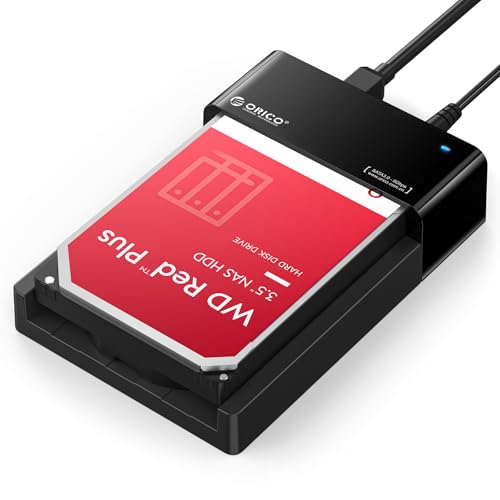
- Supports SATA drives up to 24TB
- Tool-free hot-swappable design
- Windows, Mac, and Linux compatible
Best For: Single-drive SATA access and backups
Best Simple SATA Dock
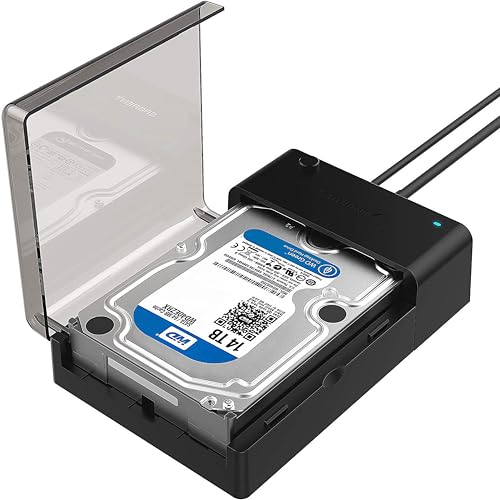
- Single-bay design for 2.5-inch and 3.5-inch SATA drives
- Includes 12V adapter for 3.5-inch drives
- Tool-free USB 3.0 access with UASP support
Best For: Basic access to one bare SATA HDD or SSD
Best for Multi-Drive Cloning

- Accommodates up to four 2.5-inch or 3.5-inch SATA drives
- Supports offline drive-to-drive cloning
- Trayless design with external power for multi-drive use
Best For: Drive management, backups, and offline cloning
Best All-in-One Pick
Nexus 500GB Portable Docking Hub

- 500GB drive plus 5-in-1 USB-C hub
- SD and MicroSD readers work simultaneously
- Compact, bus-powered design
Best For: Mobile creators needing storage and connectivity together
Best for Drive Cloning

- Supports two 2.5- or 3.5-inch drives
- Offline cloning requires no computer
- Dedicated adapter powers both bays
Best For: Drive upgrades, backups, and migrations
Best Budget Hub Design
YOTUO 500GB 7-in-1 Docking Drive
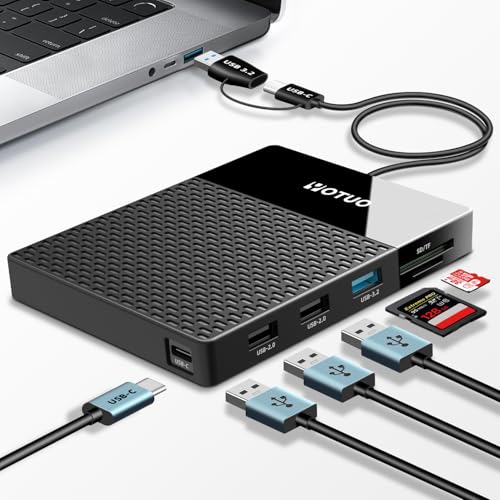
- 500GB drive with multiport hub
- Includes SD and TF card slots
- Dual USB-C and USB 3.2 cable
Best For: Everyday storage and device connectivity
Best Dual-Bay Cloner – SABRENT USB 3.0 Dual Bay Dock
For shoppers comparing portable hard drive docking stations, the SABRENT EC-HD2B is a practical choice when you need two-bay SATA access and straightforward offline cloning. It supports bare 2.5-inch and 3.5-inch SATA hard drives or SSDs, with plug-and-play USB 3.0 connectivity.
Best For: Users who need to clone or access two SATA drives without installing them in a computer.
Pros:
- Supports 2.5-inch and 3.5-inch SATA HDDs and SSDs.
- Offline cloning works without a computer and supports drives up to 10TB.
- USB 3.0 transfer speeds reach up to 5Gbps, with backward compatibility.
- Includes a power supply and USB 3.0 cable.
Cons:
- Designed for SATA drives and does not provide the broader format support of an NVMe-compatible dock.
- Offline cloning is rated up to 60Mbps, below the dock’s advertised USB transfer rate.
The EC-HD2B stands out for simple two-drive workflows, especially drive duplication and data access. Its 1-year warranty can be extended to 2 years with registration.
Best Multi-Format Dock – SABRENT Lay Flat NVMe & SATA Dock
The SABRENT DS-UFNC is one of the more versatile portable hard drive docking stations because it accepts both M.2 PCIe NVMe SSDs and 2.5-inch or 3.5-inch SATA drives. Its USB-C 10Gbps interface, included cables, and tool-free lay-flat design suit frequent drive swaps.
Best For: Users who work with both NVMe SSDs and conventional SATA drives and want offline cloning capability.
Pros:
- Supports M.2 NVMe drives plus 2.5-inch and 3.5-inch SATA HDDs and SSDs.
- Includes USB-C-to-USB-C and USB-A-to-USB-C cables.
- Offers USB 3.2 Gen 2 connectivity with speeds up to 10Gbps.
- Provides button-controlled offline cloning without a PC.
Cons:
- Drives are not included.
- Actual transfer speed depends on the installed drive; mechanical HDDs will be slower than NVMe SSDs.
- Offline cloning requires the target drive to be equal to or larger than the source.
With Windows, macOS, and Linux support and a 12V adapter for 3.5-inch drives, the DS-UFNC is a strong all-around option for mixed-drive households and workbenches.
Best Two-Drive USB-C Dock – SABRENT Dual-Bay Cloner
The SABRENT EC-CH2B is a useful portable hard drive docking station for managing two bare SATA drives at once. Both bays appear as separate drives over USB, while a dedicated offline-clone button handles one-to-one duplication without a computer.
Best For: Users who need simultaneous access to two 2.5-inch or 3.5-inch SATA drives and a simple cloning workflow.
Pros:
- Reads and writes two SATA drives at the same time when connected to a computer.
- Supports tool-free, hot-swappable 2.5-inch and 3.5-inch SATA HDDs and SSDs.
- Offline cloning requires no computer and reaches up to 60MBps.
- USB 3.0 connectivity supports speeds up to 5Gbps.
Cons:
- Does not support IDE/PATA, Molex-powered, M.2, or NVMe drives.
- The included cable is USB-C on the dock end; a USB-C-to-USB-A cable may be needed for older computers.
- Drives are not included.
This dock is best suited to SATA-only setups where dual-drive access matters more than broad format compatibility. Confirm your computer has a suitable USB-C port before ordering.
Best Simple Lay-Flat Dock – ORICO USB 3.0 SATA Dock
The ORICO lay-flat dock is a straightforward option among portable hard drive docking stations for accessing a single 2.5-inch or 3.5-inch SATA drive. Its tool-free design, UASP support, and included power adapter make it convenient for backups, data migration, and temporary drive access.
Best For: Users who want a simple single-drive SATA dock with broad operating-system compatibility.
Pros:
- Supports 2.5-inch and 3.5-inch SATA I/II/III HDDs and SSDs up to 24TB per drive.
- USB 3.0 with UASP provides advertised transfer speeds up to 5Gbps.
- Tool-free, hot-swappable design makes drive changes convenient.
- Works with Windows, Linux, and Mac OS systems without additional drivers.
Cons:
- Supports one drive at a time.
- USB 3.0 is slower than the 10Gbps USB-C interface on newer docks.
- Its 24TB capacity claim is for a single drive, not combined multi-drive storage.
The ORICO is a sensible pick for uncomplicated SATA access and high-capacity drive support. The lay-flat construction is also designed to promote natural convection cooling during extended use.
Best Simple SATA Dock – Sabrent Single-Bay SATA Dock
The SABRENT EC-DFLT is a straightforward option among portable hard drive docking stations for accessing one bare 2.5-inch or 3.5-inch SATA drive at a time. Its tool-free, lay-flat design supports plug-and-play use on Windows, macOS, and Linux, while the included 12V adapter provides the power required by 3.5-inch drives.
Best For: Users who need an affordable, single-drive dock for bare SATA HDDs or SSDs and do not need USB-C, M.2, IDE/PATA, or SAS support.
Pros:
- Supports 2.5-inch and 3.5-inch SATA I/II/III HDDs and SSDs.
- Tool-free insertion, hot-swapping, and plug-and-play operation.
- Includes a 12V/2A power adapter for stable 3.5-inch drive operation.
- UASP support and USB 3.0 connectivity.
Cons:
- Uses a USB Type-A host connection; a USB-C adapter is not included.
- Does not support IDE/PATA, M.2, SAS, or drives inside USB enclosures.
- SMART diagnostics do not pass through the USB bridge.
This is a practical single-bay choice when compatibility with bare SATA drives is all you need. Confirm your drive connector and computer port before ordering, especially if your computer has only USB-C ports.
Best Versatile Single-Bay Dock – ORICO SATA HDD/SSD Dock
The ORICO DD18 is a flexible choice among portable hard drive docking stations, supporting one 2.5-inch or 3.5-inch SATA drive with USB 3.0 and UASP. It includes a USB-A cable and 12V/2A power supply, and its broad platform compatibility makes it suitable for computers and select TVs, routers, and gaming devices.
Best For: Users who want a single-bay SATA dock with support for drives up to 22TB, hot-swapping, and compatibility across Windows, macOS, Linux, and additional USB-capable devices.
Pros:
- Supports 2.5-inch and 3.5-inch SATA I/II/III HDDs and SSDs up to 22TB.
- UASP-enabled USB 3.0 connection with included 1-meter USB-A cable.
- Includes a 12V/2A power supply for stable operation.
- Offers tool-free hot-swapping, LED indicators, and automatic sleep after inactivity.
Cons:
- Does not support IDE or SAS drives.
- New or unallocated drives must be initialized and formatted in Disk Management.
- Uses USB-A rather than a stated native USB-C host connection.
With its higher stated capacity limit and wide device compatibility, the ORICO is a useful general-purpose dock for backups, disk imaging, and file transfers. Buyers should still verify that their host device supports reading the connected drive.
Best for Multi-Drive Cloning – Sabrent 4-Bay SATA Dock
The SABRENT DS-U3B4 stands out among portable hard drive docking stations for handling up to four 2.5-inch or 3.5-inch SATA drives at once. Its trayless design supports multi-drive access over USB 3.0, while the offline clone function can copy one drive to another without a computer.
Best For: Users managing several SATA HDDs or SSDs who need a centralized dock for backups, drive access, or direct offline cloning.
Pros:
- Holds up to four 2.5-inch or 3.5-inch SATA drives.
- Offline drive-to-drive cloning works without a computer.
- Trayless, tool-free insertion simplifies drive changes.
- Includes external power for operation with multiple installed drives.
Cons:
- Supports SATA HDDs and SSDs only.
- Uses USB 3.0 with a stated maximum interface speed of 5Gbps.
- Drive insertion and cloning are intended to be performed with the dock powered off.
This is the strongest fit here for multi-drive workflows rather than occasional access to a single disk. Its offline cloning feature adds convenience for drive migrations, while the four bays reduce the need to swap drives repeatedly.
Best All-in-One Pick – Nexus 500GB Portable Docking Hub
For shoppers seeking portable hard drive docking stations with built-in storage, the ModusTech Nexus combines a 500GB external hard drive, 5-in-1 USB-C hub, and card readers in one bus-powered unit. Its exFAT formatting supports Windows and Mac out of the box, while USB 3.1 Gen 2 data ports offer up to 10Gbps transfer speeds.
Best For: Photographers, videographers, and mobile users who want storage and connectivity in one compact device.
Pros:
- Combines 500GB storage with a USB-C hub and dedicated PD charging input.
- Includes simultaneous SD and MicroSD card slots.
- Compact 160g design works with USB-C laptops, tablets, and other host devices.
- All data ports support claimed USB 3.1 Gen 2 speeds up to 10Gbps.
Cons:
- It provides 500GB of built-in storage, which may be limited for large media libraries.
- Full-capacity simultaneous use of all six ports requires a separate USB-C power source.
The Nexus is a strong choice when portability and integrated connectivity matter more than having a traditional multi-drive dock. Its built-in card readers and flexible host compatibility make it especially practical for travel and content workflows.
Best for Drive Cloning – BENFEI Dual-Bay HDD/SSD Dock
The BENFEI is a practical option among portable hard drive docking stations for users working with loose internal drives. Its dual bays accept both 2.5-inch and 3.5-inch HDDs or SSDs, and the offline clone function can copy a source drive to a target without a computer.
Best For: Drive upgrades, backups, migrations, and users who regularly access two bare HDDs or SSDs.
Pros:
- Dual bays support simultaneous use of 2.5-inch and 3.5-inch drives.
- One-button offline cloning works without a PC, provided the target is equal to or larger than the source.
- UASP support and USB 3.1 Gen 1 provide transfer speeds up to 5Gbps.
- Dedicated 12V/2.5A adapter powers both bays, including 3.5-inch drives.
Cons:
- It requires a wall power adapter rather than bus power.
- Maximum listed transfer speed is 5Gbps, below newer 10Gbps docks.
- The power switch should be turned off before inserting or removing drives.
This dock is better suited to a desk or workbench than a travel bag, but its dual-bay layout and computer-free cloning make it useful for hands-on storage management. The included 18-month warranty adds extra purchase protection.
Best Budget Hub Design – YOTUO 500GB 7-in-1 Docking Drive
The YOTUO combines a 500GB external hard drive with a multiport hub, making it a convenient choice among portable hard drive docking stations for everyday device expansion. It includes USB-C, USB 3.2, USB 2.0, SD, and TF connectivity, plus a dual-connector cable for broader host compatibility.
Best For: Users who want portable storage and basic multi-device connectivity for laptops, desktops, phones, tablets, TVs, and other supported devices.
Pros:
- Integrates 500GB storage, hub functionality, and SD/TF card readers.
- Dual USB 3.2 and USB-C connector cable supports more host devices.
- Supports Windows, Mac OS, Linux, Android, and iOS according to the supplied specifications.
- Compact, lightweight 10.4-ounce design is easy to carry.
Cons:
- The mixed USB 3.2 and USB 2.0 interfaces do not provide uniform high-speed connectivity across every port.
- The supplied details do not specify a maximum data-transfer rate for the built-in drive.
- Its listed warranty description is brief and provides limited coverage detail.
YOTUO focuses on convenience rather than specialized drive management. It is a sensible fit for general storage access and port expansion when a single compact unit is preferable to carrying a separate drive and adapter.
How We Picked These Portable Hard Drive Docking Stations
We selected these models to cover the main use cases for Portable Hard Drive Docking Stations: occasional drive access, storage upgrades, offline cloning, multi-drive workflows, and travel-friendly connectivity. The lineup includes docks for 2.5-inch and 3.5-inch SATA drives, newer NVMe-compatible designs, dual- and four-bay units, and portable products that combine storage with USB-C, SD, or microSD ports.
We also prioritized useful features such as tool-free installation, UASP support, USB-C connectivity, independent drive access, offline cloning, and included power options. Always confirm the supported drive type and capacity before ordering, especially when working with NVMe drives or larger desktop hard disks.
Quick Comparison
| Best For | Recommended Type | Key Features to Look For |
|---|---|---|
| Basic SATA drive access | Single-bay dock | 2.5/3.5-inch support, stable power, UASP |
| Disk cloning | Dual-bay dock | Offline clone button, source/target labeling |
| Multiple drives | Four-bay dock | Independent drive access, adequate cooling, strong power supply |
| Fast modern storage | NVMe or USB-C dock | 10Gbps USB, compatible M.2 key type, thermal management |
| Travel and connectivity | Portable dock or hub | Bus-powered operation, card readers, compact design |
Key Buying Factors for Portable Hard Drive Docking Stations
Drive Compatibility
Check whether the dock supports SATA, NVMe, or both. A 2.5-inch laptop drive usually needs less power, while a 3.5-inch desktop HDD generally requires the included AC adapter. M.2 drives also vary by key and protocol, so compatibility should be verified rather than assumed.
Transfer Speed and Connection
USB 3.0 is suitable for many hard drives, but USB-C 10Gbps models can reduce transfer bottlenecks with SATA SSDs and compatible NVMe storage. The computer, cable, and drive must all support the advertised standard for maximum performance.
Cloning and Drive Management
Offline cloning lets you copy one drive to another without running cloning software on a computer. Look for clear source and destination indicators, sufficient target capacity, and a process that preserves the data you need. A dock without cloning can still work well with software-based backup tools.
Power, Portability, and Build
Bus-powered docks are convenient for smaller drives and travel, while powered models are better for 3.5-inch HDDs and multiple drives. A stable base, accessible controls, ventilation, and a short, reliable cable can matter as much as headline speed.
Who Should Buy Which Portable Hard Drive Docking Stations?
Choose a single-bay SATA dock if you need an affordable way to recover files, test spare drives, or connect one bare HDD or SSD at a time. A dual-bay cloner is the better choice for upgrades and repeat backup tasks. Choose a four-bay model if you regularly manage several drives or need a compact desktop storage workstation.
For newer SSDs, select an NVMe-capable USB-C dock after checking the exact M.2 compatibility. Travelers and laptop users may prefer a portable storage-and-hub design with card readers, but these integrated products can offer less flexibility than a dedicated dock. If dependable long-term backups are the priority, pair any dock with a tested backup strategy and safely eject drives after use.