Small studios need lighting that delivers consistent exposure without consuming valuable space. The right flash can improve portraits, product images, and video set photography while keeping setup simple.
This roundup compares 10 camera flashes for small studios, including compact speedlights, wireless options, and more powerful monolights for controlled indoor shooting.
Best 10 Camera Flashes for Small Studios Picks for 2026
Compact Studio Workhorse
Godox MS300V 300W Studio Strobe

- 300W output and GN58 guide number
- Adjustable 150W LED modeling lamp
- Bowens mount and 2.4G wireless control
Best For: Small-studio portraits and manual modifier-based lighting
Wireless Bowens Monolight

- GN58 output with fast recycle time
- 50-step power adjustment from 1/32 to full
- Built-in 2.4G wireless control
Best For: Expandable small studios using Bowens modifiers
Hybrid Compact Lighting

- Flash, focus-assist, and continuous-light modes
- GN16 output and up to 550 flashes per charge
- Bi-color 2500K–6500K LED with CRI 96
Best For: Portable photo-video setups and compact studio subjects
Best for Easy Setup
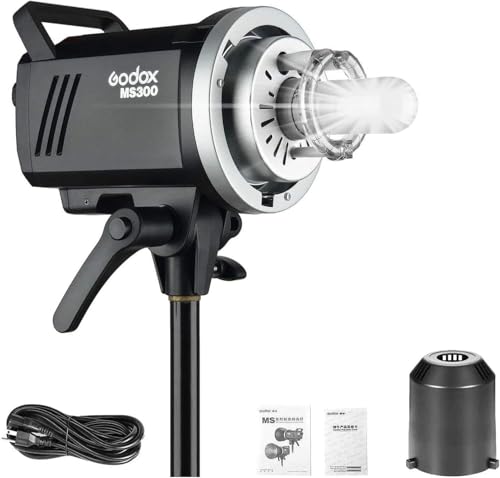
- 300Ws output with 1/32-to-full manual control
- Built-in 2.4G wireless remote operation
- Bowens mount and adjustable 150W modeling lamp
Best For: Small studio portraits, still life, and fill or background lighting
Pocket Studio Companion
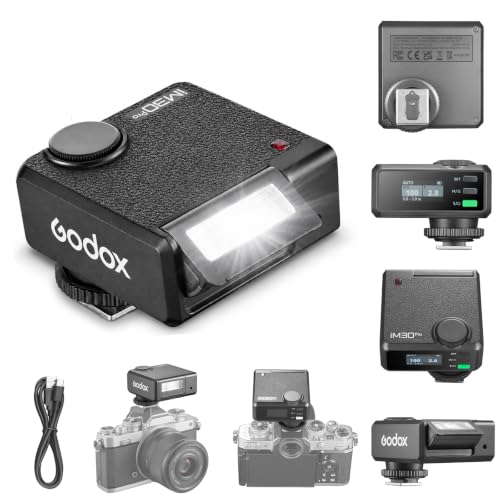
- GN15 output with adjustable tilting head
- Smart AUTO and manual power modes
- USB-C charging with up to 550 full-power flashes
Best For: Basic fill, bounce lighting, tabletop work, and compact setups
Wireless Speedlight Value

- GN60 output for portraits and controlled lighting
- Built-in 2.4G wireless system with 100-meter range
- Remote HSS available with a compatible Godox trigger
Best For: Manual off-camera lighting in small studios or on location
Power Pick

- 120Ws output with TTL and 1/8000s HSS
- Up to 420 flashes from its 3000mAh battery
- Wireless Q System and app control
Best For: Small studios needing powerful, portable lighting
Compact Starter
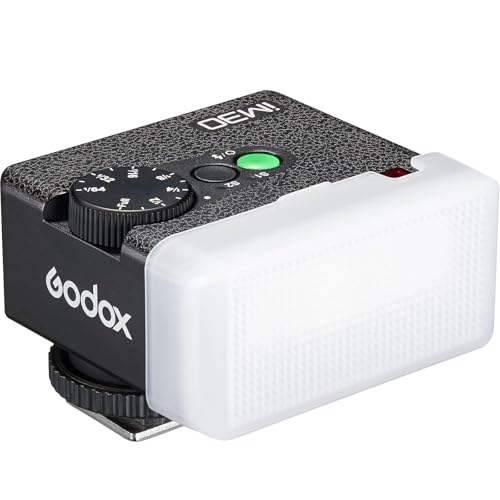
- Lightweight 78g body with diffuser cover
- Seven manual power levels
- Up to 230 flashes on two AAA batteries
Best For: Simple manual fill lighting and lightweight setups
Budget Essential

- Eight manual power levels and 5600K output
- Rechargeable battery supports 500–700 flashes
- 37g palm-sized design for portable setups
Best For: Entry-level studio, product, and close-up photography
Compact Studio Workhorse – Godox MS300V 300W Studio Strobe
For photographers building camera flashes for small studios, the Godox MS300V offers substantial 300W output in a compact monolight. Its Bowens mount, adjustable LED modeling lamp, wireless controls, and fast 0.1–1.8-second recycle time make it practical for portrait and studio work.
Best For: Small-studio portrait photographers who want strong manual strobe output and broad Bowens-mount modifier compatibility.
Pros:
- 300W output with GN58 guide number and 0.1–1.8-second recycle time
- 150W LED modeling lamp with 5%–100% manual adjustment
- Built-in 2.4G wireless control supports 16 groups and 32 channels with compatible transmitters
- Compact, lightweight body with a standard Bowens mount
Cons:
- No HSS function
- Requires removing the lamp cover before use
- Manual studio strobe operation may be less convenient than TTL lighting
The MS300V is a sensible choice when small-studio lighting needs prioritize reliable output, modifier flexibility, and wireless manual control over HSS or automatic exposure.
Budget Manual Speedlite – NEEWER TT560 Camera Flash
The NEEWER TT560 is a straightforward option for photographers assembling camera flashes for small studios on a budget. It provides manual power control, bounce and swivel adjustment, optical slave modes, and PC sync, but it does not provide TTL, HSS, or camera-menu control.
Best For: Beginners and manual-lighting users who need an affordable, battery-powered flash for simple studio or off-camera setups.
Pros:
- Eight manual power levels from 1/128 to full power
- GN38 output with 0°–90° tilt and 0°–270° rotation
- S1/S2 optical slave modes and PC sync support off-camera use
- Uses widely available AA batteries and supports CP-E4 external power
Cons:
- No TTL, HSS, automatic flash exposure, or camera-menu control
- Requires four AA batteries, which are not included
- Compatibility depends on a standard center-contact hot shoe; some listed cameras are excluded
The TT560 can work well in a controlled small studio where manual exposure is acceptable, but buyers should confirm hot-shoe compatibility and be prepared to set flash power and camera exposure themselves.
Wireless Bowens Monolight – Godox MS300V 300Ws Strobe
The Godox MS300V is a compact monolight for camera flashes for small studios, combining 300Ws output, 50-step manual power adjustment, and an adjustable LED modeling lamp. Its built-in Godox 2.4G wireless system simplifies remote operation when paired with a compatible trigger.
Best For: Small studios that want a compact Bowens-mount strobe with precise manual adjustment and wireless multi-light control.
Pros:
- GN58 output with 0.1–1.8-second recycle time
- Power adjusts from 1/32 to 1/1 in 50 steps
- Built-in 2.4G wireless system supports 16 groups and 32 channels
- LED modeling lamp offers brightness adjustment from 5% to 100%
Cons:
- Reflector is not included
- Wireless transmitter or trigger is sold separately
- Bowens-mount accessories may add to the overall setup cost
This version is appealing for photographers who value repeatable manual settings and wireless expansion. Factor in the separate trigger and reflector when budgeting for a complete small-studio kit.
Hybrid Compact Lighting – ULANZI F16R Flash and LED
The ULANZI F16R takes a more portable approach to camera flashes for small studios, combining a GN16 flash with focus-assist and continuous-light modes. Its rechargeable battery, adjustable bi-color LED, diffuser, and compact design make it useful for tabletop, portrait, video, and on-location setups.
Best For: Creators who need one lightweight light for occasional flash, focus assistance, video illumination, and portable studio work.
Pros:
- Three functions: flash, focus-assist light, and continuous video light
- Rechargeable battery provides up to 550 full-power flashes
- Bi-color 2500K–6500K LED with stepless brightness and CRI 96
- 90° tilt, included diffuser, and USB-C charging
Cons:
- GN16 output is lower than a dedicated studio strobe
- Uses a single-pin universal hot shoe, so compatibility must be checked
- Not compatible with several listed cameras, including Canon 1500D, 3000D, and 200D Mark II
The F16R is best viewed as a versatile compact light rather than a high-output studio flash. It suits small subjects and mixed photo-video work where portability and built-in battery convenience matter most.
Best for Easy Setup – Godox MS300 300Ws Monolight
For photographers choosing camera flashes for small studios, the Godox MS300 offers a practical monolight setup with 300Ws of power, a Bowens mount, and built-in 2.4G wireless control. Its adjustable modeling lamp and precise manual output make it useful for portraits, still life, fill light, or background lighting.
Best For: Small studio portraits, still life, and photographers building a Bowens-mount lighting system.
Pros:
- 300Ws output with manual adjustment from 1/32 to full power in 50 steps.
- Built-in Godox 2.4G wireless system supports remote power, modeling-light, and triggering control.
- Fast 0.1–1.8-second recycle time and adjustable 150W modeling lamp.
- Anti-preflash function helps synchronize with cameras that use a preflash.
Cons:
- This is a studio monolight rather than a portable hot-shoe flash.
- Manual exposure control may require more setup than TTL systems.
- The unit is not water resistant.
The MS300 is a strong choice when consistent, controllable studio light matters more than portability. Its Bowens compatibility and wireless features also leave room to expand with modifiers and additional Godox lighting.
Pocket Studio Companion – Godox iM30Pro Mini Flash
The Godox iM30Pro is a compact option for photographers who need a simple flash for small studios, location work, or everyday shooting. Its universal single-contact hot shoe, tilting head, built-in battery, and Smart AUTO mode keep the setup straightforward, though it does not provide TTL or HSS.
Best For: Basic fill light, bounce flash, tabletop work, and photographers who value a small rechargeable unit.
Pros:
- Tilting head locks at 45°, 60°, 75°, and 90° for direct or bounce lighting.
- Smart AUTO mode simplifies exposure, while manual power ranges from 1/1 to 1/128.
- Built-in 7.4V/700mAh lithium battery provides up to 550 full-power flashes.
- USB-C charging and S1/S2 optical slave modes add practical flexibility.
Cons:
- GN15 output is intended for modest lighting needs, not large studio spaces.
- It does not support TTL or HSS.
- Compatibility depends on a standard single-contact hot shoe; Sony ZV-1F is specifically excluded.
The iM30Pro makes sense as a low-complexity secondary light or compact bounce flash. Its rechargeable design is convenient, but photographers needing stronger output or advanced camera communication should consider a larger model.
Wireless Speedlight Value – Godox TT600 Flash
The Godox TT600 is a versatile hot-shoe speedlight for photographers assembling camera flashes for small studios without committing to a monolight. It combines GN60 output, a built-in 2.4G Godox X system, optical slave modes, and support for remote control when paired with a compatible Godox trigger.
Best For: Small studio or on-location photographers who want a powerful manual speedlight for off-camera lighting.
Pros:
- GN60 output provides useful reach for portraits and other controlled-lighting setups.
- Built-in 2.4G wireless system offers up to 100 meters of transmission and control of five groups across 32 channels.
- Supports remote control and HSS up to 1/8000 second when used with a compatible TTL wireless trigger.
- Works with standard hot shoes on many Canon, Nikon, Pentax, Olympus, Fujifilm, and Panasonic cameras.
Cons:
- Requires four AA batteries, which are not included.
- HSS is not available when the flash is used directly on the camera hot shoe.
- Recycle time can reach 2.6 seconds at full power.
The TT600 is a flexible budget-minded choice for learning off-camera flash and expanding a Godox wireless system. It offers more output than a mini flash, but its manual operation and battery dependence are worth considering for frequent studio use.
Power Pick – NEEWER Q120 Portable Strobe
For camera flashes for small studios that may also need to handle outdoor portraits or commercial work, the NEEWER Q120 offers substantially more output than a typical mini flash. Its 120Ws power, TTL support, HSS, built-in battery, and wireless control make it a flexible portable-studio option.
Best For: Small studios needing powerful, portable lighting with TTL and high-speed sync.
Pros:
- 120Ws output with 28–105mm zoom coverage
- Supports TTL, manual, MULTI, and 1/8000s HSS
- 3000mAh battery provides up to 420 full-power flashes
- Built-in 2.4GHz wireless control and app adjustment
Cons:
- Heavier and more specialized than a basic on-camera flash
- Q System and Godox X System cannot be used simultaneously
- Full compatibility may require a firmware update
The Q120 is a strong choice when a small studio needs portable monolight-style output rather than a simple fill flash. Its battery and wireless features reduce cable clutter, while TTL and HSS add flexibility for changing scenes.
Compact Starter – Godox iM30 Mini Flash
The Godox iM30 is a simple, lightweight option for camera flashes for small studios where portability and basic manual control matter most. Its single-contact hot shoe, seven power levels, optical slave modes, and included diffuser cover make it useful for straightforward fill-light setups.
Best For: Lightweight manual fill flash and simple studio or camera-top setups.
Pros:
- Very compact 78g design
- Seven power levels from 1/64 to full power
- Up to 230 flashes using two AAA batteries
- Includes a diffuser protection cover set
Cons:
- Manual operation only; no TTL exposure control
- Uses a single-contact hot shoe, so compatibility should be checked
- Wide-angle or telephoto lenses may produce shadows
The iM30 favors simplicity over automation. It is a practical low-bulk choice for controlled lighting experiments, basic fill, or a backup flash, but its GN15 output and manual controls are less suited to larger studio spaces.
Budget Essential – NEEWER N12 Mini Flash
For budget-conscious camera flashes for small studios, the NEEWER N12 provides essential manual lighting in a very small package. It combines GN12 output, eight power settings, a 5600K color temperature, and a rechargeable battery for basic portraits, products, still life, and close-up work.
Best For: Entry-level studio lighting, content creation, and close-up photography.
Pros:
- Eight output levels from 1/1 to 1/128
- Consistent 5600K color temperature
- Built-in rechargeable battery supports 500–700 flashes
- Very light 37g design with plug-and-play hot shoe mounting
Cons:
- Does not support TTL or camera-menu control
- GN12 output is intended for smaller, closer subjects
- Not compatible with several Canon Rebel models listed by the manufacturer
The N12 is a sensible low-cost starting point when manual power adjustment is sufficient. Its compact body and high stated flash count suit mobile or tabletop studio work, but buyers should verify hot-shoe compatibility and accept the lack of TTL.
How We Picked the Best Camera Flashes for Small Studios
We selected these models for the needs of photographers working in limited spaces: usable power, compact dimensions, practical controls, recycle speed, compatibility, and room to expand a lighting setup. The list includes both hot-shoe flashes for camera-mounted or portable use and studio strobes that work with modifiers and wireless triggers.
Because “small studio” can describe anything from a tabletop product station to a spare-room portrait setup, we included several power levels rather than treating one flash type as ideal for everyone. Features such as TTL support, manual output control, built-in radio systems, modeling or continuous light, and Bowens compatibility were also considered.
Quick Comparison
| Type | Best For | Main Advantage |
|---|---|---|
| Compact speedlight | Camera-mounted and portable shooting | Small, battery-powered, and flexible |
| Mini flash | Travel, tabletop work, and casual portraits | Minimal size and simple operation |
| 120Ws outdoor strobe | Portable off-camera lighting | More output than a typical speedlight |
| 300Ws monolight | Dedicated home studios | Higher power and modifier support |
Key Buying Factors for Camera Flashes for Small Studios
Power and Light Control
Choose output based on your working distance and modifiers. Compact flashes suit close-up subjects and small products, while 120Ws or 300Ws strobes provide more headroom when using umbrellas, softboxes, grids, or lower ISO settings. Variable manual power is essential for repeatable results.
Size, Power Source, and Placement
A hot-shoe flash is easy to store and can run from replaceable batteries, but a studio monolight usually offers faster recycling and a more stable stand-mounted workflow. Check whether your workspace has enough room for stands, cables, and modifiers before choosing the highest-output option.
Camera Compatibility and Triggering
Confirm the flash’s hot-shoe design and automation support for your camera brand. TTL can speed up changing setups, while manual control is often preferable for product photography. Built-in 2.4GHz systems can reduce the need for separate receivers, but verify trigger compatibility before buying.
Modifier Compatibility
Bowens-mount strobes are useful if you already own, or plan to buy, softboxes, reflectors, and beauty dishes using that standard. Speedlights may require dedicated brackets or compact accessories, which can be convenient but less robust for a permanent studio.
Who Should Buy Which Camera Flashes for Small Studios?
- Choose a 300Ws monolight if you have a dedicated small studio and want consistent power for portraits, groups, or larger modifiers.
- Choose a portable 120Ws strobe if you need more output than a speedlight while still moving between locations.
- Choose a standard speedlight if you shoot on location, use bounce flash, or need one unit that fits easily in a camera bag.
- Choose a mini flash for compact cameras, tabletop scenes, travel, or occasional fill light where portability matters more than maximum output.
For most small studios, the best choice is the model that matches your working distance and lighting style—not necessarily the most powerful unit. Prioritize reliable triggering, easy output adjustment, and compatibility with the modifiers you will actually use.