The best camera flashes for product photography help you control reflections, reveal texture, and create repeatable lighting across everything from small catalog items to larger product scenes.
This roundup includes portable speedlights, TTL-capable battery flashes, and studio strobes so you can match power, control, and workflow to your shooting setup.
Best 10 Camera Flashes for Product Photography Picks for 2026
Best Portable Strobe

- 200Ws output with TTL and up to 1/8000-second sync
- Includes speedlight and bare-bulb heads
- One-tap pairing with the Godox X3 trigger
Best For: Portable product setups needing flexible wireless strobe power
Best High-Power Manual Strobe
NEEWER Q300 Outdoor Studio Flash

- 300Ws output with Bowens modifier compatibility
- Up to 1,000 full-power flashes per battery charge
- Manual-only operation with no TTL or HSS
Best For: Manual studio and outdoor product setups needing high output
Best Canon TTL Speedlight

- Canon TTL, manual, and Multi modes
- HSS up to 1/8000 second
- Rechargeable battery and built-in Godox wireless system
Best For: Canon users needing a flexible on- or off-camera speedlight
Portable Power Pick

- 200Ws output with TTL, manual, multi-flash, and HSS modes
- Built-in battery supports up to 500 full-power pops
- Portable design includes a softbox diffuser
Best For: Mobile product photography with flexible flash control
Budget Wireless Speedlight

- GN60 output with stable 5600±200K color temperature
- Built-in 2.4G wireless system supports five groups and 32 channels
- Uses four AA batteries and recycles in 0.1–2.6 seconds
Best For: Affordable manual off-camera product lighting
Studio Setup Choice

- 300W manual strobe with 0.1–1.8-second recycling
- 150W adjustable LED modeling lamp
- Bowens mount works with many light modifiers
Best For: Dedicated studio product photography with manual lighting
Best Canon TTL Flash
NEEWER Z2PRO-C Round Head Speedlite

- 76Ws power with TTL and 1/8000s HSS
- 600 flashes and 1.5-second recycle time
- Wireless control plus dual LED modeling lights
Best For: Portable Canon product photography setups
Best Complete Two-Light Kit

- Two 180W monolights with softboxes and stands
- 5600K flash with 3200K continuous lamps
- Includes wireless trigger equipment
Best For: Beginner indoor product-photo studios
Best Adjustable Studio Strobe
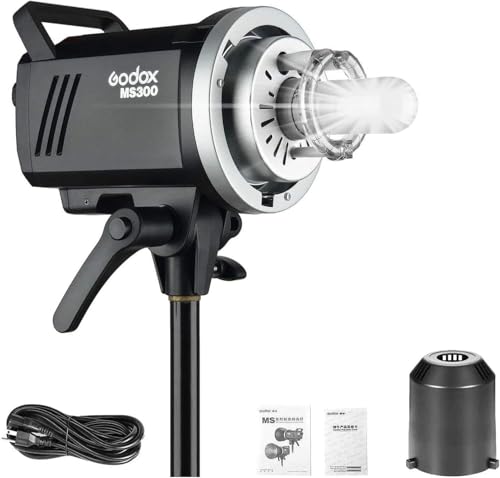
- 300Ws output with 50 manual power steps
- Built-in 2.4G wireless control
- Bowens mount and adjustable 150W modeling lamp
Best For: Controlled studio tabletop photography
Best Manual Value – NEEWER TT560 Speedlite
For photographers seeking affordable camera flashes for product photography, the NEEWER TT560 provides straightforward manual control. It offers eight power levels, optical slave modes, bounce and swivel adjustment, and PC sync for off-camera setups—but it does not provide TTL or HSS.
Best For: Beginners and budget-conscious photographers comfortable setting flash power and exposure manually.
Pros:
- GN38 output with eight manual power levels from 1/128 to full power
- Tilts 90° and rotates 270° for bounce and directional lighting
- Supports S1/S2 optical slave modes and PC sync
- Runs on widely available AA batteries
Cons:
- No TTL, HSS, automatic exposure, or camera-menu control
- Requires mechanical shutter mode on Fujifilm and other compatible mirrorless cameras
- Shutter speeds should generally be 1/200 second or slower for reliable sync
The TT560 is a practical entry point for controlled product-lighting setups, provided you are willing to meter or adjust exposure manually and verify your camera’s center-contact hot shoe compatibility.
Best Portable Strobe – Godox AD200Pro II
The Godox AD200Pro II is a versatile choice among camera flashes for product photography when you need more power than a typical speedlight in a compact package. Its 200Ws output, TTL exposure control, wireless Godox X compatibility, and up to 1/8000-second sync support make it suitable for flexible studio or location work.
Best For: Product photographers who want portable strobe power with TTL and wireless control.
Pros:
- 200Ws output with a reported guide number of 52
- TTL exposure control and sync speeds up to 1/8000 second
- Includes both the H200 II speedlight head and H200J II bare-bulb head
- Offers one-tap wireless pairing with the Godox X3 trigger
Cons:
- Requires a compatible Godox X-system trigger for wireless operation
- Not water resistant
- Higher-capability strobe design may be more than needed for simple on-camera product shots
With interchangeable flash heads, a rechargeable battery rated for 500 full-power flashes, and 0.01–1.8-second recycling, the AD200Pro II is a strong all-around option for photographers who expect their product-lighting setup to grow.
Best High-Power Manual Strobe – NEEWER Q300 Outdoor Studio Flash
The NEEWER Q300 is designed for camera flashes for product photography that need substantial output and long battery endurance. This 300Ws outdoor strobe includes a 13W modeling lamp, Bowens mount, adjustable handle, and wireless Q-system control, although it operates without TTL or HSS.
Best For: Product photographers building manual studio or outdoor lighting rigs with Bowens-mount modifiers.
Pros:
- 300Ws output with adjustable power from 1/64 to full power
- Battery supports up to 1,000 full-power flashes
- Standard Bowens mount works with softboxes, umbrellas, and reflectors
- Supports Manual, Multi, S1, S2, and Quick modes
Cons:
- No TTL or HSS; sync speed is no more than 1/200 second with the Q Compact trigger
- Q Compact trigger is included, but QPRO transmitters are not
- Specified camera exclusions include several Canon Rebel and entry-level models
The Q300 makes the most sense when output, modifier compatibility, and battery capacity matter more than automatic exposure. Its wireless range is listed at up to 98 feet, giving manual shooters useful placement flexibility.
Best Canon TTL Speedlight – Godox V860III-C Speedlight
The Godox V860III-C is a convenient choice among camera flashes for product photography when you use a compatible Canon camera and want automatic exposure options. It combines TTL and manual modes with HSS up to 1/8000 second, a built-in rechargeable battery, a modeling light, and Godox 2.4G wireless connectivity.
Best For: Canon photographers who want a rechargeable on-camera flash that can also move off-camera within the Godox X system.
Pros:
- Supports Canon TTL, manual, and Multi shooting modes
- HSS supports shutter speeds up to 1/8000 second
- Rechargeable battery provides up to 480 full-power flashes with 1.5-second recycling
- Includes a 10-level dimmable modeling light and built-in Godox 2.4G wireless system
Cons:
- This C version is specified for Canon cameras
- Not water resistant
- Its guide number of 28 is lower than the listed output of the larger AD200Pro II and Q300
For Canon users, the V860III-C offers an easy balance of convenience and control. TTL helps speed up on-camera work, while wireless Godox X compatibility makes it practical for expanding into off-camera product lighting.
Portable Power Pick – NEEWER Q3 200Ws TTL Flash
For photographers who need camera flashes for product photography without committing to a full studio setup, the NEEWER Q3 offers a useful balance of power and portability. Its 200Ws output, TTL support, built-in battery, and 1/8000-second HSS make it flexible for tabletop work, location shoots, and controlled creative lighting.
Best For: Portable product photographers who want TTL automation, battery convenience, and wireless control.
Pros:
- 200Ws output with eight power levels from 1/128 to full power.
- Built-in 3200mAh battery provides up to 500 full-power flashes, with 0.01–1.8-second recycling.
- Supports TTL, manual, multi-flash, and 1/8000-second HSS modes.
- Includes a softbox diffuser and supports NEEWER’s 2.4G Q system.
Cons:
- Wireless triggers are not included.
- Camera compatibility is listed around Canon E-TTL, Nikon i-TTL, and Sony TTL systems.
- It is not water resistant.
The Q3 is a strong choice when mobility matters as much as output. The included diffuser can help soften light on smaller products, while the battery-powered design avoids relying on AA cells during a shoot.
Budget Wireless Speedlight – Godox TT600 Manual Flash
The Godox TT600 is a practical entry point for camera flashes for product photography when you want a conventional hot-shoe flash and an expandable wireless system. It uses four AA batteries, offers GN60 output, and can be remotely controlled with compatible Godox triggers for off-camera lighting.
Best For: Budget-conscious photographers building a manual multi-light setup around the Godox 2.4G X system.
Pros:
- GN60 output and 5600±200K color temperature across the power range.
- Built-in 2.4G wireless transmission supports up to five groups and 32 channels.
- Compatible with many cameras using standard hot shoes, including Canon, Nikon, Pentax, Olympus, Fujifilm, and Panasonic.
- Offers approximately 230 full-power flashes and 0.1–2.6-second recycling.
Cons:
- Four AA batteries are required and are not included.
- HSS is not available when the flash is used directly on the camera hot shoe.
- TTL wireless trigger is sold separately for remote control and HSS functions.
The TT600 makes the most sense for controlled product setups where manual exposure is acceptable. Its wireless ecosystem can support more creative placement, but buyers should budget for a compatible trigger if they want off-camera control.
Studio Setup Choice – Godox MS300V 300W Strobe
For a dedicated tabletop or studio space, the Godox MS300V provides the consistent output and modifier compatibility often useful in camera flashes for product photography. This 300W manual strobe includes a powerful LED modeling lamp, a Bowens mount, and wireless adjustment through compatible Godox transmitters.
Best For: Studio-based product photographers who prioritize modifier options and stable manual output.
Pros:
- 300W output with GN58 guide number and 0.1–1.8-second recycle time.
- Bowens mount supports a wide range of compatible light modifiers.
- 150W LED modeling lamp adjusts from 5% to 100%.
- Wireless control is available for output, modeling lamp, and buzzer with compatible Godox triggers.
Cons:
- Manual-only exposure control; it does not provide TTL.
- Does not support HSS and has a listed sync speed of 1/200 or 1/250 second.
- Designed for studio use and weighs approximately 1.3kg without the stated package-weight variation.
The MS300V is best suited to repeatable, controlled shoots rather than fast-moving location work. Its Bowens compatibility and modeling lamp make positioning larger products and shaping shadows easier, provided your camera and setup work within its sync limitations.
Best Canon TTL Flash – NEEWER Z2PRO-C Round Head Speedlite
For photographers seeking camera flashes for product photography with TTL convenience and flexible light shaping, the NEEWER Z2PRO-C offers a powerful on-camera option for Canon systems. Its round head, 76Ws output, wireless control, and built-in modeling lights make it useful for tabletop setups as well as portraits and events.
Best For: Canon photographers who need a rechargeable, wireless TTL flash for portable product setups and general-purpose shooting.
Pros:
- 76Ws output, 1/8000s HSS, TTL, and adjustable manual power from 1/1 to 1/256.
- 600 full-power flashes with a 1.5-second recycle time from the 3000mAh lithium battery.
- 330-degree rotation, -7 to 120-degree tilt, dual LED modeling lights, and broad Canon compatibility.
- Supports 2.4G wireless control with 32 channels, 99 IDs, and multiple groups.
Cons:
- Designed for Canon-compatible cameras; EOS R50 users need a separate AD-E1 adapter.
- Q and X wireless systems cannot be used simultaneously.
- Charger is not included.
This is the most versatile choice here for photographers who want a portable flash that can move between camera-mounted and off-camera work. The rechargeable battery, TTL support, and modeling lights simplify repeated product-photo setups, while the compatibility details should be checked before purchase.
Best Complete Two-Light Kit – Godox K180A Studio Flash Kit
For controlled tabletop work, the Godox K180A is a practical entry point among camera flashes for product photography. This kit includes two 180W monolights, softboxes, stands, and a trigger setup, giving beginners and small businesses the core equipment needed for an indoor product-lighting station.
Best For: Beginners, small businesses, and studio photographers who want a ready-to-use two-light kit for products, still life, and portraits.
Pros:
- Includes two 180W monolights, two softboxes, two stands, power cables, and wireless trigger equipment.
- 5600K strobe output and 75W, 3200K continuous lamps provide both flash and modeling illumination.
- Softboxes help diffuse light and reduce shadows on product subjects.
- Compatible with Canon, Nikon, Fujifilm, Olympus, and Pentax hot shoes through the supplied trigger system.
Cons:
- Manual studio system with a listed maximum sync speed of 1/200 second.
- Wireless range is up to 30 meters, and the lights must share the same channel for synchronization.
- It is an indoor, mains-powered setup rather than a portable battery flash.
The K180A stands out because it supplies a complete lighting foundation instead of only a flash head. Its softboxes and dual-light layout are well suited to evenly illuminating products, although photographers wanting high-speed sync or battery operation should consider another type of flash.
Best Adjustable Studio Strobe – Godox MS300 300Ws Monolight
The Godox MS300 is a compact studio monolight for photographers who want consistent, adjustable output for camera flashes for product photography. Its 300Ws power, Bowens mount, modeling lamp, and built-in 2.4G wireless system make it a flexible single-light foundation for tabletop and still-life work.
Best For: Studio photographers who need precise manual power control and compatibility with Bowens-mount modifiers.
Pros:
- 300Ws output with 50 power steps from 1/32 to full power.
- 0.1- to 1.8-second recycle time and flash duration from 1/2000 to 1/800 second.
- Built-in Godox 2.4G wireless system supports remote power, modeling-light, and triggering controls.
- 150W modeling lamp adjusts from 5% to 100%, and the Bowens mount supports many modifiers.
Cons:
- This is a manual monolight rather than a TTL flash.
- The supplied package contains one strobe, so stands and modifiers may need to be purchased separately.
- It requires a power supply and is not presented as a battery-powered unit.
The MS300 is a strong choice when repeatable manual exposure matters more than portability. Its fine-grained power adjustment and Bowens compatibility make it easy to build a controlled product-photo setup, while the single-light package leaves room for adding accessories over time.
How We Picked the Best Camera Flashes for Product Photography
We focused on the features that matter most when photographing products: consistent output, useful power, recycle performance, wireless control, camera compatibility, and practical modifiers. The selection spans entry-level flashes for simple tabletop work, portable monolights for flexible locations, and studio kits for repeatable commercial setups.
We also considered whether each model supports TTL, high-speed sync (HSS), manual power adjustment, built-in or compatible radio triggering, and common modifier systems. These features can shorten setup time and make it easier to maintain consistent exposure as your products or camera angles change.
Quick Comparison
| Flash Type | Best For | Main Advantage | Potential Limitation |
|---|---|---|---|
| Manual speedlight | Small tabletop setups | Low cost and compact size | Less power and automation |
| TTL speedlight | Portable product shoots | Fast exposure adjustments | Smaller light source than a monolight |
| Portable monolight | Location and larger products | More power with battery operation | Usually needs a stand and modifier |
| Studio strobe | Catalog and controlled studio work | Consistent output and modifier support | Less convenient outside the studio |
Key Buying Factors for Camera Flashes for Product Photography
Power and Light Control
Choose enough output to light the product and modifier without running the flash at full power constantly. Portable speedlights can handle small items, while 200Ws to 300Ws monolights provide more flexibility for larger products, brighter apertures, or light-shaping accessories.
Manual, TTL, and HSS Operation
Manual control is often preferable for repeatable catalog images because it keeps exposure consistent from frame to frame. TTL is useful when distance or composition changes frequently. HSS helps when you want to use a wide aperture or overpower ambient light at faster shutter speeds.
Wireless Triggering and Compatibility
Check the exact camera version before buying, particularly with Canon, Nikon, and Sony systems. A matching radio trigger can provide remote power adjustment and reliable firing. Built-in receivers reduce the number of accessories you need.
Modifiers, Mounts, and Power
Softboxes, umbrellas, grids, and reflectors determine the apparent size and direction of the light. Bowens-compatible studio strobes offer broad modifier availability, while speedlights may require a bracket or dedicated adapter. Battery-powered models are easier to position, but AC studio units are better for long sessions.
Who Should Buy Which Camera Flashes for Product Photography?
Choose a manual speedlight if you are starting with small products, have a limited budget, or need a compact backup. Choose a TTL speedlight if portability and quick setup matter more than maximum output.
Choose a portable monolight for shoes, bags, appliances, and other medium-sized products that need stronger, softer, or more distant lighting. Choose a studio strobe or two-light kit for high-volume catalog work, consistent exposure, and better control over highlights and shadows.
Whichever model you choose, budget for a sturdy stand, a suitable modifier, and a wireless trigger when required. In product photography, controlled placement and diffusion often make a bigger difference than buying the most powerful flash available.