Choosing the right camera can make a huge difference in planetary detail, color, and ease of use. The best models balance sensor quality, frame rate, and compatibility with your telescope setup.
Below, we focus on practical options for lunar, solar, and planetary work so you can match the camera to your budget, telescope, and experience level.
Best 10 Astronomy Cameras for Planetary Imaging Picks for 2026
High-Speed Planetary Detail Capture
SVBONY SV305C Pro Telescope Camera

- IMX662 sensor with ultra-low readout noise
- 1080p capture up to 107 fps
- USB 3.0 plus ST4 guiding interface
Best For: Planetary imagers who want speed, low noise, and guiding support
Portable Plug-and-Play Planetary Imager
ASI662MC Travel-Ready Planetary Camera
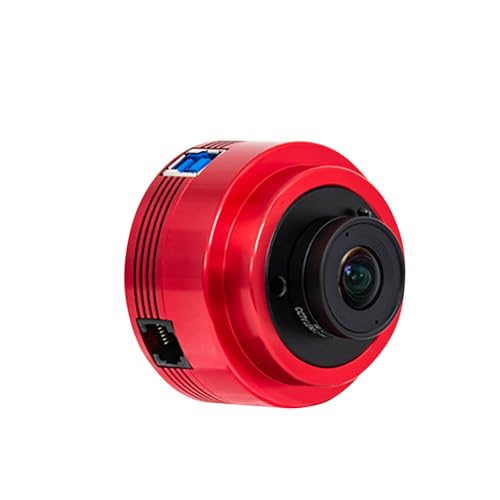
- Lightweight ABS housing for durability
- Tool-less plug-and-play installation
- Works for telescopic and terrestrial photography
Best For: Travelers and hobbyists who want a compact, easy-to-install camera
Low-Noise Lucky Imaging Choice
SVBONY SV705C IMX585 Planetary Camera

- IMX585 sensor with strong signal-to-noise ratio
- High near-infrared sensitivity and dual-gain HCG
- Also suited to EAA and entry-level deep-sky
Best For: Observers who want a versatile planetary camera with extra imaging range
Rugged Lightweight Planetary Option
ASI662MC ABS Outdoor Planetary Camera
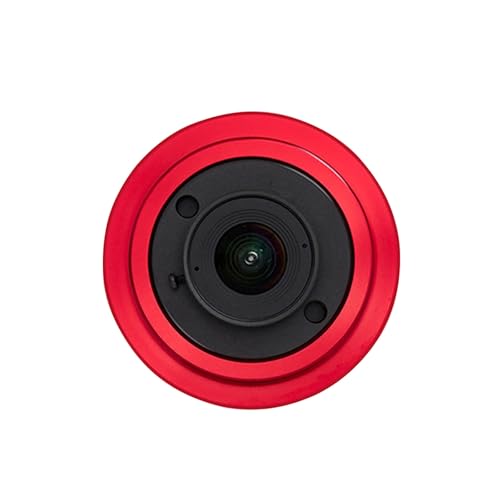
- ABS housing for impact resistance
- Lightweight and portable for field use
- Plug-and-play installation with no extra accessories
Best For: Outdoor observers who want a durable, easy-to-set-up camera
Entry-Level 8MP USB Planetary Starter
4K 8MP USB Astronomy Camera Telescope Eyepiece 1.25 Inch

- 8MP sensor with up to 4K video capture
- UVC plug-and-play with optional ASCOM support
- Removable IR cut filter and CNC aluminum body
Best For: Beginners imaging the Moon and bright planets with a simple 1.25-inch USB camera.
High-Resolution Solar System Imager
Celestron NexImage 20 Solar System Imager

- 20 MP sensor tuned for Moon, planets, and Sun
- ROI cropping helps improve frame rate for stacking
- USB-C connection with iCap software included
Best For: Users who want a high-resolution, well-supported planetary camera for Solar System targets.
Sensitive Guide-Cam for Tracking
SVBONY SV905C Guide Camera Telescope Eyepiece

- 1.23 MP color CMOS with high sensitivity
- USB 2.0 and ST4 guiding interfaces
- Works with PHD2, NINA, SKY-X, and similar software
Best For: Astrophotographers who need a sensitive guide camera with occasional planetary use.
High-Resolution Planetary Pick
SVBONY SC715C IMX715 Color Camera

- 1.45b5m IMX715 sensor for planetary detail
- USB 3.0 and DDR3 cache for smoother capture
- Works with SharpCap, AstroDMX Capture, and NINA
Best For: Planetary imagers who want detail, speed, and software compatibility
Wireless Observation Pick
4K WiFi Telescope Eyepiece Camera

- 8MP sensor supports 4K video and up to 64MP photos
- Built-in 2.8-inch IPS screen with WiFi viewing
- Fits eyepieces from 23mm to 60mm
Best For: Beginners who want wireless viewing and simple planetary recording
Beginner-Friendly Starter
SVBONY SV105 IMX307 Eyepiece Camera
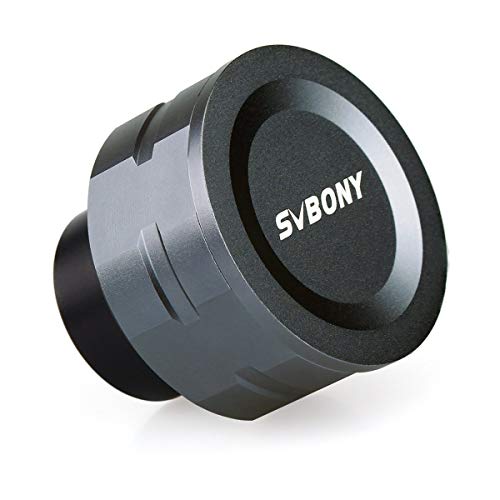
- Plug-and-play design with no driver required
- IMX307 sensor for lunar and planetary targets
- Up to 30 fps at 1080p and 2K video support
Best For: Beginners looking for an easy first planetary camera
High-Speed Planetary Detail Capture – SVBONY SV305C Pro Telescope Camera
If you’re comparing astronomy cameras for planetary imaging, the SVBONY SV305C Pro is built around speed, low noise, and flexible capture controls. Its IMX662 sensor, USB 3.0 transfer, and 107 fps 1080p mode are aimed at freezing fast-moving targets like Jupiter and Saturn with better clarity.
Best For: Planetary imagers who want a fast USB 3.0 camera with low noise, HDR, and guiding support.
Pros:
- IMX662 sensor with ultra-low readout noise for cleaner planetary frames
- 1920×1080 capture at up to 107 fps for fast-moving planets
- USB 3.0 transfer helps keep workflow responsive during high-speed capture
- ST4 guiding interface and Any Area ROI support add flexibility
Cons:
- Does not support iPad connection; computer use only
- Manual exposure and focus mean it is less automatic than casual-use cameras
- Best results depend on a telescope-based imaging setup
Overall, this is a practical pick if your priority is sharp, repeatable planetary capture with strong speed and low-noise performance. The buffer, HDR, and heat dissipation features also make it better suited to longer imaging sessions.
Portable Plug-and-Play Planetary Imager – ASI662MC Travel-Ready Planetary Camera
For buyers looking at astronomy cameras for planetary imaging and portability, the ASI662MC emphasizes lightweight construction and simple setup. Its plug-and-play design, ABS housing, and multi-platform compatibility make it appealing for telescopic imaging in the field or at home.
Best For: Travelers and hobbyists who want a compact, easy-to-install planetary camera.
Pros:
- Lightweight design with strong ABS housing for impact resistance
- Tool-less installation and plug-and-play functionality simplify setup
- Compatible with telescopes for planetary and terrestrial photography use
Cons:
- Supplied notes focus more on design than on detailed imaging specs
- Less feature-rich on paper than models with explicit frame-rate and sensor details
- Best fit is convenience and portability, not advanced control features
This is a straightforward choice if you want a compact planetary camera that is easy to carry and quick to mount. It makes the most sense for users who value rugged simplicity over a long list of imaging controls.
Low-Noise Lucky Imaging Choice – SVBONY SV705C IMX585 Planetary Camera
The SVBONY SV705C is a strong option in astronomy cameras for planetary imaging if you also want room for EAA and lucky imaging. Its IMX585 sensor, high signal-to-noise ratio, and enhanced near-infrared sensitivity are geared toward capturing more detail in a wide range of conditions.
Best For: Observers who want a planetary camera that also handles EAA, lucky imaging, and entry-level deep-sky work.
Pros:
- IMX585 sensor delivers high signal-to-noise performance and strong full-well capacity
- 1.7x near-infrared sensitivity improves capture efficiency in IR-sensitive work
- Dual-gain HCG helps maintain dynamic range while reducing read noise
- Works beyond planets, including EAA and entry-level deep-sky shooting
Cons:
- Front end uses a CS port, so adapter compatibility matters
- Broader capability may be more than needed if you only image planets
- Some features are optimized for advanced users rather than beginners
In practical use, this camera stands out for flexibility as much as planetary performance. If you want one camera that can handle planets, lucky imaging, and some deep-sky experimentation, the SV705C is a versatile pick.
Rugged Lightweight Planetary Option – ASI662MC ABS Outdoor Planetary Camera
If you want astronomy cameras for planetary imaging that are easy to carry into the field, the ASI662MC focuses on durability and lightweight use. Its ABS housing, tool-less installation, and plug-and-play design make it a practical match for outdoor observation sessions and simple telescope mounting.
Best For: Outdoor observers who want a lightweight, durable planetary camera with simple setup.
Pros:
- High-strength ABS housing adds impact resistance for field use
- Lightweight body is easier to handle during outdoor sessions
- Plug-and-play setup avoids additional drivers or accessories
- Compatible with telescopic and terrestrial photography applications
Cons:
- Notes provide limited detail on sensor specs and capture performance
- Less specialized in the listing than cameras with explicit planetary framing details
- May appeal more to simplicity-focused users than advanced imagers
As a field-friendly planetary camera, this model is about convenience and toughness rather than a long technical feature list. It makes sense if you want a no-fuss camera you can deploy quickly for outdoor imaging.
Entry-Level 8MP USB Planetary Starter – 4K 8MP USB Astronomy Camera Telescope Eyepiece 1.25 Inch
If you’re looking for astronomy cameras for planetary imaging that are simple to get running, this 8MP USB telescope camera is aimed at beginners who want to record the Moon, bright planets, and other easy targets. It supports up to 4K video and 1080P high-frame-rate capture, and it works as a standard UVC device for straightforward live viewing.
Best For: Beginners who want an affordable, plug-and-play option for Moon and planet capture through a 1.25-inch telescope setup.
Pros:
- 8MP sensor with up to 4K video and 1080P high-frame-rate capture
- UVC plug-and-play support plus optional ASCOM driver workflow on Windows
- Includes a removable IR cut filter for more natural color
- Lightweight CNC aluminum housing helps keep telescope balance stable
Cons:
- Manual telescope focusing is required; there is no autofocus
- Best suited to the Moon, planets, and bright objects rather than faint deep-sky targets
- Performance depends heavily on your telescope focus and seeing conditions
This is a practical entry point if you want a compact planetary camera that is easy to mount, cross-platform compatible, and flexible enough for casual imaging or STEM use. The tradeoff is that it relies on your telescope setup and manual focusing, so it rewards patience more than automation.
High-Resolution Solar System Imager – Celestron NexImage 20 Solar System Imager
For buyers comparing astronomy cameras for planetary imaging, the Celestron NexImage 20 stands out as a purpose-built Solar System camera with a 20 MP AR2020 CMOS sensor. It is designed for the Moon, planets, and Sun with a filter, and its region-of-interest cropping helps improve frame rate and stacking efficiency on small targets.
Best For: Observers who want a higher-resolution planetary camera with software control and strong support from a major telescope brand.
Pros:
- 20 MP back-illuminated CMOS sensor for crisp lunar and planetary detail
- Region of Interest cropping helps boost frame rate and speed stacking
- USB-C connectivity for modern, reliable data transfer
- iCap software included with manual control over key imaging settings
Cons:
- Designed for Solar System targets, not as a general-purpose all-in-one camera
- Requires a telescope with a 1.25-inch eyepiece holder or C-thread adapter
- Manual exposure and focusing mean setup still matters
This is a strong pick if you want a more serious imaging camera for planets and the Moon without giving up ease of use. The ROI feature and included control software make it especially useful for stacking-focused workflows, while the warranty and support add confidence for long-term use.
Sensitive Guide-Cam for Tracking – SVBONY SV905C Guide Camera Telescope Eyepiece
If your priority is stable tracking in astronomy cameras for planetary imaging, the SVBONY SV905C is a compact guide camera that can also be used for planets. Its 1.23 MP color CMOS sensor, high peak quantum efficiency, and low read noise are aimed at finding guide stars quickly and supporting precise tracking.
Best For: Astrophotographers who need a sensitive guide camera and occasionally want to use it for planetary imaging.
Pros:
- Highly sensitive 1.23 MP color CMOS sensor with small 3.75-micron pixels
- High peak QE and low read noise help with faint guide stars
- USB 2.0 plus ST4 interface for guiding workflows
- Compatible with PHD2, NINA, SKY-X, and other guide software
Cons:
- Not compatible with ASI AIR
- Lower resolution than dedicated planetary cameras
- Primary design focus is autoguiding rather than imaging detail-rich planets
This camera makes the most sense when guiding reliability matters more than image resolution. While it can serve in planetary imaging, its real strength is sensitive, compact guiding for telescope setups that need accurate tracking.
High-Resolution Planetary Pick – SVBONY SC715C IMX715 Color Camera
If you are comparing astronomy cameras for planetary imaging, the SVBONY SC715C is built around a 1.45b5m IMX715 sensor and is aimed at capturing fine lunar and planetary detail. Its USB 3.0 interface, DDR3 cache, and software compatibility make it a practical option for users who want smooth capture and low-latency imaging from a telescope setup.
Best For: Planetary imagers who want a compact, high-detail camera with fast transfer and software flexibility.
Pros:
- 1.45b5m pixel IMX715 sensor is designed for detailed planetary imaging.
- USB 3.0 with up to 45.5 fps at full resolution supports stable capture.
- 512MB DDR3 cache helps minimize image delays for video and stills.
- Works with SharpCap, AstroDMX Capture, and NINA for broader workflow support.
Cons:
- Not compatible with smartphones.
- No built-in focus adjustment; focusing must be done with the telescope focuser.
- Dedicated download software is required.
Overall, the SC715C is a strong fit for telescope users who want a purpose-built planetary camera with modern sensor performance and dependable data handling. It is especially appealing if you already use astronomy capture software and want a lightweight, durable camera body.
Wireless Observation Pick – 4K WiFi Telescope Eyepiece Camera
For astronomy cameras for planetary imaging, this 4K wireless telescope camera takes a convenience-first approach with WiFi viewing, a built-in screen, and app control. Its 8MP sensor supports 4K video and high-resolution image capture, while the universal eyepiece fit makes it easy to use on a wide range of scopes and optical devices.
Best For: Beginners and casual observers who want a wireless, screen-equipped camera for easy planetary viewing and recording.
Pros:
- 8MP CMOS sensor supports 4K video and up to 64MP image capture.
- Built-in 2.8-inch IPS display plus WiFi remote viewing within 32 ft.
- Universal locking groove fits eyepieces from 23mm to 60mm.
- 2000mAh battery and microSD support up to 512GB suit longer sessions.
Cons:
- Manual focus only.
- Wireless/app features add complexity compared with a basic plug-in camera.
- Product notes emphasize broad compatibility rather than telescope-specific imaging controls.
This model stands out if you want an easy-to-use planetary camera with onboard display and wireless convenience. It is less specialized than dedicated USB astronomy cameras, but the flexibility can be a real advantage for quick setup and sharing.
Beginner-Friendly Starter – SVBONY SV105 IMX307 Eyepiece Camera
The SVBONY SV105 is a straightforward choice for astronomy cameras for planetary imaging when you want an easy entry into lunar and planetary capture. It uses an IMX307 color CMOS sensor, offers plug-and-play use with no driver required, and is positioned as a basic but useful way for beginners to start astrophotography.
Best For: Beginners who want a simple, budget-friendly planetary and lunar imaging camera.
Pros:
- Plug and play with no driver required for quick setup.
- IMX307 sensor is suited to lunar, planetary, and bright terrestrial targets.
- Up to 30 fps at 1920d71080 and 2K video support.
- Compatible with Windows, Linux, macOS laptops, and telescope filters.
Cons:
- Compatibility notes require separate capture software on some systems.
- Not compatible with Apple phones or tablets.
- Manual focus only.
Overall, the SV105 is the most approachable option here if you want to try planetary imaging without a complicated setup. It lacks the advanced hardware and speed of higher-end cameras, but it covers the essentials very well for a first astronomy camera.
How We Picked the Best Astronomy Cameras for Planetary Imaging
We prioritized Astronomy Cameras for Planetary Imaging that offer strong fine-detail capture, reliable connectivity, and broad telescope compatibility. Key factors included sensor performance, pixel size, USB or wireless workflow, and whether the camera is suited to high-frame-rate video capture for stacking.
We also looked for options that fit different user levels, from simple plug-and-play choices to more advanced models for enthusiasts who want tighter control over gain, exposure, and capture software.
Quick Comparison
In general, higher-end sensors and faster data transfer are better for planets, while simpler cameras can still work well for Moon shots and entry-level planetary imaging. If you want the most versatile setup, focus on newer CMOS sensors, stable drivers, and a connection that won’t bottleneck frame rates.
Key Buying Factors for Astronomy Cameras for Planetary Imaging
Sensor and Pixel Size
Smaller pixels can help resolve fine detail when seeing conditions are good, especially on Jupiter, Saturn, and Mars. Sensor generation matters too: newer sensors often improve sensitivity and reduce noise, which can matter more than raw megapixels.
Frame Rate and Connection Type
Planetary imaging depends heavily on capturing many short exposures. USB 3.0 is generally preferable because it supports smoother high-speed capture. Wireless models may be convenient, but they can be less ideal if your main goal is maximum frame rate and consistency.
Color Vs. Monochrome
Most beginners will want a color camera for simple, practical results. Color models are easier to use and avoid the extra workflow of filters and focusing multiple channels. Monochrome setups can be more advanced but are beyond what most buyers need.
Telescope Fit and Back Focus
Check the camera’s barrel size, adapter requirements, and whether it will reach focus with your telescope. A 1.25-inch format is common, but not every scope has the same spacing or focal plane, so compatibility matters as much as image quality.
Who Should Buy Which Astronomy Cameras for Planetary Imaging?
Beginners should look for a straightforward color camera with easy software support and a stable USB connection. If you mainly want lunar and casual planetary shots, an entry-level model can be enough.
More serious hobbyists should choose a newer-sensor camera with faster transfer speeds and better low-noise performance. If portability matters, look for compact, rugged designs that are easy to use in the field. For buyers comparing Astronomy Cameras for Planetary Imaging on value, the best choice is usually the model that matches your telescope, your workflow, and how much post-processing you’re willing to do.