Choosing the right camera can make a bigger difference than changing telescopes. The best color astronomy cameras balance sensor size, cooling, pixel size, frame rate, and ease of use for your observing goals.
This roundup focuses on practical options for lunar, planetary, and deep-sky imaging, helping you narrow the field quickly based on performance, setup, and value.
Best 10 Color Astronomy Cameras Picks for 2026
Deep-Sky Workhorse
SVBONY SC571CC Cooled Color Astronomy Camera

- IMX571 APS-C BSI sensor with 26MP resolution
- Dual-stage TEC cooling lowers temps 35°C below ambient
- 16-bit output, zero amp-glow, and heater window support
Best For: Deep-sky imagers who want a cooled APS-C color camera
Portable Planetary Pick
ASI662MC Plug-Play Planetary Imager
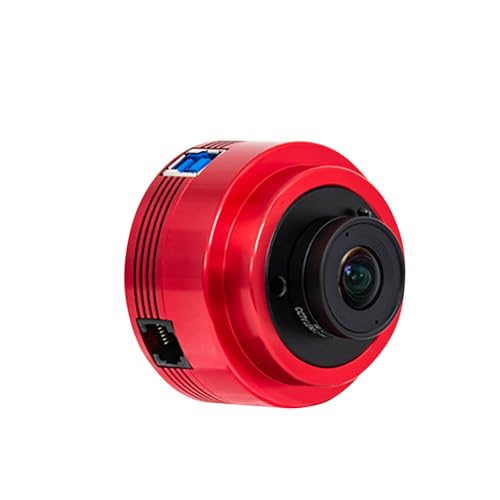
- Lightweight design for travel and remote observing
- Plug-and-play connection with no extra drivers needed
- ABS housing and broad telescope/terrestrial compatibility
Best For: Portable planetary and terrestrial imaging
Balanced Deep-Sky Choice
SVBONY SV605CC Cooled Color Astrophotography Camera
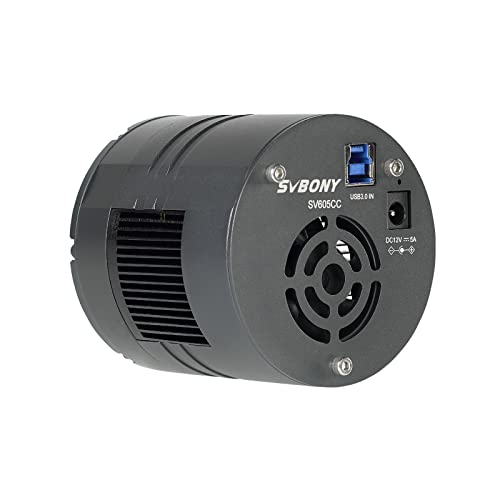
- IMX533 1-inch color chip with 3008 x 3008 output
- 80% QE and glow suppression improve deep-sky data
- TEC cooling reaches 30°C below ambient
Best For: Deep-sky users wanting a cooled 1-inch color camera
All-in-One Display Pick

- 8MP CMOS sensor with 4K video and up to 64MP photos
- Built-in 2.8-inch IPS screen plus WiFi viewing
- Universal groove fits eyepieces from 23 mm to 60 mm
Best For: Beginners wanting a wireless camera with a built-in screen
Urban Deep-Sky Choice
SVBONY SV605CC Cooled Camera + SV240 Filter

- IMX533 1-inch color sensor with 9MP square framing
- Two-stage TEC cooling lowers sensor temp up to 30°C
- SV240 filter helps block urban light pollution for nebulae
Best For: Nebula and galaxy imaging from city or suburban skies
Planetary Fast-Capture Pick
Celestron NexImage 20 Color Imager

- 20MP sensor captures crisp lunar and planetary detail
- ROI mode improves frame rate for faster stacking
- USB-C and iCap software keep setup simple
Best For: Easy Solar System imaging with a plug-and-play workflow
High-Sensitivity Cooled Option

- Back-illuminated IMX294 sensor with 4/3-inch format
- Two-stage TEC cooling cuts sensor noise for long exposures
- USB 3.0 buffer supports stable high-speed capture
Best For: Deep-sky imaging with strong cooling and color detail
Ultra-Detail Planetary Pick
SVBONY SC715C IMX715 Color Camera

- IMX715 sensor with higher dynamic range and lower noise
- 1.45μm micro pixels and 4K capture for planetary detail
- USB 3.0, DDR3 cache, and software support for smoother imaging
Best For: Planetary imagers who want a compact, high-detail color camera for telescope use.
Entry-Level EAA Workhorse
SVBONY SV305C IMX662 Color Camera

- IMX662 sensor with low readout noise and better red sensitivity
- 128MB buffer plus ROI and BIN2x2 for flexible capture
- Good fit for planetary, lunar, and EAA imaging
Best For: Beginners and budget-minded observers who want a versatile color camera for planetary, lunar, and EAA sessions.
Beginner Plug-and-Play Choice
SVBONY SV105 IMX307 Color Camera
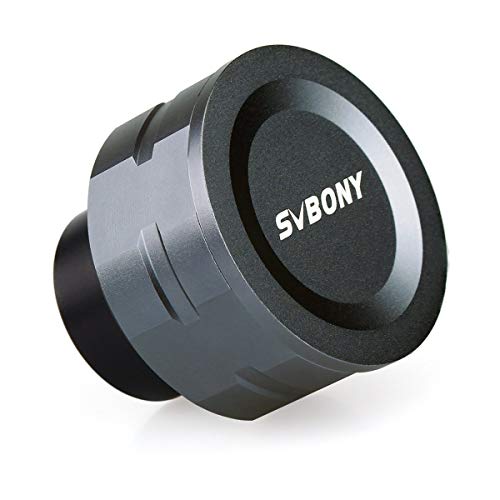
- Plug-and-play setup with no driver required
- IMX307 sensor with dark-light compensation for clearer views
- Up to 30 fps at 1080p and 2K video capture support
Best For: First-time astrophotographers who want a simple camera for quick lunar and planetary sessions.
Deep-Sky Workhorse – SVBONY SC571CC Cooled Color Astronomy Camera
If you want color astronomy cameras built for clean deep-sky data, the SVBONY SC571CC focuses on resolution, cooling, and noise control. Its IMX571 APS-C sensor, 16-bit output, and TEC cooling make it a strong fit for long exposures on faint nebulae and other challenging targets.
Best For: Astrophotographers who want an APS-C cooled color camera for deep-sky imaging with strong detail and stable long-session performance.
Pros:
- 26MP IMX571 APS-C BSI sensor with 3.76 μm pixels for sharp detail and faint target capture
- Dual-stage TEC cooling lowers sensor temperature by 35°C below ambient
- Front-window heater helps prevent dew and moisture during imaging sessions
- 16-bit ADC, high QE, zero amp-glow, and 512 MB DDR3 buffer support cleaner data and stable transfers
Cons:
- Designed for serious deep-sky use rather than quick casual grab-and-go imaging
- Best value is tied to telescopes that can fully use an APS-C imaging circle
The SC571CC is the most feature-rich option here for deep-sky imaging, especially if you prioritize cooling, dynamic range, and low-noise capture over portability.
Portable Planetary Pick – ASI662MC Plug-Play Planetary Imager
This compact option stands out among color astronomy cameras if you want something lightweight and easy to move between setups. The ASI662MC is designed for plug-and-play use, making it practical for planetary work, travel imaging, and even terrestrial photography.
Best For: Beginners and mobile observers who want a simple, travel-ready color planetary camera for telescopes or terrestrial use.
Pros:
- Lightweight, compact design is easy to carry for remote sessions
- Plug-and-play setup with no additional drivers or accessories required
- High-strength ABS housing adds impact resistance
- Works with telescopic and terrestrial photography applications
Cons:
- Notes emphasize portability and compatibility more than sensor specifications
- Best suited to planetary and general imaging, not specialized deep-sky cooling
If you want a simple camera that gets out of the way, the ASI662MC is the most straightforward pick in this group for portable planetary imaging.
Balanced Deep-Sky Choice – SVBONY SV605CC Cooled Color Astrophotography Camera
For color astronomy cameras aimed at deep-space work, the SV605CC offers a balanced mix of sensor size, cooling, and glow suppression. Its IMX533 1-inch color chip, 80% QE, and TEC refrigeration make it a practical choice for deep-sky, panoramic astronomy, and lucky imaging.
Best For: Deep-sky imagers who want a cooled 1-inch color camera with strong efficiency and low-glow performance.
Pros:
- IMX533 1-inch color sensor with 3008 x 3008 square-frame output
- Quantum efficiency reaches 80% for improved capture efficiency
- Glow suppression helps preserve signal-to-noise ratio in affected areas
- TEC secondary refrigeration cools to 30°C below ambient
Cons:
- Square 1-inch format may not suit every framing preference
- Notes focus more on deep-sky and lucky imaging than on high-portability use
The SV605CC is a strong middle-ground option if you want cooled performance and low glow without jumping straight to a larger APS-C camera.
All-in-One Display Pick – 4K Wireless Telescope Camera
Among color astronomy cameras, this 4K wireless telescope camera is built for convenience first. With an integrated IPS screen, WiFi viewing, and broad eyepiece compatibility, it suits users who want a simple way to view, record, and share observations without a complicated setup.
Best For: Beginners and casual observers who want a wireless eyepiece camera with a built-in display and easy sharing features.
Pros:
- 8MP CMOS sensor supports 4K video and up to 64MP image capture
- Built-in 2.8-inch IPS screen makes observation more intuitive
- WiFi viewing works within a 32 ft range and can connect two devices
- Fits eyepieces from 23 mm to 60 mm for wide compatibility
Cons:
- Manual focus means it relies on user setup rather than automated control
- More focused on convenience and general observation than cooled astrophotography
This is the easiest option for users who want a camera-screen hybrid for planets, wildlife, and casual astronomy rather than a dedicated cooled astro rig.
Urban Deep-Sky Choice – SVBONY SV605CC Cooled Camera + SV240 Filter
If you want color astronomy cameras that can handle city skies, this SVBONY combo is built for deep-sky work with a cooled IMX533 sensor and the included SV240 multi-narrowband filter. The square 9MP frame, 80% quantum efficiency, and strong light-pollution rejection make it a practical pick for nebulae and galaxies from Bortle 1 to Bortle 8 locations.
Best For: Imaging emission nebulae and galaxies from light-polluted suburbs or city backyards.
Pros:
- IMX533 1-inch color sensor with 3008 x 3008 square framing and 3.76 μm pixels.
- Two-stage TEC cooling can reduce sensor temperature by up to 30°C below ambient.
- SV240 filter is designed to block urban light pollution and cover Ha, OIII, and H-Beta.
- Includes multiple adapters, USB 3.0 cable, camera bag, and dust cover.
Cons:
- Designed for 300–1100 mm working wavelength and needs the right telescope setup to get the most detail.
- The included filter is focused on narrowband deep-sky targets rather than general-purpose imaging.
This is a strong value-oriented deep-sky package if your priority is cleaner color images from bright skies. The cooled sensor and included filter combination makes it especially appealing for nebula work where light pollution is a constant problem.
Planetary Fast-Capture Pick – Celestron NexImage 20 Color Imager
For color astronomy cameras focused on the Moon, planets, and the Sun, the Celestron NexImage 20 is a straightforward plug-and-play option. Its 20MP AR2020 sensor, ROI cropping, and USB-C connection are aimed at fast capture and easy stacking when you want crisp Solar System detail without a complicated setup.
Best For: Beginners and casual imagers who want an easy planetary camera for lunar, solar, and planetary targets.
Pros:
- 20MP AR2020 CMOS sensor delivers high-resolution lunar and planetary capture.
- Region of Interest (ROI) mode boosts frame rate and reduces file size for faster stacking.
- USB-C connectivity makes it simple to connect to a telescope and computer.
- Includes iCap software for control over gain, exposure, frame rate, and white balance.
Cons:
- Purpose-built for Solar System targets, so it is not the most specialized choice for deep-sky imaging.
- Sun imaging requires a filter, which adds another accessory to the setup.
This camera makes sense if you want a color planetary imager that is easy to get running quickly. It also adds some flexibility with built-in autoguiding support, but its core strength is still fast, detailed Solar System imaging.
High-Sensitivity Cooled Option – SVBONY SV405CC IMX294 Camera
Among color astronomy cameras for deep-sky work, the SVBONY SV405CC stands out for its back-illuminated IMX294 sensor and two-stage TEC cooling. The larger 4/3-inch format, 14-bit output, and 256MB buffer are aimed at cleaner long exposures, stable capture, and rich color data for post-processing.
Best For: Deep-sky imagers who want a cooled one-shot color camera with strong noise control and broad software support.
Pros:
- Back-illuminated IMX294 sensor offers strong light capture and 63ke- full well capacity.
- Cooling can lower sensor temperature by up to 30°C below ambient to reduce noise.
- Smart HCG mode helps reduce read noise when gain reaches 120 or higher.
- USB 3.0 plus 256MB DDRIII buffer supports stable high-speed capture and EAA use.
Cons:
- Its larger feature set may be more than needed if you only want a simple planetary camera.
- Getting the most from it still depends on compatible software and a proper imaging workflow.
This is a capable choice if you want a cooled color camera with more emphasis on signal quality and post-processing flexibility. It is especially appealing for users who value low noise, broad compatibility, and dependable long-exposure performance.
Ultra-Detail Planetary Pick – SVBONY SC715C IMX715 Color Camera
If you want a color astronomy cameras option focused on high-detail planetary work, the SVBONY SC715C is built around the IMX715 sensor and a 1.45μm micro-pixel design. It’s aimed at capturing sharp details in bright targets like planets, and the USB 3.0 connection plus 512MB DDR3 cache help keep capture smooth and responsive.
Best For: Planetary imagers who want a compact, high-detail color camera for a telescope-based setup.
Pros:
- IMX715 sensor with higher dynamic range and lower noise for detailed imaging
- 1.45μm micro pixels and 4K output support fine planetary detail
- USB 3.0 and 512MB DDR3 cache help reduce delays and keep frames stable
- Works with SharpCap, AstroDMX Capture, and NINA; also supports Mac computers
Cons:
- Does not have built-in focus adjustment; focus must be handled by the telescope focuser
- Not compatible with smartphones
- Dedicated download software is required
Overall, the SC715C is a strong fit if your priority is extracting as much detail as possible from planetary sessions. Its lightweight aluminum body, ST4 autoguider interface, and software compatibility make it more capable than a basic starter camera, but it still expects a properly configured telescope rig.
Entry-Level EAA Workhorse – SVBONY SV305C IMX662 Color Camera
The SVBONY SV305C is a practical color astronomy cameras choice if you want an entry-level telescope camera for planetary, lunar, and EAA use. Its IMX662 sensor, 2.9μm pixels, and low readout noise are designed to improve sensitivity while helping prevent overexposure in brighter scenes.
Best For: Beginners and budget-minded observers who want a versatile color camera for planetary, lunar, and EAA sessions.
Pros:
- IMX662 back-illuminated sensor with low readout noise and improved red-band sensitivity
- Built-in 128MB DDRIII buffer helps avoid lost or damaged frames during transfer interruptions
- ROI and BIN2x2 functions offer flexible capture and improved sensitivity
- Compatible with a 1.25-inch astronomical interface and includes a CS-C adapter ring
Cons:
- Entry-level model, so it is less specialized than higher-end planetary cameras
- Protective glass is removable, which may not suit every user preference
- Uses USB 2.0 rather than a faster interface
In practical terms, the SV305C balances useful features with an approachable design. The one-key SharpCap modes, buffer memory, and noise-reduction features make it a solid step up for users who want more control without jumping into a more complex setup.
Beginner Plug-and-Play Choice – SVBONY SV105 IMX307 Color Camera
If you’re looking for an easy way into color astronomy cameras, the SVBONY SV105 is built as a plug-and-play electronic eyepiece for beginners. It uses the IMX307 sensor, supports real-time viewing, and is aimed at lunar, planetary, and bright terrestrial targets.
Best For: First-time astrophotographers who want a simple, low-friction camera for quick lunar and planetary sessions.
Pros:
- Plug-and-play design with no driver required
- IMX307 sensor and dark-light compensation help improve clarity in low light
- Supports up to 30 fps at 1920×1080 and can record 2K video at high speed
- Compatible with Windows, Linux, macOS laptops, and telescope filters
Cons:
- Not compatible with Apple phones or tablets
- More basic than higher-end imaging cameras for advanced astrophotography
- Manual focus only
The SV105 is best viewed as a straightforward starter camera rather than a feature-packed imaging tool. Its simplicity, broad computer compatibility, and telescope-friendly 1.25-inch threaded design make it a sensible option for users who want to begin capturing the Moon and planets quickly.
How We Picked the Best Color Astronomy Cameras
We focused on cameras that make sense for real-world telescope use: sensor quality, cooling performance, USB or wireless connectivity, compatibility with common mounts and accessories, and the kind of targets each model is best suited for. We also considered ease of setup, because a camera that is technically strong but difficult to use may be a poor fit for many buyers.
Because Color Astronomy Cameras serve different purposes, we looked for a mix of planetary imagers, cooled deep-sky models, and entry-level options for beginners.
Quick Comparison
In general, cooled APS-C and large-sensor cameras are better for nebulae and galaxies, while high-frame-rate planetary models are better for the Moon, Jupiter, Saturn, and Mars. Smaller, lower-cost cameras are often the easiest way to start, especially if you want to learn capture workflow before investing in a premium setup.
Key Buying Factors for Color Astronomy Cameras
Sensor Size and Pixel Size
Sensor size affects field of view and framing, while pixel size influences how well a camera matches your telescope’s focal length and seeing conditions. Larger sensors can capture more of the sky at once, but smaller sensors can be excellent for planets and high-magnification imaging.
Cooling
Cooled models reduce thermal noise, which is especially important for long-exposure deep-sky work. If you plan to image nebulae or galaxies, cooling is a major advantage. For casual planetary imaging, it matters less.
Frame Rate and Readout
Fast frame rates help you capture thousands of short exposures for lucky imaging, which is the standard approach for planets and lunar detail. A responsive sensor and good USB connectivity can improve capture efficiency and workflow.
Compatibility and Ease of Use
Check software support, driver availability, and whether the camera includes the adapters you need. A straightforward setup can save a lot of time, especially for beginners building their first imaging rig.
Who Should Buy Which Color Astronomy Cameras?
If you want to image planets and the Moon, prioritize a compact, high-speed camera with a small or mid-size sensor. If your main goal is deep-sky imaging, look for a cooled model with a larger sensor and strong low-noise performance. Beginners may prefer simpler, lower-cost Color Astronomy Cameras that are easy to attach, focus, and learn on before upgrading to a more specialized setup.
For most buyers, the best choice is the model that matches the targets you actually plan to shoot most often, not just the highest-spec camera on paper.