Monochrome astronomy cameras remain the top choice for serious astrophotographers who want maximum detail, cleaner data, and flexible filter-based imaging. From cooled deep-sky models to compact guide cameras, the right pick depends on your target, mount, and imaging workflow.
In this roundup, we focus on practical choices for real-world use: sensor performance, cooling, compatibility, and whether a camera is better suited for planetary work, guiding, or long-exposure deep-sky capture.
Best 10 Monochrome Astronomy Cameras Picks for 2026
Premium Deep-Sky Mono Flagship
ZWO ASI2600MM PRO USB 3.0 Cooled Mono Camera

- 26.1MP Sony IMX571 monochrome sensor
- 30-35°C below-ambient cooling
- 16-bit output with 91% QE and 1.0e read noise
Best For: High-resolution cooled deep-sky imaging
Compact Guiding Pick
SVBONY SV905C Guide Camera 1.23MP 1.25in

- 1.23MP CMOS guide camera with 3.75μm pixels
- 80% peak QE and low read noise
- USB 2.0, ST4, and broad software support
Best For: Autoguiding with compact guide scopes
Budget Cooled Mono Option
16MP TE Cooling Monochrome Camera

- 16MP monochrome sensor for astrophotography
- TE cooling to reduce noise in long exposures
- AR coating and broad telescope compatibility
Best For: Budget-friendly cooled mono imaging
Entry-Level Planetary Helper
SVBONY SV305C Color Astrophotography Camera

- IMX662 color sensor with 2.9μm pixels
- 128MB buffer plus ROI and binning support
- Made for planetary imaging and EAA
Best For: Beginners wanting a color planetary/EAA camera
All-in-One Deep-Sky Rig
ZWO ASI585MM AIR Cooled Monochrome Camera

- 3-in-1 imaging, guiding, and control system
- 256GB eMMC storage with Wi-Fi and Bluetooth
- STARVIS 2 sensor, cooling, and zero amp glow
Best For: Portable astrophotographers who want an integrated monochrome rig
Budget High-Resolution Pick
16MP TE-Cooled Monochrome Astronomy Camera
- 16MP monochrome sensor for detailed imaging
- TE cooling reduces noise on long exposures
- Compatible with various telescopes
Best For: Beginners wanting a simple cooled camera for telescopes
High-Speed Planetary Choice
ZWO ASI678MM 8.29 MP Monochrome Camera
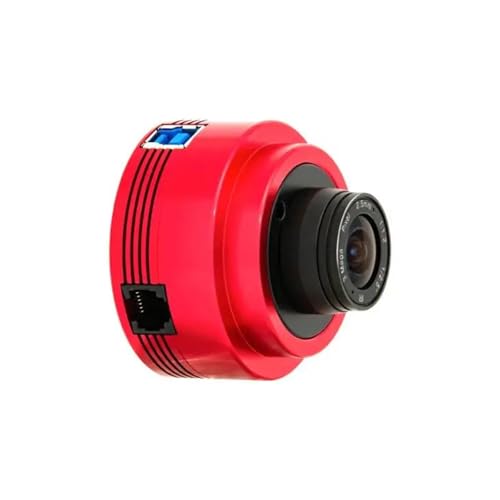
- 8.29 MP CMOS with strong near-IR sensitivity
- USB 3.0 plus 256MB DDR3 cache
- No amp glow and 47.5 fps capture
Best For: Planetary imagers who want fast, low-noise monochrome capture
Entry-Level Planetary Pick
ASI678MM Monochrome Telescope Camera
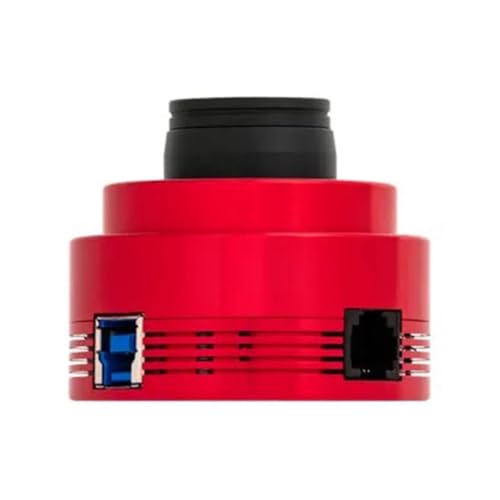
- Monochrome sensor for astronomy use
- USB 3.0 connectivity
- Works with reflector and refractor telescopes
Best For: Beginners wanting a simple monochrome camera for moon and planetary viewing
Guiding Specialist
ZWO ASI174MM-MINI Guide Camera

- 2.1 MP monochrome CMOS sensor
- High QE and low noise for guide stars
- Compact 1.25-inch focuser fit
Best For: Astrophotographers needing a dedicated guide camera with a compact design
High-Speed Imaging Choice
ASI662MM IMX662 Monochrome Camera

- IMX662 sensor with high sensitivity
- Up to 107.6 fps in high-speed mode
- USB 3.0 plus 256MB DDR3 cache
Best For: Planetary imagers wanting fast, low-noise monochrome capture
Premium Deep-Sky Mono Flagship – ZWO ASI2600MM PRO USB 3.0 Cooled Mono Camera
If you’re comparing monochrome astronomy cameras for serious deep-sky work, the ASI2600MM PRO is built for high-detail, low-noise imaging. Its 26.1MP Sony IMX571 sensor, 16-bit output, and 91% quantum efficiency make it a strong fit for long-exposure narrowband or broadband capture, while the 30-35°C below-ambient cooling helps keep calibration and noise under control.
Best For: Astrophotographers who want a high-resolution cooled mono camera for detailed deep-sky imaging.
Pros:
- 26.1MP monochrome Sony IMX571 sensor with 3.76μm pixels
- 30-35°C below ambient cooling for cleaner long exposures
- 16-bit ADC, 13.9 stops of dynamic range, and 1.0e low read noise
- 512MB DDR3 buffer and USB 3.0 support for stable data handling
Cons:
- Designed for a computer-based imaging setup, not standalone use
- Full-resolution frame rate is modest at 3.51 fps
- Back focus distance and accessory planning matter in a mono imaging train
Overall, this is a high-end, purpose-built camera for users who want maximum image quality from a cooled monochrome platform. It stands out most when paired with filters, guiding, and a solid astrophotography workflow.
Compact Guiding Pick – SVBONY SV905C Guide Camera 1.23MP 1.25in
For users focused on practical monochrome astronomy cameras for guiding, the SV905C is a compact 1.25-inch option with a 1.23MP CMOS sensor and 3.75μm pixels. It emphasizes sensitivity and stability for autoguiding, with an 80% peak QE, low read noise, USB 2.0 output, and ST4 support for common capture and guiding software.
Best For: Autoguiding setups and compact guide scopes where sensitivity and small size matter most.
Pros:
- 1.23MP CMOS sensor with 3.75μm pixels for guide-star work
- High peak QE of 80% and low read noise
- USB 2.0 plus ST4 interface for common guiding workflows
- Compatible with PHD2, NINA, MDL, and SKY-X
Cons:
- Not compatible with ASI AIR, per the notes
- Lower resolution than imaging-focused cameras
- Built for guiding more than deep-sky capture
In practice, this is a straightforward guide camera rather than a main imaging body. If your priority is tight tracking and a simple 1.25-inch form factor, it covers that role well.
Budget Cooled Mono Option – 16MP TE Cooling Monochrome Camera
This 16MP cooled model is a more accessible entry in the monochrome astronomy cameras category for users who want a dedicated astro camera with noise reduction. The supplied notes point to TE cooling, a high-resolution monochrome sensor, AR coating, and broad telescope compatibility, making it a practical step-up from uncooled or general-purpose options.
Best For: Budget-conscious astrophotographers who want a cooled monochrome camera for general telescope imaging.
Pros:
- 16MP high-resolution monochrome sensor
- TE cooling helps reduce noise during long exposures
- Compatible with various telescopes
- User-friendly software is included for capture and processing
Cons:
- Fewer detailed specs are provided in the notes
- Less established feature set than premium cooled mono models
- No sensor, cooling delta, or interface specifics listed
Based on the available information, this looks best as a straightforward cooled mono solution rather than a spec-heavy flagship. It should appeal most to users who value simplicity and a lower-friction entry into dedicated astrophotography.
Entry-Level Planetary Helper – SVBONY SV305C Color Astrophotography Camera
Although this is not one of the monochrome astronomy cameras, it can still be useful in a roundup when you want an entry-level planetary and EAA option. The SV305C uses an IMX662 color sensor, 2.9μm pixels, a 128MB DDRIII buffer, and a high-speed planetary mode in SharpCap, so it is aimed at quick capture more than deep-sky mono workflows.
Best For: Beginners seeking a color planetary camera or EAA-capable telescope camera.
Pros:
- IMX662 color sensor with 2.9μm pixels
- Low readout noise, no glow, and improved red sensitivity
- 128MB DDRIII buffer helps prevent dropped frames
- ROI and binning functions improve flexibility for capture
Cons:
- Color camera, not a monochrome astronomy camera
- Noted as not compatible with ASI AIR
- More focused on planetary and EAA use than deep-sky imaging
For buyers who mainly want a simple planetary or EAA camera, this offers a useful feature set and easy software modes. If your goal is strictly monochrome imaging, though, a dedicated mono model would be the better fit.
All-in-One Deep-Sky Rig – ZWO ASI585MM AIR Cooled Monochrome Camera
If you want monochrome astronomy cameras that simplify the whole imaging chain, the ZWO ASI585MM AIR stands out because it combines imaging, guiding, and control in one body. The built-in ASIAir, 256GB eMMC storage, and dual-band wireless support make it a strong fit for users who want fewer separate boxes in the field.
Best For: Astrophotographers who want an all-in-one monochrome camera, guider, and control system for portable rigs.
Pros:
- 3-in-1 design handles imaging, guiding, and rig control from one unit
- Built-in 256GB eMMC storage plus support for external USB storage
- STARVIS 2 sensor tech with high sensitivity, high signal-to-noise ratio, and zero amp glow
- Cooling can lower sensor temperature by 30-35°C below ambient for long exposures
Cons:
- More complex than a basic standalone camera if you only want the simplest imaging setup
- Integrated system approach may be more than some users need for a camera-only workflow
This is the most feature-packed option in the group, especially if you value fewer components and more built-in control. It is best suited to users who want a streamlined field setup without sacrificing cooling or imaging performance.
Budget High-Resolution Pick – 16MP TE-Cooled Monochrome Astronomy Camera
Among monochrome astronomy cameras, this 16MP TE-cooled model is aimed at buyers who want a higher-resolution sensor and basic noise control without a lot of complexity. The notes point to compatibility with various telescopes and user-friendly software, which makes it approachable for enthusiasts building a practical imaging setup.
Best For: Beginners and budget-minded observers who want a simple cooled monochrome camera for telescopes.
Pros:
- 16MP monochrome sensor for detailed astrophotography results
- TE cooling helps reduce noise during long exposures
- Compatible with various telescopes for flexible use
- User-friendly software supports capture and processing
Cons:
- Product details are sparse compared with more fully specified cameras
- Less information is provided about transmission, cache, or advanced sensor features
This is the straightforward choice if your priority is resolution, cooling, and ease of use rather than a long list of advanced functions. It should appeal to astronomers who want to get started without overcomplicating the purchase.
High-Speed Planetary Choice – ZWO ASI678MM 8.29 MP Monochrome Camera
If you are shopping monochrome astronomy cameras for fast captures and clean data, the ZWO ASI678MM is built around low readout noise, low dark current, and strong near-infrared sensitivity. Its USB 3.0 interface and built-in DDR3 cache are practical advantages for stable high-speed recording, especially when long exposures or rapid frame rates matter.
Best For: Planetary imagers and advanced users who want fast transfer, clean frames, and strong low-noise performance.
Pros:
- 8.29 MP CMOS sensor with enhanced near-infrared sensitivity
- USB 3.0 and built-in 256MB DDR3 cache for stable data transfer
- No amp glow, even with long exposures and high gain
- Fast 47.5 fps capture supports high-frame-rate imaging
Cons:
- Smaller onboard cache than the all-in-one AIR model’s storage approach
- Feature set is more focused on camera performance than integrated rig control
This model is a strong fit if you care most about capture quality and speed rather than an all-in-one ecosystem. The combination of low noise, no amp glow, and USB 3.0 makes it especially practical for demanding imaging sessions.
Entry-Level Planetary Pick – ASI678MM Monochrome Telescope Camera
Telescope Accessories ASI678MM Monochrome Astronomy Camera High Speed USB3.0 Telescope Eyepiece
Check Price On AmazonIf you want to get started with monochrome astronomy cameras, the ASI678MM-style telescope accessory is positioned as a simple USB 3.0 option for lunar, planetary, and star-cluster observing. Its monochrome sensor and M42 interface make it a practical match for a wide range of telescopes, while the adjustable eyepiece position is meant to help you achieve a sharper image.
Best For: Telescope users who want a straightforward monochrome camera for moon, planets, and general astronomical viewing.
Pros:
- Monochrome sensor for astronomy-focused imaging
- USB 3.0 connection for fast data transfer
- Supports reflector and refractor telescopes
- Adjustable eyepiece location to help sharpen the image
Cons:
- Supplied notes do not list sensor resolution or frame-rate specs
- Details about software compatibility are not provided
This is best viewed as a broad-use, budget-minded monochrome astronomy camera accessory rather than a spec-heavy imaging platform. If compatibility and simple setup matter more than advanced performance numbers, it offers a flexible starting point.
Guiding Specialist – ZWO ASI174MM-MINI Guide Camera
ZWO ASI174MM-MINI 2.1 MP CMOS Monochrome Astronomy Camera with USB 2.0# ASI174MM-MINI
Check Price On AmazonThe ZWO ASI174MM-MINI is a compact monochrome astronomy camera built around a 2.1 MP CMOS sensor, and its notes emphasize two common uses: autoguiding and monochrome imaging of the Moon, Sun, and planets. The larger sensor, low noise, and high QE are aimed at helping detect fainter guide stars, while the 1.25-inch form factor makes it easy to slide into a telescope or guide-scope focuser.
Best For: Astrophotographers who need a compact guide camera with a wide field of view and fast USB 2.0 transfer.
Pros:
- 2.1 MP CMOS monochrome sensor with 1936×1216 resolution
- High QE and low noise for finding fainter guide stars
- Fast USB 2.0 transfer up to 18.4 fps at maximum resolution
- Compact body fits directly into a 1.25-inch focuser
Cons:
- USB 2.0 is slower than newer USB 3.0 cameras
- Solar imaging requires a safe solar filter, which is not included
This model stands out as a purpose-built guiding camera with enough flexibility for lunar, planetary, and solar work. If you value a small footprint and reliable guide-star detection, it is one of the more focused choices here.
High-Speed Imaging Choice – ASI662MM IMX662 Monochrome Camera
The ASI662MM is a monochrome astronomy camera built around the IMX662 sensor, with the notes highlighting high sensitivity, minimal read noise, and USB 3.0 connectivity. It is positioned for low-light celestial imaging and fast planetary capture, and the built-in 256MB DDR3 cache is intended to help keep data transmission stable during high-speed use.
Best For: Planetary imagers who want a high-sensitivity monochrome camera with fast frame rates and buffered USB 3.0 transfer.
Pros:
- IMX662 sensor with exceptional sensitivity and minimal read noise
- Up to 107.6 fps in high-speed mode
- USB 3.0 interface with built-in 256MB DDR3 cache
- Designed for clear low-light celestial imaging
Cons:
- Supplied notes do not include resolution or pixel-size details
- Branding and model naming in the notes are inconsistent
For fast-moving targets, the combination of high frame rate and cache support makes this a strong practical option among monochrome astronomy cameras. It is especially appealing if you want speed and sensitivity in a compact setup.
How We Picked the Best Monochrome Astronomy Cameras
We prioritized Monochrome Astronomy Cameras that offer a strong mix of sensor quality, sensitivity, cooling performance, connectivity, and value for different types of setups. We also considered whether a camera is better suited for deep-sky imaging, guiding, or faster high-frame-rate targets like the Moon and planets.
Compatibility matters too, so we looked at common mount and software ecosystems, power requirements, and practical factors such as backfocus, pixel size, and whether a camera includes built-in guiding or integrated control features.
Quick Comparison
For deep-sky imagers, cooled larger-sensor models generally offer the best detail and noise control. For guiding or compact rigs, smaller sensors can be more efficient and easier to integrate. If you want a versatile setup, a high-sensitivity monochrome camera with USB 3.0 and solid driver support is usually the safest middle ground.
Key Buying Factors for Monochrome Astronomy Cameras
Sensor Size and Resolution
Choose sensor size based on your telescope’s focal length and your imaging goals. Larger sensors help capture wider fields and more structure, while higher resolution can reveal finer detail if your optics and tracking are up to the task.
Cooling and Noise Control
Cooled cameras are the better option for long exposures because they reduce thermal noise and improve calibration consistency. If you mainly guide or shoot shorter exposures, cooling may be less important.
Pixel Size and Match to Your Scope
Pixel size should complement your telescope’s focal ratio and seeing conditions. Smaller pixels can sample fine detail well, while larger pixels can be more forgiving and sensitive in dim conditions.
Connectivity and Workflow
USB 3.0 is preferable for faster downloads and smoother capture sessions, especially for high-frame-rate planetary work. Also check software support, driver stability, and whether the camera fits your existing control platform.
Filters and Imaging Style
Monochrome Astronomy Cameras work best when paired with filters, especially for LRGB or narrowband imaging. If you want the most flexibility and highest contrast, this is one of the biggest advantages of going mono.
Who Should Buy Which Monochrome Astronomy Cameras?
If you are building a dedicated deep-sky rig, a cooled, higher-resolution monochrome camera is usually the best place to start. If you need an affordable guide camera or a compact option for a smaller telescope, prioritize sensitivity, reliability, and easy setup over sheer resolution.
Imagers who want one camera for multiple roles should look for strong software support, modern USB connectivity, and a sensor that balances field of view with enough detail for their main targets. In short, the best Monochrome Astronomy Cameras are the ones that match your telescope, mount, and observing goals—not just the one with the biggest number on the spec sheet.