Choosing the right camera can make the difference between a blurry first attempt and a usable image that actually shows detail. The best astronomy cameras balance sensor size, noise control, frame rate, and ease of use for your telescope and targets.
This roundup focuses on 10 options for everything from Moon and planets to deep-sky astrophotography and app-controlled smart imaging.
Best 10 Astronomy Cameras Picks for 2026
Deep-Sky APS-C Pick
SVBONY SC571CC Cooled Color Astronomy Camera

- 26MP IMX571 APS-C back-illuminated sensor
- Dual-stage TEC cooling with front-window heater
- USB 3.0 plus 512 MB DDR3 buffer
Best For: Deep-sky imagers needing a cooled APS-C camera
Smart Beginner Choice
ZWO Seestar S30 Pro Smart Telescope
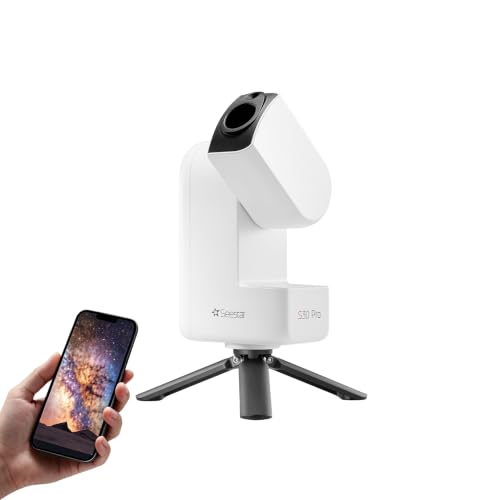
- App-controlled GOTO and auto tracking
- Dual-camera 4K imaging with AI processing
- Portable 3.64 lb design with dew protection
Best For: Beginners who want easy, all-in-one astrophotography
Planetary Imager
Celestron NexImage 20 Solar System Camera

- 20MP AR2020 CMOS sensor for Solar System detail
- ROI sub-framing increases frame rate
- USB-C and iCap software included
Best For: Lunar, planetary, and solar imaging
Portable Smart Scope
DWARFLAB Dwarf 3 Smart Telescope

- 3 lb backpack-friendly smart telescope
- Dual-lens imaging for night and day
- 4K auto-tracking with cloud processing
Best For: Travelers who want a compact dual-purpose smart telescope
Deep Sky Cooling Pick
SV605CC Cooled Color Astrophotography Camera
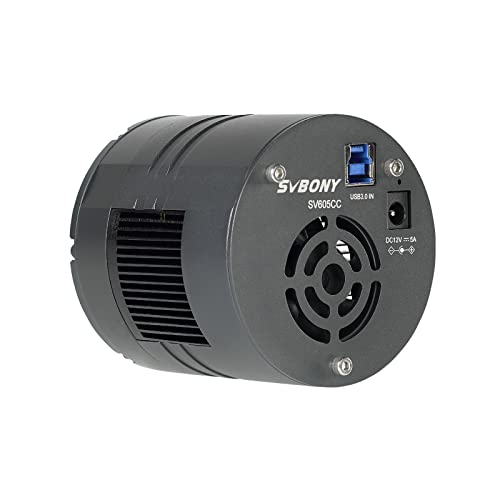
- 9MP IMX533 sensor with square 3008x3008 frame
- TEC cooling can reduce temperature up to 30°C below ambient
- Designed for deep space, panoramic astronomy, and lucky imaging
Best For: Deep-sky imagers who want a cooled color camera with low-glow performance
Planetary Speed Choice

- IMX662 sensor with ultra-low 0.7e readout noise
- 1920x1080 capture at 107 FPS for planets
- USB 3.0 plus ST4 guiding interface for imaging setups
Best For: Planetary imagers who want fast capture, low noise, and guiding support
High-Detail Planet Pick
SC715C Telescope Planetary Camera

- IMX715 sensor with 1.45µm pixels and 4K detail
- 512MB DDR3 cache helps keep frames smooth
- Works with SharpCap, AstroDMX Capture, and NINA
Best For: Planetary imagers who want detail, speed, and software compatibility
Entry-Level 4K USB Option

- 8MP sensor with up to 4K video support
- UVC plug-and-play plus optional ASCOM driver
- 1.25-inch fit with removable IR cut filter
Best For: Beginners imaging the Moon and planets
Low-Noise Planetary Choice

- IMX662 sensor with low readout noise
- 128MB buffer plus ROI and BIN features
- Suited to planets, Moon, and EAA
Best For: Users who want better sensitivity and capture control
Simple Starter Pick
SV105 Plug-and-Play Telescope Camera
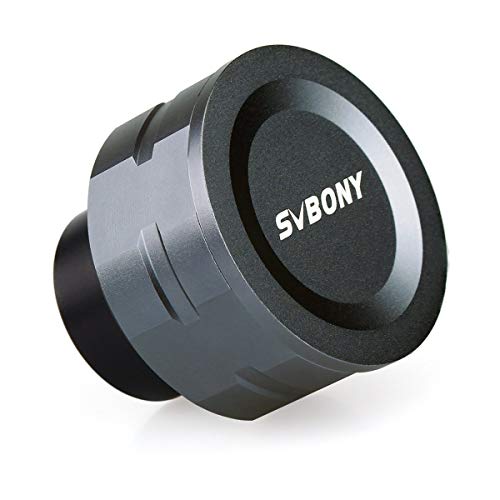
- No-driver plug-and-play setup
- IMX307 sensor with 1080P/2K capture
- 1.25-inch fit with filter-thread support
Best For: Beginners who want the easiest setup
Deep-Sky APS-C Pick – SVBONY SC571CC Cooled Color Astronomy Camera
If you want astronomy cameras for serious deep-sky work, the SVBONY SC571CC is built around a 26MP IMX571 APS-C sensor with 3.76 µm pixels, high QE, and 16-bit output. Its cooled, back-illuminated design is aimed at cleaner long exposures on faint nebulae and Ha regions, while the front-window heater helps keep dew from ruining a session.
Best For: Deep-sky imagers who want a cooled APS-C camera with strong low-noise performance and telescope compatibility.
Pros:
- APS-C IMX571 sensor with 26MP resolution and 16-bit dynamic range
- Dual-stage TEC cooling rated to 35°C below ambient
- Front-window heater helps combat dew and moisture
- USB 3.0 connection with 512 MB DDR3 buffer for steadier transfers
Cons:
- Designed for deep-sky use, not a simple point-and-shoot setup
- Best results depend on a compatible imaging telescope and workflow
- Heavier, more specialized than entry-level planetary options
This is a strong choice if your priority is clean, detailed deep-sky data and you already have the rest of the imaging setup to support it. The cooling, buffer, and zero amp-glow design make it especially attractive for long sessions.
Smart Beginner Choice – ZWO Seestar S30 Pro Smart Telescope
For buyers looking at astronomy cameras that simplify the entire process, the Seestar S30 Pro is built for app-controlled imaging with automatic GOTO, tracking, and one-tap capture. It combines a compact 30mm telescope with dual-camera 4K imaging, making it a practical option for quick setup, urban use, and wide-field astrophotography.
Best For: Beginners and casual observers who want an all-in-one smart telescope for easy astrophotography.
Pros:
- App-controlled operation with automatic GOTO targeting and tracking
- Dual-camera 4K imaging for deep-sky and wide-field shots
- Built-in light pollution filters for urban viewing
- Portable 3.64 lb design with anti-dew protection
Cons:
- More of an integrated smart telescope than a traditional standalone camera
- Deep-sky imaging requires the device to stay stationary
- Smaller 30mm aperture is more limited than larger telescope setups
The S30 Pro is a convenience-first choice that lowers the barrier to astrophotography without much setup complexity. If you want fast results from a compact system, it stands out for usability and portability.
Planetary Imager – Celestron NexImage 20 Solar System Camera
If your goal is to capture the Moon, planets, or the Sun, this Celestron option is one of the more focused astronomy cameras in the lineup. The NexImage 20 uses a 20MP AR2020 CMOS sensor and plug-and-play USB-C connectivity, with ROI sub-framing to improve frame rate and reduce file sizes during Solar System imaging.
Best For: Lunar, planetary, and solar imaging with a simple capture workflow.
Pros:
- 20MP sensor designed for crisp Solar System detail
- ROI mode helps boost frame rate and speed stacking
- USB-C connection for straightforward computer use
- Includes iCap software for gain, exposure, and white balance control
Cons:
- Purpose-built for Solar System targets, not a general all-purpose camera
- Needs a compatible telescope or C-thread adapter
- Manual focus and no image stabilization
For buyers focused on high-resolution planetary work, this camera is a practical and specialized tool. Its ROI features and included software make it easy to get started without extra accessories.
Portable Smart Scope – DWARFLAB Dwarf 3 Smart Telescope
Among astronomy cameras aimed at portability, the DWARF 3 stands out with a 3 lb design, dual-lens imaging, and 4K auto-tracking. It is set up for both night and day use, pairing a telephoto lens for deep space and wildlife with a wide-angle lens for Milky Way shots, star trails, and landscape framing.
Best For: Travelers and beginners who want a lightweight smart telescope for both astrophotography and daytime shooting.
Pros:
- Ultra-light 3 lb design fits easily into a backpack
- Dual-lens system covers deep space, Milky Way, wildlife, and landscapes
- 4K auto-tracking for stars, planets, and moving subjects
- Cloud-powered app processing reduces the need for a PC
Cons:
- More dependent on app workflow than traditional manual setups
- Smaller 35mm objective than larger telescope systems
- Some users may prefer a dedicated camera rather than a smart telescope
The Dwarf 3 is a flexible travel companion if you want one compact device for night sky work and everyday imaging. Its biggest appeal is the combination of portability, automation, and dual-purpose imaging.
Deep Sky Cooling Pick – SV605CC Cooled Color Astrophotography Camera
If you’re shopping astronomy cameras for deep-sky work, the SV605CC is built around a 9MP IMX533 color sensor with a square 3008×3008 frame, strong quantum efficiency, and TEC cooling that can drop the sensor up to 30°C below ambient. It’s aimed at users who want better signal-to-noise, reduced glow, and a compact USB3.0 camera for deep space, panoramic astronomy, meteor monitoring, and lucky imaging.
Best For: Deep-sky imagers who want a cooled color camera with strong low-noise performance and a square sensor.
Pros:
- IMX533 sensor with 3008×3008 resolution and a square frame
- TEC double-layer semiconductor cooling helps reduce sensor glow and noise
- USB 3.0 connectivity and 3.76µm pixels support detailed capture
- Suitable for deep space photography, panoramic astronomy, meteor monitoring, and lucky imaging
Cons:
- Cooling and deep-sky focus make it less versatile than simpler general-purpose cameras
- Square sensor framing may not suit every target composition
- Best results depend on a short-focus or fast optical system
Overall, the SV605CC is a strong choice if your priority is cooled deep-sky imaging and you want the benefits of a modern low-glow sensor. It’s more specialized than entry-level astronomy cameras, but that specialization is exactly what helps it deliver cleaner results on faint targets.
Planetary Speed Choice – SV305C Pro Telescope Camera
Among compact astronomy cameras for planets, the SV305C Pro stands out for its IMX662 sensor, ultra-low 0.7e readout noise, and 1920×1080 capture at 107 FPS. That combination is useful when you want clean, sharp frames of fast-moving targets like Jupiter and Saturn, plus USB 3.0 transfer speed to keep the workflow moving.
Best For: Planetary imagers who want a fast USB 3.0 camera with low noise and high frame rates.
Pros:
- IMX662 sensor with ultra-high sensitivity and low noise
- 1920×1080 resolution at 107 FPS for fast-moving planets
- USB 3.0 speeds help support a smoother capture workflow
- ST4 guiding interface and HDR support add flexibility for imaging setups
Cons:
- Designed for computer use only and does not support iPad connections
- 2MP resolution is modest compared with deep-sky oriented cameras
- Best suited to planetary and guiding tasks rather than all-around imaging
In practice, the SV305C Pro is a focused planetary and guide camera rather than a general-purpose option. If your setup is centered on bright targets and you value frame rate, low noise, and easy computer integration, it fits that job well.
High-Detail Planet Pick – SC715C Telescope Planetary Camera
If you want one of the more detail-focused astronomy cameras for planets, the SC715C is built around an IMX715 sensor with a 1.45µm pixel pitch, 4K detail, and a 512MB DDR3 cache to keep frames smooth. It also supports USB 3.0 transfer, popular astronomy software, and ST4 autoguiding, making it a practical fit for disciplined planetary imaging setups.
Best For: Planetary imagers who want high-detail capture, software flexibility, and a lightweight camera body.
Pros:
- IMX715 sensor with 1.45µm micro pixels for detailed planetary imaging
- 512MB DDR3 cache helps reduce delays and preserve frame smoothness
- USB 3.0 support reaches 45.5 fps at full resolution
- Compatible with SharpCap, AstroDMX Capture, and NINA, plus ST4 guiding
Cons:
- Not compatible with smartphones
- No built-in focus adjustment, so focusing depends on the telescope focuser
- Software download is required before use
The SC715C is a strong fit if you want a lightweight planetary camera with modern sensor performance and broad software support. It’s especially appealing for users who already have a capable telescope and want to extract fine detail from bright targets.
Entry-Level 4K USB Option – 4K 8MP USB Astronomy Camera
If you want a simple way to get started with astronomy cameras, this 8MP USB model is built for Moon, planet, and bright-object capture. It supports UVC plug-and-play use for easy live viewing, while optional ASCOM driver support gives Windows users more software workflow flexibility.
Best For: Beginners who want an easy-to-use telescope camera for lunar and planetary imaging.
Pros:
- 8MP sensor supports up to 4K video and 1080P high frame rate capture.
- UVC plug-and-play operation makes basic setup straightforward.
- Standard 1.25-inch barrel fits many common telescope focusers.
- Detachable IR cut filter helps improve natural color and reduce infrared light.
Cons:
- Manual telescope focusing is required.
- Best suited to bright targets rather than deep-sky imaging.
- Performance depends on telescope setup and seeing conditions.
Overall, this is a compact, practical entry point if you want a lightweight camera that works across Windows, macOS, and Linux. Its CNC aluminum housing and removable IR cut filter make it a flexible starter choice for backyard observing and STEM use.
Low-Noise Planetary Choice – SV305C IMX662 Color Camera
This SVBONY model is a color astronomy camera aimed at planetary photography, lunar work, and EAA. Its IMX662 sensor, low readout noise, built-in buffer, and ROI/BIN functions make it a stronger pick when you want more control over capture performance.
Best For: Users who want an entry-level camera with better sensitivity and capture features for planets, the Moon, and EAA.
Pros:
- IMX662 back-illuminated sensor with low readout noise and improved red-band sensitivity.
- 128MB DDRIII buffer helps prevent frame loss if USB transfer is interrupted.
- ROI and BIN functions can increase capture rate or improve sensitivity.
- Works in Sharpcap with one-key planetary and long-exposure modes.
Cons:
- Only 2.1MP effective sensor resolution.
- Manual focus is required.
- Protective glass is removable, but the built-in UV/IR cut filter is not.
For astronomy cameras focused on bright targets, this one offers a nice mix of beginner accessibility and useful imaging tools. It is especially appealing if you want a color camera that can grow with you as you explore planetary imaging and EAA.
Simple Starter Pick – SV105 Plug-and-Play Telescope Camera
If you are looking for astronomy cameras that are easy to begin with, the SV105 is built around plug-and-play use and real-time viewing. It is aimed at lunar, planetary, and terrestrial targets, with dark-light compensation to help improve clarity in low-light conditions.
Best For: Beginners who want a straightforward USB telescope camera with no driver required on first use.
Pros:
- Plug-and-play operation with no driver required for basic use.
- 1.25-inch body with M28.5×0.6 thread supports telescope filters.
- IMX307 sensor records up to 1080P at 30 fps and can capture 2K video.
- Compatible with Windows, Linux, Android, and macOS laptops.
Cons:
- Designed for bright targets like the Moon and planets, not deep-sky imaging.
- Windows, Linux, and Android use separate capture apps.
- Manual focusing is still required through the telescope.
This is a sensible budget-friendly starting point if you mainly want to view or record the Moon and planets on a laptop. It keeps setup simple while still offering standard telescope compatibility and useful low-light enhancement.
How We Picked These Astronomy Cameras
We focused on the features that matter most to buyers: sensor quality, cooling, pixel size, capture speed, compatibility with telescopes and mounts, and how easy each camera is to set up. We also favored models that make sense for different skill levels, from first-time users to advanced imagers building a dedicated rig.
Quick Comparison: What You’re Really Choosing
Not every astronomy camera is built for the same job. Cooled APS-C and large-sensor models are better for deep-sky targets, where low noise and field of view matter. Fast USB planetary cameras are a stronger fit for the Moon, Jupiter, Saturn, and solar detail. Smart telescopes and app-controlled cameras are ideal if you want simplicity and guided capture over manual tuning.
Key Buying Factors for Astronomy Cameras
Target Type
Start by matching the camera to your main subject. Planets and the Moon reward high frame rates and small pixels. Nebulae and galaxies benefit more from larger sensors, cooling, and better low-light performance.
Cooling and Noise Control
Cooled Astronomy Cameras help reduce thermal noise during longer exposures, which is especially valuable for deep-sky imaging. Uncooled models can still work very well for bright targets and casual use, but they usually require more careful exposure choices.
Sensor Size and Pixel Characteristics
Sensor size affects field of view, while pixel size influences sampling and detail. Bigger sensors can capture more of the sky, while smaller pixels can be useful for resolving fine planetary detail when paired with the right optics.
Connectivity and Software
USB 3.0 is useful for fast capture and stacking workflows, while app-based smart systems reduce setup complexity. Make sure the camera’s software support matches your operating system and your preferred capture or processing workflow.
Compatibility with Your Telescope
Check back focus, adapter size, and whether your telescope’s focal length suits the camera’s purpose. A great camera paired with the wrong optics can still produce disappointing results.
Who Should Buy Which Astronomy Cameras?
If you want the easiest path into astrophotography, smart telescope-style options are the most beginner-friendly. If your goal is sharp lunar and planetary detail, choose a fast planetary camera with a suitable sensor. If you’re chasing faint deep-sky objects, a cooled color model is usually the better long-term investment. For budget-minded beginners, entry-level uncooled cameras can be a practical way to start learning before upgrading.
In short, the best Astronomy Cameras are the ones matched to your sky, your telescope, and your patience level. Pick for your main target first, then compare cooling, speed, and software support before you buy.