Choosing the right vibration meter can make routine inspections faster, safer, and far more useful. The best models help you spot imbalance, misalignment, looseness, and bearing issues before they turn into downtime.
Below, we’ve rounded up 10 vibration meters with a focus on measurement range, sensor design, data logging, and real-world maintenance needs.
Best 10 Vibration Meters Picks for 2026
Advanced Diagnostics Pick
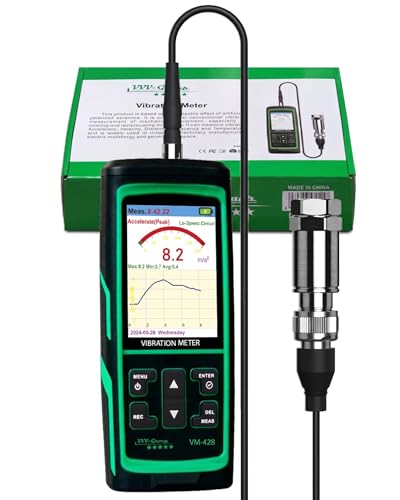
- Measures 5 parameters including temperature
- External magnetic sensor for stable contact
- USB PC export and ISO severity rating
Best For: Advanced machine diagnostics and trend monitoring
Portable Field Pick

- Acceleration, velocity, and displacement readings
- Lightweight handheld body for field use
- Includes probes, calibration report, and case
Best For: Quick predictive maintenance checks
Accessible Inspection Pick

- Remote probe for tight machine access
- Acceleration, velocity, and displacement modes
- Magnetic and interchangeable probe tips
Best For: Routine inspections on hard-to-reach equipment
Trusted Brand Pick

- Angle- and pressure-resistant sensor design
- Four-level severity scale for quick assessment
- Consistent readings across low and high frequencies
Best For: Repeatable field checks and bearing assessment
Memory-Tracking Industrial Pick
VM-422 Data-Logging Diagnostic Meter

- Measures acceleration, velocity, and displacement
- Stores up to 500 readings in 5 groups
- 10Hz to 4kHz modes for varied inspection work
Best For: Preventive maintenance and trend tracking
Remote-Probe Field Meter
Extech 407860 Heavy-Duty Vibrometer

- Remote sensor on a 39-inch cable
- Selectable units for velocity, acceleration, and displacement
- Stores and recalls up to 500 readings
Best For: Hard-to-reach equipment checks
Feature-Rich Diagnostics Pick
PM633C Multi-Function Vibrometer
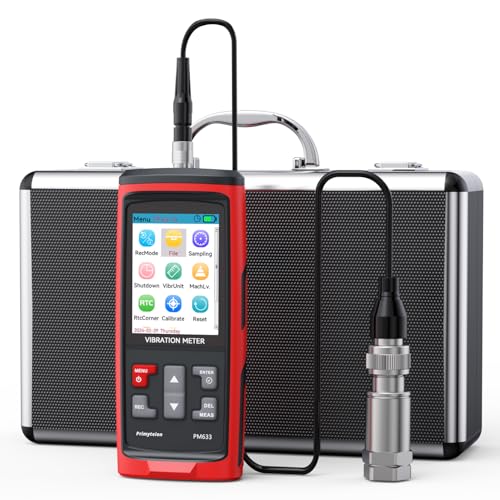
- Measures vibration and temperature in one tool
- Includes graphing, ISO severity, and PC software transfer
- Stores data and supports max/min/average analysis
Best For: Broad maintenance diagnostics on common machinery
Basic Portable Vibrometer
AS63B LCD Vibration Analyzer Tester

- Measures acceleration, speed, and distance
- Large backlit LCD for low-light reading
- Compact handheld design for field use
Best For: Quick industrial vibration checks
Flexible 3-in-1 Meter
Digital Vibration Meter with 3 Probes
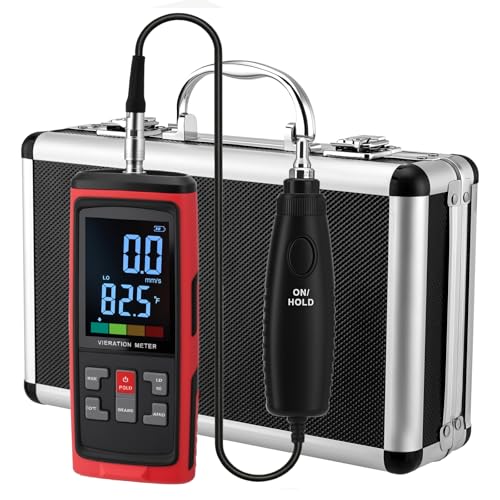
- Measures acceleration, velocity, displacement, and temperature
- Three probes help with metal surfaces and tight spaces
- USB-C charging with up to 20-hour runtime
Best For: Routine maintenance with flexible probe access
Advanced 5-in-1 Analyzer
SWANSOFT Remote Sensor Vibration Meter

- Measures acceleration, velocity, displacement, frequency, and temperature
- Remote magnetic probe helps with hard-to-reach points
- Stores data and exports CSV/BMP for trend analysis
Best For: Technicians needing logging and broader measurements
Advanced Diagnostics Pick – VM-428 Advanced Analyzer
If you need vibration meters for deeper machine diagnostics, the VM-428 is built for advanced condition checks on motors, turbines, pumps, compressors, and other rotating machinery. Its external sensor, dual frequency modes, and expanded measurement ranges make it a strong fit for technicians who need more than a simple pass/fail reading.
Best For: Technicians and maintenance teams needing broader diagnostic data, PC logging, and ISO-based vibration severity guidance.
Pros:
- Measures acceleration, velocity, displacement, frequency, and temperature for multi-parameter diagnostics
- External piezoelectric sensor with magnetic base supports stable readings on metal housings
- Includes low- and high-frequency modes for general vibration and higher-frequency wear signals
- Built-in ISO machine condition rating helps interpret velocity levels quickly
Cons:
- More of a diagnostic handheld tool than a permanently installed monitoring system
- Not intended to replace a multi-channel laboratory spectrum analyzer
The VM-428 stands out when you want a handheld vibration meter that goes beyond basic inspection and offers enough data for periodic maintenance decisions. PC connectivity and onboard memory also make it easier to track results over time.
Portable Field Pick – PM63A High-Precision Handheld
For buyers comparing vibration meters for routine predictive maintenance, the PM63A offers a compact handheld design with the core readings most teams need. It measures acceleration, velocity, and displacement with a shear-type piezoelectric accelerometer, making it suitable for quick checks on motors, fans, compressors, gearboxes, and pumps.
Best For: Field technicians who want a lightweight vibration meter for fast machine screening and maintenance rounds.
Pros:
- Measures acceleration, velocity, and displacement with stated ±5% ±2 digits accuracy
- High-sensitivity shear-type accelerometer supports real-time field diagnostics
- Compact and lightweight body is easy to carry during inspection rounds
- Includes long and short probe, battery, calibration report, and carrying case
Cons:
- No frequency or temperature measurements listed in the supplied notes
- Fewer diagnostic features than more advanced analyzer-style meters
The PM63A is a practical choice if your priority is portability and straightforward machine screening rather than expanded analysis. Its simple measurement set should suit common maintenance workflows without adding complexity.
Accessible Inspection Pick – VM-424 Remote Probe Meter
If you want vibration meters for routine plant inspections, the VM-424 is designed to make contact measurements easier on hard-to-reach equipment. Its remote sensor probe, magnetic contact option, and backlit display are useful when checking motors, pumps, compressors, gearboxes, and fan housings during standard maintenance rounds.
Best For: Maintenance teams that need a contact vibration meter with remote probing for awkward or tight measurement points.
Pros:
- Remote sensor probe helps reach narrow or difficult measurement points
- Measures acceleration, velocity, and displacement for common condition checks
- Includes magnetic, short, and long probe tips for different surfaces and access needs
- Backlit LCD with data hold and max hold supports easy inspection work
Cons:
- Does not provide full spectrum FFT vibration analysis
- Not a replacement for permanent online monitoring systems
The VM-424 focuses on practical, repeatable inspection work rather than advanced laboratory-style analysis. It is a sensible fit if your team wants a straightforward handheld meter with flexible probe access.
Trusted Brand Pick – Fluke-805 FC Vibration Meter
Among vibration meters, the Fluke-805 FC is aimed at users who want consistent readings and simple severity guidance in a rugged handheld format. Its sensor design is meant to reduce variation caused by angle or contact pressure, which can help when collecting repeatable checks on overall vibration and bearing condition.
Best For: Technicians who value consistent measurements and a clear four-level severity scale for quick vibration assessment.
Pros:
- Sensor design minimizes measurement variation from angle or contact pressure
- Consistent data quality across low and high frequency ranges
- Four-level severity scale helps assess urgency for vibration and bearing issues
- Includes Fluke Connect vibration meter support and AA batteries
Cons:
- Less feature-dense than multi-parameter analyzer-style vibration meters
- Supplied notes emphasize severity assessment more than detailed diagnostic outputs
The Fluke-805 FC is a strong fit when you want a straightforward, trusted tool for repeatable field checks. It is best for teams that prioritize measurement consistency and quick condition assessment over expanded analysis features.
Memory-Tracking Industrial Pick – VM-422 Data-Logging Diagnostic Meter
If you need vibration meters for route-based maintenance, the VM-422 is built around repeatable checks and stored readings. It measures acceleration, velocity, and displacement, then saves up to 500 records so you can compare machines or revisit trends without writing values down by hand.
Best For: Preventive maintenance teams that want handheld vibration checks with onboard memory for trend tracking.
Pros:
- 3-in-1 measurement covers acceleration, velocity, and displacement.
- Stores up to 500 readings in 5 groups for later review.
- 10Hz to 4kHz frequency selection supports low- and high-frequency inspection work.
- Color LCD includes a vibration severity bar for quick condition checks.
Cons:
- Positioned as a handheld diagnostic tool, not a lab-grade FFT analyzer.
- Manual inspection workflow may be less suited to permanent monitoring setups.
Overall, the VM-422 is a practical choice when you need structured vibration readings and simple data retention for maintenance routes. Its strength is in capturing useful field measurements and keeping them organized for comparison over time.
Remote-Probe Field Meter – Extech 407860 Heavy-Duty Vibrometer
This Extech option is a straightforward pick among vibration meters for users who want flexible units and a remote sensor. It measures velocity, acceleration, and displacement, and the 39-inch cable makes it easier to reach equipment while keeping the display in hand.
Best For: Technicians who need a durable handheld meter with a remote sensor for awkward or hard-to-reach equipment.
Pros:
- Selectable units for velocity, acceleration, and displacement.
- Remote vibration sensor on a 39-inch cable improves access.
- Stores and recalls up to 500 readings.
- 5% basic accuracy and a 10Hz to 1kHz range.
Cons:
- Frequency range is narrower than some newer multi-range meters.
- No extra analysis features are listed beyond core measurement and memory functions.
For users who mainly want dependable measurement with a remote probe and simple recall, the 407860 stays focused on essentials. It is a practical field tool rather than a feature-heavy analyzer.
Feature-Rich Diagnostics Pick – PM633C Multi-Function Vibrometer
If you’re comparing vibration meters for broader machine checks, the PM633C stands out with vibration, temperature, and on-device analysis tools. It covers acceleration, velocity, displacement, and temperature, and it adds display features like max/min/average, a line graph, and ISO vibration severity rating.
Best For: Maintenance users who want a feature-rich meter for motors, HVAC, generators, pumps, and similar equipment.
Pros:
- Measures acceleration, velocity, displacement, and temperature.
- Wide frequency range with switchable high and low modes.
- Large storage capacity with PC software transfer support.
- Includes ISO severity rating, max/min/ave, and line graph display.
Cons:
- More functions may be unnecessary for buyers who only need basic readings.
- Specified frequency limits differ by measurement type, which may require attention during setup.
The PM633C is the most feature-packed option here, especially if you want a meter that does more than capture a single vibration number. Its combination of multi-parameter measurement and data handling makes it well suited to practical diagnostics.
Basic Portable Vibrometer – AS63B LCD Vibration Analyzer Tester
If you need a straightforward vibration meter for quick checks on rotating equipment, this portable AS63B unit covers the essentials without much fuss. It measures acceleration, speed, and distance, and the large backlit LCD helps keep readings legible in low-light areas.
Best For: Quick on-site vibration checks in industrial settings where portability and simple operation matter.
Pros:
- Measures acceleration, velocity, and displacement in one handheld tool
- Large LCD with backlight improves readability in dim areas
- Compact, portable design with a piezoelectric ceramic accelerometer
- Suitable for power, petrochemical, machinery, metallurgy, and vehicle applications
Cons:
- More basic than multi-function analyzers with advanced data features
- Uses a single probe style, so access to awkward spots may be more limited
This is a practical pick if you mainly want a simple, portable vibration tester for severity checks and everyday maintenance work. It focuses on core measurements and easy readability rather than advanced diagnostic depth.
Flexible 3-in-1 Meter – Digital Vibration Meter with 3 Probes
This vibration meter is built for users who want a more flexible inspection tool with multiple probe options. It covers acceleration, velocity, and displacement, adds temperature sensing, and includes ISO 10816-oriented assessment support for routine machine checks.
Best For: Maintenance users who need probe flexibility and a simple all-in-one meter for motors, fans, and compressors.
Pros:
- 3-in-1 measurement includes acceleration, velocity, and displacement
- Includes magnetic, long-type, and standard probes for different access situations
- Dual frequency modes support general inspection and early fault screening
- USB-C charging and up to 20-hour runtime help with daily use
Cons:
- Temperature range is limited to 0~40°C, so it is not a broad-purpose temperature tool
- Designed for inspection tasks rather than advanced diagnostic analysis
Overall, this is a practical step up if you need a vibration meter that can adapt to different surfaces and tight spaces. The included probes and simple operating features make it a useful choice for on-site routine maintenance.
Advanced 5-in-1 Analyzer – SWANSOFT Remote Sensor Vibration Meter
For buyers looking for a more data-rich vibration meter, this SWANSOFT analyzer adds expanded measurement ranges and recording features. It measures acceleration, velocity, displacement, frequency, and temperature, while the remote magnetic sensor helps with hard-to-reach test points.
Best For: Technicians and inspectors who want trend-friendly logging and broader measurement coverage for machinery checks.
Pros:
- 5-in-1 measurements include acceleration, velocity, displacement, frequency, and temperature
- Remote probe with strong magnetic sensor helps reach difficult locations
- Stores up to 8 MB of data and can export CSV and BMP files via PC software
- Backlit display shows line graphs plus max, min, and average values
Cons:
- Not a permanent online monitoring system or full-spectrum FFT diagnostic tool
- More feature-rich than basic testers, so setup may be less immediate for casual users
This model is a strong fit if you want a handheld vibration analyzer that goes beyond simple readings and supports record keeping. Its logging, display, and probe design make it useful for maintenance workflows and equipment trend checks.
How We Picked These Vibration Meters
We focused on tools that fit common maintenance workflows: handheld portability, clear measurement modes, and useful analysis features for everyday troubleshooting. Priority went to models that support acceleration, velocity, and displacement readings, since those are the most practical outputs for condition monitoring.
We also considered sensor setup, memory or PC connectivity, runtime, and whether the meter is better suited to quick spot checks or more detailed diagnostic work.
Quick Comparison of Vibration Meters
Some Vibration Meters are built for fast inspections on motors, pumps, and fans, while others are better for deeper analysis or documentation. If you need a simple field tool, look for a compact handheld unit with an easy-to-read display. If you need reporting, choose a model with data storage, software support, or an external probe for hard-to-reach points.
Key Buying Factors for Vibration Meters
Measurement Modes
At minimum, most buyers should want velocity readings, since they’re commonly used for machine health checks. Acceleration helps catch higher-frequency problems, and displacement can be useful for specific machinery or alignment-related concerns.
Sensor and Probe Design
External sensors, remote probes, and multiple probe options can make a big difference in access and consistency. They’re especially helpful when checking guarded machines, tight spaces, or hot surfaces.
Range, Resolution, and Standards
Make sure the meter’s range matches the machinery you service. Higher resolution matters when you need to detect small changes over time. If your team follows ISO-based maintenance practices, look for Vibration Meters that reference common standards such as ISO 10816.
Data Handling and Runtime
Memory, PC software, and logging features help turn readings into trends. For field crews, battery life matters just as much; long runtime reduces interruptions during inspection rounds.
Who Should Buy Which Vibration Meters?
If you want a simple inspection tool for routine machine checks, a compact handheld meter is usually enough. If you manage a maintenance program across multiple assets, choose a model with logging, software, or broader analysis features. For equipment with difficult access points, prioritize remote probes or external sensors. And if you need a balance of portability and deeper diagnostics, a meter with multiple measurement modes is the most versatile option.