USB duplicators with offline operation let you copy or erase storage media without installing software or connecting to a computer. They are useful for IT teams, educators, content distributors, repair shops, and anyone handling repeat media jobs.
This roundup covers compact flash-drive copiers, high-capacity USB duplicators, and dual-bay drive docks. The right choice depends on target count, supported media, copy speed, and whether you need drive cloning as well as USB duplication.
Best 10 USB Duplicators with Offline Operation Picks for 2026
Best Compact USB Multiplier

- Duplicates up to seven USB drives simultaneously
- Standalone, computer-free plug-and-use operation
- Supports USB 1.0, 2.0, and 3.0 media
Best For: Compact multi-drive flash-media duplication
Best SATA Drive Cloner
StarTech Dual-Bay SATA Duplicator Dock
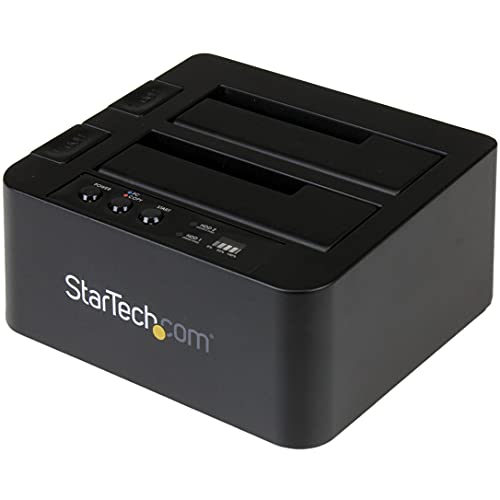
- Clones 2.5- and 3.5-inch SATA drives offline
- Copies entire drives sector by sector
- Doubles as a USB-to-SATA adapter
Best For: IT drive cloning and SATA data access
Best High-Volume USB Station

- Duplicates one master to up to 15 targets
- Works without a PC or software
- LCD shows performance and status information
Best For: Large-batch USB stick production
Best Touchscreen USB Duplicator
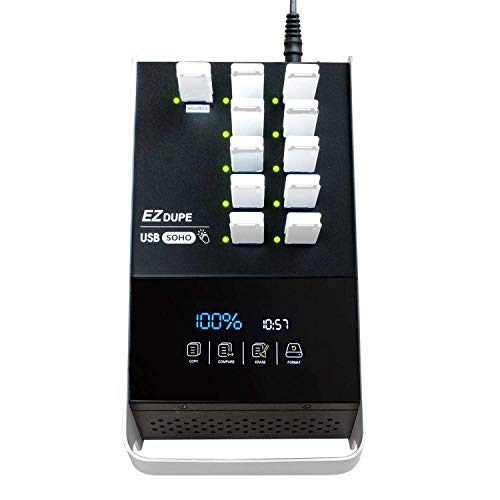
- Touchscreen controls copying, comparison, formatting, and erasing
- Supports USB 2.0, 3.0, and 3.1 thumb drives
- Duplicates at up to 35MB per second
Best For: User-friendly recurring USB media management
Best for Mixed Drive Workflows
ICY BOX Triple-Bay NVMe/SATA Cloner

- Offline one-touch cloning without software
- Supports NVMe and 2.5/3.5-inch SATA drives
- Three tool-free bays with USB 3.2 Gen 2
Best For: Mixed-drive cloning and multi-disk access
Best for USB Flash Batch Copying
BestDuplicator UB300 1:2 Copier

- Copies one flash drive to two targets offline
- Supports quick and bit-for-bit copy modes
- Includes LCD controls and media testing tools
Best For: Small-batch USB flash distribution
Best for SATA Drive Cloning on a Budget

- Offline clones 2.5- and 3.5-inch SATA drives
- Supports USB 3.0, USB-C, and UASP
- Tool-free setup with hot-swapping
Best For: Simple SATA HDD and SSD upgrades
Compact USB Workhorse
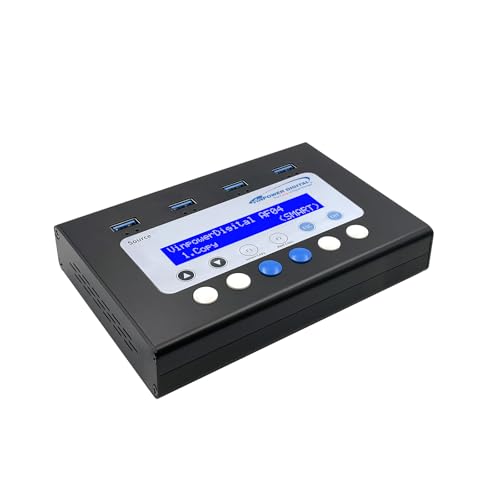
- PC-free copying with three target ports
- Smart and Raw copy modes
- DoD erasure and Read Error Skip
Best For: Small-scale USB duplication and secure erasing
Drive Dock Specialist
Dual-Bay Offline Clone Station

- Clones SATA drives without a computer
- Supports 2.5- and 3.5-inch HDDs and SSDs
- USB 3.0, UASP, and up to 2x20TB support
Best For: SATA drive upgrades and offline backups
High-Volume Flash Station

- Duplicates to 15 USB drives offline
- Asynchronous copying for independent targets
- Smart, Raw, and secure-erase modes
Best For: Large-batch flash-media production
Best Compact USB Multiplier – EZ Dupe Mini USB Plus MK III
The EZ Dupe Mini USB Plus MK III is a practical choice for buyers seeking usb duplicators with offline operation and compact, plug-and-use handling. It can copy up to seven USB flash drives simultaneously, with asynchronous duplication allowing new drives to be started without waiting for an entire batch to finish.
Best For: Small offices, technicians, and users who need to duplicate several USB flash drives without a computer.
Pros:
- Standalone operation requires no computer.
- Copies up to seven USB drives at once.
- Supports USB 1.0, 2.0, and 3.0 flash drives and powered external USB storage.
- Updated copy speed reaches up to 2.5GB per minute, depending on the drives used.
Cons:
- External hard drives require their own power source.
- Actual speed depends on the read and write performance of the connected drives.
With its compact design, asynchronous workflow, and support for multiple USB media types, this model is well suited to repeat flash-drive duplication where portability and offline use matter.
Best SATA Drive Cloner – StarTech Dual-Bay SATA Duplicator Dock
For buyers comparing usb duplicators with offline operation beyond thumb drives, the StarTech Dual-Bay dock provides standalone cloning for 2.5- and 3.5-inch SATA hard drives and SSDs. Its sector-by-sector process copies the entire source drive, including empty sectors, without requiring a computer.
Best For: IT professionals and users who need offline cloning or temporary USB access to SATA drives.
Pros:
- Standalone duplication works without a computer.
- Supports 2.5- and 3.5-inch SATA HDDs and SSDs of any capacity.
- Sector-by-sector copying supports any file format.
- Also functions as a USB-to-SATA adapter and includes USB-C and USB-A cables.
Cons:
- The target drive must be equal to or larger than the source.
- It duplicates SATA drives rather than USB flash drives.
- IDE drives require a separately sold adapter.
This tool is a strong fit for drive migration, recovery, and cloning workflows, especially when sector-level copying and broad SATA drive compatibility are more important than flash-drive batch duplication.
Best High-Volume USB Station – Nexcopy USB115SA
The Nexcopy USB115SA is designed for high-volume usb duplicators with offline operation, using a one-master, 15-target configuration. It requires no PC or software and provides real-time performance feedback and status information on its LCD.
Best For: Organizations producing large batches of USB sticks from a single master.
Pros:
- Standalone operation needs no PC or software.
- Supports one master and up to 15 target drives.
- Asynchronous duplication supports masters up to 256MB per second.
- LCD provides real-time performance and status feedback.
Cons:
- Its 15-target configuration may be more capacity than casual users need.
- The supplied notes do not specify supported USB generations or detailed file-format compatibility.
With its large target capacity and status monitoring, the USB115SA is aimed at production-style duplication rather than occasional home use. It makes the most sense where consistent, repeatable batches justify a dedicated station.
Best Touchscreen USB Duplicator – EZ Dupe SOHO Touch
The EZ Dupe SOHO Touch combines usb duplicators with offline operation and a touchscreen interface for straightforward copying, comparison, formatting, and erasing. It supports USB 2.0, 3.0, and 3.1 thumb drives and reaches duplication speeds of up to 35MB per second.
Best For: Users who want an easy-to-control USB duplicator for recurring copy, verification, formatting, and erase tasks.
Pros:
- Touchscreen menu simplifies everyday operation.
- Supports Copy, Compare, Format, and one-touch Erase functions.
- Works with all file formats, file sizes, and USB flash-drive capacities according to the supplied notes.
- Built for daily operation with a lightweight, heavy-duty construction.
Cons:
- Maximum listed duplication speed is 35MB per second.
- It is designed for USB-compatible devices rather than SATA drive cloning.
- No battery is included; it requires external power.
The touchscreen and broader management features make this a versatile option for routine USB media work. Choose it when verification, formatting, and secure one-touch erasing are as valuable as copying.
Best for Mixed Drive Workflows – ICY BOX Triple-Bay NVMe/SATA Cloner
For shoppers comparing USB duplicators with offline operation, the ICY BOX stands out as a flexible three-bay docking station for M.2 NVMe, 2.5-inch SATA, and 3.5-inch SATA drives. Its one-touch offline cloning avoids software installation, while USB 3.2 Gen 2 connectivity supports transfers up to 10 Gbps when used as a reader or dock.
Best For: Professionals and home users who need to clone or access multiple NVMe and SATA drives in mixed storage setups.
Pros:
- Supports cloning between NVMe and SATA drive types.
- Three independent, tool-free bays simplify drive swapping and simultaneous access.
- One-touch offline cloning works without a computer or cloning software.
- Includes USB-C/USB-A connectivity and a 24-month warranty.
Cons:
- Its plastic enclosure may feel less rugged than a metal dock.
- The three-bay design is more equipment than users who only clone one drive may need.
This is the most versatile option of the three for mixed NVMe and SATA workflows. Choose it when broad drive compatibility and high-speed computer connectivity matter more than a compact, single-purpose duplicator.
Best for USB Flash Batch Copying – BestDuplicator UB300 1:2 Copier
The BestDuplicator UB300 is a purpose-built choice for USB duplicators with offline operation when the source and targets are USB flash drives. It copies one drive to two targets simultaneously without a computer, and offers both data-only Quick Copy and bit-for-bit Whole Media Copy modes.
Best For: IT departments, schools, businesses, and technicians distributing or backing up USB flash-drive content in small batches.
Pros:
- Duplicates one USB flash drive to two targets without Windows or Mac software.
- Offers Quick Copy and Whole Media Copy modes.
- LCD controls, four-button navigation, and port status LEDs make operation straightforward.
- Includes capacity checks, device information, speed tests, and erase functions.
Cons:
- Supports USB 1.1 and USB 2.0 media rather than newer USB 3.x speeds.
- Copy speeds are up to 1.5 GB per minute per target, so large jobs may take time.
- SD, microSD, CF, and other card formats require a compatible USB card reader sold separately.
The UB300 is the clearest fit for repeatable flash-drive duplication rather than hard-drive cloning. Its independent controls and testing tools are useful for deployment work, while its two-target capacity keeps it compact and focused.
Best for SATA Drive Cloning on a Budget – WAVLINK Dual-Bay SATA Dock
For buyers seeking USB duplicators with offline operation for standard SATA drives, the WAVLINK dual-bay dock provides a simple source-to-target cloning setup. It accepts 2.5-inch and 3.5-inch SATA HDDs or SSDs, needs no dock drivers, and supports offline cloning at up to 60 Mbps.
Best For: Users upgrading, backing up, or accessing two SATA drives without installing cloning software.
Pros:
- Works with both 2.5-inch and 3.5-inch SATA HDDs and SSDs.
- Offline cloning runs directly from the source disk to the target disk.
- USB 3.0, USB-C, and UASP support provide flexible computer connectivity.
- Tool-free setup, hot-swapping, and automatic sleep mode add convenience.
Cons:
- The target drive must have capacity equal to or greater than the source.
- Offline cloning is limited to source-to-target operation and does not support online cloning.
- It is not compatible with M1/M2-based Macs.
This dock is a practical SATA-focused choice for straightforward disk upgrades and access. It offers broad operating-system support, but shoppers using NVMe drives or newer Apple silicon Macs should consider a different model.
Compact USB Workhorse – 1-to-3 Standalone Duplicator
If you need usb duplicators with offline operation for occasional deployments, backups, or secure media handling, the Vinpower USBMiniDup offers a compact, PC-free setup. Its three target ports support Smart Copy for accessible files and Raw Copy for bit-by-bit cloning.
Best For: Small businesses, IT teams, schools, and offices duplicating or erasing a few USB drives at a time.
Pros:
- Operates standalone without a computer, reducing exposure to computer viruses and ransomware.
- Offers Smart Copy and Raw Copy modes for different duplication needs.
- Includes DoD 5220.22-M erasing and Read Error Skip for partially damaged media.
- Compact, lightweight design with three target ports.
Cons:
- Handles only three target USB drives per duplication cycle.
- Read Error Skip can bypass damaged sectors, but it cannot restore unreadable data.
This is a practical choice when offline USB copying and secure erasing matter more than high-volume throughput. Its flexible copy modes and recovery-oriented feature set make it useful for routine business media management.
Drive Dock Specialist – Dual-Bay Offline Clone Station
For shoppers comparing usb duplicators with offline operation for hard drives and SSDs, the WAVLINK ST341UA is a dual-bay SATA docking station rather than a USB flash copier. It clones between two 2.5- or 3.5-inch SATA drives without a computer and also works as a USB 3.0-connected dock.
Best For: Users upgrading, backing up, or transferring data between SATA HDDs and SSDs.
Pros:
- Offline cloning works without a computer after holding the Clone button to start.
- Supports 2.5- and 3.5-inch SATA I/II/III drives, with capacity support up to 2x20TB.
- USB 3.0 and UASP provide up to 5Gbps transfer rates with broad operating-system compatibility.
- Tool-free, hot-swappable design includes fixed bezels for added drive stability.
Cons:
- Cloning requires the target drive to have capacity equal to or greater than the source.
- It is designed for SATA hard drives and SSDs, not direct USB flash-drive duplication.
- Offline cloning is limited to one source and one target drive at a time.
The ST341UA is best viewed as an offline drive-cloning dock. Choose it when your duplication workflow centers on SATA storage rather than multiple USB thumb drives.
High-Volume Flash Station – 15-Target USB Duplicator
Organizations needing usb duplicators with offline operation and substantial batch capacity can consider the Vinpower USBDBL-15T. This standalone unit copies one master to 15 target flash drives asynchronously, allowing each target to duplicate independently without requiring a PC.
Best For: Businesses, manufacturers, event teams, and IT departments producing large batches of identical USB media.
Pros:
- Provides 15 target slots for high-volume USB duplication.
- Asynchronous duplication supports independent copying without sacrificing stated speed or quality.
- Smart Copy and Raw Mode accommodate accessible-file copying and bit-by-bit cloning.
- Secure erase is included, with adapter support for SD, microSD, CompactFlash, and other formats.
Cons:
- Its 11-pound chassis is less portable than compact desktop duplicators.
- Additional flash-format copying requires the corresponding Interface Adaptor Module add-on.
- Its large capacity may be unnecessary for occasional, low-volume duplication.
This model is the strongest fit for repeat production runs where 15 targets and asynchronous operation can reduce hands-on time. It also adds useful media-management flexibility through secure erase and optional format adapters.
How We Picked the Best USB Duplicators with Offline Operation
We selected models based on standalone functionality, media compatibility, target capacity, operating simplicity, and the kinds of copying or erasing tasks they support. The list includes dedicated USB flash duplicators as well as offline docking stations for 2.5-inch and 3.5-inch SATA or NVMe drives.
We also considered practical differences between one-to-one, one-to-many, and dual-bay designs. A small duplicator may suit occasional transfers, while a larger unit can process multiple targets at once and reduce labor for recurring jobs.
Quick Comparison
| Best For | Look For | Typical Design |
|---|---|---|
| Occasional USB copying | Simple controls and compact size | 1-to-2 or 1-to-3 duplicator |
| Batch flash-drive production | High target count and source verification | 1-to-7, 1-to-10, or 1-to-15 tower |
| Mixed drive cloning | Broad SATA, SSD, or NVMe support | Dual- or triple-bay dock |
| Secure media cleanup | Standalone erase modes | Duplicator with erase functions |
Key Buying Factors for USB Duplicators with Offline Operation
Target Count and Throughput
The number of target ports determines how many copies you can make in one cycle. Higher-port models are more efficient for classrooms, deployment work, and commercial distribution, but they take up more space and usually cost more. Check the manufacturer’s stated speed and remember that actual performance depends on the source and target media.
Media and Interface Compatibility
Confirm whether the unit accepts USB 2.0, USB 3.x, SATA, or NVMe devices. USB duplicators are not automatically suitable for internal SSDs, and a drive dock may not support flash-drive duplication. Also check connector types, drive sizes, and whether adapters are required.
Copy Modes and Data Verification
Look for options such as whole-drive copying, used-sector copying, asynchronous operation, comparison, and verification. Whole-drive duplication is useful for exact replicas, while used-sector modes can save time when the source contains less data than its total capacity.
Controls, Safety, and Erasing
A clear touchscreen or button-based menu makes offline work easier. For sensitive media, prioritize models with dedicated erase modes and verify that the process matches your organization’s data-handling requirements. Never remove drives during an active copy or erase cycle.
Who Should Buy Which USB Duplicators with Offline Operation?
Choose a compact one-to-two or one-to-three unit if you need occasional backups, small-batch copying, or a portable tool. Choose a seven-, ten-, or fifteen-target duplicator when repeat production speed matters more than portability.
For technicians who work with bare 2.5-inch and 3.5-inch drives, a dual-bay dock is more versatile. If your workflow includes newer solid-state storage, select a model that explicitly supports NVMe and the required USB-C data rate. Before purchasing, match the duplicator’s ports and copy modes to your source media, target quantity, and expected workload.