Choosing the right telescope can make the difference between blurry frustration and genuinely rewarding night-sky images. The best telescopes for astrophotography balance optics, tracking, ease of use, and the kind of targets you want to capture.
Below, we focus on models that suit beginners through advancing hobbyists, with options for smart automated imaging, wide-field deep-sky work, and more traditional rigs built for long-term growth.
Best 10 Telescopes for Astrophotography Picks for 2026
Smart Entry Pick
ZWO Seestar S30 Pro Smart Telescope
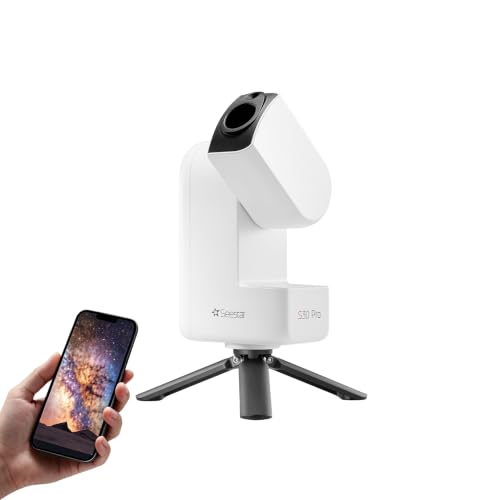
- App-controlled automatic GOTO and tracking
- Dual-camera 4K imaging with AI processing
- Portable 3.6 lb design with light-pollution filtering
Best For: Beginners and travelers who want easy astrophotography with minimal setup
Imaging OTA Choice
SVBONY SV550 80mm ED Triplet APO
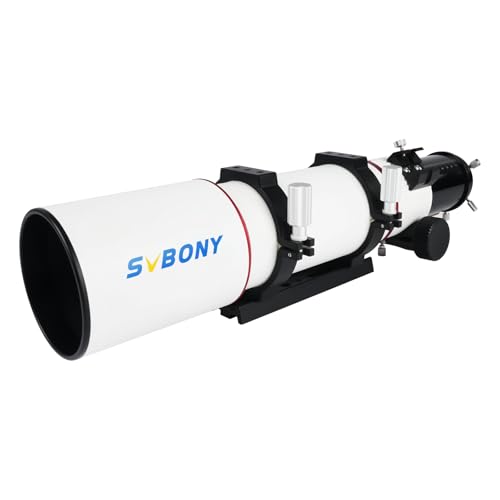
- 80mm triplet APO with ED glass for reduced chromatic aberration
- 2.5-inch dual-speed focuser for fine imaging control
- Compact OTA for deep-sky targets like M42 and M45
Best For: Imagers building an equatorial-mount refractor rig
Ultra-Portable Smart Pick
DWARFLAB Dwarf 3 Smart Telescope

- About 3 lb and backpack-friendly for travel
- Dual-lens system for deep space and wide-field imaging
- 4K auto-tracking with cloud-based processing
Best For: Travelers who want a lightweight smart telescope for easy imaging
Serious Refractor Upgrade

- 102mm ED refractor for brighter imaging
- 360° field rotator and dual-speed focuser
- Good match for planetary and deep-sky photography
Best For: Experienced astrophotographers building a larger refractor setup
Portable Flat-Field APO

- 71mm ED quadruplet APO for flat-field imaging
- Lightweight 2.5kg OTA with 360° rotatable focus
- CNC tube with matte interior coating
Best For: Portable deep-sky imaging with a lightweight refractor
GoTo SCT Starter

- Computerized GoTo mount with 40,000+ objects
- Built-in wedge supports entry-level astroimaging
- Compact 5-inch SCT with StarBright XLT coatings
Best For: Beginners wanting GoTo convenience and basic imaging support
Wide-Field APO Astrograph
SVBONY SV555 Petzval Refractor

- Petzval triplet design for flat-field imaging
- Full-frame compatible with DSLR, mirrorless, and astro cameras
- EAF-ready with precision focuser and 360° rotation
Best For: Wide-field imaging on full-frame cameras
Portable Smart Deep-Sky Pick
DWARFLAB Dwarf Mini Smart Telescope

- 1.85 lb portable design for travel and dark-sky outings
- App control, sky atlas, and auto GOTO simplify setup
- EQ mode supports up to 90-second exposures
Best For: Travelers and beginners wanting an easy-to-use smart astro telescope
High-Contrast OTA Choice

- 127 mm Maksutov-Cassegrain OTA with f/11.8 optics
- Includes 0.65x flat-field reducer and dual-speed focuser
- Flexible 2" and 1.25" eyepiece interfaces
Best For: Manual imaging setups focused on planetary detail and select deep-sky targets
Large-Aperture GoTo Classic
Celestron NexStar 8SE Computerized Telescope

- 8-inch SCT optics provide strong light gathering
- GoTo mount with 40,000+ object database and SkyAlign
- Compact for its aperture, though heavier than smaller scopes
Best For: Enthusiasts wanting a powerful computerized SCT for observing and entry-level imaging
Smart Entry Pick – ZWO Seestar S30 Pro Smart Telescope
If you want one of the easiest telescopes for astrophotography to start with, the ZWO Seestar S30 Pro is built around automation. You power it on, connect the app, and let automatic GOTO targeting and tracking handle the setup while you frame and capture from your smartphone. It is especially practical if you want sharp results without dealing with a complex mount or manual imaging workflow.
Best For: Beginners, travelers, and urban users who want app-controlled deep-sky and wide-field imaging with minimal setup.
Pros:
- Automatic GOTO targeting and tracking simplify finding and following celestial objects.
- App-controlled one-tap imaging is designed for Milky Way, star trails, planets, and galaxies.
- Apochromatic optics and built-in light pollution filters help improve contrast in brighter skies.
- Dual-camera 4K imaging and AI noise reduction support clearer-looking photos with less manual work.
Cons:
- Deep-sky imaging requires the device to stay stationary for stable tracking.
- Smaller 30mm aperture limits light gathering compared with larger refractor OTAs.
- Smartphone/app-based control may not suit users who want a traditional manual telescope setup.
Overall, the S30 Pro is a strong fit if your priority is convenience and quick results rather than building a fully manual imaging rig. It stands out as a portable, urban-friendly option for easy astrophotography.
Imaging OTA Choice – SVBONY SV550 80mm ED Triplet APO
For buyers comparing telescopes for astrophotography, the SVBONY SV550 is a more traditional imaging OTA built around optical quality and camera use. Its 80mm triplet apochromatic design is aimed at reducing chromatic aberration, producing bright, high-contrast images for deep-sky targets like M42 and M45. If you already have a mount and want a dedicated refractor tube for imaging, this is the kind of setup that rewards careful camera work.
Best For: Astrophotographers who want a compact 80mm triplet APO OTA for deep-sky imaging with an equatorial mount.
Pros:
- Triplet APO optics with ED glass help reduce blue-edge chromatic aberration.
- 80mm aperture and 480mm focal length suit common deep-sky imaging targets.
- 2.5-inch dual-speed focuser supports fine focus and reduces vignetting on full-frame cameras.
- Internal extinction measures are designed to improve contrast and suppress stray light.
Cons:
- OTA-only design means you need a compatible mount and imaging gear.
- Manual focus and equatorial mounting make it less plug-and-play than smart telescopes.
- Best results depend on setup experience and camera integration.
This is a solid pick if you want an imaging-focused refractor rather than an all-in-one smart telescope. It is best suited to users who value optical correction and are building a more deliberate astrophotography rig.
Ultra-Portable Smart Pick – DWARFLAB Dwarf 3 Smart Telescope
The DWARFLAB Dwarf 3 is a smart telescope that leans hard into portability without giving up imaging automation. At about 3 pounds, it is easy to pack for travel, and the dual-lens design gives you a telephoto path for deep-space objects plus a wide-angle lens for Milky Way and star trails. For users who want telescopes for astrophotography that can move from backyard to backpack, it is a very practical option.
Best For: Travelers and beginners who want a lightweight app-controlled telescope with both night-sky and daytime imaging modes.
Pros:
- Very lightweight 3 lb design makes it easy to carry on trips and outdoor adventures.
- Dual imaging system supports deep-space, Milky Way, star trails, wildlife, and panorama shots.
- 4K auto-tracking helps follow celestial objects and moving subjects.
- Cloud-powered one-touch processing reduces the need for a PC or complex software.
Cons:
- Smaller 35mm objective lens is not as light-gathering as larger refractor OTAs.
- Relies on app and cloud processing rather than a traditional manual workflow.
- Best suited to convenience-driven imaging rather than maximum optical customization.
The Dwarf 3 is a good match if portability and simplicity matter more than a conventional telescope setup. It is one of the easiest ways to start capturing usable astrophotography in a compact package.
Serious Refractor Upgrade – SVBONY SV503 102mm ED F7
If you are shopping telescopes for astrophotography and want a more substantial refractor, the SVBONY SV503 offers a 102mm aperture, ED glass, and a 714mm focal length. That combination is aimed at brighter, higher-contrast images with reduced color fringing, making it a practical choice for planetary observation and deep-sky imaging. The built-in field rotator and dual-speed focuser also make camera framing and critical focus easier to manage.
Best For: Experienced users who want a larger ED refractor for deep-sky astrophotography and precise camera alignment.
Pros:
- 102mm aperture provides more light gathering than smaller imaging refractors.
- S-FPL51 ED glass helps minimize chromatic aberration for sharper color fidelity.
- 360° field rotator makes camera alignment easier without rotating the tube.
- Dual-speed 1:10 focuser and 90mm focus travel support precise imaging setups.
Cons:
- OTA-only design requires a compatible mount and accessories.
- Manual focus means it is less convenient than automated smart telescopes.
- Larger size and weight make it less portable than compact imaging options.
For users building a more serious refractor-based imaging setup, the SV503 brings useful optical and mechanical features to the table. It is best viewed as a capable OTA for photographers who already know how to assemble and tune an astrophotography rig.
Portable Flat-Field APO – Askar 71F 71mm ED Refractor
If you want a compact option among telescopes for astrophotography, the Askar 71F is built around portability and flat-field imaging. Its 71mm ED quadruplet design, lightweight 2.5kg OTA, and 360° rotatable focus make it easy to carry, frame, and adapt for both sky and terrestrial use.
Best For: Portable deep-sky imaging with a lightweight, flat-field refractor that also works well for visual use.
Pros:
- Quadruplet air-spaced APO design with ED glass for flat-field astrophotography
- Lightweight build at 2.5kg for the OTA, with a total weight of 3kg including hoop and dovetail
- 360° rotatable focus helps with composing astronomical shots
- High-quality CNC tube with matte interior coating to reduce stray light reflections
Cons:
- 71mm aperture is smaller than larger deep-sky imaging telescopes
- Manual focus and manual/mechanical operation may take more hands-on setup
- Best suited to imaging-focused use rather than a full all-in-one observing system
Overall, the Askar 71F is a strong pick if you value a travel-friendly refractor with imaging-first features and a flat field. It is especially appealing for photographers who want a practical OTA that can double for visual astronomy.
GoTo SCT Starter – Celestron NexStar 5SE
For buyers comparing telescopes for astrophotography, the NexStar 5SE stands out as a compact computerized Schmidt-Cassegrain with built-in imaging support. Its 5-inch aperture, GoTo tracking, and integrated wedge make it a practical step-up scope for beginners who want easier target acquisition and entry-level astroimaging.
Best For: Beginners who want a computerized telescope with GoTo tracking and a built-in wedge for starting astrophotography.
Pros:
- Fully computerized GoTo mount with a 40,000+ object database
- SkyAlign helps get observing started quickly with simple alignment
- Built-in wedge supports polar alignment and better long-exposure imaging
- Compact 5-inch Schmidt-Cassegrain design with StarBright XLT coatings
Cons:
- Alt-az mount design is still more limited than a dedicated equatorial imaging mount
- 5-inch aperture is solid, but not as light-gathering as larger astrograph setups
- Manual focus and accessory-driven setup may require some learning time
The NexStar 5SE is a practical choice if you want a familiar Celestron system that makes finding targets and getting started with imaging easier. It is especially appealing for users who want automation and portability in one package.
Wide-Field APO Astrograph – SVBONY SV555 Petzval Refractor
The SVBONY SV555 is designed as an imaging-first telescope for astrophotography, with a Petzval triplet lens structure focused on flat-field performance and minimal aberration. Its full-frame compatibility, 360° rotatable tube, and EAF-ready focus setup make it a strong option for wide-field deep-sky work.
Best For: Wide-field astrophotographers using DSLR, mirrorless, or astronomy cameras on full-frame sensors.
Pros:
- Petzval triplet lens structure helps improve image clarity and flat-field performance
- Designed for 44mm full-frame sensors without vignetting
- EAF adapter support and precision fine-adjustment focuser aid accurate framing
- Adjustable from F4.5 to F22 with a 360° rotatable tube for flexible shooting angles
Cons:
- Manual focus means it is not fully automated out of the box
- Camera-only compatibility limits its value for purely visual observing
- At 3.8kg, it is heavier than some ultra-portable imaging refractors
For photographers prioritizing a flat field, full-frame coverage, and practical imaging accessories, the SV555 is the most specialized of the three. It is a compelling OTA if your main goal is cleaner deep-sky image capture rather than general-purpose observing.
Portable Smart Deep-Sky Pick – DWARFLAB Dwarf Mini Smart Telescope
If you want telescopes for astrophotography that are easy to carry to dark-sky sites, the DWARFLAB Dwarf Mini is built around convenience. Its compact, 1.85 lb body, app-guided setup, auto GOTO, and EQ mode make it a very approachable way to capture nebulae and star clusters without a complicated rig.
Best For: Beginners, travelers, and families who want a pocketable smart telescope for easy deep-sky imaging.
Pros:
- Ultra-light 1.85 lb design makes it easy to pack for hikes, camping, or trips.
- App control with built-in sky atlas and auto GOTO helps you get started quickly.
- EQ mode supports long exposures up to 90 seconds for deeper astro shots.
- Built-in cloud processing and a light pollution filter help refine images and cut city glow.
Cons:
- 30 mm objective is small compared with larger traditional telescopes.
- Best suited to digital, app-driven imaging rather than hands-on observing.
- Designed more for convenience and portability than maximum light-gathering power.
Overall, this is a strong pick if portability matters more than raw aperture. It trades traditional telescope size for smart features that make astrophotography simpler and more portable.
High-Contrast OTA Choice – SVBONY MK127 Telescope OTA
For astrophotography users looking at telescopes for astrophotography with a more traditional OTA setup, the SVBONY MK127 focuses on optical refinement. Its 127 mm Maksutov-Cassegrain design, f/11.8 focal ratio, dual-speed focuser, and included 0.65x flat-field reducer are aimed at sharper planetary and nebula detail.
Best For: Users building a manual OTA-based imaging setup for planetary work and selected deep-sky targets.
Pros:
- 127 mm aperture and f/11.8 optics are designed for detailed image capture with minimal aberration.
- Included 0.65x flat-field reducer helps improve edge clarity and shrink star points.
- Dual-speed focuser supports both fast acquisition and fine adjustments.
- 2″ and 1.25″ eyepiece interfaces give you more flexibility with accessories.
Cons:
- No eyepiece or mount is included, so you must already have supporting gear.
- Manual-focus OTA is less turnkey than computerized smart telescopes.
- The long focal ratio is more specialized than an all-purpose wide-field option.
This is a solid option if you already know how to assemble a telescope imaging chain. It is less beginner-friendly than a smart scope, but the optics and reducer make it appealing for sharper, more controlled imaging.
Large-Aperture GoTo Classic – Celestron NexStar 8SE Computerized Telescope
The Celestron NexStar 8SE is one of the more capable telescopes for astrophotography and visual observing if you want a large aperture in a compact, computerized package. Its 8-inch Schmidt-Cassegrain optics, GoTo mount, and SkyAlign system make it a practical step-up choice for users who want access to a large object database and strong light-gathering power.
Best For: Enthusiasts who want a powerful computerized telescope for visual use and entry-level astroimaging.
Pros:
- 8-inch aperture gathers substantial light for lunar, planetary, and deep-sky views.
- Fully computerized GoTo mount accesses a 40,000+ object database.
- SkyAlign makes setup easier by aligning on any three bright stars or planets.
- Portable form factor for an 8-inch SCT keeps the system relatively manageable.
Cons:
- Manual focus and alt-az mount limit it compared with more imaging-focused setups.
- Heavier at 10.88 kg than compact smart or OTA-only options.
- Batteries, adapter, and some accessories are not included in the box.
Overall, the NexStar 8SE is a strong all-around telescope with the aperture and automation to grow with you. It is best when you want a classic SCT platform that still offers modern GoTo convenience.
How We Picked These Telescopes for Astrophotography
We focused on optical quality, focal ratio, aperture, field of view, mount compatibility, ease of setup, and how well each model fits common imaging goals. We also favored telescopes that reduce the learning curve for newcomers while still offering enough performance for more serious astrophotography work.
For Telescopes for Astrophotography, a good fit is not just about the biggest aperture. It is about how much detail you can capture, how easy the scope is to track accurately, and whether the system matches your camera, sky conditions, and preferred subjects.
Quick Comparison
Smart telescopes are the simplest path if you want automated alignment, app control, and fast results with minimal gear. Refractors are often preferred for sharp stars and wide-field deep-sky imaging. Schmidt-Cassegrain and Maksutov designs bring more reach in compact tubes, which can be useful for lunar, planetary, and smaller targets, though they usually demand more from the mount and setup.
Key Buying Factors for Telescopes for Astrophotography
Aperture and Focal Length
A larger aperture gathers more light, but focal length affects framing and tracking demands. Shorter focal lengths are generally easier for nebulae and star fields, while longer focal lengths help with planets, the Moon, and smaller deep-sky objects.
Focal Ratio
Faster optics, such as f/4 to f/6.9, usually make it easier to collect usable data in less time. Slower systems can still produce excellent results, but they often need longer exposures and more precise tracking.
Mount and Tracking
The mount is just as important as the telescope. For astrophotography, stable tracking and low vibration matter more than raw size alone. Make sure the telescope is compatible with the mount class you plan to use, especially if you are choosing an OTA-only model.
Smart Features Vs. Manual Control
Smart telescopes can be ideal for convenience, travel, and quick imaging sessions. Traditional scopes offer more flexibility, but they usually require more setup, alignment, and accessory planning.
Who Should Buy Which Telescopes for Astrophotography?
Choose a smart telescope if you want the simplest entry into astrophotography and value app-guided operation. Pick a compact refractor if your priority is sharp, wide-field deep-sky imaging and room to grow. Go with an SCT or Mak if you want more reach for the Moon and planets, or you want a compact tube with strong visual and imaging versatility.
If you are building a more serious imaging system, prioritize a stable mount, guiding support, and accessories that match your camera and targets. The best choice is the telescope that fits your experience level, shooting style, and patience for setup.