Choosing the right digital microscope for soldering can make fine-pitch work faster, cleaner, and less frustrating. The best models give you enough working distance, a stable image, and controls that won’t slow you down.
Below, you’ll find 10 strong options for electronics repair, inspection, and detailed bench work, with a focus on clarity, usability, and value.
Best 10 Digital Microscope for Soldering Picks for 2026
Best for PC Viewing
TOMLOV DM9 7" Digital Microscope

- 7-inch rotating FHD screen for comfortable viewing
- 12MP camera with 1080P recording
- PC-compatible for a larger inspection view
Best For: Hobbyists and repair users who want a screen-based microscope for soldering and shared viewing.
Best for Soldering Station
Andonstar AD249S-M Plus 10.1" HDMI Microscope

- 3-lens setup for soldering, general inspection, and slide viewing
- 10.1" screen plus HDMI output for easier bench-side viewing
- Upgraded station includes helping hands, storage, and tool holder
Best For: Electronics repairers who want an all-in-one microscope station with a large display and organized workspace.
Best Large-Screen Pick
TOMLOV DM9 Max 10.1" Digital Microscope

- 10.1" IPS screen is easy to view during long sessions
- 5X-1500X zoom covers solder joints, coins, and parts
- PC/TV output and recording add flexibility for review
Best For: Hobbyists and repair users who want a large screen and stable bench setup.
Best All-in-One Soldering Station
Andonstar AD246S-M Plus 7'' HDMI Microscope

- Three-lens system for soldering, general inspection, and high-magnification viewing
- 7-inch HDMI display with 2160P video recording
- Expanded boom-arm base with helping hands and tool storage
Best For: Electronics repair and soldering benches that need an integrated microscope station.
Best for 3D PCB Viewing
TOMLOV 3D Dual-Lens Microscope
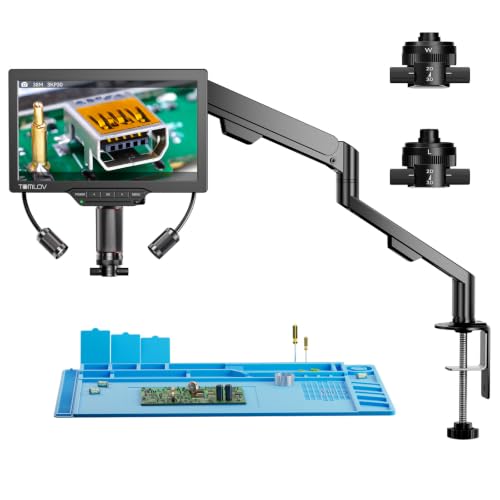
- 3D side-view and 360° rotation improve solder-joint inspection
- Magnetic dual lenses adapt fast between PCB and wide-view tasks
- 3K screen and flex arm make bench work more comfortable
Best For: Electronics repair users who want side-view visibility and flexible inspection angles.
Best for Full-View Coins
JL210 10.1'' Digital Microscope

- 10.1-inch IPS screen with 12MP imaging
- Tall metal stand leaves room for soldering
- Includes lights, remote, 32GB card, and PC view
Best For: Collectors and hobbyists who want a large-screen microscope for soldering, coins, and general bench work.
Best for Easy PC Viewing

- 5" IPS screen reduces eye strain during bench work
- Flexible stand fits tight or irregular workspaces
- Plug-and-play PC camera mode on Windows and Mac
Best For: Makers and repair hobbyists who want a simple screen-based microscope with optional computer viewing.
Best for Multi-Use Labs
Andonstar AD246S-M HDMI Microscope

- 3-lens system covers soldering, coins, and slides
- 7-inch LCD with HDMI output for larger-screen viewing
- Upgraded metal boom arm stand suits bench work
Best For: Makers and hobbyists who want one microscope for electronics repair and other close-up viewing tasks.
Best All-in-One Kit
Andonstar AD210 10.1" LCD Digital Microscope

- 10.1-inch LCD for comfortable viewing
- Includes 32GB card and lighting
- Works for soldering, coins, and slides
Best For: Makers and hobbyists who want one microscope for soldering and other close-up tasks.
Best for PC Viewing – TOMLOV DM9 7" Digital Microscope
If you want a practical digital microscope for soldering that also works well for coins, stamps, and general inspection, the TOMLOV DM9 is a strong all-around pick. Its 7-inch rotating screen, 12MP camera, and included lights make it easy to see fine joints and small components without constantly leaning over your work.
Best For: Hobbyists, students, and DIY repair users who want a screen-based microscope with easy PC viewing and solid image quality for PCB work.
Pros:
- 7-inch rotating FHD display reduces neck strain during close inspection and soldering.
- 12MP camera with 1080P video delivers clear detail for small electronics work.
- Built-in and gooseneck LED lighting helps illuminate boards and tiny parts.
- PC compatibility makes it easier to view, share, and analyze larger images.
Cons:
- Not as compact as simpler handheld microscopes.
- Actual magnification varies with screen size and working distance.
- Higher-resolution captures use up SD card space quickly.
Overall, the DM9 is a sensible choice if you need a digital microscope for soldering with a comfortable screen-first design and enough clarity for everyday bench work. It is especially appealing if you also want an easy way to inspect collectibles and store photo or video documentation.
Best for Soldering Station – Andonstar AD249S-M Plus 10.1" HDMI Microscope
If you want a digital microscope for soldering that doubles as a full workbench station, the Andonstar AD249S-M Plus is built around practical repair work. The 10.1" screen, HDMI output, and upgraded boom-arm stand make it easier to inspect joints, compare components, and keep your hands free while you work.
Best For: Electronics repairers and hobbyists who want an all-in-one microscope station with helping hands, extra workspace, and a display you can view without hunching over.
Pros:
- 3-lens system covers soldering, general inspection, and high-magnification slide viewing
- UHD 2160P recording and HDMI output are great for clearer viewing and documentation
- Upgraded stand adds workspace, storage boxes, tool holder, and helping hands for bench use
Cons:
- More of a bench setup than a compact portable microscope
- Swapping lenses and dialing in the setup takes a little more time than simpler models
For buyers comparing a digital microscope for soldering, this model stands out because it combines inspection capability with a purpose-built repair station. It is a strong fit if you value a large screen, organized accessories, and a stable platform for hands-on electronics work.
Best Large-Screen Pick – TOMLOV DM9 Max 10.1" Digital Microscope
The TOMLOV DM9 Max is a practical digital microscope for soldering if you want a bigger, easier-to-read display instead of peering through eyepieces. Its 10.1-inch IPS screen, wide-angle viewing, and PC output make it well suited for inspection work, coin collecting, and bench repairs where comfort matters.
Best For: Hobbyists and repair users who want a large screen, roomy stand, and simple recording for close-up work.
Pros:
- Large 10.1" IPS display with wide viewing angles
- Strong 5X-1500X zoom range for boards, coins, and fine details
- PC/TV compatibility plus photo and video recording with 16GB storage
- Tall stand and wireless remote help keep soldering work stable
Cons:
- High maximum zoom is more useful on a screen than for true precision inspection
- Bulkier setup than compact handheld microscopes
- Not as specialized as dedicated lab-grade soldering inspection systems
For buyers who want a comfortable digital microscope for soldering with a large screen and flexible viewing options, the DM9 Max hits a very appealing middle ground. It is especially useful when you want to inspect joints, pads, and components without hunching over a tiny display.
Best All-in-One Soldering Station – Andonstar AD246S-M Plus 7'' HDMI Microscope
If you want a digital microscope for soldering that also cleans up your bench, the Andonstar AD246S-M Plus is built like a compact repair station. The 7-inch HDMI display, helping hands, extended base, and multi-lens setup make it a flexible pick for electronics work, inspection, and occasional high-magnification viewing.
Best For: Electronics repairers and hobbyists who want an integrated microscope station with better workspace organization and hands-free soldering support.
Pros:
- Three interchangeable lenses cover solder joints, general inspection, and extreme close-up use.
- HDMI output and 2160P recording make it easy to view and document work on a larger screen.
- Upgraded boom arm base, tool holder, and component storage help keep the bench tidy.
- Helping hands with rotatable clamps add stability for soldering and rework.
Cons:
- The most advanced lens is better for specialized viewing than everyday soldering.
- Lens changes and setup are more involved than simpler single-lens microscopes.
For buyers who want more than a basic digital microscope for soldering, this model stands out for its station-style design and workspace extras. It makes the most sense if you value convenience, larger-screen viewing, and a more organized repair setup over portability.
Best for 3D PCB Viewing – TOMLOV 3D Dual-Lens Microscope
If you want a digital microscope for soldering that helps you inspect joints from more than one angle, the TOMLOV TM3K-3D stands out with its side-viewing design and rotating 3D imaging. The magnetic dual-lens setup makes it easy to switch between close PCB work and wider inspection tasks without slowing down your workflow.
Best For: Electronics repair, micro soldering, and users who want side-view visibility for cleaner inspection of solder joints and components.
Pros:
- 3D side-view and 360° rotation make solder inspection easier from multiple angles
- Magnetic dual lenses switch quickly between long-distance PCB work and wider viewing
- 3K resolution with a 7-inch IPS screen gives a clear, comfortable viewing experience
- Flexible arm stand and included light support stable bench-top use
Cons:
- Bulkier setup than compact handheld microscopes
- 3D viewing is useful, but not necessary for basic hobby soldering
For buyers who need a digital microscope for soldering with better angles and less guesswork, this TOMLOV model offers a practical mix of visibility, flexibility, and screen-based convenience. It is especially appealing if you work on PCBs, repair boards, or inspect fine details where side views matter.
Best for Full-View Coins – JL210 10.1'' Digital Microscope
If you want a digital microscope for soldering that also pulls double duty for coins and classroom use, the JL210 is a versatile all-in-one option. Its 10.1-inch IPS screen, 12MP imaging, and generous stand height make it easier to inspect boards, capture photos, and keep enough space under the lens for real work.
Best For: Hobbyists and collectors who want a large-screen microscope for soldering, coin inspection, and general magnification tasks.
Pros:
- Large 10.1-inch display makes details easy to see without squinting.
- High stand and wide clearance leave room for soldering irons and PCB work.
- Includes multiple lighting options for reducing shadows on shiny or small parts.
- Comes with 32GB storage, remote control, and PC connectivity for easy capture and sharing.
Cons:
- Bulky setup is less convenient than compact handheld microscopes.
- More of a bench tool than a true high-magnification electronics inspection scope.
- Display-focused design may be overkill if you only need occasional soldering checks.
The JL210 is a practical pick if you want a digital microscope for soldering with a big screen and enough working room to actually use it comfortably. It stands out most for users who also need full-view coin inspection and an easy, ready-to-go desktop setup.
Best for Easy PC Viewing – 5" LCD Soldering Microscope
If you want a practical digital microscope for soldering that works on a bench without a steep learning curve, this model is built around a 5-inch IPS screen, flexible stand, and straightforward PC viewing. It’s geared toward close-up inspection of solder joints, PCB traces, coin details, and other small parts where a larger display helps reduce eye strain.
Best For: Makers, repair hobbyists, and electronics tinkerers who want a simple screen-based microscope with optional PC viewing for detailed soldering work.
Pros:
- 5" IPS display makes close inspection easier on the eyes during long repair sessions
- Flexible goose-neck stand helps position the lens over tight or awkward work areas
- Plug-and-play PC camera mode is convenient for larger viewing on Windows or Mac
- 8 LEDs help light up small components and solder joints
Cons:
- Not autofocus, so you must set focus and magnification manually
- Micro SD card is required for saving photos and videos and is not included
- Best for micro-detail inspection, not for viewing large objects in full frame
This is a solid choice if you value a built-in screen and easy computer connectivity over advanced automation. For anyone shopping for a digital microscope for soldering, it offers a useful mix of flexibility and simplicity, as long as you’re comfortable with manual focus and supplying your own storage card.
Best for Autofocus Precision – TOMLOV TM4K-AF Max 4K Microscope
If you want a digital microscope for soldering that cuts down on manual refocusing, the TOMLOV TM4K-AF Max is built for fast, clear work on circuit boards, micro parts, and other detailed repair tasks. Its autofocus, TOF sensing, and large 10.1-inch display make it easier to stay locked on tiny joints without constantly adjusting the lens.
Best For: Electronics repairers, hobbyists, and technicians who want hands-free focusing and a large live-view screen for soldering and inspection.
Pros:
- Autofocus with TOF and AI support helps keep solder joints sharp and in view.
- 10.1-inch IPS screen gives a roomy, easy-to-see workspace for bench repair.
- 4K/52MP imaging adds strong detail for component checks, coins, and documentation.
- Spin flex arm and HDMI/USB output make positioning and sharing views more flexible.
Cons:
- Larger setup takes more bench space than compact microscope stands.
- Designed more for inspection and repair than for traditional eyepiece-style use.
- Extra features may be more than casual users need.
For a digital microscope for soldering, the TM4K-AF Max stands out because it prioritizes fast autofocus, a big screen, and flexible positioning. That combination makes it especially useful when you need to work efficiently on small electronics without losing detail.
Best for Multi-Use Labs – Andonstar AD246S-M HDMI Microscope
If you want a flexible digital microscope for soldering that can also handle coins, slides, and general inspection, the Andonstar AD246S-M is built for that mixed-use job. Its 3-lens design, HDMI output, and boom arm stand make it a practical pick for bench work where you need both close-up detail and a larger viewing setup.
Best For: Makers, repair hobbyists, and families who want one microscope for electronics, coins, and basic biology.
Pros:
- 3 interchangeable lenses cover soldering, coin viewing, and biological slides
- 7-inch LCD plus HDMI output makes shared viewing easier
- Upgraded metal boom arm stand is better suited to soldering environments
- Windows software support adds measurement and capture tools
Cons:
- Lens swapping is more involved than on single-lens microscopes
- Can be overkill if you only need basic board inspection
- Higher magnification claims depend on screen size and digital zoom
Overall, the AD246S-M stands out as a versatile digital microscope for soldering when you also want inspection and education features in one unit. It’s a strong fit if you value a sturdier stand, HDMI output, and multiple viewing modes over the simplest possible setup.
Best All-in-One Kit – Andonstar AD210 10.1" LCD Digital Microscope
If you want a digital microscope for soldering that also doubles as a general inspection tool, the Andonstar AD210 is a flexible pick. Its large 10.1-inch LCD makes it easier to view joints, pads, and components without squinting, while the included accessories add extra value for coin inspection and basic biology work.
Best For: Makers and hobbyists who want one microscope for soldering, electronics repair, and occasional multi-purpose inspection.
Pros:
- Large 10.1-inch screen is easy on the eyes during detailed work
- Useful all-in-one kit with 32GB card, lighting, and extra sample accessories
- Good fit for soldering, coin viewing, and general close-up inspection
Cons:
- Not as compact as smaller bench microscopes
- Multi-purpose bundle may include extras some buyers won’t use
For buyers who want a digital microscope for soldering without giving up versatility, the AD210 stands out as a practical starter-to-midrange option. It’s especially appealing if you prefer a built-in display over connecting to a separate monitor.
How We Picked the Best Digital Microscope for Soldering
For this roundup, we focused on features that matter most on the bench: image sharpness, screen size, working distance, focus control, lighting quality, and stand stability. We also looked at whether each Digital Microscope for Soldering is practical for real repair tasks rather than just good for close-up viewing.
We prioritized models that balance ease of use with enough magnification and viewing comfort for PCB inspection, component placement, and solder-joint checking.
Quick Comparison
Larger displays are easier on the eyes during long sessions, while compact 5-inch and 7-inch units are better if you need a smaller footprint. Autofocus and finer focus controls can save time, but a solid adjustable stand may matter just as much for keeping the image steady.
For electronics repair, the best choice usually comes down to how much desk space you have, how often you move the microscope, and whether you need HDMI output, PC viewing, or onboard recording.
Key Buying Factors for a Digital Microscope for Soldering
Working Distance and Stand Design
A good soldering microscope must leave enough room for your iron, tweezers, and hands. Look for flexible arms, stable bases, and lens setups that don’t crowd the board.
Screen Size and Image Stability
Higher-resolution screens help you see pads, joints, and silkscreen details more clearly. A larger display can reduce eye strain, but only if the image stays steady and the stand resists wobble.
Focus and Magnification Range
More magnification is not always better. For soldering, usable focus and a clear mid-range view matter more than extreme zoom numbers. Smooth focus adjustment is essential for tracking different component heights.
Lighting and Color Accuracy
Built-in LEDs should illuminate the work area evenly without washing out markings or creating harsh reflections on shiny solder joints. Good color accuracy makes inspection easier.
Connectivity and Recording
If you plan to share images, teach, or document repairs, HDMI, USB/PC compatibility, and video recording can be useful extras. These features are especially helpful in a workshop or classroom setting.
Who Should Buy Which Digital Microscope for Soldering?
If you need a simple bench tool for occasional PCB work, a compact LCD model may be enough. If you repair electronics often, choose a larger-screen unit with stronger stand support and better image output. For more demanding micro-soldering, autofocus or high-resolution HDMI models are often worth the upgrade.
Coin collectors and general macro users may also appreciate these microscopes, but for soldering work, prioritize comfort, clearance, and steady focus over headline magnification alone.