Choosing the right oscilloscope can make troubleshooting faster, measurements clearer, and bench work far less frustrating. This roundup of digital oscilloscopes focuses on the most useful mix of bandwidth, channels, and value for real-world electronics work.
Whether you need a simple 2-channel scope for repair tasks or a more capable 4-channel model for embedded debugging, the options below cover hobbyists, students, and engineers looking for a practical buy in 2026.
Best 10 Digital Oscilloscopes Picks for 2026
Pro-Grade 200MHz Workhorse
Siglent SDS1202X-E 200 MHz, 2-Channel
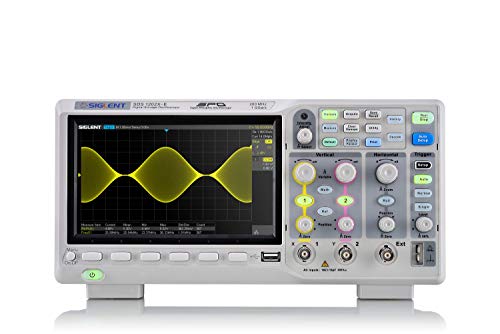
- 200 MHz bandwidth and 1 GSa/s sampling
- 14 Mpts record length for longer captures
- Supports IIC, SPI, UART, RS232, CAN, and LIN decode
Best For: Advanced bench debugging with deep memory and serial protocols
Budget-Friendly Lab Option

- Cost-effective economy oscilloscope
- 150 MHz bandwidth with arbitrary waveform output
- 5 serial protocol triggers/decodes and 14 trigger modes
Best For: Education, embedded systems, and value-focused lab work
Four-Channel Debugging Choice
Siglent SDS1104X-E 100MHz, 4CH
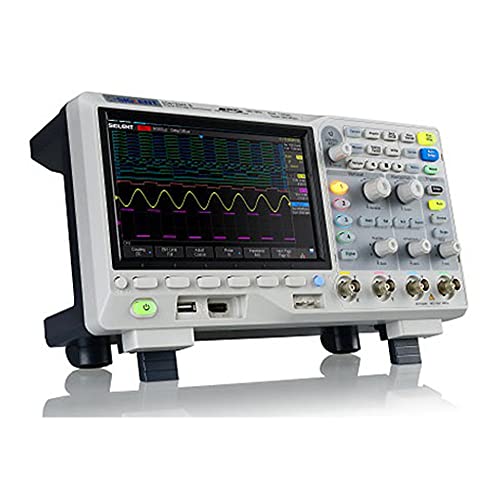
- 4 analog channels for multi-signal testing
- Standard decoder support for IIC, SPI, UART/RS232, CAN, and LIN
- Optional 16 digital channels on the four-channel series
Best For: Multi-signal troubleshooting and teaching labs
Best-Value Deep-Memory Pick
Rigol DS1054Z 50MHz, 4-Channel

- 4 channels with up to 1 GSa/s sampling
- Up to 24 Mpts memory depth and 30,000 wfms/s
- Serial decode for RS232/UART, I2C, and SPI
Best For: Budget-minded labs needing deep memory and capture tools
Budget-Friendly Bench Scope

- 100MHz, 2-channel digital storage oscilloscope
- Arbitrary waveform output plus 14 trigger modes
- Includes 5 serial protocol trigger/decode options
Best For: economical bench use, education, and basic protocol troubleshooting
Portable Precision Pick

- 4-channel scope with 12-bit resolution and 25 Mpts depth
- Up to 1,000,000 wfms/s plus waveform search/navigation
- Serial decode for CAN, UART, I2C, SPI, and parallel signals
Best For: portable lab work, embedded bring-up, and multi-signal debugging
All-in-One Field Scope

- 4-in-1 handheld scope with spectrum and FRA tools
- 350MHz bandwidth, 1 GSa/s, and 50,000 wfms/s refresh
- 7-inch touchscreen with 8000 mAh battery for portability
Best For: field troubleshooting, signal integrity work, and Bode-style testing
Portable 4-Channel 12-Bit Pick

- 12-bit vertical resolution for clearer small-signal detail
- 4 channels, 100 MHz bandwidth, and 1.25 GSa/s sampling
- UltraAcquire, serial decode, SCPI, and remote control support
Best For: portable multi-channel debugging with better low-level signal visibility
Deep-Memory 200MHz Lab Favorite

- 200 MHz bandwidth with 1 GSa/s real-time sampling
- Up to 24 Mpts memory depth for longer captures
- 30,000 wfms/s capture rate plus serial decode and LAN
Best For: students and lab users needing a fast, deep-memory general-purpose scope
Budget 100MHz Workhorse

- 100 MHz, 2-channel bench scope with 1 GSa/s sampling
- Up to 24 Mpts memory and 30,000 wfms/s capture rate
- USB, LAN, AUX output, and serial decode for common buses
Best For: budget-minded users needing a solid everyday oscilloscope for education and repair
Pro-Grade 200MHz Workhorse – Siglent SDS1202X-E 200 MHz, 2-Channel
If you want a digital oscilloscope with strong timing detail and enough bandwidth for serious bench work, the Siglent SDS1202X-E is a solid fit. Its 200 MHz bandwidth, 1 GSa/s real-time sampling rate, and 14 Mpts record length make it useful for capturing faster signals while keeping more history on screen.
Best For: Engineers and advanced hobbyists who want a 2-channel digital oscilloscope with deep memory and serial decode support.
Pros:
- 200 MHz bandwidth with up to 1 GSa/s real-time sampling
- 14 Mpts record length for longer captures
- Built-in serial bus triggering and decode for IIC, SPI, UART, RS232, CAN, and LIN
- Compact bench-friendly size with included 2-channel design
Cons:
- Only 2 analog channels
- No economy positioning in the notes, so it may be more of a step-up purchase
This model stands out if you value capture depth and protocol support in a practical lab instrument. It is a strong digital oscilloscope choice for debugging mixed-signal and serial-bus designs where visibility matters.
Budget-Friendly Lab Option – Hantek DSO2D15 150MHz, 2CH
The Hantek DSO2D15 is a cost-effective digital oscilloscope built for general lab use where value matters. With 150 MHz bandwidth, 2 channels, arbitrary waveform output, and 14 trigger modes, it covers a broad range of commissioning and troubleshooting tasks.
Best For: Buyers looking for an economy oscilloscope for education, embedded work, and general troubleshooting.
Pros:
- Cost-effective economy positioning
- 150 MHz bandwidth with 2 channels
- Supports arbitrary waveform output
- Includes 14 trigger modes and 5 serial protocol triggers/decodes
Cons:
- Only 2 channels
- No sample rate or memory depth details are provided in the notes
This is a practical pick if you want useful features without moving into a higher-end price tier. The combination of waveform output and protocol support makes it a versatile digital oscilloscope for many bench and education settings.
Four-Channel Debugging Choice – Siglent SDS1104X-E 100MHz, 4CH
Siglent Technologies SDS1104X-E 100Mhz Digital Oscilloscope 4 Channels Standard Decoder, Grey
Check Price On AmazonThe Siglent SDS1104X-E is a digital oscilloscope aimed at users who want four channels and strong decoding support on a bench-friendly platform. Its 100 MHz bandwidth, standard IIC/SPI/UART-RS232/CAN/LIN decoder, and optional 16 digital channels make it especially useful when you need more visibility across related signals.
Best For: Multi-signal troubleshooting, teaching labs, and users who want a 4-channel oscilloscope with serial decode.
Pros:
- 4 analog channels for comparing multiple signals at once
- Standard decoder support for IIC, SPI, UART/RS232, CAN, and LIN
- Optional 16 digital channels on the four-channel series
- Includes 4 passive probes and USB cable
Cons:
- 100 MHz bandwidth is lower than some higher-end alternatives
- USB AWG module is optional, not standard
If your workflow depends on seeing several signals together, this model offers a useful balance of channels and protocol tools. It is a capable digital oscilloscope for labs that need decode support and room to expand.
Best-Value Deep-Memory Pick – Rigol DS1054Z 50MHz, 4-Channel
The Rigol DS1054Z is a value-oriented digital oscilloscope that focuses on capture depth and useful everyday debugging features. It offers 50 MHz bandwidth, 4 analog channels, up to 1 GSa/s sampling on a single channel, and memory depth up to 24 Mpts for long captures.
Best For: Budget-conscious users who want a 4-channel oscilloscope with deep memory, capture tools, and basic serial decode.
Pros:
- 4 analog channels with up to 1 GSa/s single-channel sampling
- Up to 24 Mpts standard memory depth for long captures
- Up to 30,000 wfms/s capture rate with intensity graded display
- Serial trigger/decode for RS232/UART, I2C, and SPI plus FFT and filters
Cons:
- 50 MHz bandwidth is modest compared with faster scopes
- Only 4 analog channels, with no digital channels mentioned in the notes
For general electronics work, this model emphasizes practical capture performance over raw bandwidth. It is a well-rounded digital oscilloscope for labs that care about seeing intermittent events and reviewing them efficiently.
Budget-Friendly Bench Scope – Hantek DSO2C10 100MHz 2CH
If you want digital oscilloscopes that cover the essentials without pushing the budget too far, the Hantek DSO2C10 is built as a cost-effective economy option. Its 100MHz bandwidth, 2 channels, arbitrary waveform output, and broad trigger/decode support make it a practical choice for general troubleshooting and protocol work.
Best For: Students, labs, and technicians who need an economical bench oscilloscope for everyday debug and serial protocol checks.
Pros:
- 100MHz bandwidth with 2-channel input for common bench measurements.
- Includes arbitrary waveform output for added test flexibility.
- Supports 14 trigger modes and 5 serial protocol trigger/decode options.
- Positioned as a cost-effective instrument for communication, embedded, and education use.
Cons:
- 2-channel design may be limiting for more complex multi-rail comparisons.
- Feature set is focused on value, not premium portability or advanced analysis extras.
The DSO2C10 stands out as a straightforward, affordable option among digital oscilloscopes when you need useful triggers and protocol decoding more than high-end extras. It fits best in settings where dependable basic scope functionality matters most.
Portable Precision Pick – RIGOL DHO804 70MHz 4CH
The RIGOL DHO804 is a portable choice in digital oscilloscopes for users who want more channel count and finer vertical detail. With 4 analog channels, 12-bit resolution, 1.25 GSa/s sampling, and up to 25 Mpts memory depth, it is set up for correlating multiple signals while keeping an eye on small variations.
Best For: Engineers, educators, and embedded users who want a compact 4-channel scope with strong visibility into timing and ripple details.
Pros:
- 4 channels make it easier to compare multiple rails or timing signals at once.
- 12-bit vertical resolution and up to 25 Mpts memory help reveal fine signal detail.
- UltraAcquire reaches up to 1,000,000 wfms/s for catching intermittent glitches.
- Includes serial trigger/decode for CAN, RS232/UART, I2C, SPI, and 4-bit parallel signals.
Cons:
- 70MHz bandwidth may be too modest for users working with faster signals.
- Best performance depends on using its software, touch interface, and connectivity features effectively.
As a modern digital oscilloscope, the DHO804 balances portability, channel count, and signal detail in a compact footprint. Its mix of decode support, search tools, and external connectivity makes it especially useful for day-to-day lab and embedded debugging.
All-in-One Field Scope – FNIRSI DPOS350P 350MHz 2CH
If you need digital oscilloscopes with more than basic waveform viewing, the FNIRSI DPOS350P packs scope, spectrum analysis, frequency response testing, and signal generation into one handheld unit. Its 350MHz bandwidth, 1 GSa/s sampling, touchscreen interface, and battery-powered design make it a flexible option for lab or field use.
Best For: Engineers and advanced hobbyists who want a handheld multi-function scope for signal integrity, Bode-style testing, and on-the-go troubleshooting.
Pros:
- 4-in-1 design combines oscilloscope, spectrum analyzer, frequency response analyzer, and DDS signal generator.
- 350MHz bandwidth and 1 GSa/s sampling suit higher-frequency troubleshooting.
- Offers FFT-based analysis, waterfall views, gain/phase measurement, and multiple built-in measurements.
- Portable hardware includes a 7-inch touchscreen and an 8000 mAh battery with USB-C charging.
Cons:
- 2-channel layout may be limiting for larger multi-signal comparisons.
- Its deep feature set can be more than casual users need for simple checks.
The DPOS350P is the most feature-packed choice here, especially if you value analysis tools beyond standard scope capture. For users who want one handheld instrument to cover scopes, spectrum checks, and generator duties, it has a very broad toolkit.
Portable 4-Channel 12-Bit Pick – RIGOL DHO814 100MHz
If you want digital oscilloscopes that make small signals easier to see, the RIGOL DHO814 stands out with 12-bit vertical resolution, 4 channels, and a portable form factor. Its 100 MHz bandwidth and 1.25 GSa/s sampling give it enough headroom for everyday embedded, power, and mixed-signal troubleshooting.
Best For: Engineers and bench users who want higher-resolution viewing, multi-channel correlation, and portable workflow features.
Pros:
- 12-bit resolution and up to 25 Mpts memory help preserve small-signal detail in longer captures.
- UltraAcquire mode reaches up to 1,000,000 wfms/s with 256-level intensity grading for faster glitch spotting.
- 4 channels make it easier to compare multi-rail timing or embedded signals at once.
- LAN with LXI-C, browser Web Control, SCPI, USB, and HDMI support flexible lab and remote use.
Cons:
- 100 MHz bandwidth is not intended for higher-frequency applications.
- The 7-inch display is compact compared with larger bench scopes.
This is a strong choice if your priority is visibility and workflow rather than raw bandwidth. The combination of 12-bit capture, deep memory, and serial decode makes it well suited to practical debugging on a busy bench.
Deep-Memory 200MHz Lab Favorite – RIGOL DS1202Z-E 200MHz
Among digital oscilloscopes in this class, the RIGOL DS1202Z-E is aimed at users who want a balanced 200 MHz, 2-channel bench scope with deep memory and strong capture performance. Its 1 GSa/s sample rate, 24 Mpts memory depth, and intensity-graded display make it useful for longer captures where intermittent problems can be easy to miss.
Best For: Students, hobbyists, and lab users who need a fast, memory-rich general-purpose oscilloscope.
Pros:
- 200 MHz bandwidth and 1 GSa/s real-time sampling suit a wide range of bench tasks.
- Up to 24 Mpts memory depth helps keep long captures detailed.
- 30,000 wfms/s capture rate and intensity grading improve visibility of glitches and jitter.
- USB, LAN, and AUX output support documentation and bench integration.
Cons:
- Only 2 channels, so it is less flexible for multi-rail correlation than 4-channel models.
- The 7-inch WVGA display is functional, but not the largest in its class.
This model makes sense if you want a capable desktop oscilloscope without moving into more specialized hardware. Its deeper memory and faster capture rate help when you need both broad context and enough detail to inspect hard-to-find events.
Budget 100MHz Workhorse – RIGOL DS1102Z-E 100MHz
If you need digital oscilloscopes for everyday electronics debugging, the RIGOL DS1102Z-E offers a practical 100 MHz, 2-channel layout with the same deep-memory and capture-focused workflow as the higher-bandwidth model. It combines 1 GSa/s real-time sampling, 24 Mpts memory depth, and an intensity-graded display for long captures and intermittent fault hunting.
Best For: Budget-conscious users who want a capable general-purpose bench scope for education and repair work.
Pros:
- 100 MHz bandwidth is enough for many educational, hobby, and general debugging jobs.
- 24 Mpts memory depth and 30,000 wfms/s capture rate help expose brief events.
- Serial decode for RS232/UART, I2C, and SPI supports embedded troubleshooting.
- USB Host/Device, LAN, and AUX output provide useful lab connectivity.
Cons:
- 2 channels may be limiting when comparing more than two signals.
- 100 MHz bandwidth is not ideal for higher-speed applications.
For users who value a proven feature set over extra bandwidth, this is an easy scope to recommend. It keeps the same deep-memory and decoding benefits that make bench work easier, while staying focused on the most common troubleshooting tasks.
How We Picked These Digital Oscilloscopes
We focused on the specs that matter most in everyday use: bandwidth, sample rate, channel count, resolution, decoding support, portability, and overall value. We also looked for models that fit different users, from first-time bench setups to more advanced diagnostic work.
Quick Comparison
In general, 2-channel Digital Oscilloscopes are best for basic signal checks, while 4-channel models are more flexible for mixed-signal and embedded work. Higher bandwidth helps capture faster edges and higher-frequency signals, while 12-bit models can improve visibility on low-amplitude details. If you need the most practical all-around choice, balance these features instead of chasing one headline spec.
Key Buying Factors for Digital Oscilloscopes
Bandwidth and Sample Rate
Bandwidth should comfortably exceed the signals you expect to measure. For many bench and hobby applications, 50MHz to 100MHz is enough; for faster digital circuits or RF-adjacent work, 200MHz or more may be more appropriate. Sample rate matters too, because it affects how reliably the scope captures waveform detail and timing behavior.
Channels and Decoding
Two channels are sufficient for many troubleshooting jobs, but four channels are much more useful when comparing clocks, buses, and control lines at the same time. If you work with UART, I2C, SPI, or similar interfaces, protocol decoding can save time during debugging.
Resolution, Memory, and Usability
Higher vertical resolution can reveal finer waveform detail, especially on noisy or low-level signals. Deep memory helps preserve signal detail at longer time spans, while a clear display, responsive controls, and sensible probe support make daily use much easier. Portable designs can also matter if your work happens away from a fixed bench.
Form Factor and Value
Some users want a rugged, traditional bench scope; others prefer a compact portable unit. The best value is not always the cheapest option—it is the model that matches your typical tasks without overpaying for features you will not use.
Who Should Buy Which Digital Oscilloscopes?
If you are a beginner or weekend maker, a budget-friendly 50MHz to 100MHz model is usually enough. Students and repair technicians often benefit from 2-channel scopes with solid decoding and dependable performance. If you debug embedded systems, mixed signals, or multi-line circuits, a 4-channel option is usually the smarter long-term choice. For users who care about cleaner waveform detail and modern portability, 12-bit Digital Oscilloscopes are worth a close look.