Finding the right guide scope does not require a large budget. The best telescope guide scopes under $100 can make star alignment, target locating, and basic guiding more manageable for beginners and experienced observers alike.
This roundup compares compact mini guide scopes, optical finders, red-dot finders, and 50mm models so you can choose the right balance of visibility, focusing control, mounting convenience, and price.
Best 10 Telescope Guide Scopes Under 100 Picks for 2026
Compact Autoguiding Pick
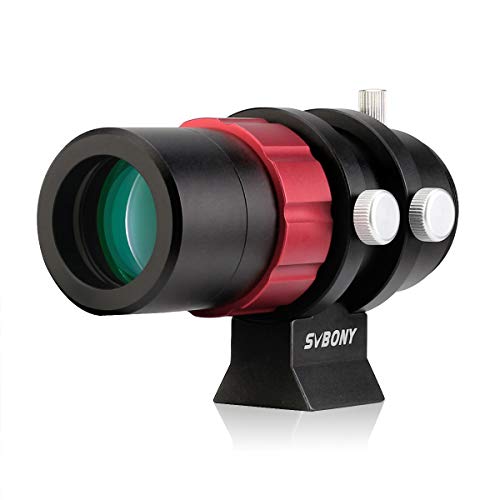
- 30mm achromatic optics with a wide field of view
- 45mm back focus for focusing flexibility
- Supports compatible 1.25-inch and M42 guide cameras
Best For: Compact deep-sky astrophotography setups
Simple Aiming Choice
Celestron StarPointer Finderscope

- 1x red-dot finder for quick aiming
- Right-side-up view is intuitive for beginners
- Includes mount and CR2032 battery
Best For: Visual observing and beginner telescope alignment
Focused Imaging Upgrade
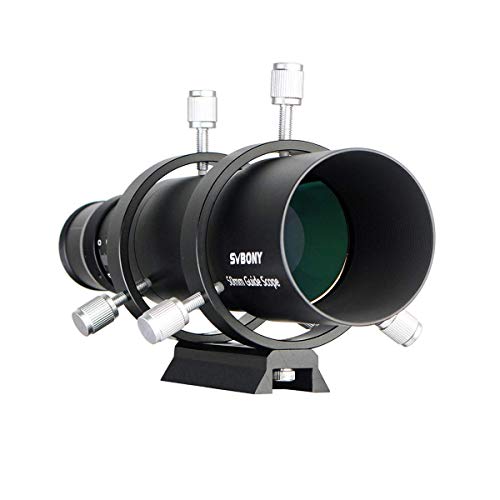
- 50mm objective for astrophotography guiding
- 8mm helical focus travel plus drawtube extension
- Includes rings and a dovetail mounting bar
Best For: Astrophotographers wanting precise manual focusing
Flexible Red-Dot Finder

- Four reticle patterns with red or green illumination
- Large open viewing window for easy aiming
- Dovetail bracket fits Vixen and SkyWatcher formats
Best For: Customizable visual telescope alignment
Bright Wide-Field Finder

- 50mm objective with bright 8x views
- Wide 7.3° field for easier aiming
- Illuminated, corrected-image glass reticle
Best For: Visual observers seeking a bright, wide-field finder
Astrophotography Guide Scope
Astromania 50mm Guide Scope with Helical Focuser

- Helical focuser for precise adjustment
- Includes rings and Synta-style dovetail bar
- T-threads support compatible guide cameras
Best For: Visual finding and autoguiding setups
Compact Alignment Finder
SVBONY 5x24 Crosshair Viewfinder

- Lightweight 5x24 finder for basic alignment
- Three thumb screws enable XY adjustment
- Includes bracket and protective dust caps
Best For: Lightweight telescopes and beginner-friendly aiming
Best Dual-Purpose Guide Scope
Astromania 30mm F4 Guide Scope

- 30mm fully multi-coated achromatic optics
- Right-angle diagonal for visual use
- T2 adapter supports compatible cameras
Best For: Beginners who want a guide scope that also works as a finderscope
Best Traditional Finder
Astromania 6x30 Crosshair Finder

- 6x magnification with a 30mm objective
- Built-in crosshairs for alignment
- Wide field for quick target finding
Best For: Visual observers seeking an affordable magnified finder
Best Simple Aiming Aid

- Adjustable red LED dot for quick aiming
- Thumbwheels enable precise alignment
- Fits Synta-style dovetail slots
Best For: Beginners who want fast, uncomplicated visual alignment
Compact Autoguiding Pick – SVBONY SV165 30mm Guide Scope
For shoppers comparing telescope guide scopes under 100, the SVBONY SV165 is a compact option designed for autoguiding cameras. Its 30mm aperture, 120mm focal length, and 45mm back focus make it suitable for users who want a wide field of view in a small package.
Best For: Deep-sky astrophotography setups using compatible 1.25-inch or M42 auto-guiding cameras.
Pros:
- Compatible with SV305C Pro, ZWO, QHY, Orion, and other compatible guiding cameras.
- Fully multi-coated 30mm achromatic optics provide a bright, clear image.
- Wide field of view and 45mm back focus support quick target finding and precise adjustment.
- Nylon-tipped thumbscrews help protect the scope tube.
Cons:
- It cannot be used with a dielectric mirror star diagonal.
- Some camera models may require additional focusing accessories.
- The image appears inverted when used with an eyepiece.
The SV165 is a practical, lightweight guide scope for camera-based guiding, especially when space and field of view matter. Confirm camera compatibility and focusing requirements before ordering.
Simple Aiming Choice – Celestron StarPointer Finderscope
Among telescope guide scopes under 100, the Celestron StarPointer is a straightforward red-dot finder rather than a magnifying guide scope. It adds point-and-look aiming, helping users center targets quickly before viewing through the main telescope.
Best For: Beginners and visual observers who want an easy, non-magnifying way to aim a telescope.
Pros:
- Right-side-up view matches the unaided-eye view of the sky.
- Adjustable red-dot brightness helps preserve night vision or support daytime aiming.
- Works with telescopes, astronomical binoculars, and spotting scopes.
- Includes the mounting base and a CR2032 battery.
Cons:
- It is a 1x, non-magnifying finder, not an optical guide scope for autoguiding.
- Compatibility depends on the telescope’s mounting arrangement.
The StarPointer is best understood as an aiming accessory for visual observing. Choose it for fast target acquisition, but select a dedicated camera guide scope if your goal is astrophotography guiding.
Focused Imaging Upgrade – SVBONY SV106 50mm Guide Scope
For telescope guide scopes under 100, the SVBONY SV106 offers a larger 50mm objective and a helical focuser for more controlled camera focusing. It is built for astrophotographers who want a sturdy guide scope with adjustable travel and flexible mounting.
Best For: Astrophotographers using compatible 1.25-inch or ZWO 120 Mini guide cameras.
Pros:
- 50mm lens provides a capable guide-scope platform for astrophotography.
- Helical focuser offers 8mm of precise adjustment, with up to 30mm of additional drawtube travel.
- Focuser can be locked after adjustment to support rigid performance.
- Includes two guide-scope rings and a 3.5-inch dovetail mounting bar.
Cons:
- At 1.7 pounds, it is less lightweight than a compact mini guide scope.
- Manual focusing requires setup and adjustment before use.
- Camera compatibility should be checked before purchase.
The SV106 is a feature-rich choice for users who value precise focusing and a larger objective. Its included rings and dovetail bar add mounting convenience, but the heavier design may not suit every portable setup.
Flexible Red-Dot Finder – Astromania Deluxe StarPointer
The Astromania Deluxe StarPointer is a red-dot aiming accessory for shoppers browsing telescope guide scopes under 100. Its open viewing window, selectable reticles, and adjustable red or green illumination make it useful for quickly positioning a telescope on planets, stars, and other targets.
Best For: Visual observers who want customizable, non-magnifying telescope alignment.
Pros:
- Large viewing window supports quick target acquisition with both eyes open.
- Offers four reticle patterns and five brightness levels in red or green.
- Horizontal and vertical adjustment screws help with precise alignment.
- Vixen- and SkyWatcher-format dovetail bracket supports broad telescope compatibility.
Cons:
- It is a non-magnifying reflex finder, not an autoguiding scope.
- Requires a CR2032 lithium button cell.
- Mounting compatibility should be confirmed for the specific telescope.
The Deluxe StarPointer is a versatile aiming solution rather than a camera guide scope. Its reticle and color choices are helpful when observing under changing conditions, while the dovetail bracket simplifies installation on compatible mounts.
Bright Wide-Field Finder – SVBONY SV208 8×50 Finderscope
For telescope guide scopes under 100, the SVBONY SV208 is a practical choice when you want a bright, wide view for locating targets. Its 50mm objective, 8x magnification, and 7.3-degree field of view make initial aiming easier, while the corrected image keeps views oriented naturally.
Best For: Observers who want a bright illuminated finder for visual target acquisition.
Pros:
- 50mm objective gathers more light for a bright image.
- 7.3-degree field of view makes sweeping the sky easier.
- Correct-image prism provides right-side-up, left-to-right-correct views.
- Illuminated glass reticle helps under very dark observing conditions.
Cons:
- At 632 g, it may add noticeable weight to a smaller telescope.
- Battery-powered illumination requires a battery for the reticle feature.
- Manual alignment and focusing require user adjustment.
The SV208 emphasizes comfortable, straightforward finding rather than compactness. Its large aperture and illuminated reticle are useful for dark-sky setup, provided your telescope mount can accommodate its weight and mounting arrangement.
Astrophotography Guide Scope – Astromania 50mm Guide Scope with Helical Focuser
Among telescope guide scopes under 100, this Astromania model is geared toward flexible astrophotography setups. It combines a helical focuser, mounting rings, and a Synta-style dovetail bar, with male T-threads for direct attachment of compatible guide cameras.
Best For: Astrophotographers who need a multi-use guide scope for visual finding and autoguiding.
Pros:
- Helical focuser supports precise focusing with minimal rotation.
- Includes guide rings and a Synta-style mounting plate.
- Male T-threads enable secure attachment of compatible guide cameras.
- 200mm focal length is designed for astrophotography telescopes up to 1500mm focal length.
Cons:
- The supplied notes list conflicting objective and focal-length details, so verify the exact specification before ordering.
- At 1.3 pounds, it may be heavier than a basic visual finder.
- It requires manual setup and compatible mounting or camera threads.
This is the most imaging-oriented option in the group, with focusing and mounting hardware intended for a stable guiding setup. Check your telescope, guide camera, and dovetail compatibility carefully before purchase.
Compact Alignment Finder – SVBONY 5×24 Crosshair Viewfinder
For telescope guide scopes under 100, the SVBONY 5×24 is a lightweight, straightforward alignment aid. Its low-power view helps you locate objects before switching to the main telescope, and the included curved-base bracket attaches with bolts or screws.
Best For: Beginners and lightweight telescope setups that need a simple crosshair finder.
Pros:
- Lightweight 1.76-ounce design adds little load.
- 5x magnification provides a simple low-power locating view.
- Three thumb screws support precise XY alignment.
- Includes a mounting bracket and dust caps.
Cons:
- The 1.15-degree field of view is narrower than the SV208’s listed field.
- Its bracket does not slide into a dovetail base.
- Manual operation and fully coated optics are more basic than an illuminated finder.
The 5×24 is a sensible budget finder when low weight and basic alignment matter most. Its included bracket is useful, but confirm that your telescope has suitable holes or mounting points because it is not designed for a dovetail base.
Best Dual-Purpose Guide Scope – Astromania 30mm F4 Guide Scope
For telescope guide scopes under 100, the Astromania Mini Guide Scope stands out as a compact option that can work as both a guide scope and a finderscope. Its 30mm fully multi-coated achromatic optics, right-angle diagonal, and T2 adapter support visual targeting and compatible astrophotography setups.
Best For: Beginners and astrophotographers who want one compact scope for target finding and autoguiding.
Pros:
- 30mm F4 optics provide a bright, wide field of view for target acquisition.
- Includes a 1.25-inch 90-degree diagonal for more comfortable visual observing.
- T2 extension adapter supports compatible guide cameras and DSLRs.
- Synta-style dovetail base fits finder bases from several major telescope brands.
Cons:
- Manual focusing requires a three-step adjustment using the focus ring.
- Its T2 compatibility depends on the guide camera or accessory being used.
The CNC-machined aluminum body, brass rings, and helical focuser make this a versatile choice when you need more than a basic finder. Verify your mounting base and camera thread compatibility before buying.
Best Traditional Finder – Astromania 6×30 Crosshair Finder
Among telescope guide scopes under 100, this Astromania 6×30 model is better suited to straightforward visual locating than camera guiding. Its 30mm objective, 6x magnification, wide field, and built-in crosshairs help you align and locate targets through a conventional optical finder.
Best For: Telescope users who need an affordable, magnified finder for quick manual target location.
Pros:
- 6x magnification and a 30mm objective reveal more detail than naked-eye aiming.
- Built-in crosshairs support accurate object location.
- Wide field of view helps make target acquisition quicker.
- Three adjustment screws allow alignment with the main telescope.
Cons:
- The straight-through view is not corrected, which may feel less intuitive for some users.
- It is described as a finder scope rather than a dedicated autoguiding scope.
With its simple manual alignment system and low 7.4-ounce weight, this is a practical accessory for visual astronomy. Choose it when your priority is locating objects through magnified optics rather than connecting an autoguider camera.
Best Simple Aiming Aid – Astromania Red Dot Finder
For telescope guide scopes under 100, the Astromania Red Dot Finder offers the simplest approach to aiming. Instead of magnifying the sky, it projects an adjustable red LED dot onto a viewing window, allowing you to point the main telescope quickly with both eyes open.
Best For: Beginners and visual observers who want fast, uncomplicated telescope alignment.
Pros:
- Non-magnifying red-dot view makes initial aiming quick and intuitive.
- Horizontal and vertical thumbwheels allow precise alignment.
- Adjustable brightness helps tailor the dot to observing conditions.
- Slide-in foot fits Synta-style dovetail slots.
Cons:
- It does not magnify targets or provide optical crosshairs.
- Requires one CR2032 battery, which is not included.
- Its stated 10-degree field of view is intended for aiming rather than detailed locating.
This lightweight 2.6-ounce finder is a convenient choice when speed and simplicity matter more than magnified views. Confirm that your telescope has a compatible quick-release dovetail mount before ordering.
How We Picked the Best Telescope Guide Scopes Under 100
We focused on affordable models that serve practical alignment and finding needs across visual astronomy and entry-level astrophotography. The selection includes red-dot finders for fast, intuitive pointing; optical finders with magnification and crosshairs; and compact guide scopes with helical focusers or camera-friendly designs.
We also considered aperture, focal ratio, focusing method, reticle visibility, mounting hardware, optical configuration, and versatility. Because compatibility varies between telescope tubes, guide-camera adapters, and finder shoes, buyers should confirm dimensions and included brackets before ordering.
Quick Comparison
| Type | Best For | Main Advantage | Watch For |
|---|---|---|---|
| Red-dot finder | Fast visual alignment | Simple, wide-open aiming | Needs visible stars or a dark sky |
| 5×24 or 6×30 optical finder | Beginning observers | Magnifies dimmer targets | Narrower field and possible image orientation issues |
| 8×50 optical finder | Deeper-sky locating | Brighter, more detailed view | More weight and bulk |
| 30mm guide scope | Compact guiding setups | Lightweight and easy to mount | Limited light-gathering compared with 50mm models |
| 50mm guide scope | Guiding and multi-use viewing | More aperture and focusing flexibility | Higher weight and mounting demands |
Key Buying Factors for Telescope Guide Scopes Under $100
Choose the Right Optical Role
A red-dot finder is usually the simplest choice for manually pointing a telescope because it shows where the telescope is aimed without magnifying the sky. An optical finder is more useful when you need to identify fainter stars or deep-sky targets. For guiding, a dedicated mini guide scope should be matched with a suitable guide camera and secure mounting system.
Check Aperture, Focal Ratio, and Focus
Larger apertures gather more light but add weight. A 30mm model is often sufficient for a lightweight imaging rig, while a 50mm scope can offer a brighter field and more flexibility. Helical focusers make fine adjustments easier than sliding tubes, especially when focusing a guide camera or eyepiece.
Confirm Mounting and Image Orientation
Make sure the finder shoe, bracket, dovetail, and tube-ring spacing match your telescope. Straight-through optical finders may show an inverted or non-corrected image, which can take practice. A right-angle or correct-image design may be more comfortable for visual use, but it can be less intuitive for initial alignment.
Consider Reticles and Night Use
Crosshair reticles help center stars precisely, while red-dot designs are quicker for broad aiming. Adjustable brightness is valuable because an overly bright reticle can obscure faint stars. Optical quality, fully multi-coated lenses, and a stable bracket also matter more than cosmetic features.
Who Should Buy Which Telescope Guide Scopes Under 100?
Choose a red-dot finder if you want the fastest, simplest alignment for bright targets and casual observing. Choose a 5×24 or 6×30 optical finder if you are building a first telescope setup and want magnification without much added weight.
Choose an 8×50 finder or 50mm guide scope when you need a brighter view, more detailed star patterns, or additional guiding flexibility. Choose a 30mm mini guide scope for a compact astrophotography rig where low weight and easy balancing are priorities. Before buying, verify the attachment system, camera or eyepiece compatibility, and whether the product is intended primarily for visual finding, guiding, or both.