The best science experiment sets for classrooms make abstract concepts easier to understand through safe, hands-on activities. The options in this roundup cover chemistry, magnetism, physics, robotics, crystals, slime, and other STEM topics.
We included compact starter kits, larger multi-experiment sets, and bulk-friendly choices so teachers can match materials to age group, lesson plans, storage space, and classroom size.
Best 10 Science Experiment Sets for Classrooms Picks for 2026
Best Starter Lab Set
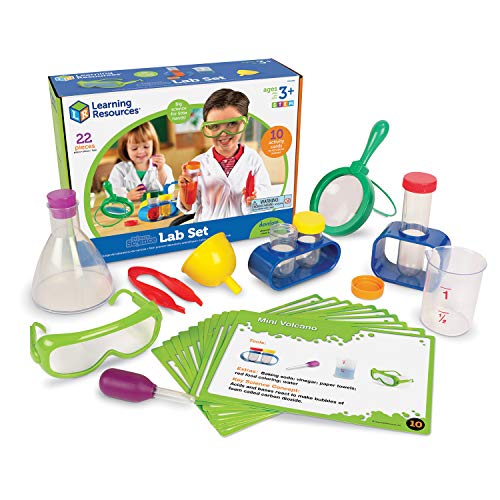
- 22 pieces with child-sized science tools
- Includes 10 double-sided activity cards
- Durable plastic for early learners
Best For: Preschool and early elementary science centers
Best Large Tool Assortment
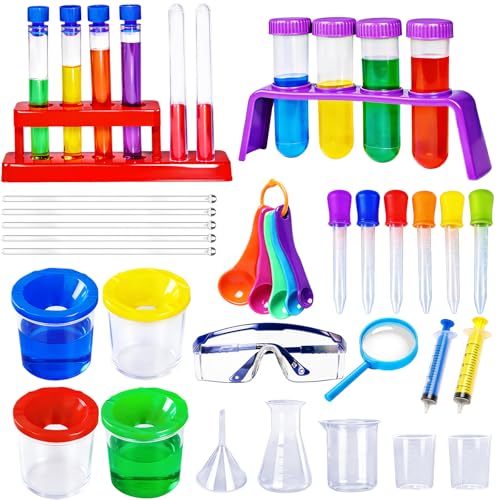
- Broad 37-piece tool selection
- Includes beaker, test tubes, droppers, and funnels
- Smooth plastic with rounded edges
Best For: Early science stations and tool-handling activities
Best Magnetism Focus

- 14-piece introductory magnetism kit
- Includes magnets, compass, cars, and iron filings
- Designed for physics exploration ages 8+
Best For: Introductory magnetism and physics units
Best Experiment Variety

- Offers 150 multi-topic experiments
- Illustrated step-by-step manual included
- Covers chemistry, physics, Earth science, and more
Best For: Ages 8+ enrichment and multi-topic project work
ColorBurst Volcano Kit
30-Piece Classroom Eruption Set

- 30-piece bulk format for group use
- Six colorful eruption options
- Two eruptions per colorful packet
Best For: Classroom activities, rewards, and party favor bags
Junior Lab Explorer Set
33-Piece Chemistry Classroom Kit

- Includes beakers, test tubes, and rack
- Adds goggles, gloves, droppers, and tools
- Plastic design is colorful and easy to clean
Best For: Older students exploring chemistry tools and observations
BuildBot STEM Collection

- Six separate robotics and STEM builds
- Supports construction and problem-solving skills
- Includes screwdriver and step-by-step manuals
Best For: Collaborative engineering projects for ages 8–12
Best Complete Classroom Lab Kit

- Includes beakers, test tubes, flasks, goggles, and measuring tools
- Duplicate components support partner or small-group work
- Designed for hands-on observation and introductory chemistry
Best For: Classroom or homeschool lab activities needing a wide range of reusable plastic tools
Best Variety Pack
Discovery Mini Science Kit 8-Pack

- Provides 32 experiments in eight individually packaged kits
- Explores chemistry, physics, crystals, space, and more
- Suitable for hands-on STEM activities for ages 8–12
Best For: Themed classroom stations and varied elementary or middle-grade STEM lessons
Best Small-Group Equipment Set

- Includes four goggles, flasks, and magnifying glasses
- Provides cylinders, beakers, test tubes, droppers, and funnels
- Thick plastic construction is designed for classroom-style use
Best For: Small-group lab stations using reusable tools for introductory chemistry activities
Best Starter Lab Set – Primary Science Lab Set
For classrooms introducing young learners to science experiment sets for classrooms, this 22-piece kit provides child-sized tools and guided activity cards. It supports simple investigations with familiar household ingredients while encouraging observation and early hypothesis-building.
Best For: Preschool and early elementary science centers, structured activities, and imaginative STEM play.
Pros:
- Includes a flask, beaker, magnifying glass, eyedropper, funnel, tweezers, test tubes, stands, goggles, and 10 double-sided activity cards.
- Tools are sized for little hands and made from thick plastic designed to withstand drops and spills.
- Supports critical thinking, observation, hypothesis formation, and open-ended pretend play.
Cons:
- Recommended for younger children, so it may offer limited depth for advanced students.
- Experiments use common household ingredients, which are not included as dedicated materials.
This is a practical choice when a classroom needs durable introductory equipment and built-in activity guidance rather than a highly specialized chemistry curriculum.
Best Large Tool Assortment – 37-Piece Kids Science Kit
This 37-piece option gives classrooms a broad assortment of basic equipment for hands-on science experiment sets for classrooms. Test tubes, droppers, funnels, measuring tools, and safety glasses support simple observation and handling activities.
Best For: Early science stations, sensory investigation, and group activities focused on basic tools and procedures.
Pros:
- Includes test tubes with a stand, magnifier, safety glasses, dropper, funnels, measuring spoons, measuring cup, beaker, and stir sticks.
- Rounded, smooth plastic edges are designed for easier and safer handling.
- Offers a larger piece count for varied classroom exploration and repeated activities.
Cons:
- The supplied notes do not identify a detailed experiment guide or activity cards.
- Age information is inconsistent in the listing, so teachers should verify suitability before classroom use.
Choose this set when variety and quantity of basic plastic tools matter most, but plan to supply lesson instructions and experiment materials separately.
Best Magnetism Focus – Junior Science Magnetism Set
For classrooms seeking science experiment sets for classrooms with a clear physics focus, this 14-piece magnetism kit provides hands-on materials for exploring attraction, magnetic fields, compasses, and related observations. Suggested experiments can be extended with everyday items such as paper, rulers, and pens.
Best For: Students ages 8 and up studying introductory magnetism and practical physics.
Pros:
- Includes bar magnets, a U-shaped magnet, ring magnet, compass, three magnetic cars, and an iron filings box.
- Supports experiments connected to magnetism, physics, and understanding the Earth.
- Encourages hypothesis development, observation, and creative investigation using common classroom supplies.
Cons:
- Its focused magnetism theme is less versatile than a broad general science kit.
- Some experiment materials must be supplied separately.
This is a strong classroom supplement for a magnetism unit, especially when the teacher wants students to investigate physical principles rather than simply follow general science activities.
Best Experiment Variety – 150 Experiments Science Kit
This kit stands out among science experiment sets for classrooms by offering 150 projects across topics including chemistry, physics, Earth science, and surface tension. Its illustrated, step-by-step manual can help teachers organize extended hands-on learning with many household materials.
Best For: Elementary and middle-school enrichment, science clubs, breaks, and multi-topic project work for ages 8 and up.
Pros:
- Provides 150 experiments covering chemistry, physics, Earth topics, and surface tension.
- Includes a step-by-step illustrated manual to guide project setup and procedures.
- Supplies lab tools, child-friendly materials, and safety goggles for scientist-style activities.
Cons:
- Many projects rely on regular household items that are not included.
- The large number of activities may require more teacher preparation and storage planning.
For educators wanting breadth and repeat-use value, this is the most comprehensive option in the group, provided the classroom can gather supplemental household supplies and manage the project volume.
ColorBurst Volcano Kit – 30-Piece Classroom Eruption Set
For teachers seeking science experiment sets for classrooms, this bulk volcano kit offers a colorful, hands-on geology activity. Each package includes materials for two eruptions, with red, blue, pink, yellow, green, and purple effects that can make a group lesson or classroom reward especially engaging.
Best For: Classroom activities, party favors, goodie bags, and STEM-themed rewards for children ages 3 and up.
Pros:
- Includes 30 pieces for distributing across a group.
- Colorful eruption options add visual interest to the activity.
- Each colorful packet can be used in two batches for two eruptions.
- Activity card provides written instructions and a video reference.
Cons:
- The set is centered on one volcano-themed activity rather than a variety of experiments.
- The instructions may require extra setup for younger children.
This is a practical pick when you need a high-quantity, easy-to-share volcano activity. Its bulk format suits classroom rewards and group events, while the bright eruptions can help introduce basic geology through direct participation.
Junior Lab Explorer Set – 33-Piece Chemistry Classroom Kit
This 33-piece lab set is a versatile option among science experiment sets for classrooms, providing plastic beakers, test tubes, droppers, measuring tools, and safety accessories. It is designed for exploratory chemistry activities where students can observe changes and practice using laboratory-style equipment.
Best For: Older students, classroom or home chemistry exploration, and hands-on lessons focused on observation and tool use.
Pros:
- Includes three beakers, four test tubes, a rack, droppers, pipettes, and a conical flask.
- Also provides goggles, gloves, a funnel, magnifying glass, stirring rods, and measuring tools.
- Colorful plastic materials make changes easier to observe and are designed for easy cleaning.
- Supports exploratory skills and curiosity through hands-on activities.
Cons:
- The supplied listing recommends the set for ages 16 and up.
- It does not include specified experiment materials or reagents.
- Its many individual pieces may need organized storage between lessons.
This set works best as reusable classroom equipment rather than a complete, ready-to-run experiment curriculum. Choose it when students need a broad assortment of basic lab tools for supervised chemistry exploration.
BuildBot STEM Collection – 6-in-1 Robotics Project Set
For hands-on engineering lessons, this robotics set expands the idea of science experiment sets for classrooms beyond traditional reactions. Students build six separate projects, including a reptile robot, balance car, bubble machine, fiber lamp, and sliding plane, while practicing construction and problem-solving skills.
Best For: STEM project sessions and collaborative building activities for children roughly ages 8–12, with adult guidance as needed.
Pros:
- Provides six separate robot-building projects in one set.
- Encourages construction, logical thinking, creativity, and problem solving.
- Includes a screwdriver and step-by-step instruction manuals.
- Suitable for individual builds or family and classroom collaboration.
Cons:
- The projects require assembly time and following detailed instructions.
- The set is focused on building and motorized crafts rather than chemistry experiments.
- The supplied age information varies between the general listing and recommended range.
This is a strong choice for classrooms emphasizing engineering, teamwork, and iterative building. Its six projects can support multiple sessions, though teachers should plan for assembly time and organize components before students begin.
Best Complete Classroom Lab Kit – 43-Piece Science Lab Set
For classrooms seeking science experiment sets for classrooms with reusable lab-style equipment, this 43-piece plastic kit provides a broad assortment of beakers, test tubes, flasks, goggles, droppers, funnels, and measuring tools. It is suited to guided observation and introductory chemistry activities.
Best For: Classroom or homeschool demonstrations involving basic chemistry tools, measurement, observation, and hands-on exploration.
Pros:
- Broad assortment of equipment, including beakers, conical flasks, test tubes, racks, pipettes, droppers, and funnels.
- Includes two sets of several key components, supporting small-group or partner activities.
- Encourages observation, creativity, exploratory skills, and problem-solving.
Cons:
- Made from plastic, so it may not provide the feel or durability of professional glassware.
- The supplied details identify the kit as intended for ages 16 and up, despite describing junior activities.
This is a practical option when equipment variety and duplicate pieces matter more than included experiment instructions. Teachers should plan age-appropriate activities and provide appropriate supervision.
Best Variety Pack – Discovery Mini Science Kit 8-Pack
Among science experiment sets for classrooms, this eight-pack stands out for thematic variety: it combines 32 hands-on experiments across chemistry, physics, crystal growing, space, frozen earth, magic, creepy science, and deep-sea themes. Individually packaged kits can help teachers rotate activities or create themed stations.
Best For: Elementary and middle-grade classrooms wanting engaging, theme-based STEM activities for students ages 8–12.
Pros:
- Offers 32 total experiments across eight mini science kits.
- Covers varied topics, including reactions, crystals, slime, space, materials science, and observation.
- Individually packaged sets can support activity stations, gifts, or group rotations.
Cons:
- It is a collection of themed activity kits rather than a broad reusable lab-equipment set.
- Some experiments may require teacher preparation or additional materials, depending on the activity.
This pack is a strong choice for classrooms prioritizing engagement and topic variety. It works especially well when lessons are organized into short, themed STEM stations rather than one continuous laboratory unit.
Best Small-Group Equipment Set – Copkim 39-Piece Lab Kit
This Copkim set is a useful choice among science experiment sets for classrooms when several students need access to the same basic tools. It includes four flasks, four pairs of goggles, four magnifying glasses, eight test tubes, two racks, beakers, graduated cylinders, droppers, funnels, and other accessories.
Best For: Small-group classroom activities focused on basic chemistry, measurement, observation, and safe experiment routines.
Pros:
- Includes four flasks, four pairs of goggles, and four magnifying glasses for shared group work.
- Graduated cylinders, beakers, test tubes, droppers, and funnels support varied introductory activities.
- Thick plastic construction is described as suitable for drops, spills, and rough play.
Cons:
- It includes equipment but does not list specific experiment materials or instructions.
- The supplied manufacturer age recommendation is 12–16 years, so younger students may need additional guidance.
Choose this kit when durable, repeat-use tools and multiple student-access pieces are the priority. Its four-person quantities make it particularly practical for rotating small groups, demonstrations, or classroom lab stations.
How We Picked These Science Experiment Sets for Classrooms
We focused on kits that support active learning rather than one-time novelty play. Our selection considers experiment variety, reusable equipment, student accessibility, subject coverage, and how easily a teacher can adapt activities for demonstrations, pairs, small groups, or learning stations.
We also looked for practical combinations of beakers, test tubes, droppers, magnets, experiment materials, and instructions. Because classroom needs vary, the list includes both broad science kits and focused sets for topics such as magnetism, chemistry, robotics, and physical reactions.
Quick Comparison
| Classroom need | Best type of set | What to prioritize |
|---|---|---|
| General STEM introduction | Multi-topic experiment kit | Clear instructions and varied activities |
| Small-group chemistry lessons | Lab-style beaker and test tube set | Enough tools for multiple students |
| Focused physics instruction | Magnetism or robotics kit | Concept-specific components and challenges |
| Large classes or events | Bulk activity or prize pack | Low cost per student and easy distribution |
| Enrichment stations | Specialty themed kit | Short, engaging activities with varied outcomes |
Key Buying Factors for Science Experiment Sets for Classrooms
Age Suitability and Supervision
Check the recommended age range and read the activity instructions before buying. Younger students typically need simpler procedures and closer adult supervision, while older learners may benefit from kits that encourage measurement, prediction, recording results, and repeat trials.
Experiment Variety
A larger activity count is useful only when the experiments are meaningfully different and use materials you can replenish. Multi-topic sets offer flexibility, while focused kits may provide better depth for a particular unit.
Class Size and Quantity
Determine whether students will work individually, in pairs, or in groups. One set with a single beaker and dropper may work for teacher demonstrations but can create delays during hands-on lessons. Multiple smaller sets or bulk packs may be more practical.
Durability, Storage, and Cleanup
Plastic labware is generally easier to handle in classrooms than glass, especially with younger children. Look for stackable or compact components, labeled parts, resealable packaging, and activities that do not require difficult cleanup. Always provide appropriate protective equipment and follow the manufacturer’s safety guidance.
Instructional Value
Prioritize kits that help students observe cause and effect, form hypotheses, collect evidence, and explain results. A teacher guide, reproducible worksheet, or clearly sequenced instructions can make a major difference in lesson preparation.
Who Should Buy Which Science Experiment Sets for Classrooms?
Choose a broad lab-style kit if you need one flexible resource for introductory chemistry and general STEM activities. A magnetism set is better for a focused physics unit, while a robotics kit suits classrooms emphasizing building, engineering, and problem-solving. Large multi-experiment kits work well for enrichment programs and rotating stations, provided you have enough time and supplies to manage each activity.
For parties, science nights, classroom rewards, or large groups, bulk volcano or small experiment packs can keep the per-student cost down. They are less suitable when you need deep instruction or repeated use. Whichever option you select, match the kit to your curriculum, student count, supervision capacity, and available storage before placing an order.