Reliable guiding can make the difference between crisp, detailed deep-sky exposures and images softened by trailing. The right camera must work well with your guide scope or off-axis guider, capture enough stars, and integrate smoothly with your imaging software.
This roundup covers 10 telescope guide cameras and camera bundles, from compact finder-scope combinations to cooled color cameras and OAG setups. Use the guide below to match sensor performance, field of view, connection type, and compatibility to your telescope and imaging goals.
Best 10 Telescope Guide Cameras for Deep Sky Imaging Picks for 2026
Versatile Guide-and-Finder Setup

- 60mm guide scope with helical focuser
- Orientation-preserving focus adjustment
- IMX662 camera with low readout noise
Best For: Flexible guiding, finding, and planetary imaging
Cooled Deep-Sky Imaging Choice
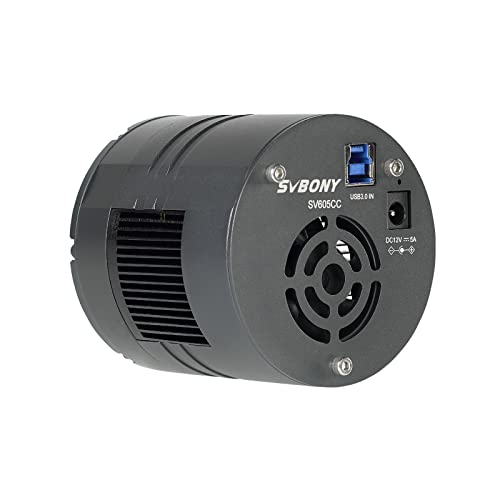
- 9MP square IMX533 color sensor
- Cooling up to 30°C below ambient
- Glow suppression for improved imaging
Best For: Cooled color deep-space photography
Compact Wide-Field Guide Scope
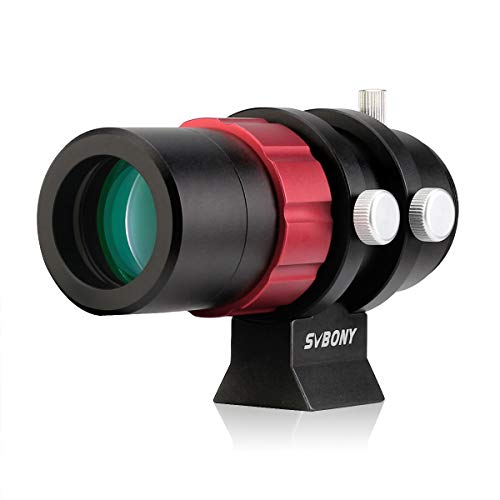
- 30mm f/4 achromatic optics
- 2.86-degree wide field of view
- 1.25-inch and M42 camera interfaces
Best For: Lightweight guiding with a separate compatible camera
High-Speed Planetary Guide Camera

- 1920×1080 video at up to 107 fps
- ST4 interface for PHD2 and ASCOM
- USB 3.0 with 128MB DDR buffer
Best For: Computer-based guiding and planetary imaging
Best Guide Scope Bundle

- 60mm guide scope with helical focuser
- 1.23MP color camera with 80% peak QE
- ST4 and major guiding-software support
Best For: Astrophotographers seeking a complete autoguiding bundle
Best Entry-Level Deep-Sky Camera
SV705C IMX585 Astronomy Camera

- 3856×2180 resolution with a 1/1.2-inch sensor
- Up to about 90% peak QE and 38ke full well
- USB 3.0 for EAA, planetary, and lucky imaging
Best For: Beginners exploring EAA and introductory deep-sky capture
Best Wireless EAA Camera

- Up to 30-second exposures for beginner deep-sky imaging
- Built-in WiFi control from a phone or tablet
- Battery, 32GB storage, RAW/FITS, and scheduled shooting
Best For: Portable EAA and wireless beginner astrophotography
Compact Guiding Pick

- 1.23MP color CMOS sensor
- ST4 interface and broad software support
- Compact 1.25-inch format
Best For: Autoguiding and occasional planetary imaging
Beginner Imaging Choice
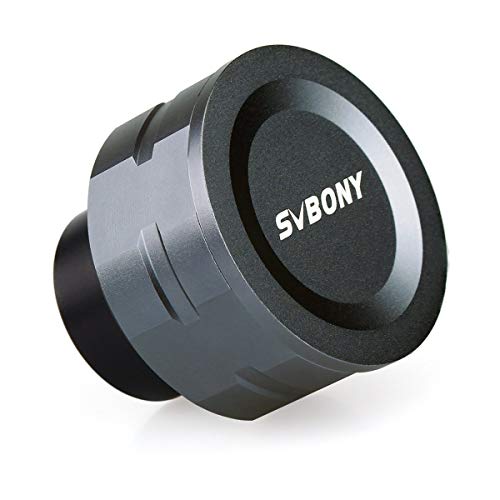
- IMX307 color sensor
- 1080p video at up to 30 fps
- Plug-and-play 1.25-inch design
Best For: Lunar, planetary, and beginner telescope imaging
Integrated OAG Package

- 8x14mm large off-axis prism
- Includes SV905C guide camera
- Dual helical focuser
Best For: Deep-sky OAG setups needing a wider guide-star field
Versatile Guide-and-Finder Setup – SV106 with SV305C Pro
For shoppers comparing telescope guide cameras for deep sky imaging, this SVBONY combination pairs a 60mm guide scope with the SV305C Pro camera. Its helical focuser maintains the camera’s orientation while focusing, and the scope can also serve as a straight-through finder with an optional 1.25-inch eyepiece.
Best For: Astrophotographers who want one flexible guide-scope and camera setup that can also support planetary imaging and finder-scope use.
Pros:
- 60mm aperture provides a versatile guide-scope platform.
- Helical focuser adjusts focus without rotating the field of potential guide stars.
- SV305C Pro offers an IMX662 sensor, low readout noise, and high frame rates.
- Optional eyepiece use allows the scope to function as a finder.
Cons:
- The SV305C Pro is primarily positioned for planetary imaging and guiding rather than dedicated cooled deep-sky capture.
- An optional 1.25-inch eyepiece is needed for finder-scope use.
This is a practical choice when versatility matters more than a specialized deep-sky camera. The stable helical focusing design and included camera give the setup useful flexibility across guiding, finding, and planetary work.
Cooled Deep-Sky Imaging Choice – SV605CC IMX533
Among telescope guide cameras for deep sky imaging, the SV605CC is aimed more directly at deep-space capture than basic guide-camera duties. Its cooled 9MP IMX533 color sensor uses a square 3008-by-3008 frame, glow suppression, and two-stage semiconductor cooling rated up to 30°C below ambient.
Best For: Deep-sky photographers seeking a cooled color camera for deep-space photography, panoramic astronomy, meteor monitoring, or lucky imaging.
Pros:
- 9MP, 1-inch IMX533 color sensor delivers a 3008-by-3008 square frame.
- Reported quantum efficiency reaches 80% for improved capture efficiency.
- Glow suppression helps protect signal-to-noise performance in affected areas.
- Two-stage cooling can reduce the sensor temperature by up to 30°C below ambient.
Cons:
- This is a dedicated cooled imaging camera, not a compact guide scope and camera bundle.
- Its 1.6 kg listed weight may require careful attention to mount balance.
- The supplied details emphasize manual focus, so the imaging setup may require hands-on focusing.
The SV605CC is the strongest fit here for users prioritizing cooled deep-sky acquisition. Its square IMX533 format, glow control, and substantial cooling make it better suited to long-session imaging than an uncooled planetary guide camera.
Compact Wide-Field Guide Scope – SV165 Mini Finder
For telescope guide cameras for deep sky imaging, the SV165 provides a compact optical platform to pair with a compatible auto-guiding camera. Its 30mm aperture, f/4 optics, 45mm back focus, and wide 2.86-degree field are designed to make target acquisition and guiding setup straightforward.
Best For: Users building a lightweight guide system with SV305C Pro, ZWO, QHY, Orion, or other compatible auto-guiding cameras.
Pros:
- 30mm achromatic optics and f/4 aperture provide a wide field of view.
- 45mm back focus supports practical focus adjustment.
- 1.25-inch and M42 interfaces support several mainstream guide cameras.
- Nylon-tipped thumbscrews help reduce scratching when positioning the scope.
Cons:
- The guide camera is not included.
- Some camera models may need additional accessories to achieve focus.
- It cannot be used with a dielectric mirror star diagonal and still reach focus.
The SV165 is a sensible low-weight starting point for a separate guiding system. Its broad field and camera compatibility are useful for locating guide stars, but buyers should verify back-focus requirements before ordering.
High-Speed Planetary Guide Camera – SV305C Pro IMX662
The SV305C Pro is a USB 3.0 camera to consider when telescope guide cameras for deep sky imaging also need fast planetary performance. Its IMX662 sensor records 1920-by-1080 video at up to 107 frames per second, while the ST4 interface supports guiding software such as PHD2 and ASCOM.
Best For: Computer-based guiding and high-frame-rate planetary imaging, especially with a compatible guide scope.
Pros:
- IMX662 sensor combines high sensitivity with 0.7e- low readout noise.
- 1920-by-1080 capture at up to 107 fps suits fast-moving planets.
- ST4 guiding interface supports PHD2 and ASCOM workflows.
- USB 3.0 transfer, 128MB DDR buffering, HDR, and flexible ROI support the capture workflow.
Cons:
- This is a 2MP planetary and guide camera rather than a cooled deep-sky imaging camera.
- It requires a computer and does not support connection to an iPad.
- A separate guide scope is needed for guiding unless purchased as part of a bundle.
The SV305C Pro makes the most sense for users who want one fast camera for guiding and planetary capture. Its ST4 connectivity is useful for automated tracking, while its small, uncooled sensor is less specialized for dedicated long-exposure deep-sky work.
Best Guide Scope Bundle – SV106 with SV905C Camera
For shoppers comparing telescope guide cameras for deep sky imaging, the SVBONY SV106 bundle combines a 60mm guide scope with a compact color camera. Its helical focuser, ST4 interface, and broad software compatibility make it a practical setup for finding and tracking guide stars.
Best For: Astrophotographers who want a complete guide-scope-and-camera bundle that can also serve as a finder scope.
Pros:
- 60mm aperture guide scope with a helical focuser for precise focusing.
- Focuser maintains device orientation while adjusting focus.
- 1.23MP color camera offers 80% peak QE and low read noise.
- Supports ST4 guiding and software including PHD2, NINA, and TheSky X.
Cons:
- USB 2.0 is slower than newer USB 3.0 camera interfaces.
- The included camera is primarily suited to guiding and planetary imaging rather than high-resolution deep-sky capture.
This is the most purpose-built option here for autoguiding. The included scope adds flexibility for locating targets, while the camera’s sensitivity and software support help simplify a guided imaging setup.
Best Entry-Level Deep-Sky Camera – SV705C IMX585 Astronomy Camera
The SV705C is a versatile choice among telescope guide cameras for deep sky imaging, especially for entry-level EAA and lucky imaging. Its IMX585 sensor combines a large 1/1.2-inch format, high quantum efficiency, and USB 3.0 connectivity for detailed, efficient capture.
Best For: Beginners who want one astronomy camera for EAA, planetary work, lucky imaging, and introductory deep-sky shooting.
Pros:
- 3856×2180 maximum resolution with an 11.2mm × 6.3mm image area.
- IMX585 sensor provides up to about 90% peak QE and a 38ke full-well capacity.
- USB 3.0 supports fast data transfer for video-based imaging.
- CS port and included C-CS adapter support C-mount and CS-mount lenses.
Cons:
- It is an imaging camera rather than a dedicated guide-scope bundle.
- Its entry-level deep-sky positioning may not suit demanding long-exposure workflows.
The SV705C stands out for versatility and sensor performance. It is a strong fit when EAA and fast planetary capture matter as much as experimenting with deep-sky imaging.
Best Wireless EAA Camera – SC311 IMX662 WiFi Camera
For portable telescope guide cameras for deep sky imaging, the upgraded SVBONY SC311 adds built-in WiFi, onboard storage, and exposures up to 30 seconds. It is designed for beginner deep-sky imaging and EAA, with controls and captured files managed through a phone or tablet.
Best For: Beginners who prioritize wireless telescope observing, simple EAA sessions, and a self-contained camera with battery power.
Pros:
- IMX662 sensor is designed for low noise, no amp glow, and enhanced red/NIR sensitivity.
- Built-in 2.4G WiFi connects directly to a phone or tablet.
- Supports up to 30-second exposures, RAW/FITS saving, and scheduled shooting.
- Includes a 2500mAh battery, 32GB TF card, and expansion up to 256GB.
Cons:
- Photo mode does not provide an image preview until the exposure button is tapped.
- Its 2.1MP resolution is lower than the SV705C’s 3856×2180 maximum.
- Battery life is rated at around four hours.
The SC311 is the convenience-focused option. Wireless control and internal storage reduce the need for a computer during EAA, while 30-second exposures make it more capable for beginner deep-sky experiments than a basic planetary camera.
Compact Guiding Pick – SV905C Guide Camera
For shoppers comparing telescope guide cameras for deep sky imaging, the SVBONY SV905C is a compact color camera built around a 1/3-inch, 1280×960 CMOS sensor. Its small pixels, high peak QE, ST4 port, and software compatibility make it a practical option for autoguiding with a guide scope or off-axis guider.
Best For: Autoguiding and occasional planetary imaging when a compact 1.25-inch camera is preferred.
Pros:
- 1.23MP color sensor with 3.75-micron pixels
- High peak QE of 80% and low read noise for faint guide stars
- USB 2.0 output and ST4 guide interface
- Compatible with PHD2, MDL, NINA, and SKY-X
Cons:
- Not compatible with ASI AIR
- USB 2.0 is an older interface standard
The SV905C offers a focused set of guiding features in a lightweight 1.25-inch body. Check software and hardware compatibility before buying, especially if your setup relies on ASI AIR.
Beginner Imaging Choice – SV105 IMX307 Camera
The SVBONY SV105 is aimed at beginners who want an easy way to view and record lunar, planetary, and terrestrial targets. Although it is not positioned as a dedicated deep-sky guiding camera, its plug-and-play USB design, 1.25-inch format, and 1080p video capture make it a straightforward entry point for telescope imaging.
Best For: Beginners capturing the Moon, bright planets, and live telescope views on a computer.
Pros:
- 1/2.8-inch IMX307 color sensor
- Up to 30 frames per second at 1920×1080
- Plug-and-play operation with no driver required
- 1.25-inch body with M28.5×0.6 filter threading
Cons:
- Designed primarily for lunar and planetary imaging rather than dedicated deep-sky guiding
- Requires compatible capture software on Windows, Linux, or macOS
- Not compatible with Apple phones or tablets
The SV105 makes telescope video capture accessible, but deep-sky imagers should treat it as a beginner imaging camera rather than a purpose-built autoguiding solution. Its strengths are ease of use, live viewing, and bright-target recording.
Integrated OAG Package – SV238 OAG with SV905C
For telescope guide cameras for deep sky imaging, this package combines the SVBONY SV238 off-axis guider with the SV905C camera. The OAG uses a large 8x14mm prism to capture more starlight and provide a wider guide field, while the SV905C adds a 1.23MP color sensor, ST4 connection, and support for popular guiding software.
Best For: Deep-sky setups that need an off-axis guiding package with improved guide-star availability in sparse fields.
Pros:
- Large 8x14mm prism for a wider guide field
- Designed to make suitable guide stars easier to find
- Includes the SV905C camera with ST4 and USB 2.0 connections
- Dual helical focuser supports manual focusing adjustment
Cons:
- Extension tubes may be required for camera back focus
- Cannot be used with the SV226 M42 filter drawer
- Mechanical compatibility should be verified for filter drawers and motorized filter wheels
This is the most purpose-built option in the group for off-axis deep-sky guiding. Its larger prism can help in star-sparse regions, but the imaging train requires careful attention to back focus, mounting holes, and accessory compatibility.
How We Picked the Best Telescope Guide Cameras for Deep Sky Imaging
We focused on practical guiding performance rather than headline specifications alone. The selection includes dedicated guide cameras, guide-scope bundles, compact astronomy cameras, a cooled model for broader imaging use, and an off-axis guider with camera. We considered sensor size and resolution, USB or Wi-Fi connectivity, guide-scope compatibility, form factor, focusing flexibility, and how each option fits common beginner and intermediate astrophotography workflows.
A higher-resolution camera is not automatically better for guiding. Field of view, pixel size, sensitivity, driver support, and the quality of the guide optics often matter more than maximum megapixels.
Quick Comparison
| Setup type | Best suited to | Main advantage | Watch for |
|---|---|---|---|
| Guide-scope bundle | Beginners building a complete system | Camera and optics are matched | Limited upgrade flexibility |
| Standalone guide camera | Existing guide scopes | Easy to reuse across setups | Requires compatible mounting and focus |
| Cooled color camera | Guiding plus broader imaging duties | Lower thermal noise and versatile capture | More cost and complexity than needed for guiding |
| Off-axis guider | Long focal lengths and demanding imaging | Guides through the main telescope | More difficult to configure and focus |
Key Buying Factors for Telescope Guide Cameras for Deep-Sky Imaging
Sensor Sensitivity and Field of View
Choose a sensitive sensor that can find stars during short guide exposures. A larger sensor gives you more sky area and improves the odds of finding a usable guide star, especially with a narrow field of view. Resolution helps with star measurement, but guiding accuracy also depends on seeing, mount quality, and software calibration.
Guide Scope or Off-Axis Guider Compatibility
Short guide scopes are simple and convenient, while an off-axis guider can reduce differential flexure by using light from the main optical path. OAG systems are especially useful with longer focal-length telescopes, but they need enough back focus and may require careful prism positioning. Check the camera’s nosepiece, thread, and mounting format before buying.
Connectivity, Drivers, and Software
USB 3.0 can improve download speed for high-frame-rate focusing and planetary work, while USB 2.0 is generally sufficient for ordinary guiding. Confirm support for your preferred computer, operating system, and guiding software. Wi-Fi can be convenient in the field, but a wired connection is often simpler and more dependable for long sessions.
Cooling and Color Output
Cooling is valuable for reducing noise during long exposures, but it is usually unnecessary for a dedicated guide camera using short exposures. Color cameras can be useful for general astronomy and electronic viewing, although monochrome sensors often provide more efficient guide-star detection.
Who Should Buy Which Telescope Guide Cameras for Deep Sky Imaging?
- New astrophotographers: Choose a guide-scope bundle for a simpler path to a working setup.
- Owners of an existing guide scope: Buy a standalone camera after confirming its barrel, focus range, and software compatibility.
- Long-focal-length imagers: Consider an off-axis guider and sensitive guide camera to limit differential flexure.
- Users wanting one versatile astronomy camera: A higher-resolution or cooled color model may serve guiding, lunar, planetary, and general imaging roles.
- Portable rig builders: Favor compact cameras and mini guide scopes with straightforward USB connections.
Before ordering, verify back-focus requirements, mounting threads, cable length, driver availability, and whether your mount and imaging software support the camera. Matching the camera to the optics and mount is more important than choosing the largest sensor or highest resolution.