Digitizing slides and negatives is one of the easiest ways to preserve family memories, but choosing the right scanner can be difficult when Mac compatibility, film formats, resolution, and software support vary.
This roundup compares 10 options, from dedicated 35mm scanners with infrared dust removal to flexible models with built-in screens and support for multiple film sizes.
Best 10 Slide Scanners for Mac Picks for 2026
Best High-Resolution Choice

- 7200 dpi and 48-bit output
- Infrared dust and scratch detection
- Supports Mac OS 10.7–14.x
Best For: Detailed 35mm film and slide archiving on Mac
Best Large-Screen Standalone Pick

- Standalone operation with no computer required
- 5-inch HD viewing screen
- Handles film, slides, photos, and cards
Best For: Simple family archiving with direct SD-card storage
Best Fast 24MP Scanner

- 24MP JPEG output
- Scans in less than five seconds
- 5-inch display and standalone controls
Best For: Quick digitization of mixed film and slide formats
Best for Easy Batch Viewing

- Quick-feeding tray for smoother scanning
- Large 7-inch tiltable LCD
- Supports 135, 110, and 126 film
Best For: Simple home archiving with convenient on-device viewing
Professional Detail Pick

- 7200 DPI and 48-bit output
- SilverFast software included
- Supports Mac OS 10.8.x–13.x
Best For: Detailed 35mm archival scans and enlargements
Format Flexibility Pick
KODAK SCANZA Film & Slide Scanner
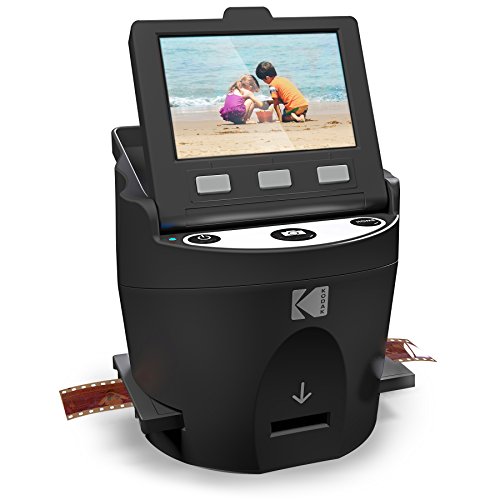
- Handles five listed film formats
- Built-in 3.5-inch LCD
- Includes adapters and cleaning brush
Best For: Mixed-format home film collections
Standalone Touchscreen Pick
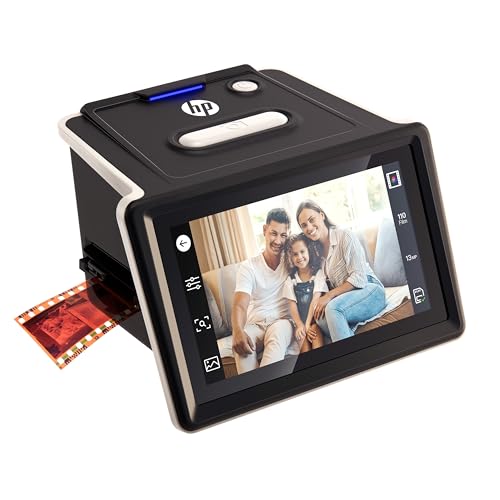
- Works without a connected computer
- 5-inch touchscreen for previews
- Supports 135, 126, and 110 film
Best For: Convenient home digitization with touchscreen control
Best All-in-One Pick
DigitPro 22MP Film & Slide Scanner

- Handles 35mm, 110, 126, 50mm slides, and Super 8
- 5-inch LCD with one-touch scanning
- USB and HDMI output; SD storage supported
Best For: Mixed-format family archives and simple standalone scanning
Best for Mac-Based Detail

- Scans 35mm film and slides at up to 7200 dpi
- Infrared dust and scratch removal support
- Includes SilverFast SE Plus 9 and QuickScan Plus
Best For: Detailed 35mm scanning with Mac-based software
Best Large-Screen Value

- 24MP CMOS sensor with adjustable image sizing
- 7-inch LCD and one-touch operation
- Supports multiple formats and includes an SD card
Best For: Easy standalone scanning with a large preview screen
Best High-Resolution Choice – Plustek OpticFilm 8200i SE
For shoppers comparing slide scanners for Mac, the Plustek OpticFilm 8200i SE is a dedicated 35mm option built for detailed film and slide scans. It supports Mac OS 10.7 through 14.x and combines 7200 dpi resolution with infrared dust and scratch detection.
Best For: Mac users digitizing 35mm negatives and mounted slides who want high-resolution output and assisted defect removal.
Pros:
- 7200 dpi resolution and 48-bit color support for detailed scans.
- Built-in infrared channel helps detect dust and scratches.
- Includes Plustek QuickScan and SilverFast SE Plus software.
- Supports Mac OS 10.7 through 14.x.
Cons:
- Designed for 35mm film and mounted slides rather than printed photos or multiple film formats.
- Requires a computer and software-based workflow.
This is the strongest fit when scan detail and restoration assistance matter more than standalone convenience. Its dedicated design and Mac support make it a focused choice for serious 35mm archiving.
Best Large-Screen Standalone Pick – DigitPro M129A
The DigitPro M129A is a practical option among slide scanners for Mac if you prefer scanning without installing computer software. It digitizes several film, slide, photo, and business-card formats, then saves images directly to the included SD card for later transfer to a Mac.
Best For: Families and beginners who want a standalone scanner with a large preview screen and broad media compatibility.
Pros:
- Works without a computer, app, or driver installation.
- Large 5-inch HD screen for previewing and editing scans.
- Supports 35mm, 135, and 110 film negatives, slides, photos, and business cards.
- Includes an 8GB SD card and a 3-year warranty.
Cons:
- 1080p resolution is less specialized than the Plustek’s 7200 dpi specification.
- The SD card workflow requires transferring scans to the Mac after capture.
Choose this model for ease of use and format flexibility rather than professional-level film detail. Its offline workflow and large screen can make a family archive project less intimidating.
Best Fast 24MP Scanner – Magnasonic FS71
The Magnasonic FS71 suits shoppers seeking slide scanners for Mac that can work independently of a computer. It scans supported film and slide formats into JPEG files, saves them to an SD card, and connects by USB for transferring images to a Mac.
Best For: Users who want quick scans, a built-in display, and support for several common film and slide formats.
Pros:
- Converts 35mm, 110, 126, and Super 8 film plus 135, 126, and 110 slides.
- Creates 24MP JPEG files and scans images in less than five seconds each.
- 5-inch LCD allows direct viewing without a computer.
- Offers brightness, RGB color, flip, and mirror adjustments on the device.
Cons:
- SD card is not included.
- HDMI cable is not included.
- Supplied minimum system requirements list Windows 7 rather than a specific Mac version.
The FS71 is a convenient archival tool for mixed collections when speed and simple controls are priorities. Mac users can transfer saved JPEGs over USB, but should confirm their preferred computer workflow before buying.
Best for Easy Batch Viewing – KODAK Slide N Scan Max
The KODAK Slide N Scan Max is a user-friendly choice among slide scanners for Mac for people who want a large screen and a straightforward scanning process. It supports 135, 110, and 126 film, saves directly to SD or SDHC cards up to 32GB, and connects through USB.
Best For: Home users digitizing mixed film collections who value continuous feeding, simple editing, and easy on-device viewing.
Pros:
- Quick-feeding tray supports a smoother continuous scanning workflow.
- Supports 135mm, 110mm, and 126mm film formats.
- 7-inch tiltable LCD doubles as a digital picture frame.
- One-touch editing simplifies resizing, conversion, and image adjustments.
Cons:
- SD or SDHC storage is limited to cards up to 32GB.
- Supplied minimum system requirements list Windows 7 rather than a specific Mac version.
- USB is the listed computer connection, so the Mac transfer workflow may be less direct than standalone viewing.
This model emphasizes convenience over advanced restoration features. Its large tilting display and quick-feed tray are especially useful for users working through a sizable home collection.
Professional Detail Pick – Plustek OpticFilm 8100
If you want slide scanners for Mac that prioritize high-resolution output, the Plustek OpticFilm 8100 is designed for 35mm negatives and slides. Its 7200 DPI resolution, 48-bit output, and included SilverFast software suit detailed archival and printing projects.
Best For: Mac users digitizing 35mm film who want maximum detail and professional-oriented image processing.
Pros:
- 7200 DPI scanning with up to 69MP image files for detailed enlargements.
- CCD sensor and 48-bit output help capture shadow and highlight detail.
- Includes SilverFast SE Plus and supports Mac OS 10.8.x through 13.x.
- Includes a protective carry bag for storage or travel.
Cons:
- Supports 35mm negatives and slides rather than a broad range of film formats.
- Requires downloading the Mac driver from Plustek’s website.
- Its professional workflow may be more than casual users need.
The OpticFilm 8100 is the strongest choice here for users who value resolution and editing control over quick, standalone operation. Confirm your macOS version before buying.
Format Flexibility Pick – KODAK SCANZA Film & Slide Scanner
Among slide scanners for Mac, the KODAK SCANZA stands out for its broad film-format support and simple controls. It converts compatible negatives and slides to JPEG files, with a built-in display for previewing and adjusting images without relying on a computer screen.
Best For: Mac and PC users digitizing mixed collections of 35mm, 126, 110, Super 8, and 8mm film.
Pros:
- Supports 35mm, 126, 110, Super 8, and 8mm negatives and slides.
- Built-in 3.5-inch adjustable-brightness LCD simplifies previewing.
- One-touch buttons, multiple adapters, and a film insert directory support easy operation.
- Includes USB, HDMI, video, and power accessories plus a cleaning brush.
Cons:
- Does not convert film formats outside the listed 35mm, 126, 110, Super 8, and 8mm types.
- SD card is not included.
- Its 24-bit color depth is lower than the Plustek’s listed 48-bit output.
The SCANZA is a practical option when format compatibility and convenience matter more than advanced computer-based scanning controls. It is especially useful for varied family archives.
Standalone Touchscreen Pick – HP FilmScan HPFS500
The HP FilmScan HPFS500 is a convenient choice for slide scanners for Mac when you want to digitize film without keeping a computer connected. Its 5-inch touchscreen, quick-load tray, and support for several common formats make it suited to straightforward home archiving.
Best For: Mac users who want a standalone scanner with touchscreen preview and support for 135, 126, and 110 film.
Pros:
- Standalone workflow lets you digitize slides and negatives without a computer.
- Supports 135, 126, and 110 negatives and positive slides.
- 5-inch all-angle touchscreen enables direct preview and image adjustments.
- Quick-load tray helps speed up scanning sessions.
Cons:
- Its 13MP sensor with 22MP interpolation is lower-resolution than the Plustek’s listed 7200 DPI output.
- Supports fewer film formats than the KODAK SCANZA.
- Requires macOS 10.15 or later for Mac compatibility.
The HPFS500 emphasizes ease of use rather than maximum archival resolution. Choose it if touchscreen control, batch convenience, and computer-free operation fit your workflow.
Best All-in-One Pick – DigitPro 22MP Film & Slide Scanner
For shoppers comparing slide scanners for Mac, the DigitPro C190 is a straightforward standalone option for converting several film formats without needing a computer during scanning. It offers one-touch operation, a large preview screen, and USB transfer for moving saved images to a computer.
Best For: Families digitizing mixed-format slides, negatives, and film with simple controls and on-device previews.
Pros:
- Supports 35mm, 110, 126, 50mm slides, and Super 8 film.
- Scans save to built-in memory or an SD card up to 64GB.
- Includes a 5-inch LCD, HDMI output, USB transfer, and a broad accessory kit.
Cons:
- SD card is not included.
- The supplied resolution specification is 1080P rather than a high-resolution archival rating.
The C190 emphasizes convenience and format flexibility over advanced computer-based editing. Its built-in display and HDMI connection make it useful for reviewing or sharing scans, while USB provides a practical route for transferring them to a Mac.
Best for Mac-Based Detail – Plustek OpticFilm 8300i SE
If image detail and Mac compatibility are priorities, the Plustek OpticFilm 8300i SE is the more specialized choice among these slide scanners for Mac. It is designed for 35mm film and slides, connects over USB, and includes SilverFast SE Plus 9 and Plustek QuickScan Plus software.
Best For: Mac users scanning 35mm negatives and slides who want high stated resolution and software-assisted dust and scratch removal.
Pros:
- Supports up to 7200 dpi scanning with a stated 3.91 dynamic range.
- Built-in infrared support works with SilverFast iSRD for dust and scratch detection.
- Supports Mac OS 10.13–12.X and includes two scanning software packages.
Cons:
- Designed for 35mm film and slides rather than multiple film formats.
- Requires a computer and software workflow instead of standalone scanning.
- The listed Mac support range may not cover newer macOS versions.
The OpticFilm 8300i SE is oriented toward controlled, detailed 35mm scanning rather than quick touchscreen use. Its high resolution, infrared channel, and bundled software make it the strongest fit here for users comfortable checking Mac compatibility before buying.
Best Large-Screen Value – BEONEGLOBAL ClearScan P7
The BEONEGLOBAL ClearScan P7 is a convenient option for shoppers seeking slide scanners for Mac but preferring a no-computer scanning process. Its 7-inch LCD, one-touch controls, included SD card, and support for several film formats make it easy to preview and save scans directly.
Best For: Users who want a large display, broad format support, and out-of-box scanning to an included SD card.
Pros:
- Uses a 24MP CMOS sensor for detailed scans and supports adjustable image sizing.
- Compatible with 35mm, 110, 126, Super 8, and 8mm film and slides.
- Includes a 7-inch LCD, one-touch controls, and a branded SD card.
Cons:
- Its listed connection is USB, so Mac file transfer may require moving files from the SD card or using USB.
- It is a standalone film scanner rather than a dedicated computer-scanning system with bundled Mac software.
The ClearScan P7 focuses on accessibility: the oversized screen makes previews easier to inspect, while the included SD card removes an immediate accessory purchase. It is a practical fit for varied home archives, provided its standalone workflow matches your Mac transfer preferences.
How We Picked the Best Slide Scanners for Mac
We focused on scanners that are practical for Mac users and cover a range of archiving needs. Key considerations included stated Mac compatibility, supported film and slide formats, optical or interpolated resolution claims, color depth, scanning workflow, included software, and ease of transferring files to a computer.
Dedicated Plustek models are aimed at users who want detailed 35mm scans and more control over image correction. All-in-one scanners from KODAK, Magnasonic, HP, and other brands emphasize convenience, built-in viewing screens, and support for several cartridge and film formats. Because software and operating-system support can change, confirm current Mac requirements before purchasing.
Quick Comparison
| Best For | What to Look For | Typical Advantage |
|---|---|---|
| Highest 35mm detail | Dedicated 7200-dpi scanner, 48-bit output | Greater control and editing potential |
| Easy home conversion | Built-in LCD and one-button controls | Fast scanning with less computer setup |
| Mixed film collections | 35mm, 110, 126, Super 8, or 8mm support | Handles more formats with one device |
| Dust and scratch correction | Infrared cleaning technology | Reduces manual retouching on compatible film |
| Modern Mac connectivity | USB-C or confirmed adapter support | Simpler connection to newer Macs |
Key Buying Factors for Slide Scanners for Mac
Mac Compatibility and Software
Check whether the scanner works with your macOS version and whether drivers or scanning software are included. A scanner may connect through USB while still requiring outdated software, so verify support before buying. Newer Macs may also need a USB adapter or hub.
Resolution and Image Quality
High advertised resolution does not always equal better scans. Dedicated film scanners generally provide more consistent detail than inexpensive camera-based models. Look for strong optical performance, 48-bit color output when editing flexibility matters, and a stable film holder that keeps frames aligned.
Film Formats
Choose a 35mm-only model if most of your collection uses standard slides and negatives. If you have 110, 126, Super 8, or 8mm film, an all-in-one scanner may save time and avoid buying separate accessories.
Workflow and Storage
LCD-equipped scanners let you preview images without opening a Mac, while computer-connected models typically offer better control over file settings. Consider scan speed, batch handling, file formats, included memory, and how easily files can be transferred and backed up.
Who Should Buy Which Slide Scanners for Mac?
Choose a dedicated Plustek scanner if image quality, detailed 35mm archiving, and post-processing matter most. Models with infrared dust and scratch removal are especially appealing for valuable or heavily handled film.
Choose a KODAK, Magnasonic, HP, or comparable LCD scanner if you want straightforward conversion with minimal setup. These are well suited to casual family archiving and users who prefer viewing scans on the device.
For collections containing several film formats, prioritize an all-in-one model with the broadest holder compatibility. Whatever you choose, scan a few representative frames first, confirm the files look correct on your Mac, and keep multiple backups of the finished archive.