Powered KVM over IP switches let you control one or more computers remotely while retaining keyboard, video, and mouse access—even when an operating system is unavailable. The right model can simplify home-lab management, server-room administration, and remote troubleshooting.
This roundup compares compact single-port devices, PoE-enabled remote KVMs, multi-port rackmount switches, and professional 4K solutions. Focus on the number of systems you need to manage, video requirements, network design, and the level of remote-access security you need.
Best 10 Powered Kvm Over Ip Switches Picks for 2026
Best Wireless 4K Pick
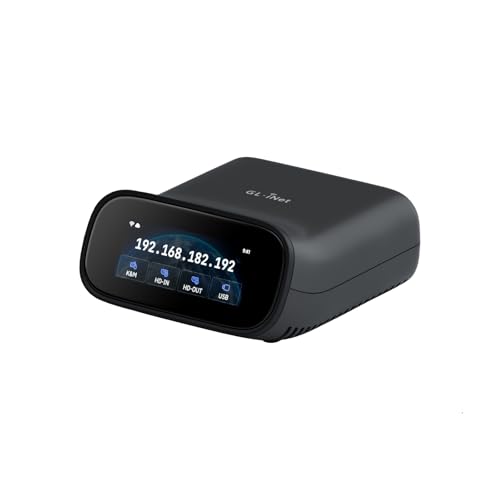
- 4K@30 passthrough and two-way audio
- Dual-band Wi-Fi 6 plus wired access
- Tailscale and optional self-hosting
Best For: Flexible home-lab and office remote access
Best Open-Source Value

- 1080p@60 streaming with 30–60 ms latency
- LAN, WebRTC, and Wake-on-LAN access
- Open-source firmware with SSH customization
Best For: Home labs and remote BIOS troubleshooting
Best PoE Deployment

- PoE and USB-C dual-power support
- 4K@30 streaming with two-way audio
- 32GB eMMC for stored system images
Best For: PoE-equipped racks and remote recovery
Best Long-Distance Extender

- 4K extension up to 390 feet over Cat5e
- USB, audio, keyboard, and mouse support
- Up to 16 paired systems on one network
Best For: Control rooms and distributed workstations
Best Compact Remote KVM

- 4K 30Hz remote video with BIOS access
- No software required on the host computer
- Compact design for one PC or server
Best For: Remote IT support and single-system management
Best Premium 4K KVM
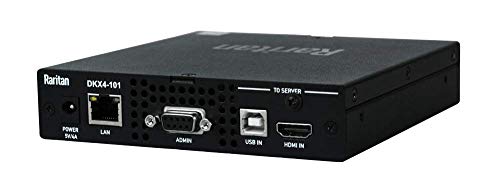
- 4K KVM-over-IP operation
- Ethernet and USB connectivity
- Rack-mount design for server environments
Best For: Professional single-server remote management
Best Multi-Port PoE KVM

- Four-port remote KVM with PoE support
- 4K 30Hz HDMI loop-out and local control
- 64GB eMMC and included rack brackets
Best For: Home labs and small server rooms with multiple hosts
Compact Rack Control
Tripp Lite 8-Port NetCommander KVM Over IP

- Eight-port Cat5 KVM with IP remote access
- Simultaneous local and remote users
- 1U rackmount design with IPv4/IPv6 support
Best For: Small server rooms needing compact dual-user administration
4K DisplayPort Access
ATEN CN9950 Single-Port KVM Over IP

- 4K DCI DisplayPort video at local and remote consoles
- FPGA graphics processor for image and frame-rate performance
- Dual LAN and power connections for redundancy
Best For: High-resolution DisplayPort workstation or server access
High-Density Server Management
Tripp Lite 16-Port NetCommander KVM Over IP

- Sixteen-port Cat5 KVM for local or internet access
- Dual Ethernet ports support uninterrupted remote access
- Works with USB or PS/2 server interface units
Best For: Larger server rooms managing mixed USB and PS/2 systems
Best Wireless 4K Pick – Comet Pro Remote KVM
For buyers comparing powered kvm over ip switches for flexible remote access, the GL.iNet GL-RM10 Comet Pro combines wired and dual-band Wi-Fi 6 connectivity with 4K passthrough. Its browser-based access, app support, touchscreen, and BIOS-level recovery features make it suitable for home labs and office support setups.
Best For: Users who want wireless flexibility, 4K passthrough, two-way audio, and secure remote management across multiple platforms.
Pros:
- Supports 4K video passthrough at 30 fps with H.264 encoding and two-way audio.
- Offers both 2.4 GHz and 5 GHz Wi-Fi 6 alongside wired connectivity.
- Includes built-in Tailscale, browser access without client software, and optional self-hosting.
- Supports remote BIOS access, OS reinstallation, and optional ATX or Fingerbot power control.
Cons:
- ATX Board and Fingerbot power-control accessories are sold separately.
- Its 4K passthrough is limited to 30 fps.
- Wireless operation adds another network dependency compared with a fully wired setup.
The Comet Pro is a strong choice when convenience and broad remote-access options matter more than a basic wired-only design. Its touchscreen and self-hosted options also give buyers more control over setup and privacy.
Best Open-Source Value – JetKVM Network KVM
The JetKVM is a compact option for shoppers seeking powered kvm over ip switches with straightforward browser access and open-source flexibility. It streams 1080p video at up to 60 fps, supports responsive keyboard and mouse control, and can provide remote BIOS-level troubleshooting over a local network or through WebRTC cloud access.
Best For: Home-lab users, technicians, and small deployments that prioritize low-latency 1080p access and open-source customization.
Pros:
- Provides 1080p at 60 fps with stated latency of 30–60 ms.
- Supports LAN browser access, WebRTC cloud access, and Wake-on-LAN.
- Open-source Linux and Golang firmware allows SSH customization.
- Works with Windows, Mac, Linux, and Raspberry Pi systems without drivers.
Cons:
- Does not transfer audio.
- The non-PoE version cannot control a fully powered-off target without optional hardware.
- ATX, DC power, and serial-console expansion modules are sold separately.
JetKVM keeps the core remote-rescue feature set focused and affordable, especially for systems that are normally powered on. Buyers needing audio, 4K video, or built-in power switching should consider a more feature-rich model.
Best PoE Deployment – Comet PoE Remote KVM
For installations where minimizing adapters and cable clutter is important, the GL.iNet Comet PoE is a practical powered kvm over ip switch alternative. It draws power from a compatible PoE switch or USB-C adapter, provides 4K streaming with two-way audio, and includes storage for system images used during remote recovery.
Best For: Rack, office, and home-lab deployments with PoE infrastructure and a need for dependable remote reinstallation workflows.
Pros:
- Supports PoE and USB-C power, with both usable simultaneously for added stability.
- Streams 4K video at 30 fps with low-latency H.264 encoding and two-way audio.
- Built-in Tailscale supports encrypted, direct remote connections.
- 32GB eMMC storage can hold multiple system images for remote reinstallation.
Cons:
- Requires a compatible PoE switch or separate USB-C power source.
- ATX Board and Fingerbot accessories for power control are sold separately.
- 4K streaming is limited to 30 fps.
The Comet PoE is especially compelling when a PoE-powered network is already available. Its dual-power design and onboard eMMC storage add useful resilience for remote maintenance, while optional accessories extend its power-control capabilities.
Best Long-Distance Extender – AV Access 4K KVM Extender
The AV Access 4K HDMI USB KVM Extender suits buyers who need powered kvm over ip switches for long-distance video and peripheral extension rather than browser-based remote administration. It carries 4K video, audio, USB, keyboard, and mouse signals over Cat5e or better cabling, with support for existing IP networks and multiple paired systems.
Best For: Control rooms, server rooms, distributed workstations, classrooms, and AV installations requiring long cable runs.
Pros:
- Extends 4K video, audio, and USB up to 390 feet over Cat5e, or up to 492 feet over Cat6/6A/7.
- Supports 4K at 30 Hz, 1080p at 120 Hz, and 7.1-channel audio.
- Provides three USB ports on the receiver for peripherals.
- Supports up to 16 extender sets with DIP-switch pairing and works without drivers.
Cons:
- This is a transmitter/receiver extender system rather than a cloud-managed KVM appliance.
- It requires separate transmitter and receiver units plus network cabling.
- Remote operation depends on the physical network path and supported cable distances.
Choose this AV Access system when the priority is stable, high-bandwidth extension across a building or rack environment. It is less suited to BIOS recovery over the internet, but better aligned with physical workstation and control-room access.
Best Compact Remote KVM – GL.iNet Comet GL-RM1
The GL.iNet Comet GL-RM1 is a compact option for anyone comparing powered kvm over ip switches for remote PC, server, or home-lab access. It provides browser/app-based control, BIOS-level access, 4K at 30Hz video, and hardware encoding without requiring software on the host computer.
Best For: Remote IT support, server maintenance, smart-home setups, and users who need BIOS-level access to one computer.
Pros:
- Supports remote rebooting, OS installation through BIOS, and powering on computers.
- Provides 3840×2160 at 30Hz with low-latency remote viewing and audio output.
- Works with laptops, desktops, servers, and other compatible devices without host software.
- Includes file transfer and Tailscale support for flexible remote access.
Cons:
- Controls one host system rather than multiple connected computers.
- PD adapters cannot be used.
- Requires Windows 10 or newer according to the listed minimum operating system requirement.
Choose the GL-RM1 when small size and straightforward single-system access matter most. Its hardware-based design is particularly useful for troubleshooting machines that are offline or stuck before the operating system loads.
Best Premium 4K KVM – Raritan Dominion KX IV-101
Raritan Dominion KX IV-101 Ultra High Performance 1-Port 4K KVM-Over-IP Switch
Check Price On AmazonThe Raritan Dominion KX IV-101 is a rack-mount 1-port choice for buyers evaluating powered kvm over ip switches for professional remote control. Its Ethernet connectivity, USB compatibility, remote operation, and 4K KVM-over-IP design suit dedicated management of a single compatible system.
Best For: Professional server rooms, rack-mounted deployments, and organizations seeking a dedicated single-port 4K KVM-over-IP unit.
Pros:
- Supports high-performance 4K KVM-over-IP operation.
- Provides remote control through Ethernet connectivity.
- Rack-mount form factor fits structured equipment installations.
- Includes a listed two-year warranty.
Cons:
- Offers only one KVM port.
- The supplied notes provide limited detail about included cables and installation accessories.
- At 1.4 pounds, it is less lightweight than compact desktop-oriented options.
The KX IV-101 is best considered when reliability-oriented rack deployment and dedicated single-device management take priority over port density. Confirm the required accessories and compatibility for your specific server environment before purchase.
Best Multi-Port PoE KVM – GL.iNet Comet X GL-RM4PE
The GL.iNet Comet X GL-RM4PE stands out among powered kvm over ip switches for home labs and IT racks that need control of several systems. It connects four hosts, supports PoE with 5V USB-C backup, and combines browser-based HTTPS access with local touchscreen and front-button control.
Best For: Home labs, small server rooms, and IT professionals managing up to four HDMI-equipped host systems.
Pros:
- Controls up to four systems through four HDMI inputs and dedicated USB-C device ports.
- Supports PoE power with 5V Type-C backup for flexible installation.
- Offers 4K at 30Hz HDMI loop-out for simultaneous local and remote access.
- Includes 64GB eMMC storage, a touchscreen, HTTPS access, and 10-inch and 19-inch rack brackets.
Cons:
- Video output is limited to 4K at 30Hz.
- Its 170 × 90 × 40 mm rack-ready chassis is larger than a single-port compact KVM.
- PoE installation requires compatible network infrastructure.
For multi-system environments, the Comet X offers a strong combination of port density, local usability, and remote access. Its onboard storage and rack-mount accessories also make it practical for deployment packages, system images, and organized lab setups.
Compact Rack Control – Tripp Lite 8-Port NetCommander KVM Over IP
For buyers comparing powered kvm over ip switches for a smaller server rack, the Tripp Lite NetCommander provides eight-port access through Cat5 cabling, with one local and one remote user supported at the same time. Remote management is available through a Java-based web application over a secure IP connection.
Best For: Small server rooms that need compact, dual-user remote and local administration.
Pros:
- Controls up to eight servers and can cascade to support up to 128.
- 1U rackmount design and Cat5 connectivity help reduce cable clutter.
- Supports IPv4 and IPv6, plus RADIUS and LDAP/S remote authentication.
- Can integrate controllable IP PDUs and offers OSD, hot-key, and push-button control.
Cons:
- Remote access uses a Java-based application.
- Only one remote and one local user can connect simultaneously.
- The listed warranty is two years, despite a separate three-year spare-part availability note.
This model is a practical fit when rack density, basic IP management, and flexible authentication matter more than high-resolution video features. Its cascading capability also leaves room for a larger installation later.
4K DisplayPort Access – ATEN CN9950 Single-Port KVM Over IP
ATEN 1-Local/Remote Share Access Single Port 4K DisplayPort KVM Over IP Switch
Check Price On AmazonThe ATEN CN9950 is a single-port option for powered kvm over ip switches, pairing remote control with DisplayPort video up to 4K DCI resolution. Its FPGA graphics processor is designed to improve image quality and frame-rate throughput, while dual power and LAN connections add redundancy.
Best For: Workstations or servers that require high-resolution DisplayPort access from local and remote consoles.
Pros:
- Supports DisplayPort resolutions up to 4096 x 2160 at 30Hz locally and remotely.
- FPGA graphics processing is intended to improve image clarity and response.
- Dual power supplies and dual LAN connections provide backup options.
- Includes a 5-pin relay/DI terminal for environmental monitoring and reboot control.
Cons:
- Single-port design does not manage multiple servers by itself.
- 30Hz support may be limiting for applications needing higher refresh rates.
- The supplied notes do not specify a warranty period.
Choose the CN9950 when video quality and connection resilience are priorities. It is less suited to expanding a large server fleet, but its 4K DisplayPort support and redundant connectivity make it useful for a focused remote-access deployment.
High-Density Server Management – Tripp Lite 16-Port NetCommander KVM Over IP
For larger racks, this 16-port Tripp Lite NetCommander is a practical choice among powered kvm over ip switches, providing local or internet-based control of computers and servers. It uses Cat5 cabling with separate USB or PS/2 server interface units and includes dual Ethernet ports for continued remote access.
Best For: Server rooms managing many USB- or PS/2-equipped computers from a central console.
Pros:
- Sixteen ports support higher-density server management than smaller KVMs.
- Remote access works through Internet Explorer, Firefox, or Chrome on supported systems.
- Dual Ethernet ports help maintain remote connectivity.
- Optional B078-101-USB2 interface supports virtual-media transfer rates up to 12 Mbps.
Cons:
- Each connected server requires a compatible interface unit.
- Video support is VGA/USB or PS/2 rather than modern DisplayPort.
- The supplied details list a 2-year limited warranty.
This is the stronger fit for a growing rack where port count and browser-based administration matter. Budget for the required server interface units, and confirm operating-system and browser compatibility before deployment.
How We Picked These Powered Kvm Over Ip Switches
We selected models that provide genuine remote KVM functionality rather than software-only remote desktop access. The lineup covers single-computer and multi-computer installations, home labs, small offices, data centers, and professional IT environments.
Our comparison emphasizes video resolution, BIOS-level control, network connectivity, port count, remote and local access, installation format, and practical deployment features such as PoE, Tailscale support, IPv4/IPv6 compatibility, and rack mounting. Product fit matters more than a single specification, so a compact unit may be the better choice for one workstation while a 16-port switch is more appropriate for centralized infrastructure.
Quick Comparison
| Best For | Look For | Suitable Options |
|---|---|---|
| One home-lab computer | Compact design, easy networking, BIOS access | JetKVM, GL.iNet Comet |
| PoE installations | Power and data over compatible Ethernet infrastructure | GL.iNet Comet PoE, Comet X |
| 4K video workflows | 4K support, suitable refresh rate, reliable USB control | Raritan, ATEN, AV Access |
| Multiple rack servers | High port count, rack mounting, shared access | Tripp Lite NetCommander models |
| Long-distance local extension | Cat5e or better cabling and compatible endpoint hardware | AV Access 4K HDMI USB KVM Extender |
Key Buying Factors for Powered Kvm Over Ip Switches
Port Count and Expansion
Choose a single-port model for one PC or server. If you manage several systems, a multi-port KVM reduces cabling and centralizes access. Leave room for future devices if your lab or rack is likely to grow.
Video Resolution and Refresh Rate
Confirm the exact resolution, refresh rate, connector type, and compression behavior. “4K” support can differ significantly between models, particularly at higher refresh rates. Match the KVM to your monitor, graphics output, and BIOS display requirements.
Power and Network Design
Powered Kvm Over Ip Switches may use an external adapter, USB power, or Power over Ethernet. PoE can simplify installation, but your switch must support the required PoE standard and budget. Also verify whether the device uses Gigabit Ethernet and whether it fits your network security policy.
Remote Control and Security
Look for BIOS-level operation, virtual media if needed, encrypted connections, account controls, and secure remote-access options. Tailscale compatibility can make private access easier, while enterprise systems may provide more extensive authentication and audit features. Avoid exposing a KVM directly to the public internet without appropriate safeguards.
Rack and User Access
Rackmount models are practical for server rooms and structured installations. Check whether the switch supports simultaneous local and remote users, how many remote sessions are allowed, and whether the included cables match your computers.
Who Should Buy Which Powered Kvm Over Ip Switches?
Home-lab users and solo administrators: Choose a compact single-port KVM such as a JetKVM or GL.iNet Comet when simple remote BIOS access and low installation complexity matter most.
PoE-equipped workspaces: Select a PoE-capable Comet model when you want fewer power cables and already have compatible Ethernet infrastructure.
IT professionals and server-room operators: Consider Raritan, ATEN, or Tripp Lite when you need stronger centralized management, rack integration, multiple ports, or formal local/remote access workflows.
Users extending a nearby workstation: An AV Access solution is a practical fit when the main requirement is moving USB and video over existing Cat5e-or-better cabling rather than managing many networked servers.