Reliable humidity readings can make field inspections, HVAC diagnostics, equipment checks, and outdoor monitoring much easier. The right hygrometer should deliver useful accuracy while standing up to changing temperatures, movement, and job-site conditions.
This roundup compares 10 practical options, including pocket psychrometers, in-duct meters, sling psychrometers, and indoor-outdoor monitors. Use the guide below to match features, measurement range, and durability to your work.
Best 10 Hygrometers for Field Work Picks for 2026
HVAC Pocket Psychrometer

- Measures wet bulb, dry bulb, dew point, and RH
- Slim probe supports in-duct testing
- Backlit display with Hold, Min, and Max
Best For: HVACR walk-around and duct diagnostics
Bluetooth In-Duct Hygrometer
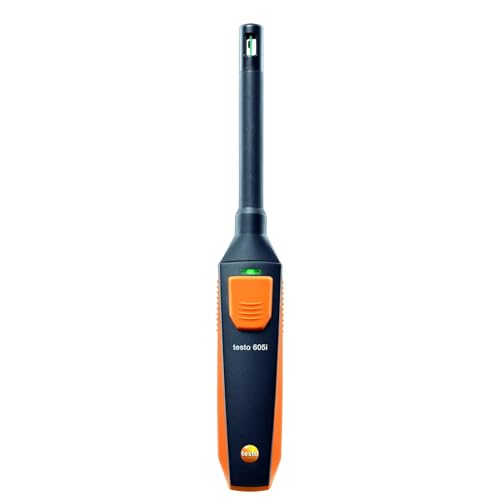
- 90-degree bendable probe reaches tight spaces
- Calculates dew point and wet bulb automatically
- App supports logging and custom reports
Best For: Connected HVAC/R inspections and documentation
Backlit Psychrometer

- Combines humidity, temperature, wet bulb, and dew point
- Backlit dual display for low-light reading
- Includes Min/Max hold and unit switching
Best For: General HVAC, building, and agricultural checks
Rugged Outdoor Thermo-Hygrometer

- IP65-rated, pocket-sized outdoor design
- Bluetooth alerts and remote monitoring
- Stores and exports up to two years of data
Best For: Camping, hiking, gardening, and outdoor trend tracking
Professional Field Standard

- Wet- and dry-bulb humidity measurement
- -5°C to 50°C temperature range
- Battery-free and portable
Best For: Professional outdoor, HVAC, agriculture, and weather checks
Quick Multi-Point Monitor

- Three compact digital hygrometers
- 10-second refresh rate
- Tabletop, magnetic, or hanging placement
Best For: Monitoring multiple rooms, greenhouse areas, or sheltered locations
Digital Measurement Kit
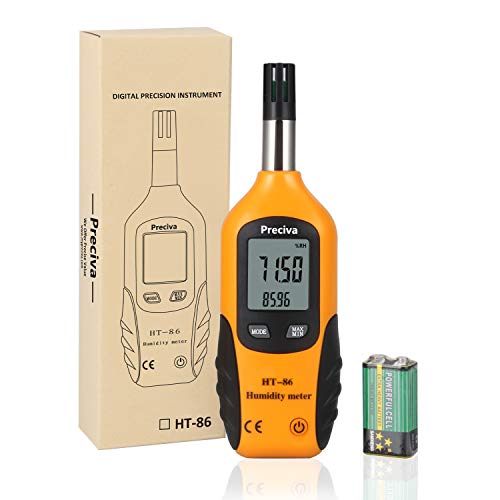
- Humidity, temperature, wet-bulb, and dew point
- Backlit dual-display LCD
- Max-hold and data-hold functions
Best For: Portable industrial, agricultural, laboratory, and meteorological measurements
Quick-Glance Indoor Monitor

- ±2 to 3%RH and ±1°F specified accuracy
- High/low records with DRY/COMFORT/WET icons
- Stand, magnetic back, and 10-second updates
Best For: Indoor greenhouse and storage-area checks
Handheld Rapid-Read Meter
HFS Temperature & Humidity Detector

- Sampling up to 8 times per second
- Backlit display with hold and Min/Max functions
- Measures -4°F to 140°F and 20% to 80%RH
Best For: Portable industrial and agricultural spot checks
Battery-Free Outdoor Dial

- Mechanical design requires no battery replacement
- Indoor/outdoor temperature and humidity readings
- Color comfort indicator for quick visual checks
Best For: Sheltered gardens, patios, greenhouses, and cellars
HVAC Pocket Psychrometer – Fieldpiece PRH2
For technicians comparing hygrometers for field work, the Fieldpiece PRH2 is a compact psychrometer designed for quick HVACR checks. It measures wet bulb, dry bulb, dew point, and relative humidity, while its slim probe fits into ductwork.
Best For: HVACR technicians who need portable walk-around and in-duct measurements.
Pros:
- Displays four useful psychrometric measurements.
- Slim 2-inch probe tip supports in-duct testing.
- Backlit dual display includes Hold, Min, and Max functions.
- Pocket-size body clips like a pen for easy carrying.
Cons:
- Designed primarily for HVACR diagnostics rather than general outdoor monitoring.
- Battery-powered operation requires replacement batteries.
The PRH2 is a focused field tool for fast air-condition checks. Its probe and HVAC-oriented readings make it especially practical when testing equipment and ductwork on the job.
Bluetooth In-Duct Hygrometer – Testo 605i
The Testo 605i is a strong option among hygrometers for field work when remote viewing and documentation matter. Its bendable 90-degree probe reaches rooms, ducts, crawl spaces, registers, and environmental chambers, while Bluetooth connects readings to a mobile device.
Best For: HVAC/R professionals who want app-based readings, calculations, logging, and reports.
Pros:
- Bendable probe head helps access confined measurement points.
- Measures relative humidity and temperature, then calculates dew point and wet bulb.
- Works with iOS and Android through the testo Smart Probes App.
- Supports measurement logging and custom report creation.
Cons:
- Requires a compatible mobile device for remote monitoring and app features.
- More specialized than a simple standalone humidity display.
The 605i suits field technicians who need more than an on-device number. Its flexible probe and app workflow support measurements across difficult access points and make results easier to record and share.
Backlit Psychrometer – ERAY Digital Hygrometer
The ERAY Digital Psychrometer is a practical choice for shoppers seeking hygrometers for field work with broad environmental readouts. It combines temperature, humidity, wet-bulb, and dew-point measurements with a backlit dual display and Min/Max hold functions.
Best For: HVAC, building, agricultural, storage, and general moisture checks where a handheld display is useful.
Pros:
- Measures temperature, humidity, wet bulb, and dew point in one device.
- Covers 0–100% RH and temperatures from -30°C to 60°C.
- Backlight improves readability in dark areas.
- Includes Celsius/Fahrenheit selection and automatic shutoff.
Cons:
- Specified temperature accuracy is ±1°C.
- Uses a 9V battery, which may be less convenient than common AAA cells.
- Supplied notes do not describe app connectivity or data logging.
The ERAY emphasizes straightforward handheld testing and useful psychrometric modes. It is a flexible general-purpose instrument, though users needing connected records or higher stated accuracy may prefer a more specialized model.
Rugged Outdoor Thermo-Hygrometer – GoveeLife H5171
For outdoor-focused hygrometers for field work, the GoveeLife H5171 pairs a compact display with IP65-rated protection, Bluetooth monitoring, and long-term data features. Its pocket-sized design and lanyard make it convenient for camping, hiking, gardening, and other moisture-exposed activities.
Best For: Outdoor users who want portable temperature and humidity tracking with alerts and recorded trends.
Pros:
- IP65-rated casing is designed to resist rain, moisture, dust, and sun exposure.
- Samples every two seconds with stated accuracy of ±0.54°F and ±3% RH.
- Bluetooth supports alerts, remote monitoring, and gateway connections.
- Provides 20-day curve readings and two years of free data storage and export.
Cons:
- IP65 protection does not allow immersion in water.
- Bluetooth and gateway features may be unnecessary for simple spot checks.
- Measures temperature and humidity but does not list wet-bulb or dew-point readings.
The H5171 is better suited to ongoing outdoor monitoring than psychrometric diagnostics. Its weather-resistant build, lanyard, alerts, and history tools make it useful when field conditions need to be tracked over time.
Professional Field Standard – Sling Psychrometer
For hygrometers for field work where battery-free operation matters, the Sper Scientific 736700 uses the traditional wet- and dry-bulb method. Its -5°C to 50°C range suits outdoor monitoring, HVAC checks, agriculture, and other professional applications.
Best For: Professionals who want a portable, battery-free psychrometer for outdoor, HVAC, agricultural, or weather measurements.
Pros:
- Measures relative humidity using the wet- and dry-bulb method.
- Works across a -5°C to 50°C temperature range.
- Lightweight, portable design requires no batteries.
Cons:
- Requires swinging the instrument to take a reading.
- Does not offer a digital display or electronic data-hold features.
The 736700 is a straightforward choice when field reliability and battery-free use are more important than automation. Its analog operating method may require more hands-on technique, but it is well suited to routine professional measurements.
Quick Multi-Point Monitor – TP49 3-Pack
The TempPro TP49 3-pack is a convenient option for hygrometers for field work that involves checking several locations. Each compact digital unit refreshes readings every 10 seconds and can stand on a surface, attach magnetically, or hang from a mount.
Best For: Users who need multiple compact temperature and humidity monitors for greenhouses, offices, cellars, rooms, or other monitored spaces.
Pros:
- Three units support monitoring in multiple locations.
- Displays temperature and humidity with large LCD digits.
- Offers tabletop, magnetic-back, and hanging placement.
- Comfort icons indicate dry, comfortable, or wet conditions.
Cons:
- Designed primarily for indoor or sheltered placement rather than rugged field use.
- Uses AAA batteries, so replacements are part of ongoing operation.
This set emphasizes coverage and quick readability over specialized psychrometric measurements. The three-unit format is useful when comparing conditions across several nearby spaces, while the compact design makes placement simple.
Digital Measurement Kit – Preciva Digital Psychrometer
For hygrometers for field work that need more than basic relative humidity, the Preciva Digital Psychrometer adds wet-bulb and dew-point readings. Its portable backlit LCD, dual display, and included 9V battery make it practical for industrial, agricultural, laboratory, and meteorological checks.
Best For: Engineers and professionals who need portable digital humidity, temperature, wet-bulb, and dew-point measurements.
Pros:
- Combines humidity, temperature, wet-bulb, and dew-point functions.
- Backlit dual-display screen supports reading in dark environments.
- Includes max-hold and data-hold functions.
- Comes with a 9V battery and has an auto power-off feature.
Cons:
- Operating humidity is limited to less than 80% RH, non-condensing.
- Temperature range is 32°F to 105°F.
- Uses a 9V battery rather than battery-free operation.
The Preciva offers a strong feature set for field measurements requiring calculated moisture indicators. Its compact form and backlight improve portability, while the operating limits should be checked against the intended environment.
Quick-Glance Indoor Monitor – TempAir Digital Hygrometer
For hygrometers for field work that involves greenhouse checks, storage areas, or other nearby indoor environments, the TempPro TempAir offers a straightforward digital readout. It updates every 10 seconds, shows temperature and humidity highs and lows, and uses DRY/COMFORT/WET icons for quick interpretation.
Best For: Users who want a compact, glanceable monitor for indoor field stations, greenhouses, refrigerators, or similar controlled spaces.
Pros:
- Specified accuracy of ±2 to 3%RH and ±1°F.
- Records high and low temperature and humidity readings.
- Tabletop stand and magnetic back support flexible placement.
- Includes three AAA batteries and offers °F/°C selection.
Cons:
- Listed for indoor use rather than exposed outdoor work.
- Updates every 10 seconds, so it is less suited to highly rapid changes.
- Uses three AAA batteries.
This is a practical choice when readability and historical high/low comparisons matter more than a rugged handheld design or outdoor deployment.
Handheld Rapid-Read Meter – HFS Temperature & Humidity Detector
Among hygrometers for field work, the HFS handheld meter is designed for active spot checks. Its probe samples up to eight times per second, updates the display three times per second, and combines temperature and relative-humidity readings with data hold and Min/Max Hold functions.
Best For: Industrial, agricultural, medical, and home users who need a portable meter for repeated ambient measurements.
Pros:
- Rapid sampling and display updates support moving between measurement points.
- Measures -4°F to 140°F and 20% to 80%RH.
- Backlit large display includes data hold, unit conversion, and Min/Max Hold.
- Includes two AAA batteries, storage bag, and user manual.
Cons:
- Humidity accuracy is ±5%RH in the stated range and ±8%RH elsewhere.
- Listed as indoor use.
- Not reusable according to the supplied details.
The HFS is the most field-oriented option here for handheld surveys, particularly when quick refreshes and held readings are useful. Confirm that its temperature and humidity ranges fit the intended site.
Battery-Free Outdoor Dial – DWEPTU Thermometer Hygrometer
For hygrometers for field work where battery maintenance is inconvenient, the DWEPTU uses a mechanical dial with no battery required. It is rated for indoor and outdoor use, provides temperature and humidity on one face, and includes color comfort indicators for quick visual checks.
Best For: Patio, garden, greenhouse, cellar, and closet monitoring where a simple wall-mounted display is preferred.
Pros:
- No batteries, buttons, or operating instructions are required.
- Indoor/outdoor design covers a -10°F to 120°F temperature range.
- Humidity range is 1% to 99%RH, with stated ±1%RH accuracy.
- Comfort-level color indicators make readings easy to interpret.
Cons:
- Analog dial may be less precise to read than a digital display.
- Care instructions say to avoid direct sunlight.
- Provides no electronic data hold or high/low recording.
This model favors simplicity and low upkeep over logging or rapid electronic updates. It is a sensible wall-mounted choice for routine environmental observation in sheltered field locations.
How We Picked the Best Hygrometers for Field Work
We focused on instruments that measure relative humidity and temperature in ways useful outside a controlled room. The selection includes psychrometers for HVAC diagnostics, compact handheld meters for inspections, sling designs for field reference readings, and weather-resistant monitors for outdoor placement.
We considered measurement functions, display readability, portability, probe or sensor design, operating range, durability, and the practical needs of technicians, inspectors, growers, hobbyists, and maintenance teams. Where a product is better suited to general monitoring than professional diagnostics, that distinction matters.
Quick Comparison
| Type | Best Use | Notable Advantage |
|---|---|---|
| Pocket psychrometer | HVAC service and inspections | Portable wet-bulb, dry-bulb, and dew-point calculations |
| In-duct thermohygrometer | Hard-to-reach HVAC spaces | Flexible probe access |
| Sling psychrometer | Reference field measurements | Traditional measurement method without electronic sensors |
| Handheld digital meter | General troubleshooting | Fast readings in a compact format |
| Indoor-outdoor monitor | Continuous location monitoring | Simple ambient readings and broad placement options |
Key Buying Factors for Hygrometers for Field Work
Measurement Functions
Basic humidity and temperature readings are enough for many inspections, but HVAC professionals may need wet-bulb, dew-point, or psychrometric calculations. Choose a psychrometer when those values support system diagnosis or airflow work.
Sensor Access and Form Factor
A pocket meter is convenient for walking inspections, while an articulated or bendable probe can reach ducts and confined equipment. Sling psychrometers need space to operate but can provide a useful reference method in outdoor conditions.
Range, Resolution, and Response
Check the stated temperature and humidity range against your working environment. Resolution is not the same as accuracy, so review the manufacturer’s accuracy specifications when readings affect compliance, equipment protection, or professional reports.
Visibility and Controls
A backlit or high-contrast display is valuable in crawlspaces, mechanical rooms, and shaded outdoor areas. Simple controls reduce setup time, while Celsius/Fahrenheit switching helps when working across different specifications.
Durability and Weather Protection
Field equipment may face dust, splashes, drops, and condensation. Look for a protective case, sealed controls, or an IP rating when the meter will be used outdoors. Do not assume water resistance makes a device suitable for immersion.
Who Should Buy Which Hygrometers for Field Work?
HVAC technicians: Choose a dedicated pocket psychrometer or in-duct thermohygrometer if you regularly need wet-bulb, dew-point, or duct measurements.
Inspectors and maintenance workers: A compact handheld digital meter offers the best balance of speed, portability, and everyday usefulness.
Outdoor technicians and researchers: Consider a sling psychrometer or a weather-resistant meter, especially when you need field measurements away from buildings or power.
Home, greenhouse, and workshop users: An indoor-outdoor monitor or multi-pack is often more convenient for tracking several rooms or locations at once.
Before buying, prioritize the measurement method and environment over extra features. The best choice is the model that provides the readings you actually use, remains readable in the field, and can tolerate the conditions where your work takes place.