The best digital weather stations make it easy to monitor indoor comfort and outdoor conditions without relying entirely on a phone app. These models range from simple temperature displays to connected systems that track wind, rain, humidity, and forecasts.
We compared 10 popular options for sensor coverage, display quality, useful alerts, wireless range, setup, and everyday value so you can choose the right station for your home, garden, workshop, or hobby space.
Best 10 Digital Weather Stations Picks for 2026
Best for Multi-Point Monitoring
7.5-Inch Wireless Weather Station

- Large, easy-to-read HD display
- Supports up to three wireless sensors
- Atomic clock and local weather forecast
Best For: Homes needing readable, multi-location weather monitoring
Best Smart-Home Integration
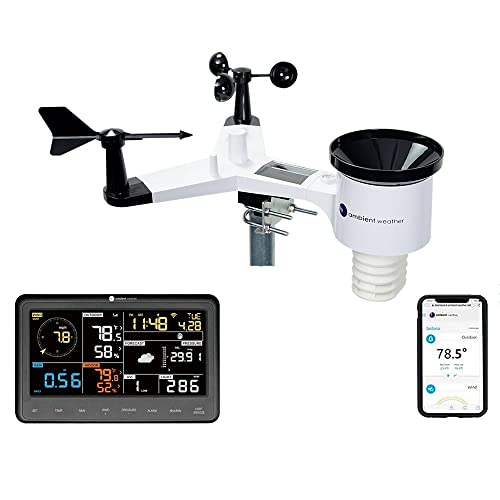
- Tracks wind, rain, UV, and solar radiation
- Offers Wi-Fi access, alerts, and remote monitoring
- Works with Alexa, Google Home, and IFTTT
Best For: Connected homes and detailed backyard weather tracking
Best Simple Forecasting Clock
AcuRite Vertical Weather Forecaster
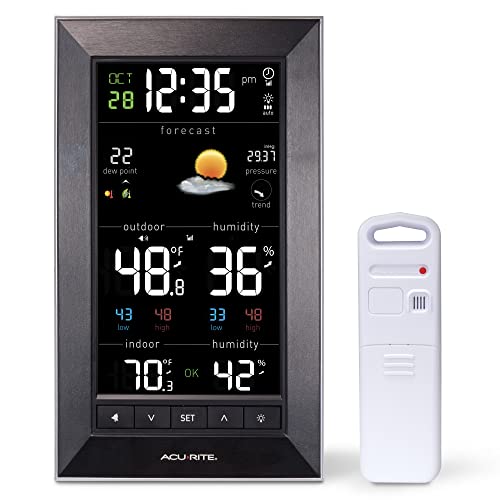
- Shows indoor and outdoor temperature and humidity
- Includes 12-hour forecasting and atomic time
- Supports alarms and wall or table placement
Best For: Everyday home, office, or RV weather updates
Best Advanced Console Value
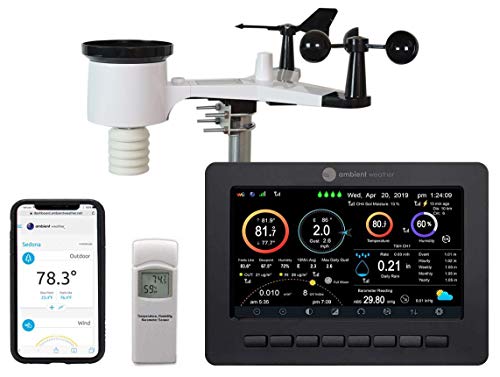
- Measures wind, rain, UV, and solar radiation
- Includes an advanced TFT color console
- Supports unit switching and optional Wi-Fi
Best For: Gardens and backyards needing broad outdoor data
Best Custom-Alert Pick

- Indoor/outdoor temperature and humidity readings
- Custom high/low alerts plus comfort charts
- Atomic clock with adjustable backlight
Best For: Homes wanting alerts and clear daily weather information
Best Comprehensive Weather Data
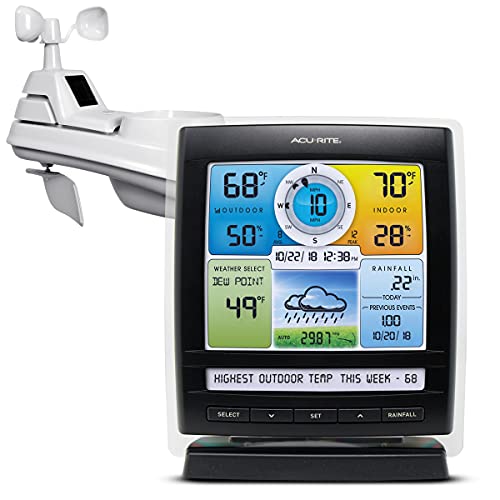
- Tracks over 55 weather data points
- Includes wind, rainfall, pressure, and humidity
- Large color screen with adjustable dimmer
Best For: Detailed home and garden weather monitoring
Best Flexible Display Option
Newentor Q3 Wireless Weather Station

- Color display with temperature, humidity, and forecast
- Supports up to three wireless sensors
- Always-on AC or battery-saving display modes
Best For: Bedrooms and homes needing flexible power and sensor options
Best Atomic-Time Pick
La Crosse Full-Color Weather Station

- Atomic self-setting clock with DST adjustment
- Indoor/outdoor temperature and humidity readings
- Color forecasts, alerts, and adjustable backlight
Best For: Homes wanting colorful monitoring with precise timekeeping
Best Easy-Read Display
AcuRite Color Home Weather Station
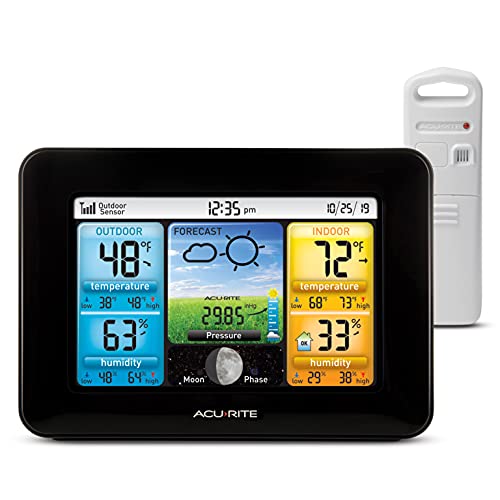
- Color LCD with more than 15 data points
- 12-hour hyperlocal forecast from sensor readings
- Tracks moon phase, pressure trends, and highs/lows
Best For: Users prioritizing clear data in homes, offices, or RVs
Best Comprehensive Monitoring
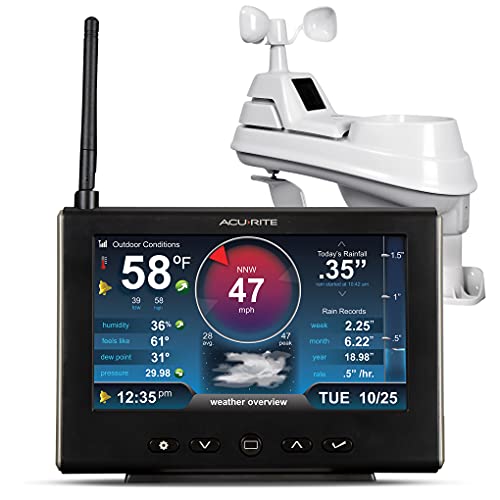
- Tracks rain, wind, temperature, humidity, and pressure
- More than 25 data points with historical records
- Custom alerts plus a barometric-pressure storm alarm
Best For: Weather enthusiasts needing detailed outdoor measurements
Best for Multi-Point Monitoring – 7.5-Inch Wireless Weather Station
For households comparing digital weather stations, this model emphasizes readability and flexible monitoring. Its 7.5-inch HD display shows temperature, humidity, forecasts, time, date, pressure, and moon phase, while the console can connect with up to three wireless sensors.
Best For: Families wanting a large display and temperature monitoring in multiple locations.
Pros:
- Large, high-contrast 7.5-inch display is designed for easy reading.
- Supports up to three sensors with a wireless range of up to 328 feet.
- Includes atomic clock synchronization, DST support, weather forecasting, and moon-phase information.
Cons:
- Barometric-pressure forecasting may require 7 to 10 days of calibration.
- Battery operation turns the display off after about 15 seconds; continuous display requires the power adapter.
This is a practical choice when display visibility and multi-location readings matter most. Plan to use the adapter for everyday operation and allow time for the forecast feature to calibrate.
Best Smart-Home Integration – Ambient Weather WS-2902 Wi-Fi
This Ambient Weather model is among the more connected digital weather stations, combining an outdoor sensor array with a color LCD console and Wi-Fi access. It measures wind, temperature, humidity, rainfall, UV intensity, and solar radiation, with remote monitoring and alerts available through compatible services.
Best For: Homeowners and gardeners who want detailed backyard data, remote access, and smart-home compatibility.
Pros:
- Measures wind speed and direction, temperature, humidity, rainfall, UV, and solar radiation.
- Supports remote monitoring, customizable alerts, and integrations with Alexa, Google Home, and IFTTT.
- Can optionally transmit data to the Ambient Weather Network.
Cons:
- Requires a 2.4 GHz Wi-Fi connection for its connected features.
- The listed lower temperature rating is 14°F.
- Its 3.9-pound setup may require more installation planning than a basic indoor/outdoor thermometer.
Choose the WS-2902 when data depth and connectivity are more important than simplicity. It offers a fuller view of local conditions and useful alert options for weather-aware routines.
Best Simple Forecasting Clock – AcuRite Vertical Weather Forecaster
The AcuRite 01121M is a straightforward option for shoppers seeking digital weather stations with a clock-focused design. Its vertical display provides indoor and outdoor temperature and humidity, daily highs and lows, barometric pressure, a 12-hour forecast, and automatic time updates.
Best For: Homes, offices, or RVs that need an easy-to-read weather clock with basic alerts.
Pros:
- Displays more than 20 data points, including temperature, humidity, pressure, date, and time.
- Provides a personalized 12-hour forecast based on current conditions.
- Offers programmable temperature and humidity alarms plus atomic time and DST updates.
- Can sit on a table or hang on a wall.
Cons:
- Its forecasting and measurement features are more basic than those of Wi-Fi-enabled stations.
- The outdoor sensor uses a 433 MHz wireless connection and requires up to 330 feet of transmission distance.
This model makes sense for buyers who prioritize a familiar clock layout and essential indoor/outdoor readings. It is less suited to users seeking remote access or broader environmental measurements such as rainfall and wind.
Best Advanced Console Value – Ambient Weather WS-2000
The Ambient Weather WS-2000 is a strong fit for shoppers comparing digital weather stations with broad outdoor coverage. Its wireless integrated sensor array measures wind, temperature, humidity, rainfall, UV, and solar radiation, while the TFT color console supports imperial and metric units and optional Wi-Fi connectivity.
Best For: Gardeners and weather hobbyists who want broad outdoor measurements with an advanced color console.
Pros:
- Tracks wind speed and direction, temperature, humidity, rainfall, UV, and solar radiation.
- Uses a high-definition TFT color display for console viewing.
- Supports imperial and metric units with calibration options.
- Offers optional Wi-Fi transmission and remote-monitoring capabilities.
Cons:
- The sensor array requires three AAA batteries, which are not included.
- The console requires the included 5V DC adapter.
- Its stated temperature accuracy is ±2°F.
Consider the WS-2000 if you want more environmental detail than a basic thermometer provides without giving up a dedicated console. Its Wi-Fi option adds flexibility, while the included sensor array supports garden and backyard monitoring.
Best Custom-Alert Pick – La Crosse C85845-INT
This La Crosse model is a practical choice among digital weather stations for households that want clear indoor and outdoor readings, customizable alerts, and an easy-to-read color display. It also adds dew point, heat index, comfort charts, and an atomic clock.
Best For: Homes that prioritize temperature and humidity alerts, timekeeping, and a large adjustable display.
Pros:
- Shows indoor and wireless outdoor temperature and humidity readings.
- Customizable high/low alerts for temperature and humidity.
- Includes dew point, heat index, comfort charts, daily high/low records, and forecast icons.
- Atomic time, adjustable brightness, and a constant AC-powered backlight.
Cons:
- Forecast calibration takes 7–10 days.
- Backup batteries and outdoor sensor batteries are not included.
- It does not list wind speed, wind direction, or rainfall monitoring.
Choose this station if alerts and everyday comfort information matter more than detailed wind and rain data. Its straightforward display and clock functions make it well suited to a kitchen, office, or living space.
Best Comprehensive Weather Data – AcuRite Iris 01512MCB
The AcuRite Iris is one of the more comprehensive digital weather stations in this group, delivering more than 55 data points on a large color screen. It wirelessly tracks temperature, humidity, wind, pressure, and rainfall while also providing historical information and a personalized forecast.
Best For: Users who want broad outdoor weather coverage, including wind and rainfall measurements.
Pros:
- Monitors indoor/outdoor temperature and humidity, wind speed/direction, pressure, and rainfall.
- Provides more than 55 data points, including historical data, heat index, dew point, and feels-like temperature.
- Large color LCD includes time, date, adjustable dimmer, and weather conditions.
- Outdoor sensor includes a mounting bracket and is designed for straightforward setup.
Cons:
- The system requires multiple batteries; the supplied details specify 10 AA batteries.
- Its 32°F lower temperature rating may limit outdoor readings in colder climates.
- The display is larger and heavier than the other listed models.
This is the strongest fit for buyers who want more than a basic thermometer. Its wind and rain measurements make it especially useful for gardens, outdoor planning, and monitoring changing conditions around the home.
Best Flexible Display Option – Newentor Q3 Wireless Weather Station
The Newentor Q3 is a compact option among digital weather stations, combining a color LCD with indoor/outdoor temperature and humidity readings, forecasting, moon phase, barometric pressure, and atomic time. Its AC adapter supports an always-on display, while battery operation provides a quick-glance energy-saving mode.
Best For: Bedrooms, living rooms, and other spaces where display flexibility and clock features are important.
Pros:
- Shows indoor/outdoor temperature and humidity, high/low records, forecast, moon phase, and pressure.
- Supports up to three wireless sensors for monitoring multiple locations.
- Offers always-on AC operation or a 15-second battery-powered quick-glance mode.
- Includes customizable alerts, atomic time, dual alarms, and snooze.
Cons:
- Only one remote sensor is included.
- Forecast calibration requires 7–10 days.
- Battery mode dims the screen after a 15-second glance rather than keeping it continuously lit.
This Newentor model balances useful home-weather information with bedside-clock functionality. It is a sensible pick for buyers who may expand to multiple sensor locations and want control over how the display uses power.
Best Atomic-Time Pick – La Crosse Full-Color Weather Station
If you want digital weather stations with a colorful display and dependable timekeeping, this La Crosse model is a practical home option. It tracks indoor and outdoor temperature and humidity, stores minimum and maximum readings, and provides forecast icons with tendency indicators.
Best For: Households that want atomic time, customizable temperature alerts, and a full-color indoor display.
Pros:
- Atomic self-setting time with daylight-saving adjustment and 12/24-hour display options.
- Wireless indoor/outdoor temperature and humidity readings with minimum and maximum records.
- Adjustable backlight intensity and forecast icons with tendency indicators.
- Weather-resistant sensor offers a stated transmission range of up to 330 feet without obstructions.
Cons:
- Battery-only operation makes the backlight temporary and on-demand unless the included power adapter is used.
- Requires three AAA alkaline batteries for backup operation.
Choose this station if accurate time display and easy-to-read color forecasting matter as much as basic temperature and humidity monitoring. Its optional adapter enables the full-feature display, while alerts and stored readings add everyday convenience.
Best Easy-Read Display – AcuRite Color Home Weather Station
Among digital weather stations for everyday home monitoring, this AcuRite model stands out for its color LCD and straightforward setup. It displays indoor and outdoor temperature, humidity, barometric pressure trends, forecast icons, moon phase, and historical high/low readings.
Best For: Home, office, or RV users who want a clear color display and a personalized short-term forecast.
Pros:
- Color LCD shows more than 15 data points, including temperature, humidity, pressure trends, and date.
- Wireless outdoor sensor provides hyperlocal conditions and a 12-hour forecast based on current readings.
- Adjustable display dimmer supports flexible placement in a home, office, or RV.
- Displays dynamic forecast icons, trend arrows, and moon phase information.
Cons:
- The outdoor sensor requires two AA batteries, which are not included.
- Its listed connectivity uses a 433 MHz wireless connection rather than Wi-Fi.
- No warranty is listed in the supplied product details.
This is a sensible choice when readability and broad at-a-glance information are priorities. It offers more than a basic thermometer while keeping setup simple, though buyers should plan to supply the sensor batteries.
Best Comprehensive Monitoring – AcuRite Iris Weather Station
For shoppers seeking digital weather stations with detailed outdoor tracking, the AcuRite Iris combines an HD display with a wireless sensor, rain gauge, and wind measurements. It reports temperature, humidity, rainfall, wind speed and direction, barometric pressure, and additional comfort and forecast data.
Best For: Weather-focused households that want rainfall, wind, alert thresholds, and extensive historical information.
Pros:
- Monitors more than 25 data points, including rainfall, wind, temperature, humidity, pressure, and heat index.
- Includes customizable alerts for temperature, humidity, wind speed, and rainfall.
- Storm alarm activates when barometric pressure drops, helping flag changing conditions.
- HD display includes moon phase, time, date, day, and a time alarm.
Cons:
- Its broader feature set and outdoor sensor make it more involved than a basic temperature station.
- The optional lightning sensor is sold separately.
- The system requires four AA batteries according to the supplied details.
This model is the strongest fit for buyers who actively track outdoor conditions rather than simply checking the temperature. Rainfall history, wind readings, threshold alerts, and storm monitoring provide useful detail for gardening, outdoor planning, and general weather observation.
How We Picked the Best Digital Weather Stations
We focused on the features that matter during daily use: accurate indoor and outdoor readings, dependable wireless sensors, clear displays, practical forecasting, and straightforward setup. We also considered whether each station supports useful extras such as wind speed and direction, rainfall tracking, dew point, heat index, atomic time, customizable alerts, or Wi-Fi access.
Because different households need different levels of detail, this list includes both compact temperature-and-humidity stations and more advanced systems designed for detailed outdoor monitoring. Product reputation, sensor capabilities, display readability, and overall value also influenced the selection.
Quick Comparison
- Best for connected monitoring: Choose a Wi-Fi-enabled model if you want remote access, app features, or smart-home integration.
- Best for basic home use: A station with indoor/outdoor temperature, humidity, time, and a forecast offers the most practical information for most households.
- Best for weather enthusiasts: Look for wind and rain sensors, historical data, expanded outdoor measurements, and a larger color display.
- Best for easy reading: Prioritize a bright, uncluttered screen with large digits and adjustable viewing options.
Key Buying Factors for Digital Weather Stations
Sensor Coverage and Placement
Check which measurements are included before buying. Temperature and humidity are common, while wind speed, wind direction, and rainfall usually require a more advanced outdoor sensor array. Confirm the stated wireless range and place the sensor away from direct heat sources, reflective surfaces, and obstructions for more useful readings.
Display and Power
A large color screen is convenient for a kitchen or living room, but it may use more power than a simple monochrome display. Review whether the console uses an AC adapter, batteries, or both. Battery backup is valuable during power interruptions, especially when preserving time, settings, or stored readings matters.
Alerts, Forecasts, and Connectivity
Temperature, humidity, frost, and storm-related alerts can be more useful than a basic forecast icon. Wi-Fi models provide remote monitoring and often support historical data, but they may require an app, account, and dependable network connection. For a low-maintenance setup, a standalone console is usually simpler.
Accuracy and Maintenance
Outdoor sensors need appropriate placement and periodic battery replacement. Rain gauges may require cleaning, while wind sensors need unobstructed exposure. No home station replaces an official weather service, but a properly installed unit can provide highly useful hyperlocal information.
Who Should Buy Which Digital Weather Stations?
Choose a basic wireless station if you mainly want indoor and outdoor temperature, humidity, time, and a quick forecast. Choose a large-screen color model if several people need to read conditions from across a room. Choose a Wi-Fi smart station if you want app access, remote checks, or more detailed records. Choose a rain-and-wind system if you garden, manage property, enjoy amateur weather observation, or need a fuller picture of outdoor conditions.