Choosing the right guide scope can improve tracking accuracy without adding unnecessary weight to your astrophotography setup. The best compact telescope guide scopes balance aperture, focal length, focus control, and easy mounting.
Our roundup compares 10 lightweight options, including 30mm, 40mm, 50mm, and 60mm models, so you can match a guide scope to your mount, imaging telescope, and guide camera.
Best 10 Compact Telescope Guide Scopes Picks for 2026
Best Compact Starter
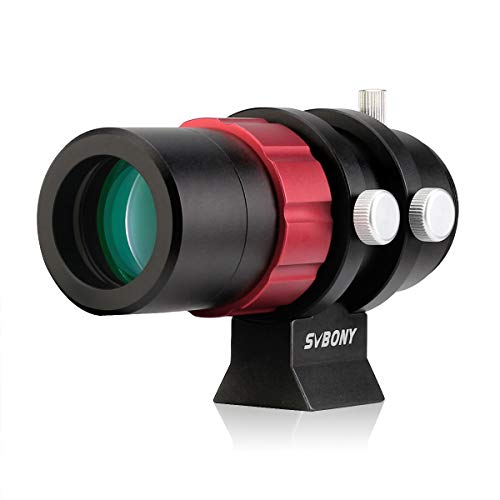
- 30mm f/4 optics provide a wide field
- 1.25-inch and M42 camera interfaces
- 45mm back focus with protective thumbscrews
Best For: Lightweight autoguiding setups with compatible cameras
Best Premium Optics

- 50mm f/4.8 APO doublet with ED glass
- Includes finder stalk and Vixen-style plate
- Built-in T-threads enable optional astrograph conversion
Best For: Guiding and visual observing where optical quality matters
Best Dual-Purpose Choice
SV106 60mm Helical Guide Scope
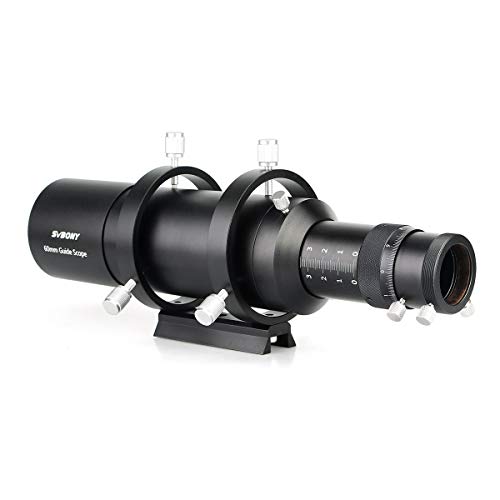
- Non-rotating helical focus adjustment
- Up to 35mm of drawtube back-travel
- Can function as a finder with an optional eyepiece
Best For: Imagers needing precise focus and finder-scope versatility
Best Right-Angle Value
Astromania 30mm Mini Guide Scope

- Combines guiding with right-angle finding
- Includes a 1.25-inch 90-degree diagonal
- Synta-style dovetail supports multiple bases
Best For: Mixed visual and astrophotography setups
Precision Focusing Pick
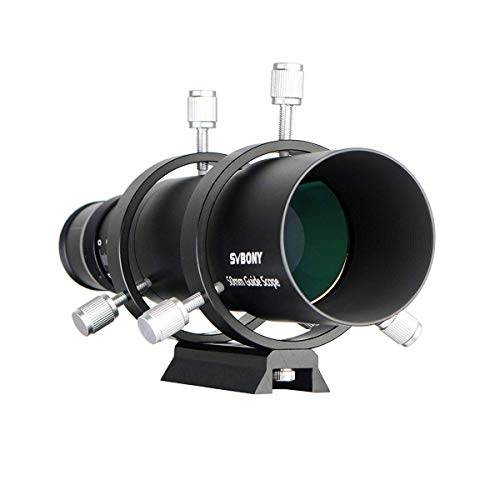
- 50mm aperture with fully multi-coated optics
- 8mm helical focus plus up to 30mm back-travel
- Includes rings and a dovetail mounting bar
Best For: Astrophotographers prioritizing precise focus control and flexible mounting
Lightweight Mini Pick
SVBONY SV165 40mm Mini Guide Scope

- Compact 40mm scope weighing about 450g
- Designed for telescope focal lengths up to 700mm
- Supports multiple guide-camera interfaces
Best For: Shorter-focal-length telescope setups needing a lightweight guide scope
Finder-and-Guide Value
Alstar 50mm Deluxe Guide Scope

- 50mm aperture with 200mm focal length
- 40mm focusing range with micro-focus adjustment
- Includes Synta-style dovetail and pipe clamps
Best For: Users wanting a dual-purpose finder and guide scope for telescopes up to 1500mm
Wide-Field Precision Pick

- 60mm aperture with 240mm focal length
- Helical focuser helps prevent image rotation
- Includes rings and Synta-style dovetail bar
Best For: Astrophotographers needing a versatile guide and finder scope
Portable Deluxe Kit
Alstar 60mm Helical Guide Scope

- 60mm aperture and 240mm focal length
- 48mm dual-helical focusing range
- Includes clamps and Synta-style mounting plate
Best For: Mobile users wanting a guide scope that also works as a finder
Lightweight Field-Finding Pick

- 50mm aperture with 200mm focal length
- Helical focuser provides precise manual adjustment
- Includes rings and Synta-style dovetail bar
Best For: Users seeking a lighter guide-and-finder scope
Best Compact Starter – SV165 30mm Mini Guide Scope
The SVBONY SV165 is a compact telescope guide scope designed for quick target acquisition and autoguiding setups. Its 30mm f/4 optics, 45mm back focus, and 1.25-inch/M42 interfaces make it a practical fit for compatible guide cameras, though some cameras may require additional focusing accessories.
Best For: Lightweight deep-sky astrophotography setups using compatible SV305C Pro, ZWO, QHY, Orion, or other autoguiding cameras.
Pros:
- Compact 30mm achromatic optics with a wide field of view.
- Compatible 1.25-inch and M42 mounting interfaces for several guide cameras.
- Nylon-tipped thumbscrews help protect the optical tube.
Cons:
- It cannot be used with the specified dielectric mirror star diagonal.
- Some camera combinations may need extra accessories to focus.
- The image is inverted when used with an eyepiece.
The SV165 offers a space-saving route into autoguiding, especially when a wide field and low weight matter more than visual observing versatility. Confirm your camera’s focus requirements before buying.
Best Premium Optics – EvoGuide 50DX APO Guide Scope
The Sky-Watcher EvoGuide 50DX is a lightweight compact telescope guide scope with a 50mm f/4.8 apochromatic doublet design. Its matched ED glass, 242mm focal length, and included mounting hardware make it a more substantial option for guiding or visual observing.
Best For: Astrophotographers who want a 50mm guide scope with APO optics, flexible mounting, and the option to convert it into a short-focal-length astrograph.
Pros:
- Matched ED glass is designed for contrast-rich, faithful views.
- Includes a finder stalk and Vixen-style mounting plate.
- Built-in T-threads support astrograph use with an optional adapter.
Cons:
- At 2.7 pounds, it is heavier than the smaller 30mm options.
- The astrograph adapter is optional and not included.
- Its 1.25-inch helical focuser offers less accessory flexibility than larger focusers.
The EvoGuide 50DX is a strong choice when optical quality and mounting flexibility take priority over minimum size. Its added weight and optional-adapter requirement should be considered for highly portable rigs.
Best Dual-Purpose Choice – SV106 60mm Helical Guide Scope
The SVBONY SV106 is a versatile compact telescope guide scope with a built-in helical focuser. It can accept compatible autoguider cameras or work as a straight-through finder with an optional 1.25-inch eyepiece, making it useful for both imaging and alignment.
Best For: Astrophotographers who want precise, non-rotating focus adjustment and a guide scope that can also serve as a finder.
Pros:
- Helical focuser provides 8mm of precise travel without rotating the field.
- Telescoping drawtube adds up to 35mm of back-travel.
- Supports autoguider cameras, eyepieces, and female T-thread accessories.
- Compression ring helps protect inserted cameras and eyepieces.
Cons:
- Its 790g weight is substantial for a compact guide scope.
- The 1.25-inch eyepiece for finder use is optional.
- Compatibility depends on the camera or accessory’s connection type.
The SV106 stands out for users who value focusing convenience and multi-use capability. It is less minimal than a 30mm guide scope, but its extra aperture and adjustable drawtube can simplify varied setups.
Best Right-Angle Value – Astromania 30mm Mini Guide Scope
The Astromania 30mm mini guide scope is a compact telescope guide scope that also supports comfortable right-angle visual observing. Its 1.25-inch diagonal, T2 extension adapter support, and Synta-style dovetail base give it broader finder and camera compatibility than a guide-only design.
Best For: Users who want one small scope for autoguiding, right-angle finding, and occasional naked-eye observation.
Pros:
- 30mm fully multi-coated achromatic optics provide bright, clear views.
- Includes a 1.25-inch 90-degree diagonal for comfortable viewing.
- Standard Synta-style dovetail fits several Sky-Watcher, GSO, Celestron, Vixen, and Orion bases.
- Focus ring and 45mm back focus support quick adjustment.
Cons:
- Guide cameras and DSLRs may require the T2 extension adapter.
- The supplied diagonal adds functionality but may not suit every guiding configuration.
- Manual focusing requires adjustment at the scope.
The Astromania model is a practical all-rounder for buyers who want more than a dedicated guide tube. Its right-angle viewing setup and broad mounting compatibility make it especially useful on mixed visual and imaging rigs.
Precision Focusing Pick – SVBONY SV106 50mm Guide Scope
For astrophotographers comparing compact telescope guide scopes, the SVBONY SV106 stands out for its 50mm aperture and adjustable helical focuser. It combines fine manual focusing with a sturdy metal build and flexible mounting options.
Best For: Astrophotographers who want precise focusing and a versatile 50mm guide scope for compatible guide cameras.
Pros:
- 8mm helical focus travel allows precise adjustments, while the drawtube adds up to 30mm of back-travel.
- Includes two guide scope rings and a 3.5-inch dovetail mounting bar.
- Male T-threads support secure attachment of guide cameras with female T-threads.
- All-metal construction and fully multi-coated optics support durable, clear viewing.
Cons:
- At 1.7 pounds, it may be heavier than some mini guide scopes.
- Manual focusing requires initial setup and adjustment.
The SV106 is a strong choice when focusing control and mounting flexibility matter more than minimizing every ounce. Its included rings and bar make it a practical all-in-one option for many astrophotography setups.
Lightweight Mini Pick – SVBONY SV165 40mm Mini Guide Scope
The SVBONY SV165 is a compact telescope guide scope designed for optical tube assemblies with focal lengths up to 700mm. Its 40mm aperture, front focuser, and six-point guide ring make it a practical fit for lighter guiding setups.
Best For: Users with telescopes up to 700mm focal length who want a lightweight guide scope with broad camera compatibility.
Pros:
- Compact 40mm design weighs about 450g for easier setup and transport.
- Fully multi-coated achromatic optics provide clear, sharp views.
- 1.25-inch and M42 interfaces support SV305 Pro, Orion, ZWO, QHY, and similar guide cameras.
- Front focuser with scale and locking ring helps repeat focusing, while the six-point ring allows coaxiality adjustments.
Cons:
- It is specified for telescope focal lengths within 700mm, limiting use with longer systems.
- Some eyepiece combinations may require removing the red locking ring and shortening the tube to focus.
The SV165 favors low weight and compatibility over a larger aperture. It is especially appealing for shorter-focal-length telescopes and users who value a repeatable, adjustable mounting system.
Finder-and-Guide Value – Alstar 50mm Deluxe Guide Scope
Among compact telescope guide scopes, the Alstar 50mm Deluxe Finder and Guidescope offers dual-use flexibility for astrophotography and visual observing. Its 200mm focal length, fully multi-coated optics, and helical focusing system are aimed at reliable guide-star acquisition.
Best For: Observers who want one 50mm instrument for guiding, finding objects, and visual use on telescopes up to 1500mm focal length.
Pros:
- 50mm aperture and fully multi-coated lenses provide bright, wide-field views.
- Helical focuser offers 40mm of total focus range, including 10mm of micro-focusing.
- Includes a Synta-style dovetail plate and pipe clamps for broad telescope compatibility.
- All-metal housing and locking features help limit movement during imaging.
Cons:
- Manual focusing requires setup before imaging.
- Its included mounting hardware may add bulk compared with a minimal mini-guide-scope setup.
The Alstar is a versatile option for users who want guiding and object-finding capability in the same accessory. Its generous focus range and compatibility with telescopes up to 1500mm make it suitable for a wider range of systems than many compact alternatives.
Wide-Field Precision Pick – Astromania 60mm Guide Scope
For photographers comparing compact telescope guide scopes, this Astromania model combines a light-gathering 60mm aperture with a 240mm focal length and wide-field optics. Its helical focuser is designed for precise adjustments without rotating an attached camera or eyepiece, while the included rings and dovetail bar simplify installation.
Best For: Astrophotographers who want a versatile 60mm guide scope for autoguiding, visual finding, and telescopes up to 1500mm focal length.
Pros:
- 60mm fully multi-coated optics provide a bright, wide-field view for locating guide stars.
- Helical focuser offers fine adjustment with a brass compression ring and approximately 45mm of total focusing range.
- Includes guide rings, Teflon inlays, and a Synta-style dovetail mounting plate.
- Male T-threads support direct attachment of compatible guide cameras.
Cons:
- Its larger 60mm design may add more weight than a smaller guide scope.
- Manual focusing requires hands-on adjustment before use.
This is a well-equipped choice when finding guide stars quickly and maintaining precise focus matter more than minimizing every gram of payload.
Portable Deluxe Kit – Alstar 60mm Helical Guide Scope
This Alstar model is a practical option among compact telescope guide scopes, pairing a 60mm fully multi-coated optical system with a 240mm focal length. The compact kit includes mounting hardware, while its dual helical focuser provides fine control and is designed to keep a guide star oriented during focus changes.
Best For: Mobile astronomers and astrophotographers seeking a compact, all-metal guide-and-finder scope with flexible camera and eyepiece compatibility.
Pros:
- 60mm aperture offers bright, wide-field views for visual finding and guiding.
- Dual helical focuser provides 48mm of total focusing range, including 10mm of micro-focus adjustment.
- Supports direct T-thread camera attachment and optional 1.25-inch eyepieces.
- Includes matching pipe clamps and a Synta-style dovetail mounting plate.
Cons:
- At about 2 pounds, it may be heavier than more minimal guide-scope setups.
- Manual operation requires focusing and setup adjustments by the user.
The Alstar stands out as a complete, portable package for users who want one instrument to handle both guide-camera work and object locating.
Lightweight Field-Finding Pick – Astromania 50mm Guide Scope
For buyers prioritizing a smaller setup, this Astromania 50mm model is one of the more compact telescope guide scopes in the lineup. It uses a 200mm focal length, fully multi-coated optics, and a helical focuser for autoguiding or visual finding, with included rings and a dovetail bar for straightforward mounting.
Best For: Astrophotographers who want a lighter 50mm guide-and-finder scope for telescopes up to 1500mm focal length.
Pros:
- 50mm aperture and 200mm focal length provide a practical guide-star view.
- Helical worm focuser offers fine adjustment and helps prevent camera or eyepiece rotation.
- Includes heavy-duty rings, Teflon inlays, and a Synta-style mounting plate.
- Male T-threads allow direct connection to compatible autoguider cameras.
Cons:
- The smaller 50mm aperture gathers less light than the listed 60mm alternatives.
- Its manual focus system still requires setup adjustments in the field.
This model makes sense when reducing bulk is important while retaining dedicated focusing control and a mounting package suited to both guiding and visual use.
How We Picked These Compact Telescope Guide Scopes
We focused on guide scopes that suit portable astrophotography rigs and electronically assisted astronomy setups. Key considerations included aperture, focal length, optical design, focusing hardware, mounting convenience, and versatility as a finder or guide scope. We also included several closely related sizes so buyers can compare the trade-off between low weight and greater light-gathering ability.
A guide scope does not need to match your imaging telescope’s aperture, but it should provide a useful field of view and enough resolution for your guide camera and mount. Compatibility with rings, dovetail plates, and camera adapters is equally important.
Quick Comparison
| Guide scope size | Best suited to | Main advantage | Potential limitation |
|---|---|---|---|
| 30mm | Very portable imaging rigs | Lowest weight and compactness | Less light gathering and resolving power |
| 40mm | Small refractors and travel setups | Good portability-to-performance balance | May offer fewer framing options than larger models |
| 50mm | General-purpose guiding | Strong balance of sensitivity and size | Adds more weight and mounting demand |
| 60mm | Longer focal-length imaging systems | More light gathering and potentially finer guiding | Bulkier and more sensitive to flexure |
Key Buying Factors for Compact Telescope Guide Scopes
Focal Length and Field of View
A shorter focal length usually gives a wider field, making it easier for the guide camera to find suitable stars. Longer focal lengths can provide more guiding scale, but they may require more careful alignment and a rigid mounting system.
Focusing Mechanism
Helical focusers allow fine adjustments and can be convenient when switching cameras or accessories. Check whether the focuser locks securely; focus shift during an imaging session can undermine otherwise accurate guiding.
Mounting and Flexure
Solid rings, a dependable dovetail connection, and minimal play matter more than a small difference in optical specifications. Avoid mounting a guide scope on a flexible accessory shoe when your imaging telescope or exposure times demand maximum stability.
Camera and Accessory Compatibility
Confirm the thread or adapter type before buying. Also check whether the package includes rings, a diagonal, or other accessories you actually need. A model advertised as multi-use may work as a finder, but its practical value depends on your camera and telescope connections.
Who Should Buy Which Compact Telescope Guide Scopes?
Choose a 30mm model if your priority is the lightest possible setup for a small mount or travel rig. A 40mm scope is a sensible middle ground for users who want compact dimensions without moving immediately to a larger guide system.
For most general-purpose deep-sky setups, a 50mm guide scope offers a useful balance of sensitivity, field coverage, and portability. Consider a 60mm option when you use a longer imaging telescope, need additional light-gathering ability, or want more flexibility for finder and guide duties. Whichever size you choose, prioritize rigid mounting and secure focusing to get the most reliable performance from your guide camera.