The best anemometers for home use make it easier to measure outdoor wind, check ventilation, troubleshoot HVAC airflow, and monitor changing weather conditions. The right choice depends on whether you need a portable meter for occasional checks or a connected station for continuous readings.
We compared handheld anemometers, Bluetooth-enabled models, and full weather stations across measurement range, display quality, portability, functionality, and ease of use. Use the guide below to narrow the list to the tool that fits your home projects and monitoring needs.
Best 10 Anemometers for Home Use Picks for 2026
Best Portable Pick
TopTes TS-301 Digital Anemometer
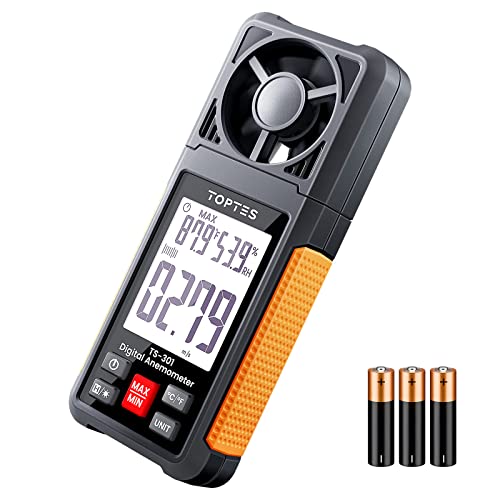
- Large 2.26-inch backlit display
- Six wind-speed measurement units
- Measures temperature and humidity
Best For: Portable home, HVAC, and outdoor measurements
Best Home Weather Station
AcuRite Notos 00589MCB Weather Station
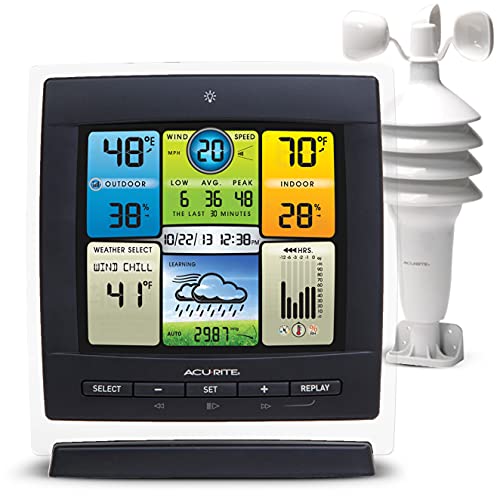
- Tracks wind, temperature, humidity, and pressure
- Offers a 12-hour personalized forecast
- Color display with adjustable dimmer
Best For: Whole-home indoor and outdoor weather monitoring
Best for HVAC Checks
BTMETER BT-100 Handheld Anemometer

- Measures airflow in five units
- Includes wind temperature and wind chill
- Tripod thread supports hands-free testing
Best For: HVAC vents, ducts, and DIY airflow checks
Best for Wind Tracking
AcuRite Notos 01604A2 Pro Weather Station
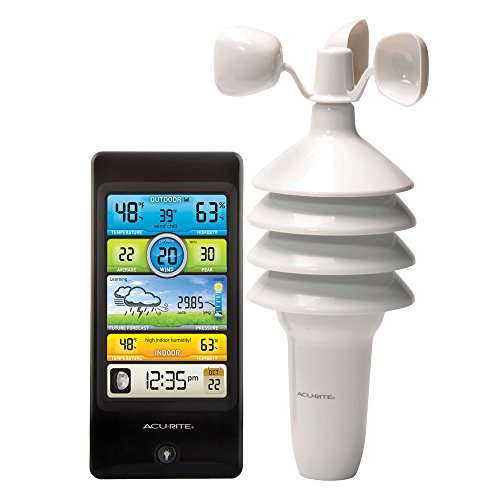
- Tracks current, average, and peak wind
- Updates readings every 18 seconds
- Records daily and all-time highs and lows
Best For: Continuous outdoor wind monitoring at home
Best Bluetooth Pick

- Bluetooth app supports logging and file export
- Measures wind speed, temperature, and wind chill
- Compact design supports HVAC and outdoor use
Best For: Portable home HVAC checks and app-based wind tracking
Best for Everyday Use
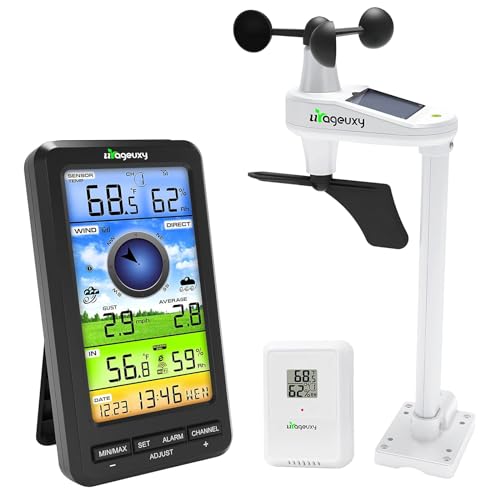
- Tracks wind, temperature, and humidity indoors and outdoors
- WiFi uploads data to supported weather websites
- Includes a readable 5-inch color display
Best For: Continuous home, garden, and property weather monitoring
Best HVAC Tool
testo 405i Hot-Wire Anemometer

- 15-inch telescopic shaft reaches ducts and vents
- Bluetooth app supports graphs, storage, and reports
- Measures airflow, air velocity, and temperature
Best For: Detailed residential HVAC inspections and servicing
Versatile Home Wind Checks
Mcbazel 3-in-1 Handheld Anemometer

- Measures wind speed, temperature, and Beaufort level
- Offers five wind-speed units plus MAX/MIN/AVG modes
- Backlit, lightweight design for indoor and outdoor use
Best For: Homeowners wanting broad readings in one portable meter
Compact Wind and Chill Meter
BTMETER BT-816B Handheld Anemometer

- Measures wind speed, temperature, and wind chill
- Includes current, MAX, and AVG measurement modes
- Tiny 53 g design with backlit LCD and lanyard
Best For: Portable home and outdoor airflow checks
HVAC-Focused Airflow Testing
HoldPeak 866B Digital Anemometer

- Measures light airflow with ±5% stated accuracy
- Tracks MAX, MIN, and AVG readings for HVAC checks
- Includes backlight, tripod mount, lanyard, and case
Best For: DIY HVAC airflow comparisons and CFM estimates
Best Portable Pick – TopTes TS-301 Digital Anemometer
For shoppers comparing anemometers for home use, the TopTes TS-301 is a compact handheld option for checking outdoor wind and indoor airflow. Its large backlit display, six selectable units, and temperature and humidity readings make it practical for general household and hobby measurements.
Best For: Home users who want a portable meter for HVAC checks, vents, outdoor activities, and quick weather observations.
Pros:
- Large 2.26-inch backlit LCD is easy to read.
- Measures wind speed in six units, including mph, knots, km/h, and m/s.
- Also measures relative humidity and temperature.
- Includes three AAA batteries, a carry pouch, and a three-year warranty.
Cons:
- Temperature and humidity sensors may need at least 30 minutes to adjust to a new environment.
- Automatic shutoff occurs after 10 minutes of inactivity.
The TS-301 is a well-rounded choice when portability and readable measurements matter more than permanent installation. It is especially useful for occasional airflow checks around the home or while traveling.
Best Home Weather Station – AcuRite Notos 00589MCB Weather Station
Among anemometers for home use, the AcuRite Notos is designed as a complete wireless weather station rather than a handheld meter. It combines wind speed with indoor and outdoor temperature, humidity, pressure trends, and a 12-hour personalized forecast on a color display.
Best For: Households that want at-a-glance wind and broader indoor/outdoor weather information from one display.
Pros:
- Displays real-time wind speed, temperature, humidity, and pressure trends.
- Provides a hyperlocal forecast for the next 12 hours.
- Color LCD has an adjustable dimmer for flexible placement.
- Includes wireless outdoor equipment and pole-mount hardware.
Cons:
- It is a larger, corded weather-station setup rather than a pocket-sized anemometer.
- Outdoor temperature accuracy is listed as plus or minus 2 degrees Fahrenheit.
If you want more than a single wind reading, the Notos offers a convenient home-center format with historical data and multiple weather measurements. Its display and mounting options suit a dedicated indoor/outdoor setup.
Best for HVAC Checks – BTMETER BT-100 Handheld Anemometer
The BTMETER BT-100 is a practical choice for anemometers for home use when airflow testing is the priority. It measures wind speed across five units, includes wind temperature and wind chill readings, and has a sensitive vane design suited to vents and ductwork.
Best For: DIY HVAC checks, duct and vent airflow measurements, and users who want tripod mounting for hands-free readings.
Pros:
- Measures wind speed from 0.67 to 67.1 mph with stated accuracy of plus or minus 2% of readings.
- Supports five units, including m/s, km/h, ft/min, knots, and mph.
- Measures wind temperature and wind chill with a backlit screen.
- Includes a metal tripod thread, case, neck strap, and two AAA batteries.
Cons:
- Wind-temperature measurement is limited to 14°F to 113°F.
- Its one-year warranty is shorter than some competing options.
The BT-100 stands out for airflow-focused home projects, especially where a tripod can make continuous readings easier. Its compact case also keeps it convenient for occasional outdoor use.
Best for Wind Tracking – AcuRite Notos 01604A2 Pro Weather Station
For home users who want ongoing outdoor readings, the AcuRite Notos 01604A2 Pro is a weather-station alternative to handheld anemometers for home use. Its wireless sensor tracks current, average, and peak wind speed while also recording temperature and humidity.
Best For: Homeowners who want continuous outdoor wind tracking, daily highs and lows, and a dedicated color display.
Pros:
- Tracks current, average, and peak wind speed.
- Updates wind readings every 18 seconds.
- Records daily and all-time high and low readings.
- Includes wireless sensor, mounting hardware, tabletop stand, and optional battery backup.
Cons:
- It is intended for a mounted outdoor setup, not handheld spot checks.
- Temperature accuracy is listed as plus or minus 2 degrees Fahrenheit.
The Pro model is the better fit when wind history and peak readings are more valuable than portability. Its wireless sensor and color display provide a convenient, always-available view of changing outdoor conditions.
Best Bluetooth Pick – BTMETER BT-100APP
For shoppers comparing anemometers for home use, the BTMETER BT-100APP is a compact handheld option with Bluetooth app support. It measures wind speed, temperature, and wind chill, while its data logging and CFM calculation features make it useful for household HVAC checks and outdoor activities.
Best For: Homeowners who want portable wind measurements, HVAC airflow checks, and app-based data logging.
Pros:
- Measures wind speed in five units and displays temperature, wind chill, and battery power.
- Bluetooth connectivity supports app readings, data logging, and Excel or TXT export.
- Eight vanes and two temperature sensors help detect low airflow for duct and vent checks.
- Compact, lightweight design includes a tripod mounting hole for continuous testing.
Cons:
- CFM must be calculated manually using airflow velocity and duct area.
- Its stated wind-temperature range is limited to -10–45°C.
The BT-100APP is a versatile choice when portability and smartphone connectivity matter. It is especially practical for basic HVAC troubleshooting, though users seeking a permanently installed weather station may prefer a dedicated system.
Best for Everyday Use – Urageuxy WiFi Anemometer
The Urageuxy WiFi weather station is a strong fit for anyone choosing anemometers for home use as part of a broader monitoring setup. Along with wind speed and direction, it tracks indoor and outdoor temperature and humidity on a 5-inch color display, with WiFi uploads for remote access.
Best For: Homes, gardens, offices, and small properties that need continuous weather monitoring and online data access.
Pros:
- Combines wind speed and direction with indoor and outdoor temperature and humidity readings.
- WiFi can upload data to Weather Underground, PWSweather, and Weathercloud.
- Color display includes high/low alarms, minimum/maximum records, and adjustable brightness.
- Waterproof outdoor sensors include mounting hardware for garden, roof, fence, or patio installation.
Cons:
- Requires a 2.4G WiFi router for website synchronization.
- The system requires six AAA batteries in addition to its power adapter.
- Additional remote thermo-hygro sensors are optional and not included.
This model is more than a handheld wind meter: it is a complete personal weather station for ongoing household monitoring. Choose it when display visibility, outdoor installation, and remote data access are more important than pocket portability.
Best HVAC Tool – testo 405i Hot-Wire Anemometer
For precise household duct and vent work, the testo 405i is a professional-style choice among anemometers for home use. Its hot-wire sensor measures air velocity, temperature, and in-duct airflow, while the 15-inch telescopic shaft helps reach confined or awkward HVAC spaces.
Best For: Homeowners, technicians, and HVAC professionals inspecting ducts, vents, and air-conditioning systems.
Pros:
- Measures air velocity, temperature, and in-duct airflow, with volume-flow calculations when duct dimensions are entered.
- Hinged telescopic shaft extends to 15 inches for hard-to-reach vents and ducts.
- Bluetooth connects the meter to a smartphone or tablet for remote readings.
- Smart Probe App presents readings as tables and graphs and supports saved reports.
Cons:
- Its five-second response time may feel slow for rapidly changing airflow.
- App operation requires a compatible smartphone or tablet.
- Its professional HVAC focus may be more capability than casual outdoor users need.
The testo 405i stands out when measurement access and HVAC-oriented reporting are priorities. Its telescoping probe and app workflow make it better suited to detailed duct inspections than general wind observation.
Versatile Home Wind Checks – Mcbazel 3-in-1 Handheld Anemometer
For shoppers comparing anemometers for home use, the Mcbazel 3-in-1 combines wind speed, temperature, and Beaufort-scale readings in one compact handheld meter. Its backlit display and multiple unit options make it practical for indoor checks, outdoor activities, and basic HVAC monitoring.
Best For: Homeowners who want wind speed, temperature, and wind-level data in a single portable device.
Pros:
- Displays wind speed, temperature, and Beaufort scale together.
- Supports m/s, km/h, knots, ft/s, and mph.
- Includes MAX, MIN, AVG, data hold, backlight, and auto power-off functions.
- Lightweight ABS body is easy to carry.
Cons:
- AAA batteries are not included.
- Its feature set may be more than needed for simple wind-speed checks.
The Mcbazel is a well-rounded option when you want more context than wind speed alone. Its temperature display and Beaufort reading are useful for everyday home and outdoor observations, while the compact design keeps it convenient to store and carry.
Compact Wind and Chill Meter – BTMETER BT-816B Handheld Anemometer
The BTMETER BT-816B is a compact choice among anemometers for home use, especially when portability matters. It measures wind speed and temperature, adds real-time wind-chill information, and offers a backlit LCD for checking readings in dim areas.
Best For: Users who need a very small handheld meter for home airflow checks and outdoor activities.
Pros:
- Measures wind speeds from 0.3 to 30 m/s and includes temperature readings.
- Provides current, maximum, and average wind-speed modes.
- Real-time wind-chill measurement adds outdoor context.
- Weighs 53 g and includes a lanyard for portability.
Cons:
- Its stated temperature range is limited to -14°F to 113°F.
- The compact form may provide less grip than larger meters.
Choose the BT-816B if you value a lightweight design and wind-chill data alongside basic wind measurements. It is suited to quick readings around the home or on the go, with unit switching and backlit operation adding convenience.
HVAC-Focused Airflow Testing – HoldPeak 866B Digital Anemometer
For home HVAC troubleshooting, the HoldPeak 866B is one of the more purpose-built anemometers for home use. Its sensitive eight-blade impeller measures light airflow, while the backlit display, tripod compatibility, and included case support repeatable checks around vents, grilles, and exhaust fans.
Best For: Homeowners and DIY users checking HVAC airflow differences and estimating CFM with vent-area measurements.
Pros:
- Measures airflow from 0.67 to 67.1 mph with ±5% accuracy.
- Supports MAX, MIN, and AVG readings for changing airflow.
- Includes air temperature and wind-chill readings in °F or °C.
- Offers a tripod mount, wrist strap, backlight, and protective case.
Cons:
- Tripod is not included.
- At 200 g, it is heavier than the compact BTMETER option.
- CFM calculations require separate vent-area measurements.
The HoldPeak 866B makes the most sense when airflow comparison is the priority. Its low-airflow sensitivity and hands-free tripod option can help with more systematic HVAC checks, while the included accessories make it practical for storage and field use.
How We Picked the Best Anemometers for Home Use
We evaluated these products by looking at the features that matter most outside professional fieldwork: wind-speed range, measurement units, airflow functions, temperature and humidity readings, display visibility, portability, and data access. We also considered whether each model is better suited to quick spot checks, HVAC testing, recreational use, or ongoing weather monitoring.
Handheld meters generally offer the simplest way to measure wind or airflow at a specific location. Weather stations require more setup but can provide continuous indoor and outdoor data, while Bluetooth and Wi-Fi models add app access, remote monitoring, or historical information.
Quick Comparison
- Best for simple spot checks: TopTes TS-301, Mcbazel 3-in-1, or HoldPeak 866B.
- Best for HVAC and ductwork: testo 405i, BTMETER BT-100, or HoldPeak 866B with airflow and temperature functions.
- Best for app-connected readings: BTMETER BT-100APP.
- Best for continuous home weather data: AcuRite Notos models or the Urageuxy Wi-Fi weather station.
- Best for a broad outdoor wind range: BTMETER BT-816B.
Key Buying Factors for Anemometers for Home Use
Measurement Type and Range
Decide whether you need wind speed, volumetric airflow such as CFM, or both. A basic anemometer is suitable for checking outdoor conditions, fans, and vents. For HVAC work, choose a model that supports airflow calculations and has a range appropriate for ducts, registers, or blower systems.
Accuracy and Measurement Units
Look for clearly stated accuracy specifications and support for the units you regularly use, such as MPH, M/S, knots, feet per minute, or CFM. A wider range is useful for outdoor applications, but resolution and repeatability matter more for comparing readings around the home.
Display, Portability, and Controls
A backlit display helps in garages, attics, and low-light conditions. Compact handheld meters are convenient for carrying between rooms or outdoors, while a telescoping probe can make in-duct measurements safer and easier. Check battery type, automatic shutoff, and whether the buttons are easy to use with one hand.
Connectivity and Weather Monitoring
Bluetooth models can save readings or send them to a phone, which is useful for documenting HVAC tests. Wi-Fi weather stations are better for continuous monitoring, but they need a suitable installation location, reliable network coverage, and periodic sensor maintenance.
Who Should Buy Which Anemometers for Home Use?
Choose a basic handheld model if you want an affordable tool for checking fans, windows, vents, drones, sailing conditions, or general outdoor wind. Choose an HVAC-focused meter if you need CFM, a probe, temperature readings, or repeatable measurements at registers and inside ducts. Choose Bluetooth when recording and reviewing readings on a phone is valuable. Choose a weather station if your priority is always-on wind, temperature, humidity, and indoor/outdoor monitoring rather than occasional measurements.
Before buying, confirm the product’s stated accuracy, sensor type, operating range, weather resistance, and included accessories. For most household users, a clear display and simple controls are more useful than advanced features that will rarely be used.