The best memory card readers for Mac make it simple to move photos, videos, and other files from SD, microSD, CF, and Memory Stick cards to your computer. The right model depends on your Mac’s ports, card formats, transfer needs, and whether you also use an iPhone or iPad.
We’ve gathered 10 practical options, from compact USB-C adapters to versatile multi-card readers, so you can find a dependable fit for your workflow without paying for features you do not need.
Best 10 Memory Cards for Mac Picks for 2026
Best USB-C Versatility

- SD and microSD support
- USB-A expansion port
- Plug-and-play Mac compatibility
Best For: Multi-device file transfers from cards and USB peripherals
Best for Fast UHS-II Transfers

- UHS-II transfer support
- Works with USB-C Macs
- Does not block other ports
Best For: High-resolution photo and video workflows using SD cards
Best Budget Dual-Format Option
- Reads SD and microSD cards
- Built-in USB-C cable
- Supports USB OTG peripherals
Best For: Everyday card transfers across Mac and other USB-C devices
Best Compact Dual-Slot Reader
Anker PowerExpand USB-C Card Reader
- Separate SD and microSD slots
- Ultra-compact 9-gram design
- 18-month warranty
Best For: Portable SD and microSD access for MacBook and USB-C devices
Most Versatile

- Reads CF, SD, microSD, and Memory Stick cards
- USB-C plug with included USB-A adapter
- Plug-and-play support for Mac and multiple platforms
Best For: Mixed card formats and cross-device file transfers
Fastest Transfers

- USB 3.0 supports transfers up to 5 Gbps
- Reads and writes SD and microSD simultaneously
- USB-C and USB-A connectors included
Best For: Mac photographers using standard SD and microSD cards
Best for Apple Device Flexibility
3-in-1 Card Reader for Mac and iPhone
- Built-in Lightning, USB-C, and USB-A connectors
- MFi Certified with macOS and iOS support
- Reads SD and microSD cards up to 1TB
Best For: Apple users moving camera files across Mac, iPhone, and iPad
Best All-Around Choice

- Supports four card formats
- USB-C and USB 3.0 connectivity
- Reads and writes four cards simultaneously
Best For: Photographers with mixed card formats
Best Compact Option
- Dual SD and microSD slots
- Bidirectional batch transfers
- Plug-and-play MacOS support
Best For: Traveling Mac users with SD or microSD cards
Best for USB Expansion

- Adds a USB 3.0 port
- Dual SD and microSD slots
- Supports simultaneous card transfers
Best For: MacBook users needing card and USB connectivity
Best USB-C Versatility – BnmxTek USB-C SD Card Reader
If you need memory cards for Mac plus flexible support for newer phones and tablets, the BnmxTek reader offers SD and microSD access through USB-C. Its built-in cable and extra USB-A port make it useful for moving photos, videos, documents, and other files between compatible devices.
Best For: Mac and MacBook users who also transfer files from cameras, drones, action cams, iPhones 15/16, iPads, or USB peripherals.
Pros:
- Works with Mac, MacBook, Windows, Linux, Chrome OS, and compatible USB-C devices.
- Supports SD, SDHC, SDXC, microSD, microSDHC, and microSDXC cards.
- Includes a USB-A expansion port for flash drives, hard drives, keyboards, mice, and other peripherals.
- Plug-and-play design requires no third-party app or driver.
Cons:
- SD and microSD cards cannot be read simultaneously.
- The built-in USB-C connector does not support Lightning devices.
- Listed transfer rate is 54 MB/s.
This is a practical all-around choice when your memory cards for Mac need to work across several USB-C devices. The dual card formats and USB-A port add convenience, although simultaneous card access is not available.
Best for Fast UHS-II Transfers – Apple USB-C to SD Card Reader
For Mac users prioritizing high-speed photo and video transfers, Apple’s USB-C to SD Card Reader is designed for UHS-II SD cards. It connects to USB-C-enabled Macs, iPads, and iPhones while maintaining compatibility with older SD cards and adapters.
Best For: Photographers and videographers using UHS-II SD cards with USB-C-enabled Mac, iPad, or iPhone devices.
Pros:
- Supports high-resolution photo and video transfers at UHS-II speeds.
- Works with USB-C-enabled Mac, iPad, and iPhone devices.
- Backward compatible with other SD cards and adapters.
- Designed not to block adjacent ports.
Cons:
- Designed around standard SD cards rather than a stated microSD slot.
- Compatibility depends on the device having a USB-C port.
This is a focused option for users who want a straightforward Apple accessory for memory cards for Mac. Its main advantage is UHS-II support, making it especially suitable for compatible high-resolution media workflows.
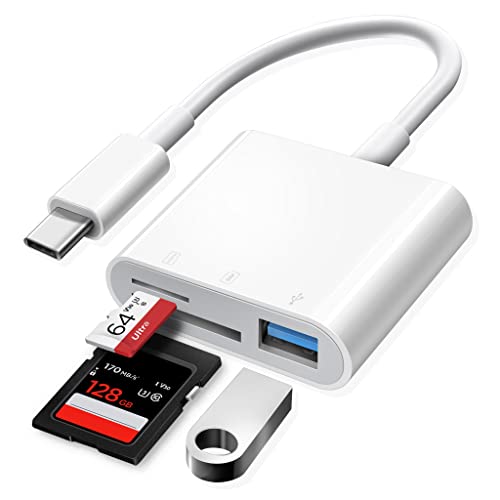
Best Budget Dual-Format Option – Oyuiasle USB-C SD Card Reader
The Oyuiasle reader is a compact choice for memory cards for Mac when you need both SD and microSD access through USB-C. It uses a built-in cable, requires no extra app or driver, and can also connect compatible USB peripherals.
Best For: MacBook, iMac, iPad, iPhone 15/16, Android, and other USB-C users who need basic card and peripheral file transfers.
Pros:
- Supports SD and microSD cards with plug-and-play operation.
- Built-in USB-C cable helps avoid blocking nearby ports.
- Compatible with Mac, iPadOS, Windows, Linux, Android, and other listed USB-C devices.
- USB OTG support works with flash drives, hard disks, keyboards, mice, and cameras.
Cons:
- SD and microSD cards cannot be read simultaneously.
- Listed data transfer rate is 30 Mb/s.
- Compatibility is centered on USB-C devices.
Choose this reader if you want broad device compatibility in a small package without installing software. It covers common SD and microSD tasks, though its listed transfer rate is lower than faster card-reader options.
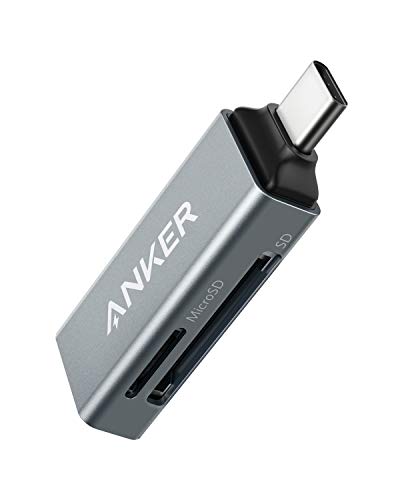
Best Compact Dual-Slot Reader – Anker PowerExpand USB-C Card Reader
Anker’s PowerExpand reader is a small, lightweight option for memory cards for Mac, with separate standard SD and microSD slots. Its USB-C connection suits compatible MacBooks and other USB-C devices, while the compact design is convenient for travel or everyday carry.
Best For: MacBook and USB-C smartphone users who regularly swap standard SD and microSD cards.
Pros:
- Provides separate SD and microSD slots for convenient card swapping.
- Supports SD, SDHC, SDXC, UHS-I, microSD, microSDHC, and microSDXC formats.
- Ultra-compact 9-gram design fits easily beside other peripherals.
- Includes an 18-month warranty and customer service.
Cons:
- May require removing a device case for proper connection.
- Optimized for USB-C devices, so connector compatibility should be checked.
- The listed card support is centered on UHS-I rather than UHS-II.
This Anker reader is a sensible portable pick when size and dual-slot convenience matter most. It is well suited to routine transfers on MacBooks and USB-C phones, especially for users carrying both SD and microSD media.
Most Versatile – 4-in-1 USB-C Card Reader
If you need memory cards for Mac plus broader device support, this 4-in-1 reader covers CF, SD, microSD, and Memory Stick formats. Its USB-C plug works with newer Macs and mobile devices, while the included USB adapter adds compatibility with older computers.
Best For: Mac users who work with several memory-card formats and move files between Apple, Android, Windows, and iOS devices.
Pros:
- Supports CF, SD, microSD, and Memory Stick cards in one reader.
- Includes USB-C and detachable USB-A connectivity.
- Plug-and-play operation with macOS, Windows, Android, and iOS.
- Handles common photo and video formats, including RAW and HD video.
Cons:
- Its listed transfer rate is 480 Mbps, below the 5 Gbps rating of some USB 3.0 readers.
- Does not support Wi-Fi SD cards.
This is the most flexible choice of the three if your workflow includes legacy CF or Memory Stick media alongside standard SD and microSD cards. It is especially practical for households or creators using a mix of devices.
Fastest Transfers – Acer Dual-Slot USB-C Reader
For memory cards for Mac, the Acer dual-slot reader is a streamlined option for SD and microSD workflows. Its USB 3.0 interface is rated up to 5 Gbps, and both card slots can be read and written simultaneously for faster media management.
Best For: Mac photographers, video editors, and travelers who primarily use SD and microSD cards.
Pros:
- USB 3.0 transfer rate rated up to 5 Gbps.
- Supports simultaneous reading and writing of SD and microSD cards.
- Built-in USB-C and USB-A connectors work with newer and older computers.
- Compact aluminum design includes protective port covers and an attached cord.
Cons:
- Supports SD and microSD only; it does not support CF, XQD, Memory Stick, or CFexpress cards.
- Thick device cases may interfere with full insertion.
- Not compatible with Lightning-port devices.
The Acer is a focused, fast choice for standard camera cards. Choose it over a more universal reader when dual-slot operation and USB 3.0 speed matter more than support for specialty formats or Lightning devices.
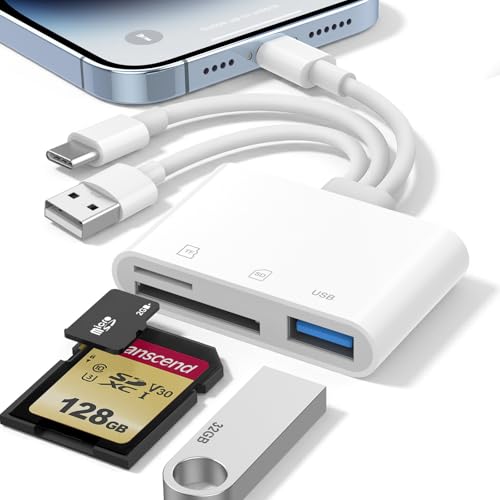
Best for Apple Device Flexibility – 3-in-1 Card Reader for Mac and iPhone
This 3-in-1 reader is a flexible pick for memory cards for Mac when your setup includes iPhone, iPad, and USB-A devices as well. Built-in Lightning, USB-C, and USB-A connections let you access SD and microSD cards without carrying separate adapters.
Best For: Apple users who transfer camera media between Macs, Lightning iPhones or iPads, USB-C devices, and USB-A computers.
Pros:
- Built-in Lightning, USB-C, and USB-A connectivity.
- Apple MFi Certified and compatible with macOS and iOS.
- Supports SD, SDHC, SDXC, microSD, microSDHC, and microSDXC cards up to 1TB.
- Works without an app, Wi-Fi connection, or driver.
Cons:
- Its listed data transfer rate is 68 Mbps.
- Supports SD and microSD cards but not CF or Memory Stick formats.
- FAT32 limits individual files to under 4GB.
This reader stands out for connector convenience rather than maximum listed speed. It is a strong travel option for Apple households that still need to connect to a USB-A laptop or transfer photos directly from a camera card.
Best All-Around Choice – BENFEI 4-in-1 Card Reader
If you need versatile memory cards for Mac access, the BENFEI 4-in-1 reader supports SD, microSD, Memory Stick, and CompactFlash cards through either USB-C or USB 3.0. It can read and write four cards simultaneously, making it useful for photographers managing several media formats.
Best For: Mac users and photographers who need broad card-format support and simultaneous transfers.
Pros:
- Supports SD, microSD, Memory Stick, and CompactFlash formats.
- Works with USB-C and USB 3.0 ports.
- Can read and write four cards at the same time.
- Offers plug-and-play compatibility with Mac OS and includes an 18-month warranty.
Cons:
- Not compatible with standard Memory Stick, Memory Stick Micro (M2), or CF Type I cards.
- Transfer performance depends on the card and connected USB port.
This is the most flexible option in the group for mixed camera-card collections. Its four-format design and dual connector make it especially practical for MacBook owners with different port types.
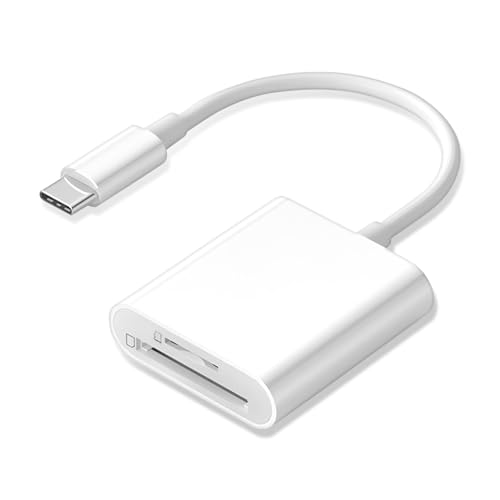
Best Compact Option – LBSC USB-C SD Card Reader
For straightforward memory cards for Mac transfers, the LBSC USB-C reader provides dedicated SD and microSD slots in a compact plug-and-play design. It supports bidirectional transfers, so you can move photos and videos to a Mac or save files back to a card.
Best For: MacBook users who mainly work with SD and microSD cards and want a portable reader.
Pros:
- Includes separate SD and microSD card slots.
- Supports batch and bidirectional photo and video transfers.
- Works with MacOS, Windows, Linux, and Chrome without additional drivers.
- Built-in USB-C cable helps conserve space and keeps the setup tidy.
Cons:
- Supports only SD and microSD formats.
- Its listed data transfer rate is 68 megabits per second.
The LBSC is a simple choice when your workflow centers on standard SD and microSD media. Its integrated cable and small footprint suit travel, while the two-slot layout keeps card access convenient.
Best for USB Expansion – SZHAIYIJIN USB-C SD Reader
The SZHAIYIJIN reader combines SD and microSD access with a USB 3.0 port, giving Mac users more flexibility than a basic card adapter. It supports simultaneous reading and writing from two card slots and is designed for transferring photos and videos from cameras, dash cams, and trail cameras.
Best For: MacBook and iPad users who want card access plus an extra USB port.
Pros:
- Provides SD and microSD slots alongside a USB 3.0 port.
- Supports simultaneous SD and microSD reading and writing.
- Works with MacOS and many USB-C laptops, tablets, and phones.
- Requires no driver installation and includes over-current and short-circuit protection.
Cons:
- Does not support formats beyond SD and microSD.
- Compatibility depends on the host device supporting USB-C and the relevant functions.
This reader is a strong fit for a Mac setup that needs both memory-card access and a spare USB connection. Its dual-slot design is useful for camera workflows, while the USB port adds everyday versatility.
How We Picked the Best Memory Cards for Mac
For this roundup, we focused on card readers that connect reliably to modern Macs and support common SD or microSD formats. We also considered compatibility with MacBooks, iMacs, iPads, and newer iPhones where stated; connection types such as USB-C, USB-A, and Lightning; slot selection; portability; and the convenience of plug-and-play operation.
Multi-format readers earned consideration for photographers and professionals who use CF or Memory Stick cards, while compact single- or dual-slot models can be a better choice for everyday transfers. Claimed speeds depend on the reader, card, host device, file type, and connection standard, so real-world performance may vary.
Quick Comparison
- Best for Apple simplicity: Apple’s USB-C to SD Card Reader is a straightforward choice for users who want a focused, familiar accessory.
- Best for multiple devices: Three-in-one and multi-port readers add USB-A, USB-C, or Lightning compatibility for broader use.
- Best for several card formats: Four-in-one readers support combinations such as SD, microSD, CF, and Memory Stick.
- Best for portability: Compact USB-C SD and microSD adapters take up little room in a laptop bag or camera kit.
Key Buying Factors for Memory Cards for Mac
Check Your Mac’s Ports
Most current MacBook models use USB-C or Thunderbolt ports, while older Macs may include USB-A. A USB-C reader is the safest starting point for newer systems, but a reader with an included adapter can be more flexible if you use multiple computers.
Match the Card Slots to Your Devices
Standard SD cards are common in cameras, while microSD cards are widely used in drones, action cameras, phones, and trail cameras. If you regularly work with professional cameras or older media, look for dedicated CF or Memory Stick support rather than assuming every slot handles every format.
Consider Speed and Simultaneous Transfers
USB 3.0 or newer connections can reduce transfer times compared with older USB standards, but the memory card itself may be the limiting factor. If you need to copy from multiple cards, verify whether the reader supports simultaneous read and write operations or only one active card at a time.
Look at Build and Convenience
A short, integrated cable or compact plug-in design is useful for travel, while a larger hub-style reader may be easier to use at a desk. Check for secure slot placement, a practical cable length, and compatibility with protective MacBook cases.
Who Should Buy Which Memory Cards for Mac?
Choose a focused USB-C SD reader if you mainly transfer camera photos to a newer Mac and want the smallest setup. Pick a dual-slot SD/microSD model if you switch between full-size camera cards and microSD media. A four-in-one reader is better for photographers or teams handling several legacy formats. If you move files between a Mac, iPhone, iPad, and older USB-A computers, a multi-connector reader offers the most flexibility. Finally, choose Apple’s reader when simple SD compatibility and a streamlined Apple-focused experience matter more than extra slots.