Smooth handheld footage is easier to achieve when your stabilizer matches your camera, lens, and shooting style. This roundup compares 10 lightweight camera gimbals, from compact smartphone models and integrated pocket cameras to full-size systems for mirrorless cameras and DSLRs.
Use the recommendations below to narrow your options by payload, portability, tracking features, battery needs, and workflow. The right choice should stabilize your setup without adding more weight or complexity than you need.
Best 10 Lightweight Camera Gimbals Picks for 2026
Best Lightweight DSLR Gimbal

- 3 kg tested payload in a 1.05 kg body
- Native vertical shooting for social video
- Up to 16 hours of battery life
Best For: DSLR and mirrorless creators carrying heavier camera setups
Best Pocket Gimbal Camera

- 179 g pocket-sized design
- 1-inch CMOS sensor with 4K/120fps video
- Rotating screen for horizontal or vertical filming
Best For: Travelers and vloggers seeking an all-in-one stabilized camera
Best Tracking Camera Gimbal

- Built-in AI tracking sensor
- 2.5 kg payload for DSLR and mirrorless cameras
- Quick vertical setup with touchscreen controls
Best For: Creators wanting integrated tracking and flexible camera control
Best Lightweight Phone Gimbal

- 370 g foldable design
- 3-axis stabilization with native tracking
- Built-in extension rod and tripod
Best For: Phone vloggers and travelers needing an all-in-one filming grip
Best Lightweight Camera Gimbal for Mirrorless Cameras
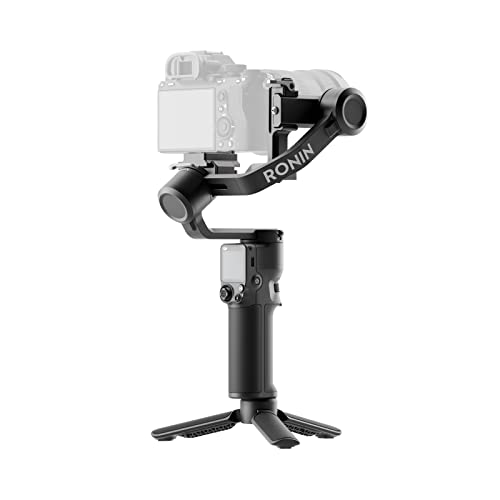
- 795g body with 2 kg tested payload
- Native vertical shooting and Bluetooth shutter control
- 1.4-inch touchscreen with 3rd-gen stabilization
Best For: Traveling mirrorless-camera creators needing more payload capacity
Best Lightweight Phone Gimbal for Extended Shooting

- 300g foldable design with built-in tripod
- ActiveTrack 7.0 for automated subject tracking
- Up to 10 hours of use with phone charging
Best For: iPhone and Android creators filming on the go
Best Versatile Lightweight Camera Gimbal Kit

- 852g stabilizer supports devices up to 1.2 kg
- Built-in AI tracker works without an app connection
- Includes fill light, extension rod, tripod, and case
Best For: Multi-device creators wanting an accessory-rich kit
Best Lightweight Pick

- 1.03 kg gimbal with a 2 kg payload
- Includes intelligent tracking and briefcase handle
- Supports cameras and smartphones
Best For: Travel filmmakers and solo creators
Best Mid-Range Capacity

- 3 kg payload for mainstream mirrorless setups
- Native vertical shooting and three main modes
- Teflon-coated axes support precise balancing
Best For: Mirrorless-camera creators needing extra payload
Best Feature-Rich Option

- Enhanced tracking for people, vehicles, and pets
- Fine-tuning knobs and Z-axis feedback
- Includes electronic briefcase handle and quick-open tripod
Best For: Advanced creators wanting maximum control
Best Lightweight DSLR Gimbal – ZHIYUN CINEPEER Weebill 3E
The ZHIYUN CINEPEER Weebill 3E is a strong option among lightweight camera gimbals for DSLR and mirrorless users who need substantial payload capacity without a bulky setup. It weighs about 1.05 kg, supports tested loads up to 3 kg, and offers native vertical shooting for social content.
Best For: DSLR and mirrorless creators using moderately heavy camera-and-lens combinations for long shoots, vertical video, or low-angle footage.
Pros:
- Supports up to 3 kg while maintaining a relatively compact design.
- Native vertical shooting does not require extra accessories or disassembly.
- Up to 16 hours of battery life with 14W PD fast charging.
- Bluetooth shutter control can start and stop recording or trigger photos.
Cons:
- The package includes only a Panasonic control cable; other camera brands may require additional cables.
- The sling grip and wrist rest for Sling Mode 2.5 are sold separately.
- It is not water resistant.
Choose the Weebill 3E if payload capacity, battery endurance, and native vertical shooting matter more than achieving the lightest possible rig. Confirm camera compatibility and cable requirements before buying.
Best Pocket Gimbal Camera – DJI Osmo Pocket 3
The DJI Osmo Pocket 3 takes the lightweight camera gimbals concept into an all-in-one pocket camera. Its 179 g body combines a 1-inch CMOS sensor, integrated 3-axis stabilization, a rotating 2-inch touchscreen, and 4K video recording in a compact form.
Best For: Travelers, vloggers, and casual creators who want stabilized footage without carrying a separate camera, lens, and gimbal.
Pros:
- Very compact 179 g design for travel and everyday filming.
- 1-inch sensor and 4K recording up to 120fps support detailed video and slow motion.
- Rotating touchscreen supports horizontal and vertical shooting.
- ActiveTrack 6.0 helps keep moving subjects centered.
Cons:
- It is an integrated compact camera rather than a stabilizer for interchangeable-lens cameras.
- It is not water resistant.
- Battery life is listed at about 166 minutes.
The Osmo Pocket 3 is a practical pick when portability is the priority. It offers more camera functionality than a phone gimbal while remaining small enough for spontaneous vlogging and travel footage.
Best Tracking Camera Gimbal – FeiyuTech SCORP 2
The FeiyuTech SCORP 2 is a capable choice among lightweight camera gimbals for DSLR and mirrorless cameras, pairing 3-axis stabilization with a built-in AI tracking sensor. Its 2.5 kg payload, touchscreen, and quick vertical setup give creators useful control for both planned and reactive shooting.
Best For: Camera operators who want built-in subject tracking, quick vertical filming, and hands-on control over gimbal movement and camera settings.
Pros:
- Integrated AI tracking works without installing a separate tracking accessory.
- Supports up to 2.5 kg and includes a quick vertical-shooting setup.
- 1.3-inch touchscreen and multifunction control knob simplify adjustments.
- Supports both Bluetooth and cable-based camera control.
Cons:
- At about 1,070 g, it is heavier than some compact gimbal options.
- Camera compatibility and wireless features may vary by model.
- It is not water resistant.
The SCORP 2 stands out when tracking and direct controls are more important than minimizing every gram. Its included accessories also make it a flexible starting point for camera-based vertical and horizontal shoots.
Best Lightweight Phone Gimbal – DJI Osmo Mobile 8
The DJI Osmo Mobile 8 is one of the most convenient lightweight camera gimbals for phone creators, weighing 370 g and folding to a compact size. It combines 3-axis stabilization with native tracking, a built-in extension rod, tripod functionality, and up to 10 hours of battery life.
Best For: Phone vloggers, travelers, families, and livestreamers who need stabilized footage, tracking, and flexible shooting angles without extra support gear.
Pros:
- Lightweight 370 g design with a compact folded form.
- Native tracking works with the multifunction module and supports audio and lighting features.
- Built-in extension rod and tripod support group shots and low-angle filming.
- Up to 10 hours of battery life and phone charging while filming.
Cons:
- Designed for cellphones rather than DSLR or mirrorless cameras.
- The DJI Mimo app is not available through Google Play and must be downloaded from DJI’s official website.
- Advanced features may depend on phone and platform compatibility.
The Osmo Mobile 8 is a sensible choice for creators who already use a phone as their main camera. Its integrated extension rod, tripod, tracking, audio, and lighting features reduce the need for additional accessories.
Best Lightweight Camera Gimbal for Mirrorless Cameras – DJI RS 3 Mini
For creators seeking lightweight camera gimbals for travel and extended handheld shooting, the DJI RS 3 Mini combines a 795g design with a tested payload of up to 2 kg. It supports a broad range of camera and lens combinations while adding native vertical shooting and Bluetooth shutter control.
Best For: Mirrorless-camera users who want a travel-friendly gimbal with strong payload capacity and native vertical shooting.
Pros:
- Lightweight 795g design is comfortable for longer shoots.
- Supports camera and lens combinations up to 2 kg.
- Offers native vertical shooting, Bluetooth shutter control, and 3rd-generation RS stabilization.
- Includes a 1.4-inch full-color touchscreen and tripod.
Cons:
- Not water resistant.
- DJI Ronin app is required for activation and full functionality.
- The app is not available through Google Play and must be downloaded from DJI.
The RS 3 Mini is a strong choice when portability matters without giving up support for larger mirrorless camera setups. Check your camera-and-lens combination against the 2 kg payload limit before buying.
Best Lightweight Phone Gimbal for Extended Shooting – DJI Osmo Mobile 7
The DJI Osmo Mobile 7 is one of the most approachable lightweight camera gimbals for iPhone and Android users. At 300g, it is easy to carry and grip, while its foldable design, built-in tripod, 3-axis stabilization, and up to 10 hours of operation suit solo creators and mobile filmmakers.
Best For: Smartphone creators who prioritize portability, subject tracking, and long recording sessions.
Pros:
- Ultra-light 300g design with an ergonomic anti-slip grip.
- Built-in foldable tripod simplifies solo shooting and storage.
- ActiveTrack 7.0 helps follow moving subjects.
- Provides up to 10 hours of use and can charge a phone via USB-C.
Cons:
- Designed for cellphones rather than interchangeable-lens cameras.
- Advanced features such as tracking and ShotGuides use the DJI Mimo app.
- The DJI Mimo app is not available through Google Play and must be downloaded from DJI.
Choose the Osmo Mobile 7 if your camera is a smartphone and you want a lightweight, low-fuss setup for walking footage, livestreams, or solo content. Its 300g weight and built-in tripod make it especially convenient for travel.
Best Versatile Lightweight Camera Gimbal Kit – FeiyuTech SCORP Mini 2
The FeiyuTech SCORP Mini 2 Kit is a flexible option among lightweight camera gimbals, supporting mirrorless cameras, smartphones, action cameras, and video cameras. Its 852g body carries up to 1.2 kg and includes an independent AI tracker, fill light, extension rod, tripod, and carrying case.
Best For: Creators who use multiple device types and want built-in tracking plus a versatile accessory bundle.
Pros:
- Supports cameras, phones, action cameras, and video cameras up to 1.2 kg.
- Built-in AI tracker can follow faces and objects without connecting to an app.
- Includes a wireless fill light, extension rod, tripod, adapters, and carrying case.
- Five-way joystick and 1.3-inch touchscreen support easier control and low-angle filming.
Cons:
- Heavier than the DJI Osmo Mobile 7 at 852g.
- Its 1.2 kg payload is lower than the DJI RS 3 Mini’s 2 kg capacity.
- Compatibility depends on using the included mounting accessories and suitable device weight.
The SCORP Mini 2 Kit stands out for mixed-device workflows and app-independent AI tracking. It is a practical pick when the included accessories and device flexibility matter more than achieving the lowest possible weight.
Best Lightweight Pick – DJI RS 4 Mini Combo
For creators comparing lightweight camera gimbals, the DJI RS 4 Mini Combo stands out for its 1.03 kg weight, support for cameras and smartphones, and 2 kg payload capacity. Auto axis locks, quick vertical switching, and included tracking hardware make it practical for fast-moving solo shoots.
Best For: Travel filmmakers, vloggers, and solo creators who want a relatively light gimbal with intelligent tracking and flexible camera support.
Pros:
- Lightweight 1.03 kg design with support for up to 2 kg.
- Auto axis locks help prepare the gimbal quickly.
- Includes an RS Intelligent Tracking Module and briefcase handle.
- Switches from horizontal to vertical shooting in about 10 seconds.
Cons:
- Lower payload capacity than the larger RS 4 and RS 5.
- Not water resistant.
- Android users must download the DJI Ronin app from DJI’s website rather than Google Play.
The RS 4 Mini is the most portable option in this group and offers useful solo-filming features without the higher weight of the larger models. It is best suited to mirrorless, vlog, and smartphone setups that stay within its 2 kg limit.
Best Mid-Range Capacity – DJI RS 4
The DJI RS 4 is a strong choice among lightweight camera gimbals for creators who need more payload capacity than a compact model provides. Its 3 kg capacity, Teflon-coated axis arms, native vertical shooting, and multiple control modes suit mainstream mirrorless camera and lens combinations.
Best For: Mirrorless-camera users who need a balance of manageable size, smoother balancing, and higher payload capacity for solo video work.
Pros:
- Supports payloads up to 3 kg.
- Teflon-coated axes help deliver smoother, more precise balancing.
- Native vertical shooting does not require an additional accessory.
- Joystick switch provides quick access to PF, PTF, and FPV modes.
Cons:
- Heavier than the RS 4 Mini at 1.55 kg.
- Battery grip extension for up to 29.5 hours is sold separately.
- Not water resistant.
With a 3 kg payload and expanded balancing space, the RS 4 is better suited to larger mirrorless setups than the RS 4 Mini. Its 1.55 kg weight keeps it more manageable than the RS 5 while retaining useful professional controls.
Best Feature-Rich Option – DJI RS 5 Combo
The DJI RS 5 Combo is designed for creators who prioritize advanced control and fast setup over minimum weight. Among these lightweight camera gimbals, it offers enhanced subject tracking, fine-tuning knobs, automated axis locks, a Z-axis indicator, and an electronic briefcase handle for low-angle operation.
Best For: Professional and advanced creators using heavier camera setups who want detailed balancing controls and included tracking accessories.
Pros:
- Enhanced tracking can follow people, vehicles, or pets from the touchscreen.
- Fine-tuning knobs and Teflon interlayers support precise balancing.
- Electronic briefcase handle enables intuitive single-handed, low-angle operation.
- Fully charges in one hour and provides up to 14 hours of standby time.
Cons:
- Heaviest model in this comparison at 1.62 kg.
- Its larger feature set may be more than casual users need.
- Android users must download the DJI Ronin app from DJI’s website rather than Google Play.
The RS 5 Combo is the most advanced and fully equipped option here, particularly for users who value tracking, balancing feedback, and low-angle control. Its 1.62 kg weight is still manageable for a professional gimbal, but portability is not its main advantage.
How We Picked These Lightweight Camera Gimbals
We selected these models to cover the main ways creators shoot stabilized video in 2026: smartphone filmmaking, travel and vlogging, compact mirrorless kits, DSLR setups, and more demanding professional rigs. We considered payload capacity, three-axis stabilization, camera and phone compatibility, tracking tools, controls, battery practicality, portability, and the overall value of each system.
Not every model here is a traditional interchangeable-lens-camera gimbal. The DJI Osmo Pocket 3 combines a camera with a built-in gimbal, while the Osmo Mobile models are designed for smartphones. Those products are included because they can be more practical than a larger camera-and-gimbal setup for many creators.
Quick Comparison
- Best for compact mirrorless kits: DJI RS 3 Mini or DJI RS 4 Mini Combo.
- Best for heavier camera setups: DJI RS 4 or DJI RS 5 Combo.
- Best for built-in portability: DJI Osmo Pocket 3.
- Best for smartphones: DJI Osmo Mobile 7 or DJI Osmo Mobile 8.
- Best for integrated tracking tools: FeiyuTech SCORP 2 or SCORP Mini 2 Kit.
- Best value-oriented camera gimbal: ZHIYUN CINEPEER Weebill 3E.
Key Buying Factors for Lightweight Camera Gimbals
Payload and Camera Compatibility
Check the gimbal’s supported payload against the complete setup, not just the camera body. Include the lens, battery, memory card, cage, microphone, monitor, and other accessories. A gimbal operating near its limit may balance poorly, drain its battery faster, or provide less responsive movement.
Size, Weight, and Balance
Lightweight does not always mean small, and a compact gimbal may still feel tiring during a long shoot. Consider folded dimensions, handle design, mounting options, and whether you can comfortably carry the system with your camera attached. Smaller gimbals are especially useful for travel, events, and run-and-gun work.
Tracking and Creative Controls
AI tracking, built-in fill lights, subject-follow modes, quick-release plates, and integrated displays can simplify solo production. These features are valuable for presenters and vloggers, but they should not outweigh basic compatibility and reliable stabilization if your work is primarily camera-operated.
Battery and Workflow
Compare rated runtime, charging method, camera-control support, and the availability of spare batteries or power banks. Also check whether the gimbal supports your camera’s focus, shutter, zoom, and recording controls. A model that reduces setup time can be more useful than one with a longer feature list.
Who Should Buy Which Lightweight Camera Gimbals?
Choose a smartphone gimbal if you mainly record with an iPhone or Android phone and want better walking footage, tracking, and hands-free shooting. The Osmo Mobile 7 and 8 are the most direct choices in this group.
Choose the Osmo Pocket 3 if you want a highly portable all-in-one camera for vlogging, travel, and quick social video without balancing a separate camera.
Choose a mini camera gimbal such as the DJI RS 3 Mini, RS 4 Mini Combo, or FeiyuTech SCORP Mini 2 if you use a relatively small mirrorless setup and prioritize lower carry weight.
Choose a full-size model such as the DJI RS 4, RS 5 Combo, FeiyuTech SCORP 2, or ZHIYUN Weebill 3E if your camera rig includes heavier lenses or accessories. Confirm payload and dimensions before buying, then balance the complete setup carefully for the smoothest performance.