Choosing the right laboratory solvent filtration system can improve sample clarity, reduce clogging, and make routine prep far more efficient. The best option depends on solvent compatibility, filtration capacity, and how often you need to replace consumables.
Below, we focus on practical systems and filters that fit common lab workflows, from small-volume sterile filtration to larger vacuum-based setups for solvent clarification.
Best 10 Laboratory Solvent Filtration System Picks for 2026
Best for Standard-Size Vacuum Filtration
1000mL Glass Solvent Filtration Set

- 1000 mL GL45 receiving bottle for standard lab workflows
- 300 mL filter cup with sintered sand core vacuum setup
- High-borosilicate glass for solvent use and temperature changes
Best For: Labs needing a standard-capacity glass filtration setup for routine solvent and chromatography prep.
Best for Aggressive Solvent Samples
Hydrophilic PTFE Syringe Filters 25mm 0.45μm

- Hydrophilic PTFE membrane for aggressive solvents and acids
- 25mm size with 0.45μm pore for routine lab filtration
- Pack of 100 supports ongoing sample prep workflows
Best For: Labs filtering corrosive solvents, strong acids, and aqueous-organic samples.
Best for Complete Starter Kits
Fristaden Lab Vacuum Filtration Kit

- All-in-one setup with flask, funnel, stopper, and clamp
- Borosilicate glass build handles heat and harsh chemicals
- Universal hose connection fits common lab pumps and aspirators
Best For: Compact vacuum filtration for routine solvent separation and small-batch lab work.
Best for Hydrophobic Solvents
PTFE Syringe Filters 25mm 1.0 μm

- Hydrophobic PTFE for non-aqueous solvents and corrosive liquids
- 25mm size with 1.0 μm pores for faster flow and higher throughput
- Pack of 100 suits routine pre-filtration and sample prep
Best For: Labs filtering organic solvents, acids, or gas streams that need a hydrophobic PTFE membrane.
Best Borosilicate Value
QWORK Buchner Funnel Kit, 250ml/1000ml
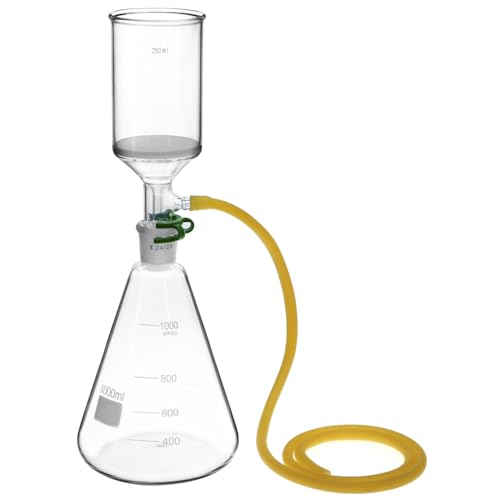
- Borosilicate glass build with thermal-shock resistance
- 250ml funnel and 1000ml filter bottle for moderate batches
- Vacuum filtration design with 15–40 μm nominal filtration size
Best For: Labs and small-scale users wanting a durable glass vacuum filtration setup.
Best for Sterile Filtration
500ml Sterile Vacuum Filter Units, 0.22μm

- 0.22μm PES membrane for sterile filtration
- Individually wrapped disposable units
- Graduated 500ml body for easy measuring
Best For: Labs needing disposable sterile vacuum filters for small-batch solvent and media prep.
Best Glass Setup
QWORK Glass Vacuum Filtration Set, 1000 mL Flask

- Glass build for solvent-friendly lab use
- 1000 mL flask and 300 mL funnel included
- 10 μm pore size for routine clarification
Best For: Labs and DIY users needing a simple glass vacuum filtration kit for solvent and liquid clarification.
Best with Extra Features
500ml Vacuum Filtration System

- 0.22μm PES membrane for fine filtration
- Sterile, individually wrapped disposable units
- 500ml graduated design with GL45 adapter
Best For: Labs needing sterile, ready-to-use filtration for media, buffers, and solvent clarification.
Best for Fast Vacuum Filtration
Laboratory Vacuum Filtration Set, 500 mL

- Complete vacuum filtration kit with flask, funnel, adapter, and clamp
- Borosilicate glass construction for heat and chemical resistance
- Universal connection fits most pumps and aspirator systems
Best For: Labs and small research setups that want faster solvent filtration with a simple glassware kit.
Sterile Pick
250ml Vacuum Filtration System, 0.22μm PES

- 0.22μm PES membrane for fine sterile filtration
- Gamma-sterilized, individually wrapped disposable units
- Graduated funnel with GL45 adapter for easier handling
Best For: Sterile, ready-to-use filtration for media, buffers, and contamination-sensitive lab liquids.
Best for Standard-Size Vacuum Filtration – 1000mL Glass Solvent Filtration Set
If you need a practical laboratory solvent filtration system for routine solvent cleanup, this 1000 mL glass set covers the basics without unnecessary complexity. It combines a 300 mL filter cup, GL45 screw-mouth receiving bottle, and sand core vacuum filtration parts for everyday lab prep, degassing, and impurity removal.
Best For: Labs that want a standard-capacity glass vacuum filtration setup for chromatography prep, solvent handling, and general sample clarification.
Pros:
- 1000 mL high-borosilicate receiving bottle with GL45 compatibility
- 300 mL filter cup and sintered sand core for vacuum filtration tasks
- Glass construction is suited to common lab solvents and temperature changes
Cons:
- Requires a compatible vacuum pump, which is not included
- Glassware setup is less portable than plastic alternatives
As a laboratory solvent filtration system, this set is most appealing when you want a familiar, standard-format glass assembly that works with common membranes and reagent bottles. It is a solid fit for labs prioritizing compatibility and straightforward solvent filtration over extra accessories.
Best for Aggressive Solvent Samples – Hydrophilic PTFE Syringe Filters 25mm 0.45μm
If you need a dependable laboratory solvent filtration system for acidic, organic, or HPLC-related samples, these hydrophilic PTFE syringe filters are a strong fit. The 25mm format and 0.45μm pore size make them practical for routine clarification, contaminant removal, and small-volume prep work.
Best For: Labs filtering aggressive solvents, strong acids, and aqueous-organic solutions that need a hydrophilic PTFE membrane.
Pros:
- Hydrophilic PTFE membrane suits aggressive solvents and mixed-phase samples
- 25mm diameter offers a good balance of flow, area, and sample handling
- 0.45μm pore size works well for general laboratory clarification and prep
- Pack of 100 is convenient for recurring lab workflows
Cons:
- Not sterile, so it may not suit sterile-critical workflows
- Lower throughput and holdup volume limit use with larger sample volumes
- Single-use design can increase consumable costs over time
For labs that regularly handle corrosive or solvent-heavy samples, this is a practical laboratory solvent filtration system component with the right membrane chemistry for demanding filtration tasks. It is especially useful when compatibility matters more than maximum throughput.
Best for Complete Starter Kits – Fristaden Lab Vacuum Filtration Kit
If you want a practical laboratory solvent filtration system that arrives ready to use, this Fristaden Lab kit is a straightforward choice. It combines a 500 mL filtering flask, 300 mL graduated Buchner funnel, adapter, stopper, and clamp, so you can get set up without hunting for extra parts.
Best For: Buyers who want a compact, all-in-one vacuum filtration setup for routine lab work, small batches, and solvent separation.
Pros:
- Complete kit includes the main components needed to start vacuum filtration.
- Borosilicate glass construction is heat-resistant, pressure-resistant, and chemically durable.
- Universal hose connection works with pumps, aspirators, and built-in lab systems.
- Backed by a 1-year warranty from a USA-based company.
Cons:
- 500 mL flask size is better for small to mid-size jobs than larger production runs.
- Glass components require more care than plastic alternatives.
For labs that need a dependable laboratory solvent filtration system without overcomplicating the setup, this kit offers strong value and solid compatibility. It is especially appealing if you want a simple bench-top solution that can speed up routine separations.
Best for Hydrophobic Solvents – PTFE Syringe Filters 25mm 1.0 μm
If you need a simple, fast, and chemically resistant option for a laboratory solvent filtration system, these hydrophobic PTFE syringe filters are built for non-aqueous samples, gases, and corrosive liquids. The 25mm size and 1.0 μm pore rating make them a practical pre-filtration choice when you want higher flow and decent throughput.
Best For: Labs filtering organic solvents, acids, or gas streams that need a hydrophobic PTFE membrane with quick flow and broad chemical compatibility.
Pros:
- Hydrophobic PTFE membrane handles non-aqueous solvents and corrosive liquids well
- 25mm diameter and 1.0 μm pore size support faster flow and higher throughput
- Useful as a pre-treatment filter for challenging samples
- Pack of 100 offers good value for routine lab use
Cons:
- Not ideal for aqueous samples that need a hydrophilic membrane
- 1.0 μm is too coarse for fine final filtration
- Plastic syringe format may not suit higher-volume setups
For labs that prioritize solvent compatibility over ultra-fine particle capture, this is a solid fit for a laboratory solvent filtration system. It’s especially useful when you need a dependable general-purpose PTFE filter for fast, repeatable sample prep.
Best Borosilicate Value – QWORK Buchner Funnel Kit, 250ml/1000ml
If you need a practical laboratory solvent filtration system for routine lab work, the QWORK Buchner Funnel Filtering Kit gives you a sturdy borosilicate-glass setup with a 250ml funnel and 1000ml filter bottle. It’s a straightforward choice for research, chemical handling, teaching labs, and other filtration tasks where durability and clear visibility matter.
Best For: Labs, classrooms, and small-scale chemical users who want a durable glass vacuum filtration setup with a useful mid-size capacity.
Pros:
- Borosilicate glass construction helps resist thermal shock and supports repeated lab use.
- 250ml funnel paired with a 1000ml bottle offers a practical capacity for moderate batches.
- Designed for efficient vacuum filtration with a nominal 15–40 μm filtration size.
- Versatile enough for research, chemical applications, distillation, and soap making.
Cons:
- Filter paper is not included, so you may need compatible consumables separately.
- The 24/29 joint and overall size should be checked carefully before purchase.
- Better suited to general lab filtration than highly specialized workflows.
This kit makes sense if you want a solid, no-frills laboratory solvent filtration system that prioritizes glass quality and everyday usability over extra accessories.
Best for Sterile Filtration – 500ml Sterile Vacuum Filter Units, 0.22μm
If you need a laboratory solvent filtration system for sterile sample prep, this 500ml vacuum filtration unit is built for straightforward, single-use convenience. The PES membrane, 0.22μm pore size, and 90mm diameter make it a practical pick for routine lab work where cleanliness and consistency matter.
Best For: Laboratories that want disposable sterile vacuum filters for solvent clarification, media prep, and general chemistry workflows.
Pros:
- 0.22μm PES membrane supports sterile filtration applications
- Individually wrapped, disposable design helps reduce cross-contamination risk
- 500ml capacity is useful for common small-batch lab tasks
- Graduated body makes volume checking easier during use
Cons:
- Single-use format creates more consumable waste
- 500ml size may be too small for higher-volume workflows
- Not ideal if you need a reusable filtration setup
Overall, this laboratory solvent filtration system is a solid fit when sterility, speed, and simple handling matter more than reusability. It is a practical choice for labs that prefer ready-to-use filter units over assembling separate components.
Best Glass Setup – QWORK Glass Vacuum Filtration Set, 1000 mL Flask
If you need a straightforward laboratory solvent filtration system for routine clarification and sample prep, this QWORK glass vacuum set gives you the core pieces in one package. The 1000 mL flask and 300 mL funnel make it a practical option for small-to-midsize batches where visibility, chemical resistance, and vacuum-assisted speed matter.
Best For: Labs, classrooms, and DIY setups that want an affordable glass filtration kit for liquid clarification and solvent work.
Pros:
- Glass construction is well suited to common lab solvents and repeated use
- Includes a 1000 mL flask and 300 mL funnel for a ready-to-use setup
- 10 μm pore size supports routine clarification and pre-filtration tasks
- Useful for sample prep, solvent filtration, and general lab workflows
Cons:
- 10 μm filtration is relatively coarse for fine particle removal
- Not a full turnkey system if you still need pumps or additional accessories
- Capacity may be limiting for larger-volume filtration jobs
Overall, this is a solid pick if you want a basic laboratory solvent filtration system with glass durability and a simple, proven layout. It’s best for users who value practicality over advanced fine-filtration performance.
Best with Extra Features – 500ml Vacuum Filtration System
If you need a practical laboratory solvent filtration system for sterile media, buffer prep, or particulate removal, this 500ml disposable vacuum filtration kit is built for quick, contamination-conscious workflows. The 0.22μm PES membrane and gamma-sterilized, individually wrapped units make it a strong fit for routine lab use where cleanliness and consistency matter.
Best For: Cell culture, sterile solution prep, and labs that want ready-to-use disposable vacuum filter units with minimal setup.
Pros:
- 0.22μm PES membrane supports fine microbial retention for sensitive applications
- Disposable, sterile, and individually wrapped for cleaner handling
- Graduated 500ml design with GL45 adapter and angled vacuum pipe improves usability
- Pack of 12 helps keep replacements on hand for repeat lab work
Cons:
- Disposable format may create more waste than reusable systems
- 500ml capacity may be too small for larger batch filtration
Overall, this laboratory solvent filtration system is a good fit when sterility, convenience, and dependable fine filtration matter more than long-term reuse. It is especially appealing for labs that want a ready-to-run setup for media, buffers, and other contamination-sensitive liquids.
Best for Fast Vacuum Filtration – Laboratory Vacuum Filtration Set, 500 mL
If you need a practical laboratory solvent filtration system for routine separations, this vacuum filtration set is built to speed up solid-liquid cleanup without adding complexity. The 500 mL filter flask, 300 mL graduated Buchner funnel, and included adapter parts make it a straightforward bench-ready option for labs that want faster filtration and reliable glassware.
Best For: Labs, classrooms, and small research setups that want a simple vacuum filtration kit for faster solvent and solution filtration.
Pros:
- Speeds up filtration so you can separate solids in minutes instead of hours
- Includes the core pieces needed for a complete vacuum flask setup
- Borosilicate glass is heat-resistant, pressure-resistant, and chemically durable
- Universal hose connection works with most pumps and aspirator systems
Cons:
- 500 mL capacity is better for small to medium batches than high-volume work
- Requires a compatible vacuum source to use as intended
For buyers prioritizing a dependable, no-frills laboratory solvent filtration system, this Fristaden Lab kit offers the essentials in a durable glass format. The 1-year warranty adds a little extra confidence for everyday lab use.
Sterile Pick – 250ml Vacuum Filtration System, 0.22μm PES
If you need a laboratory solvent filtration system that prioritizes sterility and contamination control, this disposable vacuum filtration set is built for fast, repeatable sample prep. The 0.22μm PES membrane, sterile packaging, and graduated funnel make it a practical choice for cell culture media, buffers, and other sensitive liquids.
Best For: Researchers, labs, and clean-process workflows that need sterile, ready-to-use filtration units for media, buffers, and solvent clarification.
Pros:
- 0.22μm PES membrane supports fine filtration and microbial retention
- Individually wrapped, gamma-sterilized, and DNase/RNase-free
- Graduated 250ml–1000ml funnel and GL45 adapter improve usability
- Disposable design helps reduce cleaning time and cross-contamination risk
Cons:
- Disposable format creates ongoing replacement costs
- 250ml bottle size may be too small for larger batch workflows
- Best suited to sterile lab tasks rather than heavy-duty industrial throughput
This is a strong fit when sterility matters more than reusability, especially in a laboratory solvent filtration system used for sensitive liquids and contamination-prone workflows. If you want a ready-to-use unit that minimizes prep time, this one is easy to justify.
How We Picked the Best Laboratory Solvent Filtration System
We looked for filtration options that match real lab use: compatible materials, sensible capacities, clear pore-size choices, and components suited to solvent handling. We prioritized setups that support common prep tasks without overcomplicating maintenance or operation.
Quick Comparison
Use small syringe filters when you need fast spot filtration or final polishing of samples. Choose vacuum flask and funnel systems for larger batches, routine clarification, or workflows that benefit from gravity-assisted collection. Disposable sterile units make sense when contamination control and convenience matter more than reuse.
Key Buying Factors for a Laboratory Solvent Filtration System
Material Compatibility
Check whether the funnel, flask, membrane, and seals can handle the solvents you use. Glass and PTFE are common choices for broader chemical resistance, while PES and other membranes are often selected for aqueous or sterile workflows.
Pore Size
Pore size controls how fine the filtration is. Smaller pores, such as 0.22 μm, are better for sterile filtration and fine particle removal, while larger pores may be sufficient for clarification and general sample prep. If you only need to remove visible debris, a coarser option can reduce clogging and speed up filtration.
Capacity and Throughput
Match the system size to your batch volume. A 250 mL or 500 mL unit is practical for smaller runs and bench-top prep, while 1000 mL systems are better when you filter larger volumes less frequently. For high-throughput labs, compatibility with replacement filters matters as much as the vessel size.
Workflow and Sterility Needs
If your process is sensitive to contamination, disposable sterile filter units can simplify handling and reduce cleaning time. For general solvent filtration, reusable glass vacuum systems often offer better long-term value and more flexibility.
Who Should Buy Which Laboratory Solvent Filtration System?
Researchers doing routine solvent clarification or sample cleanup should favor reusable glass vacuum systems. Labs that need sterile, low-contamination filtration should lean toward disposable membrane units. If your workflow involves small-volume polishing or quick prefiltration, syringe filters are usually the most efficient choice. The best Laboratory Solvent Filtration System is the one that fits your solvent, volume, and cleanliness requirements without adding unnecessary steps.