Choosing the right light meter makes it easier to check whether classroom lighting is bright, balanced, and suitable for reading, writing, presentations, and screen use. The models in this roundup cover straightforward handheld testing as well as more advanced color-temperature and mapping features.
We focused on measurement range, display clarity, sensor design, portability, and classroom-friendly controls so you can find a practical tool for routine inspections, science activities, or facilities work.
Best 10 Light Meters for Classrooms Picks for 2026
Best Value Classroom Pick
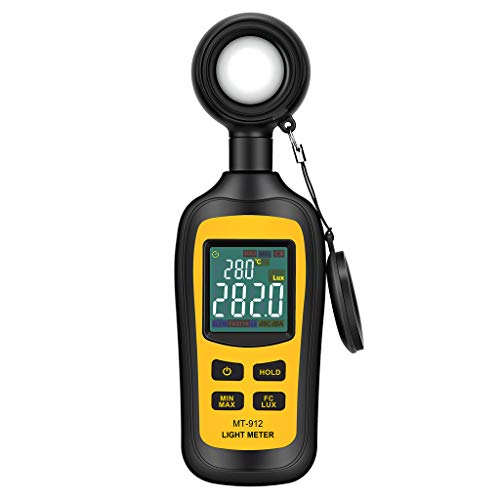
- Measures up to 200,000 lux
- Includes temperature measurement and data hold
- Compact design with two-year warranty
Best For: Routine classroom lighting checks
Best Compact Option

- Reads lux and foot-candles
- 0.5-second sampling time
- Backlit display with MAX/MIN and data hold
Best For: Portable spot checks across classrooms
Best Flexible Probe Design
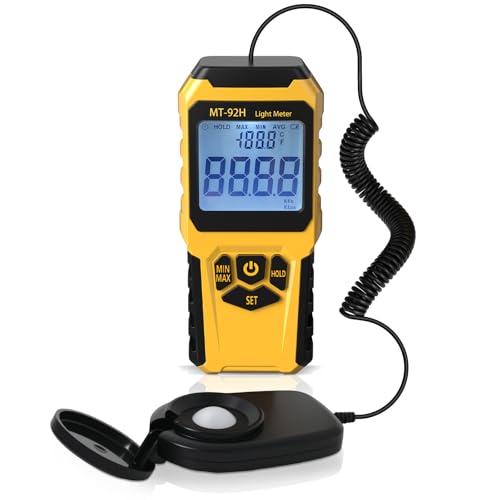
- Separate sensor enables flexible positioning
- Measures up to 200,000 lux with 0.1-lux resolution
- Switches between lux/FC and °C/°F
Best For: Hard-to-reach measurements and light-temperature checks
Best for Record Keeping
UNI-T UT383BT Bluetooth Lux Meter

- Transfers readings to the iENV app
- Supports data storage, export, and analysis
- Measures lux and foot-candles with 0.5-second sampling
Best For: Documenting and comparing readings across rooms
Best for Room-by-Room Mapping
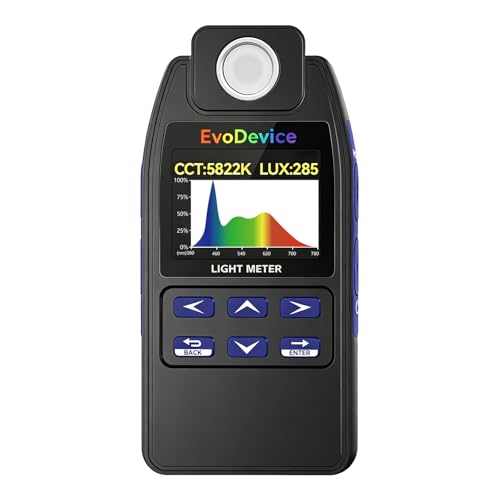
- Measures lux and color temperature
- Maps up to 99 points
- Useful across common light sources
Best For: Classrooms checking lighting consistency across multiple areas
Best for Straightforward Lux Checks

- Reads up to 200,000 lux
- Offers FC/LUX conversion
- Responds twice per second
Best For: Quick classroom illuminance checks in multiple units
Best Compact Classroom Pick

- Measures up to 200,000 lux
- Includes hold and MAX/MIN modes
- Backlit, pocket-sized design
Best For: Portable classroom checks in varied lighting conditions
Wide-Range Classroom Checker
Digital Illuminance Light Meter

- 0–200,000 lux measurement range
- Lux/foot-candle switching with data hold
- Backlit LCD and min/max readings
Best For: Routine classroom and indoor brightness checks
Flexible Sensor Pick

- 360-degree rotating sensor
- Four lux ranges up to 200,000
- Includes two AAA batteries
Best For: Classroom surveys requiring flexible sensor positioning
Multi-Function Classroom Monitor
Digital Illuminance Light Meter
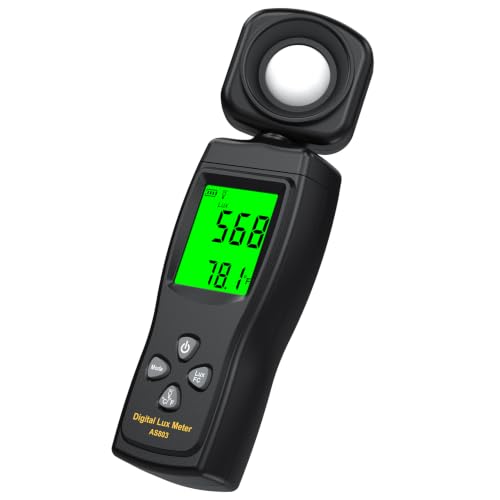
- 0–200,000 lux range with 180° sensor
- Measures temperature in °C or °F
- Backlit display and rapid sampling
Best For: Classrooms needing light and temperature monitoring
Best Value Classroom Pick – High-Range Digital Lux Meter
For classrooms that need a straightforward way to check lighting, this handheld meter measures 0 to 200,000 lux and also reports ambient temperature. Its compact design and practical memory functions make it a versatile choice among light meters for classrooms.
Best For: Teachers, facility staff, and school offices checking classroom illumination and temperature.
Pros:
- Measures a broad 0–200,000 lux range.
- Includes MIN/MAX readings, data hold, and auto power-off.
- Uses a clear four-digit color LCD and includes a two-year warranty.
- Lightweight 6.7-ounce handheld design.
Cons:
- Requires three AAA batteries.
- Does not list Bluetooth or app-based data recording.
This is a practical all-purpose option for routine classroom checks, especially when a wide measurement range and simple handheld controls matter more than connected reporting.
Best Compact Option – UNI-T UT383 Lux Meter
The UNI-T UT383 is a compact light meter for classrooms that need quick readings without a complicated setup. It displays results in lux or foot-candles, refreshes every 0.5 seconds, and includes useful minimum, maximum, and hold functions.
Best For: Classrooms, labs, and school staff who want a portable meter with dual measurement units.
Pros:
- Measures 0–199,900 lux and 0–18,500 foot-candles.
- Provides rapid 0.5-second sampling.
- Features a backlit four-digit LCD, MAX/MIN, data hold, and overload indication.
- Small five-ounce body is easy to carry between rooms.
Cons:
- Requires batteries, with no battery specification provided in the notes.
- No Bluetooth or temperature measurement is listed.
Choose this model when portability and simple lux/foot-candle readings are priorities. Its quick sampling and compact form suit frequent spot checks around a school.
Best Flexible Probe Design – MT-92H Split-Sensor Meter
The MT-92H stands out among light meters for classrooms with its separate split-sensor design, which helps users position the probe flexibly while taking readings. It also switches between lux and foot-candles and displays temperature in Celsius or Fahrenheit.
Best For: Staff measuring hard-to-reach areas, comparing classroom light levels, or monitoring temperature alongside illumination.
Pros:
- Measures 0–200,000 lux with 0.1-lux resolution and ±3% accuracy.
- Separate sensor supports flexible positioning.
- Refreshes readings every 0.5 seconds.
- Switchable backlight and lux/foot-candle and Celsius/Fahrenheit modes.
Cons:
- Requires three AAA batteries.
- Its 188-gram weight is slightly higher than some compact alternatives.
This is a strong choice for practical classroom inspections where probe positioning, readable display performance, and combined light-and-temperature measurements are useful.
Best for Record Keeping – UNI-T UT383BT Bluetooth Lux Meter
The UNI-T UT383BT is a useful light meter for classrooms when readings need to be recorded or reviewed over time. Bluetooth transfers measurements to the iENV app for data storage, export, and analysis, while the meter retains the compact controls of the UT383 series.
Best For: School facilities teams and administrators documenting illumination readings across multiple rooms.
Pros:
- Transfers measurement data to an iOS or Android app through Bluetooth.
- Supports recording, exporting, storage, and analysis.
- Measures 0–199,900 lux and 0–18,500 foot-candles.
- Includes a backlit display, 0.5-second sampling, MAX/MIN, and data hold.
Cons:
- App-based features require a compatible iOS or Android device.
- No ambient temperature measurement is listed.
If your school needs more than one-off readings, the UT383BT is the most documentation-friendly option in this group. Bluetooth connectivity can simplify organizing and analyzing classroom lighting data.
Best for Room-by-Room Mapping – E130 Lux & CCT Meter
For light meters for classrooms where consistency matters across desks, workstations, or activity areas, the E130 combines lux and color-temperature readings with 99-point light mapping. Its handheld controls make routine lighting comparisons straightforward.
Best For: Classrooms that need to compare lighting distribution and evaluate LED, fluorescent, HID, or daylight conditions.
Pros:
- Measures both illuminance (lux) and color temperature (CCT) across several common light sources.
- Records up to 99 measurement points to reveal uneven lighting across a room.
- Includes hold/freeze functionality and a spectrum mode for supported phosphor-converted white LEDs.
- Comes with two AAA batteries.
Cons:
- The spectrum curve is not intended for analysis of sunlight, sodium, metal halide, or CFL sources.
- Its feature set may be more than needed for simple single-point lux checks.
The E130 is the most classroom-focused option here for mapping uneven illumination and comparing both brightness and color temperature. Choose it when lighting distribution is as important as the reading at one spot.
Best for Straightforward Lux Checks – Dr.meter 0-200,000 Lux Meter
For light meters for classrooms that prioritize a broad illuminance range and simple operation, this Dr.meter model provides fast lux readings with selectable foot-candle conversion. It is suited to general indoor checks as well as brighter outdoor measurements.
Best For: Schools and offices needing quick illuminance readings in lux or foot-candles.
Pros:
- Measures from 0 to 200,000 lux.
- Switches between FC and LUX units.
- Samples readings twice per second for quick response.
- Peak recording can capture the highest value from brief light pulses.
Cons:
- Does not list color-temperature or multi-point room-mapping functions.
- Uses a 9V battery rather than the AAA batteries used by the other listed options.
This is a practical choice when classroom assessments call for basic brightness data rather than spectrum or color-temperature analysis. Its wide range also makes it flexible for comparing indoor spaces with bright sunlight.
Best Compact Classroom Pick – POROMETISTO LT01 Light Meter
For light meters for classrooms that need portable readings and helpful hold or min/max tools, the POROMETISTO LT01 offers a 0-200,000-lux range in a pocket-sized design. Its backlit display is useful when checking darker storage or activity areas.
Best For: Teachers, facilities staff, and inspectors who want portable light checks with hold and range-recording functions.
Pros:
- Measures up to 200,000 lux and 20,000 foot-candles.
- Provides a digital reading and analog bar graph with two readings per second.
- Data Hold and MAX/MIN modes help review readings in hard-to-reach or variable-light locations.
- Includes a backlight, auto power-off, two batteries, lanyard, and a two-year warranty.
Cons:
- The listed accuracy specification is stated under standard incandescent lamps.
- It does not list color-temperature measurement or multi-point mapping.
- The product details identify the included batteries as AA, while the title materials describe the unit as using two batteries; verify the package documentation if battery type matters.
The LT01 balances portability and useful data-holding features for routine classroom inspections. It is a strong fit when staff need to capture changing light levels without carrying a larger instrument.
Wide-Range Classroom Checker – Digital Illuminance Light Meter
For classrooms that need a straightforward way to compare lighting across desks, boards, and activity areas, this digital meter offers a broad 0–200,000 lux range. It displays readings in lux or foot-candles, with hold, minimum, and maximum functions for easier note-taking.
Best For: Schools and educators checking general brightness levels in classrooms and other indoor spaces.
Pros:
- Measures up to 200,000 lux with a fast sampling rate of up to two readings per second.
- Switches between lux and foot-candle units and includes maximum, minimum, and data-hold functions.
- Backlit LCD, low-battery indicator, and automatic shutoff support routine use.
- Compact, lightweight design suitable for schools and other facilities.
Cons:
- Requires three AAA batteries, which are not included.
- Readings below approximately 2 lux display as zero.
- Accuracy varies by range, at ±3% plus 10 digits below 10,000 lux and ±4% plus 10 digits above it.
This is a practical pick when you want wide measurement coverage and simple controls for classroom lighting checks. The low-light threshold and battery requirement are worth keeping in mind before purchase.
Flexible Sensor Pick – Handheld Digital Lux Meter
This handheld option is designed for light meters for classrooms where sensor positioning can be awkward. Its separate 360-degree rotating sensor helps you aim toward the light source, while four selectable lux ranges and foot-candle readings support different measurement tasks.
Best For: Teachers, facility staff, and office users who want adjustable sensor positioning during classroom surveys.
Pros:
- Rotating sensor can be positioned independently from the meter for flexible readings.
- Offers 200, 2,000, 20,000, and 200,000 lux ranges plus a foot-candle setting.
- Includes automatic range selection, minimum/maximum readings, data hold, and low-battery indication.
- Two AAA batteries are included.
Cons:
- The listed accuracy is ±4% plus 10 digits.
- Its visible-light measurement range is specified as 400–700 nm.
- It has a smaller maximum range of 20,000 foot-candles than its lux maximum.
The rotating sensor is the main advantage for checking different classroom surfaces and fixtures without constantly repositioning your hand. It is a useful all-around meter for school and office environments.
Multi-Function Classroom Monitor – Digital Illuminance Light Meter
For classroom lighting checks that benefit from quick readings and extra environmental information, this meter combines a 0–200,000 lux range with a 180-degree rotating sensor and temperature measurement. Its backlit display and 0.5-second sampling are convenient when moving between rooms or measuring several areas.
Best For: Classrooms, libraries, offices, and labs where users want light and temperature readings in one handheld tool.
Pros:
- Measures from 0 to 200,000 lux with stated accuracy of ±4% plus 10.
- 180-degree rotating sensor supports measurements from different angles.
- Backlit LCD, 0.5-second sampling, data hold, and maximum/minimum recording aid field checks.
- Also measures temperature in Celsius or Fahrenheit and includes three measurement modes.
Cons:
- Requires three AAA batteries, although they are included.
- The added temperature function may be unnecessary for users who only need illumination readings.
- The supplied notes do not specify a classroom-specific calibration feature.
This is the most versatile choice of the three for users who want more than a basic lux reading. The rotating sensor and temperature mode add flexibility, while the broad range suits common classroom and indoor lighting evaluations.
How We Picked the Best Light Meters for Classrooms
We compared these light meters by looking at the features that matter most in schools: illuminance range, measurement responsiveness, sensor positioning, display readability, portability, and ease of use. Most selected models measure up to 200,000 lux, giving them enough headroom for classrooms, laboratories, workshops, and brighter areas near windows or outdoor entrances.
We also considered useful extras such as backlit screens, hold functions, temperature readings, foot-candle modes, Bluetooth connectivity, rotating or split sensors, and color-temperature measurement. A basic meter can be sufficient for routine checks, while more specialized models may help with lighting design, demonstrations, or detailed facility documentation.
Quick Comparison
- Best for straightforward checks: A compact digital lux meter with a clear LCD and simple controls.
- Best for frequent school inspections: A durable UNI-T or similar handheld meter with consistent readings and a responsive sensor.
- Best for awkward measurement positions: A model with a rotating or split sensor that lets you view the display while positioning the detector.
- Best for lighting analysis: The E130, with color-temperature, spectrum, and light-mapping capabilities.
- Best for budget-conscious buyers: A 0–200,000-lux meter with hold and backlight functions but fewer advanced features.
Key Buying Factors for Light Meters for Classrooms
Measurement Range and Accuracy
Check the meter’s stated range and resolution before buying. Classrooms usually need reliable readings across ordinary indoor lighting, but a higher maximum range is useful for sunlit rooms and comparison testing. If readings will support formal compliance decisions, verify the manufacturer’s accuracy specifications and calibration guidance.
Sensor and Viewing Design
A detachable, split, or rotating sensor can make it easier to measure desks, whiteboards, windows, and ceiling fixtures without twisting your wrist. A fixed sensor is often smaller and simpler, but it may be less convenient in tight spaces.
Display and Controls
Look for large digits, a backlight, data hold, automatic range selection, and a fast refresh rate. These features help when moving around a busy classroom or recording readings from several locations. Temperature measurement can be useful for broader environmental checks, though it is not essential for every user.
Extra Analysis Features
Color-temperature and spectrum functions are valuable when comparing LED bulbs, daylight, and display lighting. Bluetooth or mapping features may benefit facilities teams, but they can add cost and complexity for occasional checks.
Who Should Buy Which Light Meters for Classrooms?
Teachers and students should choose a simple, portable model with an easy-to-read display and hold function. School administrators and maintenance staff may prefer a faster, sturdier meter with a rotating or split sensor for repeated room surveys. Science departments, lighting specialists, and facilities professionals should consider the E130 or another advanced model if color temperature, spectrum, or mapped readings are part of the project.
Before purchasing, decide whether you need occasional classroom demonstrations or repeatable building-wide assessments. Matching the meter’s features to that workload will usually matter more than choosing the highest possible lux range.