Condensation can quickly ruin an otherwise clear observing session, especially when temperatures drop and humidity rises. A compatible dew heater helps keep telescope lenses, corrector plates, and camera optics clear without adding much bulk.
We’ve selected 10 heater strips with different lengths, power connections, heat settings, and mounting options. Use the guide below to match the right heater to your optical equipment and power bank.
Best 10 Telescope Dew Heaters with Power Banks Picks for 2026
Large-Aperture Coverage

- 560mm heating length for optics under 178mm outside diameter
- Three adjustable heating modes
- 12V input with 120cm cable
Best For: Large telescopes and camera lenses
Hand-Assembled Reliability

- 12V RCA anti-dew heating strip
- Cold-resistant, flexible power cord
- Multiple sizes for different telescope types
Best For: RCA-compatible telescope setups in cold weather
Power-Bank Friendly

- USB 5V design connects to a power bank
- Fits optics under 76mm external diameter
- Three adjustable heating modes
Best For: Small optics and portable USB-powered setups
Primary-Mirror Protection
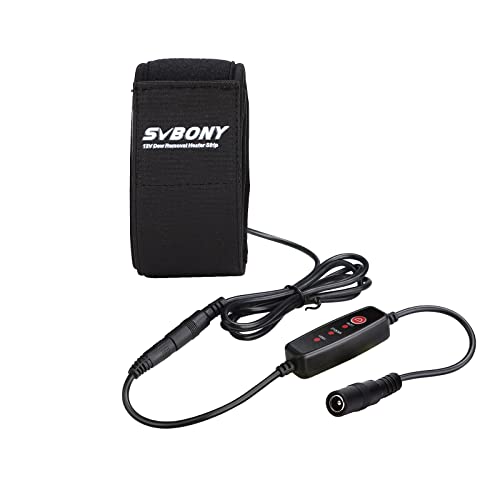
- 480mm strip for astronomical telescopes
- Fits optics under 152mm outside diameter
- Three-speed 12V heating control
Best For: Medium-size telescope mirrors and camera lenses
Flexible Cold-Weather Pick

- Flexible to -25°C with insulating neoprene
- Three adjustable heat levels
- USB powered with a 60.23-inch cable
Best For: Smaller telescope and camera setups used in cold conditions
Universal Telescope Choice

- Fits telescope exteriors below 127mm
- Three heating modes for flexible control
- 1.8m USB cable for power-bank use
Best For: Portable telescope setups with sub-127mm optical tubes
Large-Optic Option
NEEWER HW-23B 600mm USB Lens Heater

- Covers equipment up to 150mm diameter
- Three temperature ranges from low to high
- 5V USB powered with a 1.5m cable
Best For: Large telescopes, binoculars, and camera lenses
Adjustable Pick
Astromania 25cm USB Dew Heater

- Stepless temperature control
- 5V USB power-bank compatible
- Fits optics under 80mm
Best For: Smaller telescope and camera lenses needing fine heat adjustment
Long-Reach Choice
NEEWER HW-29B 400mm Lens Heater
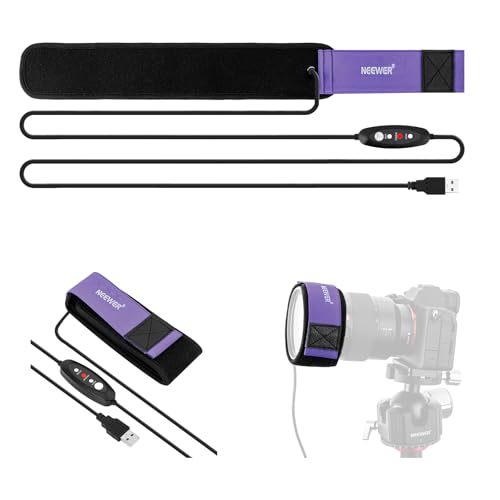
- 400mm strip for optics up to 86mm
- Three temperature settings
- Includes 1.5m USB cable
Best For: Larger compatible lenses and setups needing extra cable reach
Fast-Start Option

- Graphene element with stated five-second startup
- Three adjustable heat settings
- Fits barrels up to 4.3 inches
Best For: Larger telescope and camera barrels needing quick, USB-powered warming
Large-Aperture Coverage – SVBONY SV192 560mm Dew Heater
For shoppers comparing telescope dew heaters with power banks, the SVBONY SV192 is a 12V strip designed for larger optics. Its 560mm heating length fits lenses and telescopes with an outside diameter below 178mm, while the adjustable settings help tailor heat output to conditions.
Best For: Large-aperture telescopes and camera lenses that need a long, narrow heating strip.
Pros:
- 560mm length accommodates optics under 178mm in outside diameter.
- Three heating modes—strong, medium, and weak—offer adjustable operation.
- Built-in aluminum and alloy-fiber heating wire support fast, even heating.
- Uses a 12V DC 5.5 x 2.1 interface and includes a 120cm cable.
Cons:
- It requires a 12V power source, so a USB-only power bank is not suitable without compatible power equipment.
- The 50mm width may not suit users seeking a wider heating band.
This is a practical choice when coverage and adjustable 12V heating matter most. Confirm your optic’s outside diameter and power-bank output before buying.
Hand-Assembled Reliability – R-Sky 6-Inch RCA Dew Heater
The R-Sky Astro Instruments 6-inch strip is a manually assembled 12V anti-dew heater for telescope setups using an RCA connection. It is available in multiple sizes and is intended to help keep optics clear in cold or humid conditions.
Best For: Users who want an RCA-powered heater with a cold-resistant cable and size options for different telescope designs.
Pros:
- Multiple sizes are available, ranging from 1.25-inch eyepieces to 12-inch tubes.
- Designed to help prevent fogging, condensation, and frost.
- Special construction provides uniform heat distribution.
- Cold-resistant RCA cable is designed to remain flexible in sub-zero conditions.
Cons:
- The listed 6-inch version uses an RCA connection and 12V power, so power-bank compatibility depends on the available output and adapter.
- The supplied details do not specify adjustable heat settings.
Consider this strip if your telescope setup already supports RCA 12V accessories and you value a flexible cable for cold-weather use. Match the selected size to the optic or tube diameter.
Power-Bank Friendly – SVBONY SV172 240mm USB Heater
Among telescope dew heaters with power banks, the SVBONY SV172 is the most straightforward match for a USB battery. Its 5V USB design includes a 1.8m cable and is sized for camera or telescope lenses with an external diameter below 76mm.
Best For: Small telescope optics and camera lenses used with a USB power bank.
Pros:
- USB connection works with a power bank or another USB power source.
- 1.8m cable offers useful placement flexibility around a telescope setup.
- Three heating modes—strong, medium, and weak—allow output adjustment.
- Compact 240mm length and 50mm width are designed to minimize interference with focusing and the field of view.
Cons:
- It fits external diameters below 76mm, limiting use on larger optics.
- The 5V design is not intended as a direct replacement for 12V heater strips.
This is the clearest pick for portable setups centered on a USB power bank. Check both the lens diameter and the power bank’s ability to supply the heater’s stated 1.9A to 2.0A input current.
Primary-Mirror Protection – SVBONY SV192 480mm Heater
The SVBONY SV192 480mm strip is made specifically for astronomical telescopes and helps protect optics from fogging or freezing. Its 12V connection and three heat settings make it a useful option when pairing a suitable power bank or 12V power source with a telescope setup.
Best For: Telescope primary mirrors or camera lenses with outside diameters below 152mm.
Pros:
- 480mm strip is designed for astronomical telescope equipment.
- Compatible with primary mirrors or camera lenses under 152mm outside diameter.
- Three-speed regulator provides medium, weak, and adjustable heating options.
- 5.5 x 2.1 female interface connects with various 12V power inputs.
Cons:
- It requires a 12V input, so USB power-bank users need compatible output equipment.
- The supplied notes do not state a cable length.
Choose this version when your optic falls within the 152mm size limit and you want telescope-focused 12V dew protection. Verify your power bank’s voltage and connector before ordering.
Flexible Cold-Weather Pick – 350mm Neoprene Lens Warmer
For telescope dew heaters with power banks, this 350mm USB lens warmer is a practical choice for smaller telescope and camera setups. Its flexible neoprene strip, adjustable heat control, and long cable make it suitable for cold-night astrophotography.
Best For: Backyard astrophotographers using lenses or telescope equipment up to 4.26 inches in diameter.
Pros:
- Flexible down to -25°C and made with insulating neoprene to help reduce heat loss.
- Three incremental temperature settings with continuous warming.
- USB powered and compatible with a power bank or other USB source.
- Long 60.23-inch cable and hook-and-loop fastening support convenient placement.
Cons:
- The 350mm strip is less suitable for larger telescope barrels.
- The supplied notes specify a 2.0A input, so the power source should support that demand.
Its soft construction and adjustable strap make it easy to fit, while the USB connection suits portable observing setups. Check your telescope’s outside diameter before choosing it.
Universal Telescope Choice – SVBONY SV172 400mm Dew Heater
This SVBONY SV172 is a straightforward option for telescope dew heaters with power banks. Its 400mm strip fits optics below 127mm in outer diameter, while the USB cable and adjustable heating modes support portable telescope sessions.
Best For: Telescope users who need a universal 400mm heater for lenses or optical tubes under 127mm in diameter.
Pros:
- Designed for telescope and camera lenses, with a 50mm bandwidth intended not to interfere with focusing.
- USB connection works with a power bank or another USB power source.
- Strong, medium, and weak heating modes provide adjustable output.
- Aluminum construction, alloy fiber heating wire, and three insulation layers support fast, even warming.
Cons:
- Compatibility is limited to lenses or telescope exteriors below 127mm.
- The heater requires a USB source capable of approximately 1.9A to 2.0A.
With its longer 1.8m cable and three heat settings, the SV172 balances flexibility and simple operation. Confirm the diameter of the surface you plan to wrap before buying.
Large-Optic Option – NEEWER HW-23B 600mm USB Lens Heater
For larger optics, the NEEWER HW-23B is a useful entry in the telescope dew heaters with power banks category. Its 600mm length, 5V USB operation, and three temperature ranges accommodate telescopes, binoculars, and camera lenses with circumferences up to 475mm.
Best For: Larger telescope, binocular, and camera setups requiring coverage for diameters up to 150mm.
Pros:
- 600mm overall length with a 500mm effective heating length.
- Fits equipment with circumferences up to 475mm or diameters up to 150mm.
- Three temperature ranges offer low, medium, and high settings.
- Works with 5V USB power sources, including portable chargers, and includes a 1.5m cable.
Cons:
- Its larger size may be unnecessary for compact lenses or smaller telescope tubes.
- The supplied notes do not specify the heater’s USB current requirement.
The HW-23B stands out when a shorter heater would not cover the optical barrel. Its touch-fastener design also allows quick adjustment, but measure circumference first for a secure fit.
Adjustable Pick – Astromania 25cm USB Dew Heater
The Astromania 25cm is a compact option for anyone comparing telescope dew heaters with power banks. Its 5V USB connection works with a power bank or another USB source, while the stepless controller lets you fine-tune warmth for compatible optics.
Best For: Telescope and camera lenses under 80mm (3.15 inches) in diameter, especially users who want continuous temperature adjustment.
Pros:
- Stepless temperature regulation for more precise adjustment.
- USB-powered design connects to power banks and other USB sources.
- Can also be used with compatible lenses, water bottles, feeding bottles, or as a cold-weather wrist strap.
- Includes a stated two-year manufacturer warranty.
Cons:
- The 25cm length and under-80mm compatibility limit its fit for larger lenses.
- The notes do not specify heating temperatures or cable length.
Choose this model if flexible heat control matters more than broad diameter coverage. Confirm your lens or telescope barrel is below the stated 80mm limit before buying.
Long-Reach Choice – NEEWER HW-29B 400mm Lens Heater
The NEEWER HW-29B is a longer dew strip for shoppers seeking telescope dew heaters with power banks and flexible placement. It uses any 5V USB source, including portable chargers, and provides three temperature levels for changing outdoor conditions.
Best For: Camera lenses, telescopes, and binoculars up to 86mm (3.39 inches) in diameter, particularly when extra cable reach is useful.
Pros:
- 400mm length fits devices up to 86mm in diameter.
- Three heat settings: low, medium, and high.
- Works with power banks, laptops, and USB adapters.
- Includes a 1.5m (4.9ft) USB cable and touch fasteners for a secure fit.
Cons:
- It offers three preset levels rather than stepless adjustment.
- A lithium-ion battery is listed as required, although the heater itself is USB powered.
Its long strip, extended cable, and three-level controller make the HW-29B a practical choice for larger compatible optics and setups where the power bank may sit away from the telescope.
Fast-Start Option – Haida USB Graphene Dew Heater
The Haida Lens Dew Heater combines USB power-bank compatibility with a graphene heating element designed for quick startup. Three heat settings and a touch-fastener strap make it a versatile choice among telescope dew heaters with power banks.
Best For: Telescope, camera, and finder-scope barrels up to 4.3 inches in diameter, including larger setups that need broad coverage.
Pros:
- Graphene heating material is described as reaching startup in five seconds.
- Three temperature levels cover low, medium, and high heat.
- Connects to a camera port, power bank, or other USB source.
- Fits lens barrels up to 4.3 inches and includes a 1.5m cable.
Cons:
- It uses preset heat levels rather than continuous temperature adjustment.
- The supplied details do not state the heater’s power draw or battery runtime with a power bank.
The Haida stands out for its stated fast startup and generous fit range. Verify your power bank has a suitable USB output and that your equipment falls within the 4.3-inch diameter limit.
How We Picked the Best Telescope Dew Heaters with Power Banks
We focused on practical compatibility for telescope and astrophotography setups: heater length, connection type, heat control, stated operating conditions, and ease of securing the strip around an optical tube or lens. The selection includes USB models for common power banks and 12V options for astronomy power systems.
Because heater performance depends on ambient temperature, humidity, optics, and battery output, specifications should be treated as a starting point rather than a guarantee. Always confirm the product’s connector and power requirements before buying.
Quick Comparison
| Feature | Why It Matters | Best Match |
|---|---|---|
| Heater length | Must fit securely around the lens or optical section | Short strips for camera lenses and small scopes; longer strips for larger optics |
| USB power | Works with many USB battery packs and portable chargers | Portable observing and travel setups |
| 12V/RCA power | Fits dedicated astronomy power supplies and controllers | Permanent or advanced telescope rigs |
| Multiple heat settings | Helps balance dew prevention and battery life | Long sessions and changing weather |
| Flexible construction | Makes installation easier and improves contact with the optical surface | Mixed lens and telescope use |
Key Buying Factors for Telescope Dew Heaters with Power Banks
Measure the Optical Circumference
Length is one of the most important specifications. A heater that is too short may not close around the lens, while an excessively long strip can overlap awkwardly or transfer heat inefficiently. Measure the outside circumference of the section you intend to warm, then compare it with the listed strip length and fastening method.
Check Voltage, Connector, and Battery Output
USB heaters are generally convenient with power banks, but verify whether the model uses USB-A, USB-C, or another connection. A 12V heater should not be connected directly to a standard 5V USB output unless an appropriate converter or controller is specified. Also check the power bank’s output rating and capacity; higher heat settings consume power faster.
Choose Controllability Over Maximum Heat
Adjustable settings can reduce unnecessary battery drain and help avoid excessive warming. Start with the lowest effective setting, particularly when using a small battery pack or observing in mild conditions. A separate controller may be useful for 12V strips without built-in adjustment.
Consider Weather and Installation
Look for flexible bands, secure closures, and cable placement that will not interfere with focus or tracking. Keep power banks protected from moisture, avoid covering ventilation openings, and follow the manufacturer’s operating guidance in freezing conditions.
Who Should Buy Which Telescope Dew Heaters with Power Banks?
Choose a shorter USB heater for camera lenses, small refractors, or compact travel kits. A 400mm-class strip is a versatile choice for many medium-sized telescope accessories, while 560mm or 600mm models suit larger optical sections when their dimensions match. Select a 12V RCA model if your setup already uses a dedicated astronomy battery or dew controller. For long imaging sessions, prioritize adjustable heat levels and a power bank with enough capacity for the expected runtime.