Choosing between digital compound microscopes can be tricky when display size, camera quality, optics, and stage control all vary so much. The right model depends on whether you’re buying for school, home exploration, clinical-style viewing, or lab work.
Below, we focus on the most useful features for real buyers so you can quickly narrow down the best fit from the 10 strongest options available in 2026.
Best 10 Digital Compound Microscopes Picks for 2026
Editor’s Pick
AmScope DM300HD 1200X Digital Compound Microscope
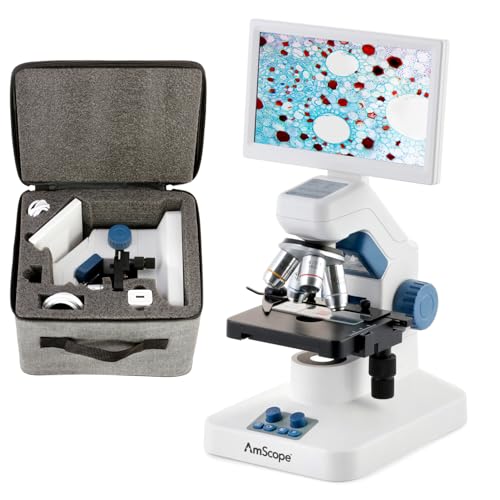
- 7-inch IPS display with WiFi app support
- HDMI/USB output plus 2MP camera
- Precision X-Y stage and rechargeable battery
Best For: Students and lab users who want a built-in screen with flexible sharing options
Best for Learning
TOMLOV DM301 Pro 7" Screen Microscope

- 7-inch IPS screen with wireless app support
- Dual LEDs and built-in measurement scale
- Includes slides and STEM-friendly accessories
Best For: Kids, students, and homeschool science activities
Best Budget Hybrid
AmScope B120C-E1 Binocular Microscope with USB Camera
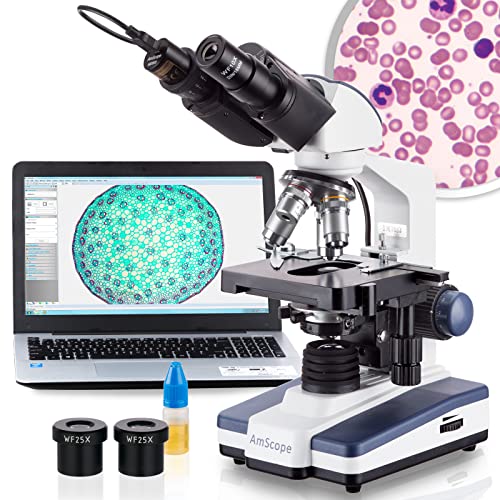
- 40x-2500x magnification for broad use
- Includes 1MP USB camera for PC capture
- LED lighting with daylight-balanced illumination
Best For: Students and professionals who want a classic microscope with basic digital imaging
Laboratory Power Pick
Woehrsh Trinocular 40X-5000X Microscope

- Trinocular design with HD USB camera
- 40x-5000x magnification and dual-stage control
- Extensive lab accessory pack included
Best For: Advanced lab users who want maximum adjustability and digital capture
Starter STEM Kit
PalliPartners 100X-2000X Compound Microscope

- 100X to 2000X magnification range
- Includes slides, phone clip, and Bluetooth shutter
- Top and bottom LED lighting with coarse/fine focus
Best For: Students and beginners who want a full starter kit for home or classroom use
Digital Lab Pick
AmScope B120 5MP Binocular Microscope
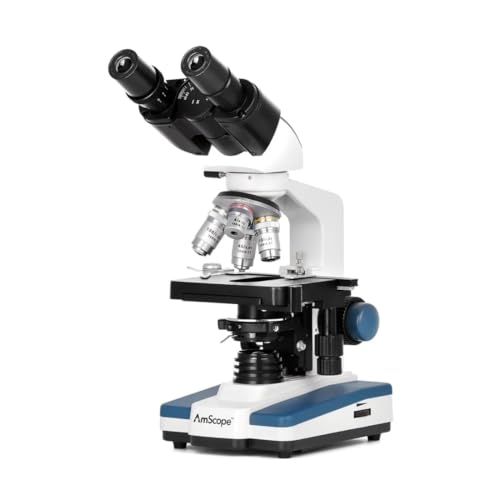
- 5MP USB camera with professional software
- 40X to 2500X magnification for lab and school use
- Binocular head with bright LED illumination
Best For: Buyers who want a lab-style microscope with digital capture and analysis
Dual-Light Classroom Choice
40X-2500X Microscope with Phone Holder

- 40X to 2500X magnification with multiple eyepieces and objectives
- Dual LED lighting for opaque and translucent specimens
- Phone holder and 5-color filter wheel included
Best For: Families and students who want flexible viewing and phone-based capture
Research-Grade Digital Imaging
SWIFT SW350T 2.0MP Trinocular Microscope

- 2.0MP USB camera for photos and video
- Trinocular port supports viewing and capture
- Windows/Mac software adds measurement and stitching
Best For: Lab reports, clinics, and STEM users who want digital capture
Complete Lab Starter
Wevision M1 40X-2500X Binocular Microscope

- 40X-2500X magnification with achromatic objectives
- Includes Abbe condenser and independent diopters
- Ships as a complete lab kit with case and accessories
Best For: Labs and beginners who want an all-in-one viewing kit
Dual-Light Beginner Pick
Herwicm RM Binocular Compound Microscope

- Top and bottom LED lighting
- Binocular wide-angle eyepieces aim to reduce fatigue
- Coaxial coarse and fine focus for easy adjustment
Best For: Beginners and hobbyists learning basic microscope use
Editor’s Pick – AmScope DM300HD 1200X Digital Compound Microscope
This digital compound microscope is built for users who want an all-in-one viewing setup with a built-in 7-inch IPS display, WiFi app support, and HDMI/USB output. The DM300HD combines portable convenience with lab-style control, making it practical for classroom observation, home study, and on-site specimen review.
Best For: Students, home users, and lab work that benefits from a built-in screen and external display options.
Pros:
- 7-inch IPS screen reduces reliance on an external monitor.
- WiFi and app support make it easy to view, capture, and share images and video.
- Double-layer metal stage with X-Y control supports precise slide positioning.
- Includes HDMI output, rechargeable battery, and carrying case for flexible use.
Cons:
- Maximum magnification is listed at 1200x, which may not suit users seeking extreme high power.
- Portable digital features add complexity compared with a basic optical microscope.
Overall, the DM300HD is a strong pick if you want digital compound microscopes that prioritize screen-based viewing, sharing, and portability. Its balance of imaging features and practical accessories makes it especially versatile for mixed home, school, and field use.
Best for Learning – TOMLOV DM301 Pro 7" Screen Microscope
The TOMLOV DM301 Pro is a practical choice in digital compound microscopes for families, students, and classrooms that want easy viewing and simple sharing. Its 7-inch IPS screen, wireless app support, and included STEM accessories make it straightforward to use for slide viewing, demos, and guided science activities.
Best For: Kids, students, homeschool setups, and group learning sessions.
Pros:
- 7-inch IPS display offers clear, comfortable viewing.
- Wireless app support enables viewing, zooming, and media capture.
- Dual LED lighting helps balance top and bottom illumination.
- Includes a built-in measurement scale and STEM-ready slides.
Cons:
- Maximum magnification is 1200x, so it is geared more toward learning than advanced lab use.
- Best suited to users who want a digital screen workflow rather than a traditional eyepiece setup.
For buyers comparing digital compound microscopes for education, this model stands out for ease of use and included learning materials. It gives you the basics needed for observation and sharing without making the setup feel complicated.
Best Budget Hybrid – AmScope B120C-E1 Binocular Microscope with USB Camera
The AmScope B120C-E1 is a more traditional compound microscope with a binocular head, strong magnification range, and an included USB camera for digital capture. If you want digital compound microscopes features without committing to a screen-based design, this setup keeps the viewing experience flexible for students, labs, and small professional tasks.
Best For: Buyers who want an affordable binocular microscope with basic digital imaging.
Pros:
- Wide 40x-2500x magnification range supports a variety of specimen types.
- Includes a 1.0 MP USB camera for image capture and analysis on Windows PCs.
- LED illumination with a fly-eye lens is designed for bright, daylight-balanced light.
- Binocular compound design is suitable for educational and professional settings.
Cons:
- Digital camera is basic compared with higher-resolution built-in camera systems.
- PC-dependent camera workflow is less convenient than integrated screen models.
This is a sensible option if you value optical performance first and just want light digital functionality on the side. It offers a straightforward path into digital compound microscopes without the added cost of a full display system.
Laboratory Power Pick – Woehrsh Trinocular 40X-5000X Microscope
This laboratory-grade model is aimed at users who need a highly equipped compound microscope with digital imaging support and extensive accessories. Among digital compound microscopes, it stands out for its trinocular design, wide magnification range, electronic eyepiece, and dual mechanical stage for detailed specimen work.
Best For: Advanced users, lab environments, and detailed biological or inspection work.
Pros:
- Trinocular setup includes HD USB camera and electronic eyepiece support.
- 40x-5000x magnification range offers broad observation flexibility.
- Dual coaxial coarse and fine focusing with a double-layer stage improves control.
- Includes a large lab accessory pack with slides, tools, and storage items.
Cons:
- Large accessory set and lab-grade design may be more than casual users need.
- Corded electric operation is less portable than battery-powered digital models.
If you want a more serious specimen platform, this microscope delivers the most complete lab-style feature set in the group. It is the best fit when the priority is observation depth, adjustability, and digital capture rather than simplicity.
Starter STEM Kit – PalliPartners 100X-2000X Compound Microscope
If you want digital compound microscopes that are easy to use at home or in class, this PalliPartners model offers a broad magnification range and a phone clip for simple image capture. It pairs 4X, 10X, and 40X objectives with a WF25X eyepiece and 2X lens, so it can cover everything from basic viewing to more detailed observation of cells and plant tissue.
Best For: Students, homeschoolers, and beginners who want a complete microscope kit with slides and phone photo support.
Pros:
- 100X to 2000X magnification range for a wide variety of specimens
- Includes 10 prepared slides, 18 blank slides, a phone clip, and Bluetooth shutter
- Top and bottom LED illumination helps with opaque and translucent samples
- Coaxial coarse and fine focus knobs support sharper adjustments
Cons:
- Uses a smartphone clip for digital photography rather than a built-in camera
- Single-user setup may be less advanced than lab-focused systems
- Best suited to educational use rather than professional-grade microscopy
This is a practical starter option if you want an all-in-one learning kit with enough accessories to begin observing specimens right away. It bridges the gap between toy scopes and more complex lab equipment without getting overly technical.
Digital Lab Pick – AmScope B120 5MP Binocular Microscope
Among digital compound microscopes, this AmScope B120 kit stands out for combining a binocular viewing head with a 5MP USB camera and interactive software. Its 40X to 2500X magnification range and daylight-balanced LED illumination make it a strong fit for users who want both hands-on viewing and digital image capture.
Best For: Students, labs, and hobbyists who want a binocular microscope with software-based digital capture.
Pros:
- 5MP USB digital camera included for image capture and analysis
- 40X to 2500X magnification suits educational and lab use
- Binocular design with LED illumination and fly-eye lens for bright viewing
- Includes interactive software and a 5-year manufacturer warranty
Cons:
- Requires corded power rather than battery operation
- USB camera setup may be more involved than a phone clip system
- Priced more like a serious lab tool than an entry-level starter scope
This is the most computer-ready option in the group, especially if image capture and analysis matter as much as visual inspection. It makes sense for buyers who want a more traditional lab microscope with digital workflow support.
Dual-Light Classroom Choice – 40X-2500X Microscope with Phone Holder
If you are comparing digital compound microscopes for family learning or school projects, this model is appealing because it combines strong magnification with a phone holder and multiple viewing aids. The 40X to 2500X optical range, dual LED illumination, and 5-color filter wheel give it flexible day-to-day usefulness for both opaque objects and translucent samples.
Best For: Kids, students, and families who want an easy-to-use microscope with phone viewing support.
Pros:
- 40X to 2500X magnification with WF25X/10X eyepieces and multiple objectives
- Dual incident and transmitted LED lighting for different sample types
- Phone holder makes it easier to view and capture photos or videos
- 5-color filter wheel adds flexibility when observing transparent samples
Cons:
- No built-in digital camera; smartphone use is required for media capture
- Accessory-heavy setup may be more than casual users need
- Best suited to educational exploration rather than advanced lab work
This is a good middle-ground option if you want classroom-friendly features without moving into a full USB camera system. The added filters and rotating eyepieces make it especially convenient for hands-on experiments and sharing views.
Research-Grade Digital Imaging – SWIFT SW350T 2.0MP Trinocular Microscope
For buyers comparing digital compound microscopes, the SWIFT SW350T stands out for its trinocular design and included 2.0MP USB camera. It’s built to observe through both eyepieces while capturing photos and video for lab reports, clinics, and STEM work, with software on Windows and Mac that adds measurement, stitching, and EDF tools.
Best For: Lab reports, clinical observation, STEM education, and users who want built-in digital capture alongside traditional viewing.
Pros:
- Includes an upgraded 2.0MP USB camera for photo and video capture.
- Trinocular port supports digital imaging while viewing through both eyepieces.
- Professional software offers image stitching, EDF, and measurement features.
- 40X-2500X optics with achromatic objectives and wide-field eyepieces.
Cons:
- Heavier metal build at 4.7 kg, so it is less portable than compact scopes.
- Maximum utility depends on using the included software and computer connection.
Overall, this is the most imaging-focused option in the group, especially if documentation matters as much as viewing. The bundled slides and cover slips also make it easier to get started right away.
Complete Lab Starter – Wevision M1 40X-2500X Binocular Microscope
If you want a practical digital compound microscope setup without hunting for extras, the Wevision M1 is a strong all-in-one choice. It combines 40X-2500X magnification, achromatic objectives, an Abbe condenser, and a complete lab kit that includes slides, cover slips, immersion oil, and a carry case.
Best For: Labs, medicine, and serious beginners who want a complete binocular microscope kit ready to use.
Pros:
- 40X-2500X range with WF10X and WF25X eyepieces plus 4 achromatic objectives.
- Abbe condenser and achromatic optics help improve contrast and image clarity.
- Independent eyepiece diopters help each eye reach focus comfortably.
- Complete bundle includes a carry case, slides, cover slips, immersion oil, dust cover, and lens paper.
Cons:
- No built-in camera or digital imaging hardware is listed.
- At 7.5 pounds, it is not the lightest option for frequent movement.
This model is best viewed as a well-equipped lab microscope rather than a digital-first system. If you already have a camera workflow or mainly need a reliable viewing platform, it offers a lot of value in one box.
Dual-Light Beginner Pick – Herwicm RM Binocular Compound Microscope
Among digital compound microscopes for casual users, the Herwicm RM is geared toward straightforward viewing rather than advanced imaging. It offers binocular viewing, dual LED illumination from top and bottom, and a large stage with coaxial focus controls, making it approachable for students, adults, and hobbyists.
Best For: Children, students, adult beginners, and hobbyists learning basic biological observation.
Pros:
- Dual LED lighting with top and bottom illumination for easier observation.
- Binocular wide-angle eyepiece design aims to reduce eye fatigue during longer sessions.
- Coaxial coarse and fine focus knobs allow quick, comfortable adjustments.
- Large stage and protective lens design support practical everyday use.
Cons:
- Its listed maximum magnification is 40X, far below the higher-power models here.
- No camera or digital capture accessories are included in the supplied notes.
This is the simplest option in the lineup and makes the most sense if ease of use matters more than high magnification or digital documentation. It’s a solid entry point for learning microscope basics.
How We Picked the Best Digital Compound Microscopes
We focused on Digital Compound Microscopes that offer a practical mix of image quality, user-friendly controls, and useful digital viewing options. Priority factors included magnification range, optical clarity, included camera or screen features, mechanical stage design, illumination quality, and whether the microscope is better suited to students, hobbyists, or more serious lab use.
We also looked for value: models that deliver a sensible feature set without forcing buyers to pay for extras they may not need.
Quick Comparison
If you want the simplest viewing experience, screen-based digital microscopes are easier to share and teach with. If you want better flexibility for imaging, trinocular and camera-ready binocular models are often the better long-term choice. For budget-conscious buyers, some non-Digital Compound Microscopes still make sense if they provide strong optics and can be upgraded later with a camera.
Key Buying Factors for Digital Compound Microscopes
Optics and Magnification
Magnification numbers can be misleading if the optics are weak. Look for achromatic objectives, decent eyepieces, and stable focus controls. For most buyers, image quality matters more than extreme top-end magnification.
Camera or Display Setup
Built-in screens are convenient for classroom use and shared viewing, while USB or trinocular camera systems are better if you want to capture images, record video, or connect to a larger monitor. Check resolution, ease of software use, and whether the camera is included or sold separately.
Stage and Focusing Controls
A two-layer mechanical stage makes slide movement smoother and more precise, especially at higher magnification. Fine focus should feel controlled rather than loose or jerky.
Lighting
LED illumination is the standard to look for. Dual lighting, dimming controls, and good condenser setup can make a major difference in contrast and visibility.
Durability and Ease of Use
For students and beginners, a microscope should be simple to set up and forgiving to use. For labs and advanced users, build quality, camera compatibility, and smoother mechanics become more important.
Who Should Buy Which Digital Compound Microscopes?
Students and families usually do best with screen-equipped or easy-to-use entry models. Hobbyists and homeschool buyers should look for a balance of optics, stage quality, and included accessories. For research, clinical-style work, or frequent imaging, trinocular and camera-ready systems are the smarter pick because they support documentation and better workflow.
If you’re unsure, choose the model that best matches how you will actually use it: viewing slides casually, teaching a group, capturing images, or working at a bench for longer sessions.