Choosing the right thermal camera can save time, reduce guesswork, and make board-level troubleshooting far more precise. For electronics repair, the best models balance resolution, temperature range, focus, and easy-to-read thermal detail.
Below, we’ve rounded up 10 options that fit different repair workflows, from compact handheld units to PCB-focused analyzers and phone-connected cameras.
Best 10 Thermal Imaging Cameras for Electronics Repair Picks for 2026
Top Standalone Inspector
FOXWELL RT280 320x240 Handheld Thermal Camera

- 320x240 LCD with TISR-enhanced detail
- 8GB storage for 20,000+ images and videos
- Windows PC analysis with reports and 2D/3D views
Best For: Standalone repair inspections with deeper thermal analysis
Best Everyday Pick
HSFTOOLS HF256 256x192 Thermal Camera
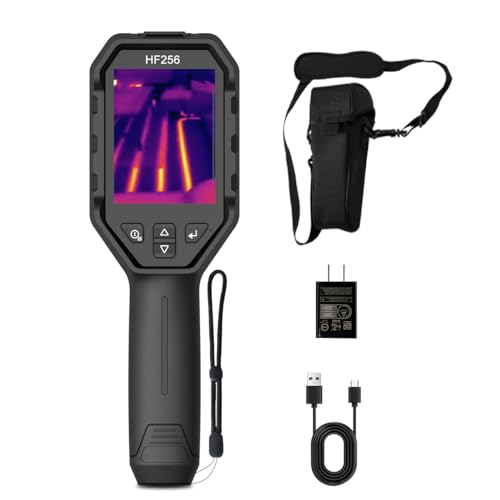
- Snapshot super-resolution boosts captured detail to 320x240
- Sub-40 mK sensitivity for fine anomaly detection
- 16GB memory and up to 6 hours of battery life
Best For: Daily troubleshooting with simple controls and long runtime
Lightest Quick-Check Option

- 240g body with non-slip grip
- Dual thermal and thermometer modes
- Up to 14 hours of battery life
Best For: Fast handheld checks when portability is the priority
Best Phone-Based Tool
TOPDON TS001 Android Thermal Camera

- 256x192 IR resolution with 25Hz video
- Sees PCB boards, resistors, and 1mm components
- Runs from your phone with report and Excel export support
Best For: Android-based close-up electronics diagnostics
PCB Diagnostic Thermal Scope
ShortCam III 256×192 Thermal Analyzer

- 256×192 IR resolution with 4K display
- HDMI output for monitor-based inspection
- Dual-light modes help reveal leakage heat
Best For: PCB and motherboard fault diagnosis
Mobile USB-C Thermal Viewer

- USB-C support for phones and tablets
- 256×192 imaging with TISR upscaling
- Portable 25Hz thermal tracking
Best For: Portable repair work on USB-C mobile devices
Fusion PCB Fault Finder
Qianli SuperCam X Thermal Camera

- 256×192 detector for PCB hot spots
- Adjustable image fusion improves visibility
- Full-frame temperature measurement and recording
Best For: Motherboard repair and thermal fault diagnosis
Portable Thermal Inspector
TOPDON TC004 Mini Thermal Imaging Camera

- TISR boosts 128x128 thermal images to 240x240.
- 25Hz refresh rate and 40° x 30° FOV support smoother scans.
- 15-hour battery life and IP54 build suit mobile use.
Best For: Compact electrical inspections and everyday troubleshooting
PCB Fault Finder
Infrared Thermal Imager Analyzer 256x192

- 256x192 sensor targets board-level fault finding.
- 3D, rectangular, and double-board modes aid diagnosis.
- Adjustable metal stand helps with stable inspection setup.
Best For: PCB repair, motherboard inspection, and short-circuit checks
High-Temp Repair Camera
TR256A Infrared Thermal Imaging Camera

- 256x192 IR resolution with 50Hz refresh for responsive viewing.
- Hot/cold tracking and temperature alerts support diagnostics.
- PC screen projection and 2.8-inch LCD improve usability.
Best For: Electrical diagnostics and fast temperature monitoring
Top Standalone Inspector – FOXWELL RT280 320×240 Handheld Thermal Camera
For thermal imaging cameras for electronics repair, the FOXWELL RT280 focuses on clarity, measurement tools, and field durability. Its 320×240 LCD, TISR enhancement, and 25Hz refresh rate help you spot small temperature differences on panels, boards, and nearby components without a choppy view.
Best For: Electronics repair techs who want detailed thermal views, onboard storage, and PC-based analysis.
Pros:
- 320×240 LCD with TISR boost to 240×180 effective thermal resolution
- Measures from -4°F to 1022°F with high/low alarms and automatic hot/cold/center detection
- Stores over 20,000 images and videos in built-in 8GB eMMC memory
- Windows PC software supports point, line, area, 2D/3D analysis, and report generation
Cons:
- PC analysis software is not compatible with Mac
- Bulkier than phone-based thermal solutions
- Best suited to inspection and diagnosis rather than ultra-portable everyday carry
Overall, the RT280 is a strong pick if you want a standalone thermal camera with more analysis depth than basic handheld units. It combines practical measurement tools, rugged build quality, and easy image storage for repeat repair work.
Best Everyday Pick – HSFTOOLS HF256 256×192 Thermal Camera
Among thermal imaging cameras for electronics repair, the HSFTOOLS HF256 stands out for easy handling and solid image detail. Its 256×192 sensor with snapshot super-resolution, sub-40 mK sensitivity, and 25Hz refresh rate is designed to make hot spots and small anomalies easier to see during routine troubleshooting.
Best For: Technicians who want a compact thermal camera with simple controls and long battery life.
Pros:
- Snapshot super-resolution improves captured image clarity to 320×240
- Sub-40 mK thermal sensitivity helps reveal fine temperature differences
- 16GB eMMC memory stores about 90,000 standard thermal images
- Up to 6 hours of battery life with IP54 protection and 6.6 ft drop resistance
Cons:
- 3.2-inch screen is smaller than some larger handheld models
- No built-in mention of advanced PC reporting tools
- Best when you want a straightforward inspection tool rather than a feature-heavy platform
The HF256 is a practical choice if you want an affordable-feeling, easy-to-use thermal imager for recurring repair work. It balances image quality, storage, and durability well enough for daily diagnostics without adding complexity.
Lightest Quick-Check Option – GT14S Thermal Imaging Camera
If you want thermal imaging cameras for electronics repair in a small, easy-to-carry body, the GT14S is built for fast checks and flexible viewing. It combines thermal imaging modes with a thermometer mode, so you can scan boards or equipment and also switch to quick point readings when you need exact numbers.
Best For: Users who want a lightweight thermal camera for quick inspections and all-day handheld use.
Pros:
- Dual mode design combines thermal imaging and thermometer mode
- Weighs just 240g for comfortable handling
- NETD < 50mK and a 50° field of view support subtle hotspot detection
- Up to 14 hours of battery life with custom high/low alarms
Cons:
- Less storage and analysis detail is mentioned than on some competing models
- Smaller body may feel simpler than full-size inspection cameras
- Best for quick diagnostics rather than advanced reporting workflows
The GT14S is a good fit if portability matters as much as thermal visibility. Its light weight, long battery life, and dual-mode workflow make it easy to keep on hand for rapid diagnostics and temperature spot checks.
Best Phone-Based Tool – TOPDON TS001 Android Thermal Camera
For thermal imaging cameras for electronics repair, the TOPDON TS001 is a compact phone-powered option aimed at fine detail and easy transport. Its 256×192 IR resolution, 25Hz frame rate, and image enhancement features are designed to help you inspect small parts such as PCB boards and resistors with a smartphone or Windows laptop.
Best For: Android users who want a lightweight thermal add-on for close-up electronics diagnostics.
Pros:
- 256×192 IR resolution with 25Hz frame rate for smooth imaging
- Detects PCB boards, resistors, and other 1mm components according to the product notes
- No built-in battery, so it runs from your phone or tablet with low power draw
- Supports picture/video capture, report generation, temperature alarms, and Excel export
Cons:
- Compatible with Android smartphones/tablets and Windows laptops, not iOS
- Requires a host device for power and use
- Less suitable if you prefer a fully standalone handheld thermal camera
The TS001 makes sense if you already work from an Android device and want a compact thermal accessory for repair work. It brings useful inspection and reporting functions without adding much bulk to your kit.
PCB Diagnostic Thermal Scope – ShortCam III 256×192 Thermal Analyzer
If you want thermal imaging cameras for electronics repair that are built around PCB troubleshooting, the ShortCam III is tuned for board-level fault finding. Its 256×192 IR output, 4K HDMI display, and dual-light modes make it easier to spot abnormal heat on phone, computer, and vehicle motherboards without needing a computer in the middle of the workflow.
Best For: Technicians who want a dedicated PCB thermal analyzer for fast component and leakage checks.
Pros:
- 256×192 infrared resolution with a 4K ultra-clear display for detailed thermal viewing
- HDMI output supports quick switching to a display without a computer
- Dual-light imaging and multiple display modes help with quick leakage detection
- Full metal body and folding stand improve durability and storage
Cons:
- Designed specifically for PCB and electronic inspection rather than general-purpose use
- Uses a fixed-focus setup, so it is less flexible than adjustable-focus alternatives
- Not water resistant
The ShortCam III is a strong fit if your priority is professional motherboard diagnostics and a streamlined bench setup. Its software support and HDMI workflow make it especially practical for repeat inspection work.
Mobile USB-C Thermal Viewer – TC002C Duo Smartphone Camera
Among thermal imaging cameras for electronics repair, the TOPDON TC002C Duo stands out for its USB-C smartphone and tablet compatibility. With enhanced 256×192 imaging, TISR upscaling to 512×384, and a 25Hz refresh rate, it gives you a portable way to track heat differences while moving between boards, tools, and test areas.
Best For: Repair techs who want a compact thermal camera that works with USB-C phones and tablets.
Pros:
- Works with USB-C smartphones and tablets across iOS, Android, and Windows
- TISR boosts 256×192 thermal imaging up to 512×384 for sharper detail
- 25Hz refresh rate and 40mK sensitivity support smooth heat tracking
- Supports temperature readings, photo/video capture, and app-based control
Cons:
- Not compatible with Mac devices
- Not currently compatible with Android 16 devices
- More of a portable accessory than a dedicated bench tool
This is a practical pick if you want a lightweight thermal viewer that travels with your phone or tablet. It is especially useful when you need quick thermal checks without building out a separate inspection station.
Fusion PCB Fault Finder – Qianli SuperCam X Thermal Camera
If you need thermal imaging cameras for electronics repair that focus on motherboard diagnostics, the Qianli SuperCam X is built for that job. Its 256×192 infrared detector, adjustable image fusion, and full-frame temperature measurement make it useful for identifying hot spots and short circuits during PCB inspection.
Best For: Electronics technicians who want a PCB thermal tool with image fusion and temperature measurement.
Pros:
- 256×192 uncooled vanadium oxide detector captures detailed thermal images
- Adjustable image fusion helps align infrared and visible-light views
- Full-frame temperature measurement includes max, min, and test area readings
- Supports image capture and video recording for documentation
Cons:
- Temperature range is listed as 0°C–120°C, which is narrower than some general-purpose thermal tools
- Requires corded power
- PC software connection options may add setup steps
This model makes sense when your workflow depends on clear thermal context and temperature logging during board-level troubleshooting. It is a focused diagnostic tool rather than a broad, all-weather thermal camera.
Portable Thermal Inspector – TOPDON TC004 Mini Thermal Imaging Camera
If you want thermal imaging cameras for electronics repair that are easy to carry from bench to job site, the TOPDON TC004 Mini is a practical pick. It combines a 128×128 base image with TISR enhancement to 240×240, plus a 25Hz refresh rate, so you can inspect electrical systems and other detailed targets with smoother visuals.
Best For: Technicians who want a compact thermal camera for general electrical inspections, leak checks, and everyday troubleshooting.
Pros:
- TISR enhances thermal resolution from 128×128 to 240×240 for more detail.
- 40° x 30° field of view and 25Hz refresh rate help with smooth scanning.
- Measures from -4°F to 842°F with hot, cold, and center spot tracking.
- 15-hour runtime, IP54 rating, and drop resistance up to 2 meters add durability.
Cons:
- Resolution starts at 128×128 before enhancement, not a native 240×240 sensor.
- Paper manual is not included, so setup relies on the electronic manual.
For users who value portability and long battery life, this model offers a strong mix of convenience and inspection-friendly features. It is especially appealing if you need a compact thermal camera that can handle routine diagnostics without feeling bulky.
PCB Fault Finder – Infrared Thermal Imager Analyzer 256×192
Built for thermal imaging cameras for electronics repair, this infrared thermal imager analyzer focuses on board-level fault finding. With a 256×192 sensor and 25Hz refresh rate, it is aimed at spotting abnormal components, short circuits, and current leakage during PCBA and motherboard inspection.
Best For: Repair work on circuit boards, motherboard diagnostics, and identifying short circuits or leakage issues.
Pros:
- 256×192 thermal resolution is suitable for detailed electronics diagnostics.
- 3D imaging mode helps visualize small temperature changes on circuit boards.
- Rectangular analysis and double-board comparison modes support fault isolation.
- Adjustable metal stand makes positioning and distance tuning easier.
Cons:
- Product notes do not mention battery operation or portability details.
- It appears specialized for electronics inspection rather than general-purpose use.
If your workflow centers on PCB troubleshooting, the analysis tools here are the main advantage. The comparison and measurement modes can make it easier to separate a healthy board from a faulty one under similar test conditions.
High-Temp Repair Camera – TR256A Infrared Thermal Imaging Camera
For buyers comparing thermal imaging cameras for electronics repair, the TR256A stands out with a 256×192 IR resolution, 50Hz refresh rate, and 40MK NETD. It is designed for electrical device repair work and includes hot/cold spot tracking, temperature alerts, and PC screen projection for easier review.
Best For: Users who want a higher-refresh thermal camera for electrical diagnostics and temperature monitoring.
Pros:
- 256×192 resolution with 50Hz refresh rate supports responsive thermal viewing.
- Hot/cold spot tracker and high/low temperature alerts help identify trouble areas.
- 56° x 42° HFOV and 2.8-inch color LCD provide a workable viewing setup.
- PC screen projection adds flexibility for reviewing images on a larger display.
Cons:
- The supplied notes list different measure ranges, so buyers should verify operating range needs carefully.
- No electronics-specific analysis modes like board comparison are listed in the notes.
This is a solid choice if you want quick thermal response and broader viewing support for electrical troubleshooting. Its feature set is straightforward, but the higher refresh rate and alert tools make it practical for routine repair use.
How We Picked These Thermal Imaging Cameras for Electronics Repair
We focused on tools that are genuinely useful for diagnosing PCB and motherboard issues, not just general-purpose heat detection. Priority went to image clarity, practical temperature measurement, frame rate, focus control, and how well each camera supports close-range component inspection.
We also considered portability, display quality, device compatibility, and features that matter on the bench, such as temperature overlays, fusion modes, and targeted PCB analysis.
Quick Comparison
For fast decision-making, think in three groups: handheld standalone cameras for flexible shop use, phone-attached or app-driven models for portability, and PCB-specialized thermal analyzers for more detailed board-level work. Higher resolution and better focus help you separate small hot spots from surrounding components, while a wider temperature span improves usefulness across both low-voltage electronics and power devices.
Key Buying Factors for Thermal Imaging Cameras for Electronics Repair
Resolution and Detail
Resolution matters because small faults can be tiny. A 256×192 sensor is often a strong sweet spot for electronics repair, while lower-resolution models may still work well if they offer solid image enhancement or thermal-to-visible fusion.
Focus and Minimum Distance
Close-focus capability is critical when inspecting densely packed boards. Adjustable or sharp near-field focus helps you identify an overheating resistor, regulator, or shorted IC without losing detail.
Temperature Range and Accuracy
Look for a camera that can read both low and high temperatures comfortably. For Thermal Imaging Cameras for Electronics Repair, accuracy and repeatability matter as much as the maximum number on the spec sheet.
Workflow Features
Features like spot readings, isotherm alerts, image fusion, temperature tracking, and capture/export tools can make troubleshooting faster. If you do repeated diagnostics, software support and display quality are worth extra attention.
Form Factor
Choose a handheld unit if you want a self-contained bench tool. Pick a smartphone accessory if portability and price are more important. PCB analyzers are best when your work centers on motherboard and circuit-level fault isolation.
Who Should Buy Which Thermal Imaging Cameras for Electronics Repair?
If you repair phones, laptops, consoles, or small consumer boards, a 256×192-class camera with good close-range performance is usually the most versatile choice. If you want maximum portability, a phone-connected thermal camera is ideal for field work or light bench use. If your focus is advanced motherboard diagnosis, a PCB-specific analyzer with fusion and inspection tools will usually deliver the most efficient workflow.
For most buyers, the best option is the one that matches your typical board size, working distance, and troubleshooting style. Prioritize clarity and usability over headline specs alone, and you’ll get far more value from your thermal camera.