Choosing a thermal imaging camera for hunting comes down to more than just resolution. The right model should help you spot heat signatures quickly, identify movement at useful distances, and stay easy to use in the dark.
Below, we’ve narrowed the field to 10 strong options for hunters who want better visibility at night, in brush, or through light fog—without overspending on features they may not need.
Best 10 Thermal Imaging Camera for Hunting Picks for 2026
Inspection-Grade Thermal Clarity
FOXWELL RT280 Thermal Imaging Camera

- 320 x 240 LCD with TISR-enhanced detail
- Stores over 20,000 images and videos
- High/low alarms plus laser targeting
Best For: Hunters who want a rugged thermal imager for field checks and hotspot detection
Pocketable Thermal Optics
RIX Pocket K2 Hunting Monocular

- 256 x 192 sensor with 50Hz refresh
- Ultra-light, pocketable hunting monocular
- IP67 waterproof with image stabilization
Best For: Hunters who need a lightweight thermal monocular for all-day carry
Long-View Field Scanner
Teslong TTS260 Thermal Monocular

- Super Resolution upscales to 512 x 384
- Detects thermal signatures up to 218 yards
- Up to 8 hours battery with 32GB storage
Best For: Hunters who want longer-view observation and comfortable extended use
App-Connected Night Vision
TOPDON TS004 Thermal Monocular

- 256 x 192 thermal core with 50Hz refresh
- TopInfrared app supports live monitoring
- 11-hour battery with IP67 protection
Best For: Hunters who want connected recording and rugged all-weather performance
Compact Scout
ATN BlazeSeeker-207 Thermal Monocular

- 256x192 sensor with up to 345m detection range
- Low <35mK NETD for better thermal sensitivity
- Photo/video recording plus Wi‑Fi app control
Best For: Hunters wanting a compact, easy-to-use thermal monocular
Detail Pick
MiLESEEY TNV10PRO Thermal Monocular

- True 320x240 IR sensor with 12 μm detector
- 50 Hz refresh rate and 800x600 OLED display
- Up to 12 hours of battery life with hotspot tracking
Best For: Hunters who want sharper detail and longer runtime
Rugged Classic
FLIR Scout TKx Thermal Monocular

- Detects heat signatures in darkness or bright light
- Waterproof IM-67-rated rugged shell
- Up to 7 hours of battery life
Best For: Hunters who need a durable, compact thermal monocular
Ultra-Portable AMOLED Pick

- 256×192 sensor with 50Hz imaging
- 205 g body for easy carry
- AMOLED touchscreen with color palettes
Best For: Hunters who want a lightweight thermal monocular with touchscreen viewing
App-Connected Budget Hunter

- 256×192 sensor with 25Hz refresh
- WiFi app sharing and 4X zoom
- Replaceable battery with 6+ hours runtime
Best For: Hunters wanting a connected, weather-resistant monocular
Long-Range 50Hz Option
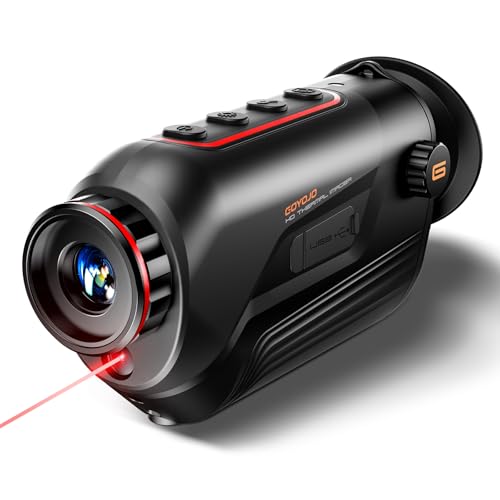
- 15 mm lens for longer-range detection
- 50Hz refresh for smoother thermal viewing
- WiFi app control with 16GB storage
Best For: Hunters and wildlife watchers wanting a longer-range monocular
Inspection-Grade Thermal Clarity – FOXWELL RT280 Thermal Imaging Camera
If you want a thermal imaging camera for hunting, the FOXWELL RT280 is better suited to field inspections and hotspot checks than direct game viewing. Its 320 x 240 LCD, TISR-enhanced resolution, 9 color palettes, and laser targeting help you spot small temperature differences clearly in low-light or confined conditions.
Best For: Hunters who also want a rugged thermal imager for spotting heat anomalies, checking gear, or using it around camp and vehicles.
Pros:
- 320 x 240 LCD with TISR boosting effective thermal detail to 240 x 180.
- Wide 50° x 38° field of view and 25Hz frame rate for smooth viewing.
- Measures from -4°F to 1022°F with high/low temperature alarms.
- Built-in 8GB eMMC storage holds over 20,000 images and videos.
Cons:
- Software analysis is Windows-only, not compatible with Mac.
- Designed more for inspection work than a dedicated hunting monocular.
- Bulkier than pocket-sized field thermal optics.
The RT280 is a capable handheld thermal imager when precision matters, but buyers focused purely on hunting may prefer a purpose-built monocular. Its strengths are clarity, storage, and analysis tools.
Pocketable Thermal Optics – RIX Pocket K2 Hunting Monocular
The RIX Pocket K2 is a strong thermal imaging camera for hunting if you want something truly portable in the field. Its 256 x 192 sensor, 50Hz refresh rate, OLED display, and image stabilization are built to make scanning easier in changing weather and with small hand movements.
Best For: Hunters who want a compact, lightweight thermal monocular they can carry all day.
Pros:
- 256 x 192 thermal resolution with NETD <25mK for subtle temperature differences.
- 50Hz refresh rate and EIS help keep the image smooth and stable.
- 800 x 600 OLED display gives strong contrast and rich detail.
- IP67 waterproof design is ready for humid, foggy, or rainy conditions.
Cons:
- Fixed-focus design limits fine adjustment flexibility.
- Smaller objective lens may not suit users wanting a larger viewing setup.
- Best for handheld observation rather than longer-range inspection tasks.
This model stands out for portability and weather resistance, which makes it practical for hunters who value quick deployment and easy carry. It is a field-friendly monocular rather than a full-size thermal camera.
Long-View Field Scanner – Teslong TTS260 Thermal Monocular
For a thermal imaging camera for hunting, the Teslong TTS260 leans into longer-view observation and comfortable field use. Its 256 x 192 sensor uses Super Resolution to simulate 512 x 384 detail, while the 12mm lens, OLED eyepiece, and 4x digital zoom help you examine distant heat signatures more clearly.
Best For: Hunters who want a monocular built for longer observation sessions and better detail at distance.
Pros:
- Super Resolution boosts 256 x 192 images up to 512 x 384.
- 12mm lens detects thermal signatures up to 218 yards away.
- 0.32-inch 800 x 600 OLED eyepiece offers a larger, clearer view.
- Up to 8 hours of battery life plus 32GB built-in storage.
Cons:
- Recognition distance is listed separately at up to 55 yards, so real-world identification range is more limited than detection range.
- Fixed focus may not appeal to users wanting more manual control.
- Not as pocketable as some smaller monoculars.
The TTS260 is a balanced hunting monocular for users who want better reach, clearer viewing, and enough battery life for extended outings. It is especially appealing if you plan to record and review what you see later.
App-Connected Night Vision – TOPDON TS004 Thermal Monocular
If you want a thermal imaging camera for hunting with modern connectivity, the TOPDON TS004 is built around app-based monitoring and rugged field use. It pairs a 256 x 192 thermal core with a 50Hz refresh rate, 13mm lens, and wireless phone connection so you can review live thermal views and capture footage on the go.
Best For: Hunters who want app connectivity, long battery life, and a durable thermal monocular for outdoor use.
Pros:
- 256 x 192 resolution with smooth 50Hz thermal imaging.
- Wireless TopInfrared App support for live monitoring and recording.
- 11-hour battery life from the 5000mAh battery.
- IP67 waterproof housing and 2-meter drop resistance.
Cons:
- Only the 13mm lens and listed detection ranges are provided, so it is less flexible than models with more optical detail.
- App reliance may not suit users who prefer fully standalone operation.
- At 70 g, it is light, but the larger overall footprint may still feel less pocketable than smaller monoculars.
The TS004 combines strong battery life, app convenience, and outdoor durability in a compact hunting monocular. It is a practical option if you value connected recording and reliable all-weather performance.
Compact Scout – ATN BlazeSeeker-207 Thermal Monocular
ATN BlazeSeeker-207 Thermal Imaging Monocular 256x192; 1-8.8X 12 Micron <35 NETD 50 Hz
Check Price On AmazonIf you want a thermal imaging camera for hunting that stays simple and portable, the ATN BlazeSeeker-207 focuses on the core field features: a 256×192 thermal sensor, 12 μm pixel size, and a detection range up to 345m. It also adds a low <35mK NETD rating, which helps the image react better to temperature differences when scanning brush, timber, or open ground.
Best For: Hunters who want a compact thermal monocular with solid sensitivity, basic recording, and phone connectivity.
Pros:
- 256×192 thermal sensor with up to 345m detection range
- Low <35mK NETD for better temperature sensitivity
- Five viewing palettes, including White Hot and Black Hot
- Built-in photo and video recording with MicroSD support up to 256GB
Cons:
- 25 Hz sensor rating is lower than the 50 Hz models in this roundup
- Field of view and lens options are limited to the supplied configuration
- Best suited to observation rather than premium detail work
This is a straightforward hunting monocular for buyers who value reach, sensitivity, and easy capture features without overcomplicating the setup. The Wi‑Fi app control is a useful bonus if you want quick adjustments or to record from your phone.
Detail Pick – MiLESEEY TNV10PRO Thermal Monocular
The MiLESEEY TNV10PRO is aimed at hunters who want a thermal imaging camera for hunting with stronger image detail and smoother movement. It uses a true 320×240 IR sensor, a 12 μm detector, and a 50 Hz refresh rate, plus an 800×600 OLED display to make targets and textures easier to interpret in the field.
Best For: Hunters who want sharper thermal detail, hot spot tracking, and long battery life for extended night use.
Pros:
- True 320×240 IR sensor with 12 μm detector
- 50 Hz refresh rate and 800×600 OLED display for smoother viewing
- Hotspot Tracking helps lock onto the object in frame
- 4500mAh battery delivers up to 12 hours of runtime
Cons:
- Bulkier than the smallest compact monoculars
- Higher feature set may be more than casual users need
- Built-in memory is helpful, but there is no mention of expandable card storage
Overall, this model stands out for practical field clarity and endurance. The upgraded UHD mode and onboard recording make it a strong fit for hunters who spend long nights observing changing terrain, brush, and heat signatures.
Rugged Classic – FLIR Scout TKx Thermal Monocular
FLIR Scout TKx - Compact Infrared/Thermal Imaging Monocular for Wildlife Viewing, Hunting & Outdoor
Check Price On AmazonThe FLIR Scout TKx is a compact thermal imaging camera for hunting and wildlife viewing built around dependable all-weather use. It offers infrared/thermal detection in complete darkness or glaring light, a 90 meter detection range for human-sized subjects, and a rugged waterproof body for harsh outdoor conditions.
Best For: Hunters and outdoor users who want a durable, compact thermal monocular with simple operation and proven brand reliability.
Pros:
- Detects heat signatures in complete darkness or bright light
- Up to 90 meter detection range for human-sized subjects
- Waterproof build tested to IM-67 submersible standards
- Up to 7 hours of battery life on the rechargeable Li-Ion battery
Cons:
- Detection range is shorter than the longer-reach models here
- No built-in photo or video recording is listed in the supplied notes
- Fewer advanced digital features than newer competitors
If your priority is ruggedness and consistent thermal viewing over advanced extras, the Scout TKx is an easy product to trust. Its high-contrast view options and weather-tight shell make it a practical pick for wet, unpredictable hunts.
Ultra-Portable AMOLED Pick – EM10-256 Thermal Monocular
If you want a thermal imaging camera for hunting that’s easy to carry all night, the EM10-256 is built around a compact 205 g body, a 256×192 VOx detector, and a 10 mm F1.0 lens. It’s aimed at hunters who want clear handheld thermal viewing, simple touch controls, and dependable performance in the field.
Best For: Hunters and outdoor users who want a lightweight thermal monocular with touchscreen convenience and strong battery life.
Pros:
- 256×192 thermal sensor with 50Hz refresh for real-time viewing
- Only 205 g, making it very easy to carry on long hunts
- 1.43″ AMOLED touchscreen with multiple color palettes
- Up to 6 hours of use, plus 20W fast charging support
Cons:
- Fixed focus design may be less flexible than manual-focus units
- Built-in 16GB storage is modest for heavy recording use
- Best detection claims are dependent on conditions and target size
This model stands out for hunters who value portability and an easy viewing experience over larger body styles. Its rugged IP67 build and smart connectivity make it a practical field tool for nighttime use.
App-Connected Budget Hunter – GOYOJO G210 Thermal Monocular
The GOYOJO G210 is a thermal imaging camera for hunting built around a 256×192 sensor, a 10 mm focal lens, and a 25Hz refresh rate. It’s a practical pick if you want app connectivity, several display palettes, and enough battery life for extended evening use.
Best For: Hunters or outdoor users who want a connected, weather-resistant monocular with easy sharing and simple operation.
Pros:
- 256×192 thermal sensor with 12μm detector for thermal viewing
- 6 color palettes plus 4X zoom for flexible target viewing
- WiFi app support for real-time image sharing
- Replaceable battery and over 6 hours of use
Cons:
- 25Hz refresh is lower than faster 50Hz models
- IP65 protection is solid, but not as high as IP67 units
- Manual focus may take more adjustment in the field
For buyers focused on value, the G210 covers the essentials without adding unnecessary complexity. Its app support and weather-resistant build make it a versatile companion for hunting and general outdoor observation.
Long-Range 50Hz Option – GOYOJO G215 Thermal Monocular
If you’re shopping for a thermal imaging camera for hunting with a stronger long-range emphasis, the G215 adds a 15 mm lens, 50Hz thermal imaging, and a 256×192 sensor. It’s designed for users who want quicker motion handling, manual focus control, and a more distance-oriented field of view.
Best For: Hunters and wildlife observers who want a longer-range thermal monocular with smoother 50Hz imaging.
Pros:
- 15 mm lens optimized for longer-range thermal detection
- 50Hz refresh for smoother image updates
- 256×192 resolution with 6 color palettes
- WiFi app control and built-in 16GB storage
Cons:
- Manual focus may require more hands-on adjustment
- Field of view is narrower than some shorter-lens alternatives
- IP65 rating is good, but not the highest ruggedness level
The G215 is the most range-focused option in this group, especially for buyers who want a 15 mm lens and faster 50Hz performance. Its combination of app connectivity, storage, and battery flexibility makes it a capable field tool for hunting and outdoor patrol work.
How We Picked the Best Thermal Imaging Camera for Hunting
We focused on practical hunting performance rather than spec sheets alone. That means prioritizing thermal resolution, refresh rate, lens size, detection usefulness, portability, and value. We also looked at whether each Thermal Imaging Camera for Hunting is easy to carry in the field, fast to power on, and simple to interpret during real-world use.
Quick Comparison: What Matters Most
When comparing models, think in terms of what you need to do most often: scanning wide areas, identifying animals at distance, or moving quietly with a compact handheld unit. Higher resolution generally improves detail, while a higher refresh rate makes motion look smoother. A larger lens can help with longer-range spotting, but it may reduce portability.
Key Buying Factors for a Thermal Imaging Camera for Hunting
Resolution and Image Clarity
Higher sensor resolution helps reveal shape, movement, and separation between targets and background clutter. If you hunt in dense cover or want cleaner identification, prioritize stronger image detail over gimmicks.
Refresh Rate
A 50Hz unit is typically smoother for tracking moving animals and scanning active terrain. Lower refresh rates can still work, but motion may appear less fluid.
Lens and Detection Range
Lens focal length affects how far you can spot heat signatures and how wide your field of view feels. A wider view helps scanning; a longer lens can support detection at distance.
Display, Size, and Ergonomics
Handheld thermal monoculars should be comfortable to hold, easy to aim, and readable in low light. A clear screen and intuitive controls matter more than flashy extras when you’re wearing gloves or working fast.
Battery Life and Field Readiness
Look for enough runtime to cover your typical outing, plus charging options that fit your setup. Field-friendly power matters if you hunt long evenings or spend time away from vehicles.
Who Should Buy Which Thermal Imaging Camera for Hunting?
If you want maximum portability, choose a compact monocular that slips into a pocket or chest rig. If you value clearer target separation, move up to higher-resolution options with stronger processing. Budget-minded buyers can still get solid performance from 256×192 models, especially if their main goal is close-to-mid-range scanning. For hunters who need broader utility beyond hunting, a versatile Thermal Imaging Camera for Hunting with Wi-Fi or super-resolution features may be worth the extra cost.
In short, match the optic to your terrain, typical shooting distance, and how much weight you’re willing to carry. That’s the easiest way to get the most useful thermal performance for your money.