Choosing among telescopes for deep sky viewing comes down to light-gathering power, mount stability, and how easy the scope is to set up on a real observing night.
This roundup focuses on models that make galaxies, nebulae, and star clusters more accessible without wasting money on optics that are too narrow, shaky, or complicated for regular use.
Best 10 Telescopes for Deep Sky Viewing Picks for 2026
Smartphone-Guided Deep-Sky Dobsonian
Celestron StarSense Explorer 8" Dobsonian Telescope
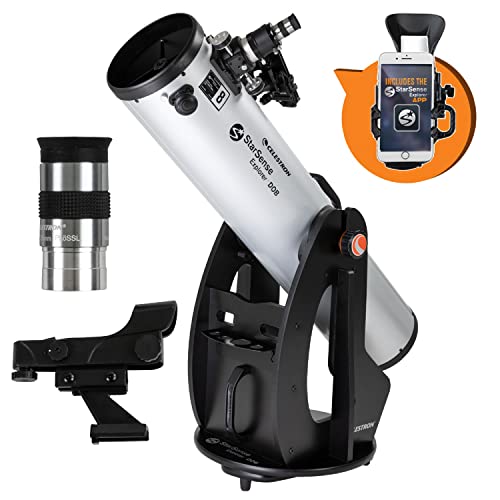
- 8-inch reflector for galaxies, nebulae, and clusters
- StarSense app helps locate targets from your phone
- Stable manual Dobsonian base with XLT coatings
Best For: Beginners who want big-aperture deep-sky viewing with guided target finding.
Portable ED Imaging Refractor
SVBONY SV503 80ED with Flattener

- 80mm ED refractor with reduced chromatic aberration
- 0.8X flattener widens field and improves edge sharpness
- Lightweight OTA with 2-speed focuser for precise imaging
Best For: Deep-sky astrophotographers who want a portable refractor for wide-field imaging.
Fully Automated GoTo 8-Inch SCT
Celestron NexStar 8SE Computerized Telescope

- 8-inch SCT optics for deep-sky objects and planets
- GoTo mount tracks targets from a 40,000+ object database
- SkyAlign speeds setup with easy three-object alignment
Best For: Observers who want computerized finding and tracking in a compact 8-inch telescope.
Budget 150mm Equatorial Reflector
MEEZAA 150EQ Newtonian Telescope
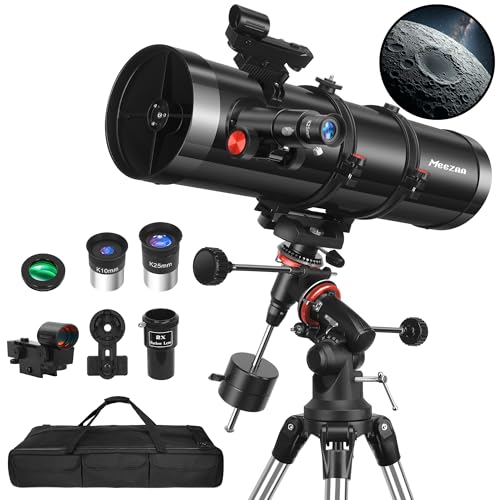
- 150mm aperture for strong light-gathering
- Equatorial mount with slow-motion controls
- Includes eyepieces, Barlow, filter, and carry bag
Best For: Beginners and families wanting an affordable large-aperture starter scope.
Computerized Deep-Sky Pick

- 40,000+ object database with tracking
- 127mm Mak optics for high-contrast views
- Portable and quick to align with SkyAlign
Best For: Observers who want easy object-finding in a compact GoTo telescope
Manual Deep-Sky Starter

- 130mm reflector with strong light gathering
- Equatorial mount with slow-motion controls
- Includes eyepieces, StarPointer, and software
Best For: Beginners wanting a larger-aperture manual scope for learning the night sky
Portable Travel Deep-Sky Option
HOROX Maksutov-Cassegrain 80mm
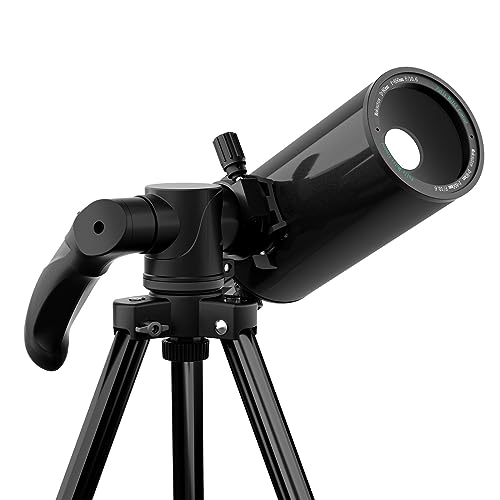
- Compact 22cm tube for easy travel
- 80mm objective lens for dim targets
- Fast focus system with sturdy tripod
Best For: Travelers who want a compact telescope for camping, hiking, and quick sessions
Smartphone-Guided Beginner Pick
Celestron StarSense Explorer LT 114AZ
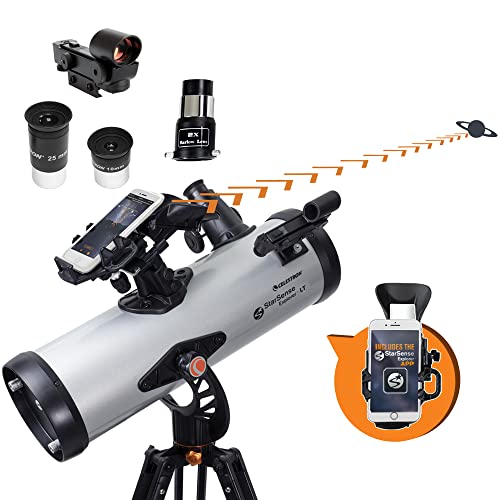
- StarSense app helps locate targets quickly
- 114mm reflector supports bright deep-sky views
- Simple manual altazimuth mount with slow motion control
Best For: Beginners who want guided finding and easy setup
Computerized Compact Choice

- Locates and tracks 40,000+ objects
- Compact enough for camping and travel
- SkyAlign setup speeds initial alignment
Best For: Travel-friendly observers who want computerized guidance
Premium App-Enabled Upgrade
Celestron StarSense Explorer DX 5"

- 130mm Schmidt-Cassegrain optics with StarBright XLT
- StarSense app guides you to tonight’s best targets
- Dual-axis slow-motion controls improve manual tracking
Best For: Backyard users wanting premium optics and app guidance
Smartphone-Guided Deep-Sky Dobsonian – Celestron StarSense Explorer 8" Dobsonian Telescope
If you want telescopes for deep sky viewing that make finding objects easier, this 8-inch Dobsonian leans hard into guided observing without losing aperture. The StarSense Explorer app uses your phone to help you locate targets, while the large reflector optics are built to show bright nebulae, galaxies, clusters, and planets with a wide, easy-to-use manual mount.
Best For: Beginners and casual observers who want a large-aperture deep-sky telescope with smartphone-assisted target finding.
Pros:
- 8-inch reflector gathers strong light for deep-sky favorites like the Orion Nebula and Andromeda Galaxy.
- StarSense app and dock help you navigate to targets with on-screen arrows and sky recognition.
- Ultra-stable manual Dobsonian base keeps viewing smooth and simple.
- XLT coatings and 2" Crayford focuser support sharp, vivid views.
Cons:
- Manual operation means you still do the observing and tracking by hand.
- Bulky 43.4-pound build is not the most travel-friendly option.
Overall, this is a strong pick if you want big-aperture deep-sky performance plus app-assisted object location. It balances ease of use with the light-gathering power many observers want for galaxies and nebulae.
Portable ED Imaging Refractor – SVBONY SV503 80ED with Flattener
For telescopes for deep sky viewing with an astrophotography focus, this 80mm ED refractor is built around cleaner stars and a wider imaging field. The included 0.8X field flattener shortens exposure times, expands the field of view, and helps keep stars sharp across the frame, which makes it a practical choice for deep-sky imaging sessions.
Best For: Astrophotographers and portable setup users who want a lightweight refractor for deep-sky imaging.
Pros:
- 80mm ED glass with S-FPL51 helps reduce chromatic aberration for higher-contrast images.
- 0.8X focal reducer/field flattener improves edge-to-edge sharpness and widens the field.
- 2" dual-speed focuser with 1:10 micro-adjustment supports precise focus.
- Lightweight 2.5 kg OTA is easier to pair with a mount for travel-friendly imaging.
Cons:
- OTA-only setup means you still need a compatible mount and camera gear.
- 80mm aperture is more about imaging finesse than maximum visual brightness.
This is a sensible choice if your deep-sky goals lean toward wide-field astrophotography rather than big visual viewing. The included flattener and lightweight tube make it easier to build a clean, portable imaging rig.
Fully Automated GoTo 8-Inch SCT – Celestron NexStar 8SE Computerized Telescope
If you want telescopes for deep sky viewing that simplify target acquisition, the NexStar 8SE combines an 8-inch Schmidt-Cassegrain optical tube with a fully computerized GoTo mount. Its 40,000+ object database, SkyAlign, and tracking make it easier to spend time observing galaxies and globular clusters instead of hunting for them.
Best For: Observers who want a compact 8-inch computerized telescope for deep-sky objects and planets.
Pros:
- 8-inch SCT optics gather enough light for galaxies, globular clusters, and lunar detail.
- GoTo mount with 40,000+ object database automatically slews and tracks targets.
- SkyAlign speeds up setup by using any three bright stars or planets.
- Compact form factor makes the 8-inch aperture more manageable than many larger scopes.
Cons:
- Requires power for computerized operation, so it is less simple than a purely manual scope.
- Manual focus and fork-arm design may not suit users seeking a purely grab-and-go setup.
The NexStar 8SE is a strong step-up option if you want the convenience of automation without giving up an 8-inch aperture. It is especially appealing for observers who want reliable deep-sky access with minimal star-hopping.
Budget 150mm Equatorial Reflector – MEEZAA 150EQ Newtonian Telescope
For buyers comparing telescopes for deep sky viewing on a tighter budget, this 150mm Newtonian reflector offers a large aperture and a straightforward manual setup. The 650mm focal length, equatorial mount, and included accessories make it a practical starter package for viewing the Moon, planets, and brighter deep-sky objects.
Best For: Beginners, families, and value-focused shoppers who want a large-aperture entry telescope.
Pros:
- 150mm aperture gathers plenty of light for brighter deep-space targets and lunar detail.
- Equatorial mount with slow-motion controls supports smoother manual tracking.
- Includes two eyepieces, 2X Barlow, phone adapter, moon filter, and carry bag.
- Quick, tool-free assembly makes it easier to get started.
Cons:
- Manual use means learning alignment and tracking skills over time.
- Portable, beginner-friendly design is less specialized than premium deep-sky or imaging scopes.
This MEEZAA package makes sense if you want a big aperture without a high entry cost or complicated setup. It is best seen as a versatile starter telescope that can handle casual deep-sky viewing while keeping the kit complete.
Computerized Deep-Sky Pick – Celestron NexStar 127SLT
If you want telescopes for deep sky viewing that also make finding objects easier, the Celestron NexStar 127SLT is built around computerized GoTo convenience. Its 127mm Maksutov-Cassegrain optics gather solid light for observing planets, the Orion Nebula, and other targets, while the 40,000+ object database helps you spend more time viewing and less time searching.
Best For: Beginners and casual observers who want a portable computerized telescope for backyard sessions and dark-sky trips.
Pros:
- 40,000+ object database with automatic tracking
- 127mm aperture and high-contrast Maksutov-Cassegrain optics
- Compact, lightweight, and easy to transport
- SkyAlign setup gets you observing in minutes
Cons:
- Requires battery power for computerized operation
- Single-fork arm design is more convenience-focused than ultra-stable
Overall, this is a strong choice if you want a deep-sky-friendly telescope that reduces setup friction and helps you locate objects quickly. The mix of portability, computerized navigation, and sharp high-contrast optics makes it especially appealing for on-the-go stargazing.
Manual Deep-Sky Starter – Celestron AstroMaster 130EQ
For buyers comparing telescopes for deep sky viewing on a beginner-friendly budget, the Celestron AstroMaster 130EQ stands out for its 130mm Newtonian reflector and equatorial mount. It is designed to deliver bright views of celestial objects while keeping pointing and tracking smooth with manual slow-motion controls.
Best For: Beginners who want a larger-aperture manual telescope for learning the sky and viewing brighter deep-sky targets.
Pros:
- 130mm optics provide strong light-gathering ability
- Equatorial mount with slow-motion control knobs
- Quick setup with no tools required
- Includes 20mm and 10mm eyepieces plus StarPointer
Cons:
- Manual operation means you must locate objects yourself
- Less compact than smaller travel-friendly telescopes
This model makes sense if you want a straightforward first telescope with more aperture than entry-level starter scopes. Its combination of a stable mount, decent accessory bundle, and 130mm reflector optics makes it a practical entry into deeper-sky observing.
Portable Travel Deep-Sky Option – HOROX Maksutov-Cassegrain 80mm
If portability is the priority in telescopes for deep sky viewing, this HOROX Maksutov-Cassegrain model offers a compact 850mm optical tube and a lightweight travel-friendly setup. Its 80mm objective lens is positioned for nighttime viewing of dimmer objects such as Saturn, Jupiter, and the M31 galaxy, while the folded optical design helps keep the tube short and easy to carry.
Best For: Travelers and casual observers who want a compact telescope for quick setup on camping or hiking trips.
Pros:
- Compact 22cm tube with 850mm focal length
- 80mm objective lens for viewing dim, distant objects
- Patented focus indicator and fast focus design
- Sturdy aluminum alloy tripod with broad base
Cons:
- 80mm aperture is smaller than larger deep-sky scopes
- Altazimuth mount is simpler but less specialized for tracking
This is a good pick if you want an easy-to-carry telescope that still gives you access to nighttime observing. It is less about maximum aperture and more about convenience, fast setup, and a compact form factor that fits travel use well.
Smartphone-Guided Beginner Pick – Celestron StarSense Explorer LT 114AZ
If you want telescopes for deep sky viewing without a steep learning curve, the Celestron StarSense Explorer LT 114AZ is built to make finding targets easier. The smartphone-guided app shows on-screen arrows and generates a list of tonight’s best objects based on your time and location, so you can spend less time searching and more time observing bright nebulae, galaxies, and star clusters.
Best For: Beginners who want app-assisted object finding and a simple manual setup for casual deep-sky sessions.
Pros:
- StarSense Explorer app uses sky recognition to help pinpoint the telescope’s position.
- 114mm Newtonian reflector delivers views of the Orion Nebula and Andromeda Galaxy.
- Manual altazimuth mount with altitude slow motion adjustment keeps tracking straightforward.
- Includes 25mm and 10mm eyepieces plus a 2x Barlow lens.
Cons:
- Manual operation means you still nudge the scope yourself while observing.
- Best suited to brighter deep-sky targets rather than faint, challenging objects.
This is a practical entry point if you want smartphone guidance and a solid aperture in a portable beginner-friendly package. It balances ease of use with enough light-gathering ability to make deep-sky viewing rewarding from the city or darker skies.
Computerized Compact Choice – Celestron NexStar 102SLT
For buyers comparing telescopes for deep sky viewing, the Celestron NexStar 102SLT stands out for its computerized database and compact size. It can locate and track more than 40,000 stars, galaxies, and nebulae, while the SkyAlign setup gets you observing in minutes for quick trips to dark-sky sites.
Best For: Observers who want computerized object locating in a portable refractor for travel and weekend use.
Pros:
- Computerized hand control can locate and track a large catalog of objects.
- Compact, portable design is easy to carry for camping or dark-sky trips.
- SkyAlign setup is designed to get you ready in minutes.
- Includes 20mm and 9mm eyepieces plus a free Starry Night software download.
Cons:
- Refractor design and 102mm aperture are more modest than larger deep-sky scopes.
- Needs external power or AA batteries, which are not included.
This model makes sense if portability and automated object finding matter more than maximum aperture. It is a convenient option for casual deep-sky observing sessions where fast setup and tracking are a priority.
Premium App-Enabled Upgrade – Celestron StarSense Explorer DX 5"
If you want telescopes for deep sky viewing with a stronger optical package, the Celestron StarSense Explorer DX 5″ adds a 130mm Schmidt-Cassegrain tube and StarBright XLT coatings. The StarSense app still handles object finding with on-screen arrows and a curated list of targets, but this version is better suited to users who want a more compact scope with sharper, higher-contrast views.
Best For: Backyard observers who want smartphone-guided targeting plus premium Schmidt-Cassegrain optics.
Pros:
- 130mm Schmidt-Cassegrain optics with StarBright XLT coatings improve contrast.
- StarSense app provides smartphone-assisted target finding and a list of tonight’s best objects.
- Dual-axis slow-motion controls make manual tracking smoother.
- Compact tube design is easier to manage than many larger deep-sky scopes.
Cons:
- Manual altazimuth mount still requires you to follow and center targets yourself.
- More expensive and less grab-and-go simple than basic beginner reflectors.
This is the strongest all-around option here if you want a step up in optical quality without giving up app guidance. It fits observers who value a compact design, better contrast, and a more premium deep-sky viewing experience.
How We Picked the Best Telescopes for Deep Sky Viewing
For Telescopes for Deep Sky Viewing, we prioritized aperture, optical quality, mount type, and practical ease of use. We also looked for designs that fit different experience levels, from simple manual Dobsonians to app-assisted and computerized GoTo systems.
We gave extra weight to models that balance light gathering with usable focal length, solid tracking, and setup simplicity, since frustration at the eyepiece can matter as much as raw specs.
Quick Comparison
If you want the strongest light-gathering for the money, larger Dobsonian and Newtonian options are usually the best value. If you want easier object location, app-guided and computerized models can reduce the learning curve. Compact catadioptric and refractor designs are better when portability, storage, or travel matter more than maximum aperture.
Key Buying Factors for Telescopes for Deep Sky Viewing
Aperture
Aperture is the biggest driver of deep-sky performance because it determines how much light reaches the eyepiece. In practice, bigger is usually better for faint galaxies and nebulae, as long as the mount can support the tube steadily.
Mount Stability
A stable alt-azimuth or Dobsonian base is often better for beginners than a shaky equatorial setup. For longer observing sessions or astrophotography-friendly use, a well-made equatorial or computerized mount can improve tracking and comfort.
Optical Design
Newtonian reflectors tend to offer excellent aperture for the price. Schmidt-Cassegrain and Maksutov-Cassegrain models are more compact and easier to store, while refractors can deliver crisp, low-maintenance views but usually with smaller apertures at the same budget.
Focal Ratio and Focal Length
Shorter focal ratios are often easier for wider-field sweeping of star clusters and larger nebulae. Longer focal length designs can be useful for brighter compact targets, but they are not always the most efficient choice if your main goal is faint deep-sky objects.
Who Should Buy Which Telescopes for Deep Sky Viewing?
Beginners who want the simplest path to better views should look at large manual Dobsonians or smartphone-assisted scopes. Observers who value object finding help and tracking should consider app-enabled or computerized models. Travelers and apartment dwellers may prefer compact catadioptric or refractor options, even if they give up some aperture.
If your main goal is serious deep-sky viewing, prioritize the largest stable aperture you can realistically store, transport, and set up often. The best telescope is the one you will actually use under clear skies.