A good mini PC can replace a bulky tower for everyday work, streaming, light creative tasks, and even casual gaming. The best models balance size, speed, ports, and upgrade potential.
In this roundup, we focus on compact desktops that make sense for different budgets and use cases, from basic home office setups to more powerful AMD-based systems.
Best 10 Mini PC Picks for 2026
Gaming Mini PC
GMKtec M7 Ultra Ryzen 7 PRO 6850U

- Ryzen 7 PRO 6850U with Radeon 680M graphics
- OCuLink, dual USB4, HDMI 2.1, quad-display support
- Dual 2.5GbE LAN plus WiFi 6E and BT 5.2
Best For: gamers and power users wanting compact performance and expansion
Budget Mini PC
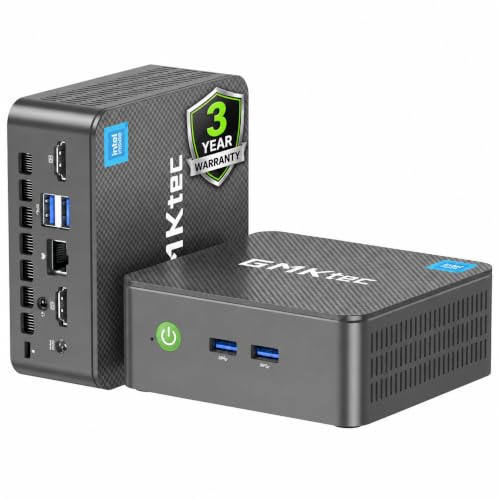
- Intel N95 processor for everyday tasks
- Dual HDMI supports two 4K@60Hz displays
- 8GB RAM, 256GB SSD, and Wake on LAN
Best For: basic home and office use on a budget
Balanced Work Mini PC

- Ryzen 7 7730U for productive multitasking
- Triple 4K@60Hz display support
- 16GB RAM and 1TB SSD included
Best For: remote work and light creative use with multiple monitors
Dual-LAN Mini PC
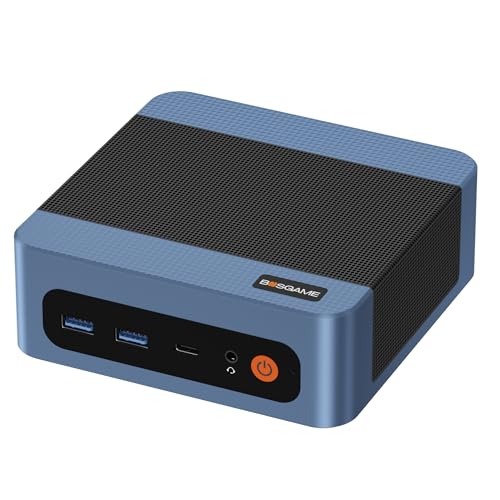
- Ryzen 5300U for smooth everyday productivity
- Dual 2.5G LAN with triple-display support
- 16GB RAM, 512GB SSD, plus extra M.2 slot
Best For: office and homelab users who need strong networking
High-Performance Pick
GMKtec M5 Ultra Ryzen 7 Mini PC

- Ryzen 7 7730U with 8 cores/16 threads
- 32GB RAM, 512GB SSD, expandable storage
- Dual 2.5G LAN, WiFi 6E, triple-display support
Best For: Power users who want a fast all-round mini pc
Value Productivity Pick

- Ryzen 5 3501U with Radeon Vega 8 graphics
- Dual Gigabit LAN and triple-display support
- 8GB RAM, 256GB SSD, upgrade-friendly
Best For: Budget-minded buyers needing a practical office mini pc
Budget Basic Pick

- Intel N4500 with very low 6W power use
- Dual HDMI 2.0 for two 4K displays
- 8GB RAM, 256GB SSD, expandable to 4TB
Best For: Light daily use and compact home entertainment setups
Triple-Display Budget Pick

- Ryzen 5 3500U with integrated Vega 8 graphics
- 8GB DDR4 RAM and 256GB SATA SSD
- Triple 4K output with HDMI, DP, and USB-C
Best For: Everyday work and compact triple-monitor setups
Office Connectivity Pick
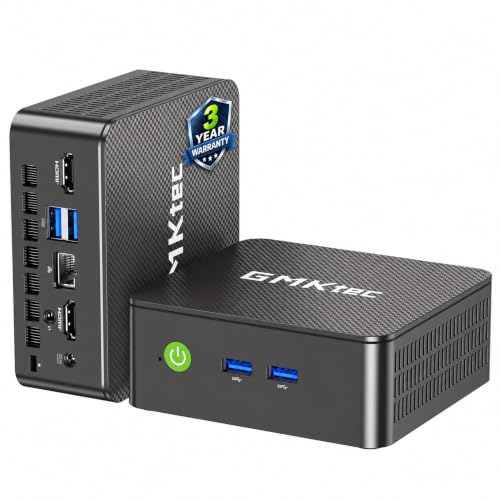
- Core i3-10110U for responsive productivity
- 16GB dual-channel RAM and 512GB SSD
- Wi-Fi 6, BT 5.2, and 2.5GbE Ethernet
Best For: Business users who need fast networking and dual 4K displays
Gaming Mini PC – GMKtec M7 Ultra Ryzen 7 PRO 6850U
If you want a mini pc that leans more toward gaming and heavy multitasking than basic office work, the GMKtec M7 Ultra is built for that job. Its Ryzen 7 PRO 6850U, Radeon 680M graphics, and high-bandwidth OCuLink support make it a strong pick for users who want compact power with flexible display and expansion options.
Best For: Gamers, power users, and creators who want a compact system with better upgrade and eGPU potential.
Pros:
- Ryzen 7 PRO 6850U with Radeon 680M graphics for strong everyday and gaming performance
- Dual USB4, HDMI 2.1, and support for quad-screen 8K display output
- OCuLink port offers higher bandwidth for lower-lag eGPU setups
- Dual 2.5GbE LAN, WiFi 6E, and Bluetooth 5.2 for flexible connectivity
Cons:
- Built-in graphics are still integrated, so it will not match a dedicated GPU
- Performance modes and expansion features may be more than casual users need
- Gaming claims depend on the title and settings
This is a well-equipped mini pc for buyers who want more than a simple desktop replacement. The combination of fast networking, multi-display support, and OCuLink makes it stand out if you plan to push the system harder over time.
Budget Mini PC – GMKtec G3S Intel N95
The GMKtec G3S is a budget-friendly mini pc aimed at everyday tasks like office work, browsing, and home entertainment. With an Intel N95 processor, 8GB of RAM, and a 256GB SSD, it focuses on simple, responsive use rather than heavy workloads.
Best For: Basic home, office, and media use where low cost and small size matter most.
Pros:
- Intel N95 processor is positioned as a step up from several lower-end N-series chips
- Dual HDMI 2.0 outputs support two 4K@60Hz displays
- Includes 8GB RAM and a 256GB SSD for quick boot and everyday responsiveness
- Supports Wake on LAN, PXE boot, RTC wake, and auto power on
Cons:
- 8GB RAM and 256GB storage are modest for heavier multitasking
- WiFi 5 and Gigabit Ethernet are less advanced than faster newer options
- Best suited to light workloads rather than demanding creative or gaming use
This mini pc makes sense if you need a compact, practical machine for routine tasks. It covers the basics well and adds useful display and remote-management features without pushing the price into higher-performance territory.
Balanced Work Mini PC – ACEMAGIC K1 Ryzen 7 7730U
The ACEMAGIC K1 is a well-rounded mini pc for buyers who want a stronger all-purpose desktop in a compact shell. Its Ryzen 7 7730U processor, 16GB of RAM, and 1TB SSD make it a capable fit for productivity, light editing, and 1080p gaming.
Best For: Remote workers, multitaskers, and light creators who want a compact workstation with triple-screen support.
Pros:
- Ryzen 7 7730U offers strong performance for office work and multitasking
- Triple 4K@60Hz display support through HDMI, DP, and USB ports
- 16GB RAM and 1TB SSD provide a roomy and responsive starting setup
- Dual-vent cooling is designed to maintain 15-28W TDP performance
Cons:
- Integrated Radeon graphics are better for light gaming than demanding titles
- It is not intended to replace a dedicated editing or gaming tower
- Power draw and feature set may be more than needed for basic browsing
This is a practical mini pc for people who want one box to handle work, media, and a little gaming. The triple-display support and larger storage make it especially appealing for desk setups that need flexibility.
Dual-LAN Mini PC – BOSGAME E5 Ryzen 5300U
The BOSGAME E5 is a compact mini pc built around the Ryzen 5300U, making it a sensible choice for office work, design tasks, and home use. It adds triple-display output and dual 2.5G LAN, which gives it more network and desktop flexibility than many entry-level systems.
Best For: Office users, homelab builders, and anyone who wants dual 2.5G networking in a small desktop.
Pros:
- Ryzen 5300U with Radeon graphics handles everyday productivity smoothly
- Triple display support via HDMI, DisplayPort, and USB-C
- Dual 2.5G LAN is useful for soft routing, NAS, or home lab setups
- 16GB RAM, 512GB SSD, and an extra M.2 slot for more storage
Cons:
- Processor is a 4-core chip, so it is not aimed at heavy workloads
- WiFi 5 and BT 5.0 are older than newer wireless standards
- Included RAM is listed at 16GB with a maximum of 16GB in the notes
This mini pc stands out if your priorities are connectivity and practical desktop use rather than raw speed. The dual LAN setup and triple-display support make it especially appealing for office and network-focused buyers.
High-Performance Pick – GMKtec M5 Ultra Ryzen 7 Mini PC
If you want a mini pc that can handle office work, light content creation, and gaming in one compact box, the GMKtec M5 Ultra is built for that kind of mixed-use setup. Its Ryzen 7 7730U, 32GB of dual-channel RAM, and 512GB SSD give it a stronger starting point than many entry-level mini desktops, while the dual 2.5G LAN and WiFi 6E make it especially useful for network-heavy or always-on tasks.
Best For: Users who want a versatile mini pc for productivity, triple-display setups, light gaming, and small-server or routing use.
Pros:
- Ryzen 7 7730U with 8 cores and 16 threads for strong everyday performance
- 32GB DDR4 RAM and 512GB PCIe SSD included, with room to expand
- Supports triple displays and 4K@60Hz output for flexible workstation use
- Dual 2.5G LAN plus WiFi 6E and Bluetooth 5.2 for fast connectivity
Cons:
- Integrated graphics limit it to lighter gaming and graphics workloads
- Storage and memory upgrades are supported but not included
Overall, this is the most capable all-around mini pc in the group if you want more headroom for multitasking and network use. It is a practical choice when you need performance without moving to a full-size desktop.
Value Productivity Pick – C4 Plus Ryzen 5 Mini PC
The C4 Plus is a practical mini pc for everyday office work, web browsing, streaming, and light multitasking. It pairs a Ryzen 5 3501U processor with 8GB of RAM and a 256GB SSD, and it adds useful business-friendly features like dual Gigabit LAN, triple-display support, and USB 3.2 Gen 2 ports for faster peripherals and transfers.
Best For: Home offices, business desks, and compact setups that need solid connectivity and multi-monitor support.
Pros:
- Ryzen 5 3501U with Radeon Vega 8 graphics for daily productivity
- Dual Gigabit LAN and WiFi 5 for flexible wired and wireless networking
- Triple-display output support for multitasking across multiple screens
- Expandable RAM up to 32GB plus an extra NVMe SSD slot
Cons:
- 8GB/256GB base configuration is modest for heavier workloads
- USB-C video output is limited to 1080p rather than 4K
This mini pc focuses on useful office features instead of raw power, which makes it a sensible pick for cost-conscious buyers. If your priority is a compact desktop with strong connectivity and upgrade options, it fits well.
Budget Basic Pick – Bmax B3 Pro N4500 Mini PC
If you need a simple mini pc for routine tasks, the Bmax B3 Pro keeps things compact and efficient. Its Intel N4500 processor, 8GB RAM, and 256GB SSD are aimed at everyday use, while dual HDMI output, WiFi 5, and Gigabit Ethernet make it easy to build a tidy home office or HTPC setup.
Best For: Light office work, home entertainment, and users who want a low-power mini pc with dual 4K display support.
Pros:
- Intel N4500 with low 6-watt power consumption for efficient operation
- Dual HDMI 2.0 ports support two 4K@60Hz displays
- Expandable dual M.2 storage design up to 4TB
- WiFi 5, Bluetooth 5.0, and Gigabit Ethernet for basic connectivity
Cons:
- 2-core processor is best suited to light workloads only
- Base 8GB RAM and 256GB SSD may feel limited for heavier multitasking
As a mini pc for straightforward daily use, this model emphasizes efficiency and simplicity over speed. It is best suited to buyers who want a compact machine for basic computing and media playback.
Triple-Display Budget Pick – BOSGAME E4 Air Mini PC
If you want a mini pc for everyday productivity, the BOSGAME E4 Air keeps the focus on dependable performance rather than flashy extras. Its Ryzen 5 3500U, 8GB of DDR4 memory, and 256GB SATA SSD make it a practical fit for web browsing, spreadsheets, streaming, and light editing.
Best For: Budget-minded office users, home users, and anyone who wants triple-monitor support in a compact desktop.
Pros:
- Ryzen 5 3500U with 4 cores and 8 threads for steady daily multitasking
- Triple 4K output via HDMI, DisplayPort, and USB-C
- Dual Gigabit LAN plus Wi-Fi 5 and Bluetooth 5.0 for flexible connectivity
- Supports Windows 11, Ubuntu, and Linux
Cons:
- 8GB RAM may feel limited for heavier multitasking
- 256GB SATA SSD is modest for large media libraries
- Wireless is Wi-Fi 5 rather than Wi-Fi 6
This mini pc is a good fit if you want a simple, space-saving system for work and media without paying for more power than you need. The triple-display support and dual LAN are especially appealing for desk setups and light server-style use.
Office Connectivity Pick – GMKtec G3 PRO Mini PC
The GMKtec G3 PRO is a mini pc built for office tasks, business use, and light server-style workloads. Its Core i3-10110U, 16GB of dual-channel RAM, and 512GB SSD give it a stronger everyday responsiveness profile, while the dual HDMI outputs and fast networking options make it easy to slot into a practical workstation.
Best For: Office workers, light business workloads, and users who value wired networking and dual-monitor support.
Pros:
- Core i3-10110U is positioned for strong single-core performance in everyday apps
- 16GB dual-channel DDR4 RAM and 512GB storage for smoother multitasking
- Two HDMI 2.0 ports support 4K@60Hz dual-screen setups
- Wi-Fi 6, Bluetooth 5.2, and 2.5GbE Ethernet for modern connectivity
Cons:
- Integrated graphics are aimed at productivity, not gaming-heavy use
- Storage expansion is available, but the included SSD may still be limiting for large libraries
- Designed more for utility than premium aesthetics
If your priority is a compact business desktop with strong connectivity and easy dual-display support, this model fits well. It balances speed, ports, and network flexibility in a way that suits office desks, monitoring setups, and basic home server duties.
Well-Rounded Multitasker – KAMRUI Pinova P2 Mini PC
The KAMRUI Pinova P2 is a well-rounded mini pc for users who want a newer AMD processor, generous memory, and flexible display output. With a Ryzen 7330U, 16GB LPDDR4X RAM, and a 256GB SSD, it is set up for smooth multitasking, faster boot times, and compact desktop use in both home and business settings.
Best For: Users who want a compact all-rounder for productivity, multitasking, and triple-monitor setups.
Pros:
- Ryzen 7330U offers 4 cores, 8 threads, and up to 4.3GHz boost
- 16GB LPDDR4X memory supports smooth multitasking
- Triple 4K output through HDMI, DP, and USB-C
- Two storage expansion slots provide room for future upgrades
Cons:
- 256GB included SSD is only a starting point for larger files
- No dedicated graphics, so it is aimed at productivity rather than gaming
- Storage expansion is helpful, but added drives are not included
This is the most balanced pick of the group if you want a mini pc that feels modern without going overboard. The stronger Ryzen 7330U platform, quiet cooling, and triple-display support make it a flexible choice for workstations, travel, and small desks.
How We Picked These Mini PC Options
We looked for a mix of performance tiers so this list covers entry-level, midrange, and higher-powered builds. Priority factors included processor class, memory and storage configurations, display support, connectivity, and overall value for the money.
Because a Mini PC can serve very different buyers, we also weighed whether each system is better suited to simple web and office work, multitasking, media playback, or heavier workloads like coding, light content creation, and gaming.
Quick Comparison
At a glance, the lower-power Intel N-series systems are the best fit for basic browsing, documents, and streaming. Midrange Ryzen 5 and Ryzen 7 models offer noticeably better multitasking, smoother app switching, and a more future-proof experience. The strongest configurations in this group are the best choice if you want a Mini PC that can handle demanding day-to-day use without feeling cramped.
Key Buying Factors for a Mini PC
Processor Performance
The CPU is the biggest determinant of how responsive a Mini PC feels. For light use, entry-level chips are fine. For multiple browser tabs, office apps, video calls, and heavier multitasking, choose a Ryzen 5, Ryzen 7, or Core i3-class system where possible.
Memory and Storage
8GB RAM is workable for basic tasks, but 16GB is a better baseline for most buyers. If you want smoother multitasking or plan to keep the system for several years, 32GB is even better. For storage, SSDs are far preferable to mechanical drives, and 512GB or more gives you more breathing room for apps and files.
Ports and Display Support
Check for the USB, HDMI, Ethernet, and wireless options you need before buying. If you plan to run dual monitors, confirm the system supports the right display outputs and resolutions. A Mini PC should save space without forcing compromises in everyday connectivity.
Cooling and Expandability
Compact systems vary in thermals and upgrade options. If you expect long work sessions or heavier loads, look for a model with better cooling and room for RAM or storage upgrades. That flexibility can make a big difference over time.
Who Should Buy Which Mini PC?
If you need a low-cost desktop for email, streaming, and schoolwork, an entry-level Mini PC is usually enough. If you work from home, multitask heavily, or want better longevity, a Ryzen-based model with 16GB RAM or more is the safer choice. Users who want the most headroom for performance, multiple displays, or more demanding apps should focus on the higher-end Mini PC options in this roundup.
For most buyers, the best approach is to match the system to the workload rather than simply buying the fastest model available. A well-chosen Mini PC can offer an excellent balance of size, efficiency, and everyday performance.