Accurate guiding can make the difference between sharp, detailed deep-sky images and frames softened by star trails. The right guide scope gives your guide camera a dependable reference star without adding unnecessary weight or complexity to your imaging setup.
We compare 10 options across compact mini guide scopes, helical-focuser models, multi-use finders, and larger refractors. Pay close attention to focal length, mounting, focus control, camera compatibility, and how each scope balances with your primary telescope.
Best 10 Telescope Guide Scopes for Deep Sky Imaging Picks for 2026
Lightweight APO Guide Scope

- 50mm f/4.8 APO doublet with ED glass
- 242mm focal length and helical focuser
- Includes finder stalk and Vixen-style plate
Best For: Portable guiding and flexible astrophotography setups
Wide-Field ED Imaging Scope
SVBONY SV503 80ED with Field Flattener

- 80mm ED refractor with 0.8x reducer
- Sharp edge-to-edge imaging for larger sensors
- Dual-speed 2-inch focuser for precise focus
Best For: Wide-field deep-sky imaging of galaxies and nebulae
Precision Helical Guide Scope
Astromania 60mm FMC Guide Scope

- 60mm aperture with 240mm focal length
- Helical focuser supports precise, rotation-resistant focus
- Includes rings and Synta-style mounting plate
Best For: Flexible finding and autoguiding with secure camera attachment
Beginner Deep-Sky Telescope

- 130mm Newtonian reflector for bright visual views
- Equatorial mount with slow-motion controls
- Includes eyepieces and StarPointer finder
Best For: Beginners prioritizing visual deep-sky observing
Best Helical-Focus Guide Scope
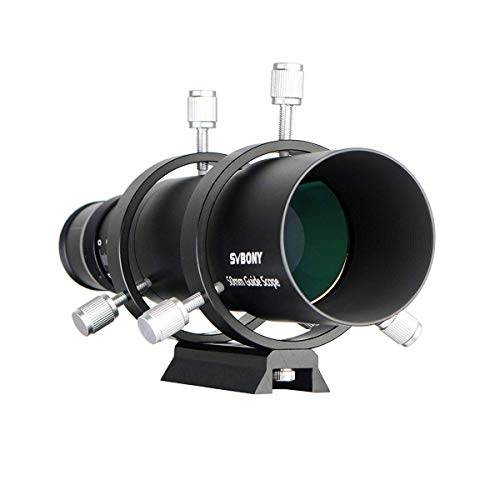
- 8mm helical focuser for fine adjustments
- Up to 30mm additional back-travel
- Includes rings and dovetail mounting bar
Best For: Astrophotographers wanting precise manual focusing in a compact 50mm guide scope.
Best Complete Telescope Setup
Celestron StarSense Explorer DX 130

- 130mm reflector for bright deep-sky views
- Smartphone-assisted object navigation
- Includes two eyepieces and preassembled mount
Best For: Beginners learning to locate and observe deep-sky targets.
Best Multi-Use Guide Scope
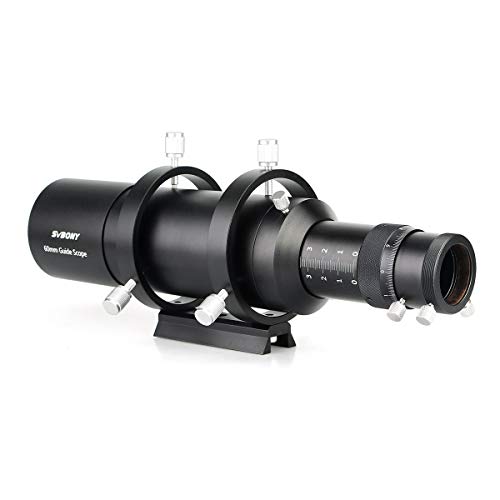
- Helical focuser maintains device orientation
- Up to 35mm additional back-travel
- Can double as a 9.6x60 finder
Best For: Astrophotographers seeking a guiding scope with optional finder-scope versatility.
Compact CMOS Guide Camera

- 1.23MP color CMOS sensor with 3.75-micron pixels
- Up to 80% peak QE and low read noise
- USB 2.0, ST4, and broad software compatibility
Best For: Compact autoguiding and planetary imaging setups
Wide-Field Mini Guide Scope
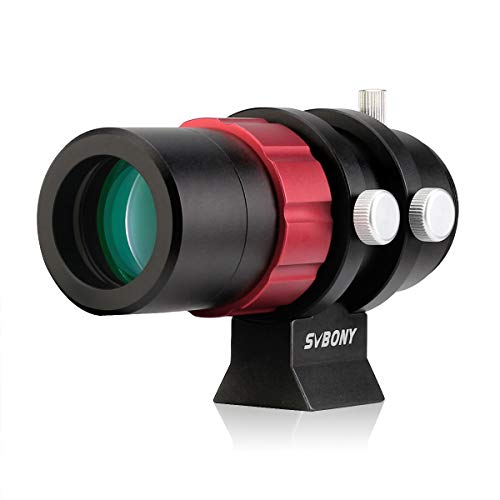
- 30mm achromatic optics with F4 aperture
- 2.86-degree field of view for quick target finding
- 1.25-inch and M42 camera interfaces
Best For: Wide-field guiding with compatible astronomy cameras
Adjustable Focuser Guide Scope
SV165 40mm F4 Mini Guide Scope

- Designed for telescopes up to 700mm focal length
- Front focuser with scale and locking ring
- Six-point guide ring for coaxiality adjustment
Best For: Adjustable guiding on medium-focal-length imaging rigs
Lightweight APO Guide Scope – Sky-Watcher EvoGuide 50DX
The Sky-Watcher EvoGuide 50DX is a compact choice for anyone comparing telescope guide scopes for deep sky imaging. Its 50mm f/4.8 apochromatic doublet, 242mm focal length, and included mounting options make it practical for guiding, visual finding, or conversion into a fast astrograph with an optional adapter.
Best For: Portable astrophotography setups that need a lightweight, versatile guide scope.
Pros:
- ED glass supports contrast-rich views and reduced chromatic aberration.
- Includes a finder stalk and Vixen-style mounting plate.
- Built-in T-threads allow optional astrograph conversion.
- Compact 50mm design with a 1.25-inch helical focuser.
Cons:
- The adapter for astrograph use is optional and not included.
- Its 50mm aperture may offer less light than larger guide scopes.
The EvoGuide 50DX stands out when low weight and flexible mounting matter more than maximum aperture. It is a well-rounded option for guiding and occasional visual use.
Wide-Field ED Imaging Scope – SVBONY SV503 80ED with Field Flattener
The SVBONY SV503 80ED with field flattener is designed for deep-sky imaging rather than guiding alone. Its 80mm ED refractor, included 0.8x reducer, and edge-to-edge correction provide a faster, wider imaging system for galaxies, nebulae, and larger camera sensors.
Best For: Deep-sky astrophotographers seeking a complete, wide-field imaging telescope package.
Pros:
- Included 0.8x reducer shortens exposure times and widens the field.
- Field flattener helps keep stars sharp from center to edge.
- 80mm S-FPL51 ED glass supports high-contrast, low-chroma images.
- Dual-speed 2-inch focuser offers 1:10 fine adjustment.
Cons:
- At 5.51 pounds, it places more demand on a mount than smaller guide scopes.
- It is a full imaging telescope, not a compact dedicated guide scope.
This kit is the strongest fit for users whose priority is capturing deep-sky images. The reducer and flattener make it a more immediately useful imaging system, while the 80mm aperture adds capability at the cost of portability.
Precision Helical Guide Scope – Astromania 60mm FMC Guide Scope
The Astromania 60mm FMC is a practical option among telescope guide scopes for deep sky imaging, combining a 240mm focal length with a helical focuser and included mounting hardware. Its wide 2.7-degree field is useful for locating guide stars, while threaded camera attachment supports a secure autoguiding setup.
Best For: Astrophotographers who want a versatile 60mm finder and guide scope with precise focusing.
Pros:
- 60mm aperture and 240mm focal length suit guiding setups up to 1500mm focal length.
- Helical focuser provides fine adjustment and helps prevent camera rotation.
- Includes rings, T-threaded focuser collar, and Synta-style mounting plate.
- Wide 2.7-degree field makes guide-star acquisition easier.
Cons:
- The supplied details list a relatively short 45mm total focusing range.
- Its larger metal construction may add more weight than compact guide scopes.
Astromania’s 60mm model is especially appealing when mounting flexibility and focusing control are priorities. The included rings and dovetail reduce setup complexity, making it a capable dual-purpose finder and autoguider.
Beginner Deep-Sky Telescope – Celestron AstroMaster 130EQ
The Celestron AstroMaster 130EQ is a complete beginner telescope rather than a dedicated guide scope, but it can introduce new users to deep-sky observing before they move into specialized imaging equipment. Its 130mm Newtonian optics, equatorial mount, and slow-motion controls provide a straightforward visual astronomy starting point.
Best For: Beginners who want a complete telescope for visual Moon and deep-sky exploration.
Pros:
- 130mm optics provide substantial light-gathering ability for beginner observing.
- German equatorial mount includes manual slow-motion controls.
- Includes 20mm and 10mm eyepieces plus a StarPointer red-dot finder.
- Quick setup and a two-year US warranty with unlimited support.
Cons:
- It is not a dedicated guide scope for deep-sky imaging.
- At 17 pounds, it is less portable than compact guide-scope options.
- The mount is manually controlled rather than presented as an autoguiding system.
The AstroMaster 130EQ makes sense as an entry point for visual astronomy, not as a direct replacement for a guide scope. Choose it if learning the sky and viewing deep-sky objects come before building a specialized imaging rig.
Best Helical-Focus Guide Scope – SVBONY SV106 50mm
For astrophotographers comparing telescope guide scopes for deep sky imaging, the SVBONY SV106 50mm emphasizes controlled focusing and flexible camera compatibility. Its helical focuser provides 8mm of fine travel, while the telescoping drawtube adds up to 30mm of back-travel for different autoguider setups.
Best For: Astrophotographers who want a compact, all-metal 50mm guide scope with precise manual focusing and included mounting hardware.
Pros:
- 8mm helical focuser supports precise focus adjustments without rotating the attached device.
- Up to 30mm of additional back-travel accommodates various autoguider devices.
- Includes guide scope rings, a dovetail mounting bar, and six metal thumbscrews for aiming.
- Male T-threads support secure attachment of compatible guide cameras.
Cons:
- Manual focusing requires hands-on adjustment.
- The 50mm aperture may offer less light-gathering capacity than a larger guide scope.
- Camera compatibility depends on the device having suitable 1.25-inch or female T-thread connections.
The SV106 50mm is a practical, well-equipped option when precise focus control and straightforward mounting matter more than maximum aperture. Its included rings and dovetail bar make it convenient for building a dedicated guiding setup.
Best Complete Telescope Setup – Celestron StarSense Explorer DX 130
Although it is a complete visual telescope rather than a dedicated guide scope, the Celestron StarSense Explorer DX 130 is relevant for beginners exploring telescope guide scopes for deep sky imaging. Its 130mm Newtonian reflector and smartphone-guided navigation make it a straightforward way to locate deep-sky targets before expanding into astrophotography.
Best For: Beginners and backyard observers who want smartphone-assisted access to bright deep-sky objects, planets, and lunar views.
Pros:
- StarSense app uses sky recognition to help locate celestial objects.
- 130mm Newtonian reflector is designed for views of the Moon, planets, Orion Nebula, and Andromeda Galaxy.
- Manual altazimuth mount includes dual-axis slow-motion controls for tracking.
- Includes 25mm and 10mm eyepieces, tripod, accessory tray, and red-dot finderscope.
Cons:
- It is not a dedicated guide scope or autoguiding accessory.
- The manual altazimuth mount is better suited to visual observing than long-exposure deep-sky imaging.
- At 18 pounds, it is less portable than a small guide-scope system.
The DX 130 is best viewed as a starting telescope for learning the sky and evaluating deep-sky targets, not as a replacement for a camera guide scope. Its smartphone navigation and included accessories make setup approachable for visual astronomy.
Best Multi-Use Guide Scope – SVBONY SV106 60mm
For telescope guide scopes for deep sky imaging, the SVBONY SV106 60mm stands out for its dual role as an autoguiding scope and straight-through finder. Its helical focuser preserves the device orientation during focusing, and the telescoping drawtube provides up to 35mm of additional back-travel.
Best For: Astrophotographers who want one manual-focus scope that can support guiding and optional finder-scope use.
Pros:
- Helical focusing adjusts position without rotating the attached camera or eyepiece.
- Up to 35mm of back-travel can accommodate different autoguider configurations without extension tubes.
- Can work as a 9.6×60 finder with an optional 25mm eyepiece.
- Compression-ring fitting helps protect inserted cameras and eyepieces from scratches.
Cons:
- An eyepiece is optional rather than included for finder-scope use.
- Manual focusing is less convenient than motorized focusing.
- Users must verify compatibility with their camera or eyepiece connection.
The 60mm SV106 is a flexible choice for users who want guiding hardware that can also serve as a finder. Its extra back-travel and compression ring make it accommodating for varied accessories, while the non-rotating helical design simplifies focusing.
Compact CMOS Guide Camera – SV905C 1.23MP Guide Camera
For telescope guide scopes for deep sky imaging, the SVBONY SV905C is a compact color guide camera designed to help autoguiding systems lock onto faint guide stars. Its 1.23MP, 1280×960 CMOS sensor combines 3.75-micron pixels, up to 80% peak QE, and low read noise in a 1.25-inch form factor.
Best For: Astrophotographers who need a small, sensitive guide camera for compatible guide scopes or off-axis guiding setups.
Pros:
- High peak QE and low read noise can support tracking on faint guide stars.
- USB 2.0 connection and ST4 guide interface support common guiding workflows.
- Works with PHD2, MDL, NINA, SKY-X, and other supported software.
- CS interface with included CS-C adapter ring adds lens flexibility.
Cons:
- Not compatible with ASI AIR.
- Color imaging may be less specialized than a monochrome guide camera for some setups.
The SV905C is a practical choice when low-light sensitivity and compact 1.25-inch compatibility matter. Confirm software support and camera-to-scope focusing requirements before buying.
Wide-Field Mini Guide Scope – SV165 30mm F4 Guide Scope
The SVBONY SV165 30mm F4 is a lightweight option for telescope guide scopes for deep sky imaging, pairing a wide field of view with a 45mm back-focus distance. Its fully multi-coated, achromatic optics are intended to provide a bright view for finding targets and guiding.
Best For: Deep-sky imaging setups using compatible 1.25-inch or M42 autoguiding cameras, particularly when a broad field helps locate guide stars quickly.
Pros:
- F4 optics and a 2.86-degree field of view provide broad sky coverage.
- 1.25-inch and M42 interfaces support cameras from SVBONY, Orion, ZWO, and QHY.
- 45mm back focus allows relatively straightforward manual focusing.
- Nylon-tipped thumbscrews help reduce the risk of scratching the tube.
Cons:
- Some cameras may require extra accessories to reach focus.
- It cannot be used with a dielectric mirror star diagonal without losing focus.
- An eyepiece produces an inverted image, which may not suit every visual-use case.
With its wide field and compact 30mm objective, the SV165 is geared toward fast target acquisition and basic guiding. Check your camera’s mounting and focusing requirements before pairing it with the scope.
Adjustable Focuser Guide Scope – SV165 40mm F4 Mini Guide Scope
The SVBONY SV165 40mm F4 is designed for telescope guide scopes for deep sky imaging with optical telescope assemblies up to 700mm focal length. It combines fully multi-coated achromatic optics, a front focuser with scale, and an adjustable six-point guide ring for alignment and repeatable setup.
Best For: Imaging rigs up to 700mm focal length that need a larger 40mm guide scope with adjustable alignment and focusing features.
Pros:
- Suitable for astronomical telescopes with focal lengths within 700mm.
- 1.25-inch and M42 interfaces support SV305 Pro, Orion, ZWO, and QHY guide cameras.
- Front focuser scale and locking ring help repeat focus settings.
- Six-point guide ring allows adjustment of guide-scope coaxiality.
Cons:
- Manual focusing may require setup adjustments for a particular camera.
- If an eyepiece will not focus, the red locking ring may need to be removed and the tube shortened.
- At 450g, it adds more weight than the smaller 30mm version.
The 40mm SV165 is the more adjustable choice in this lineup, especially for users who value alignment control and repeatable focusing. Verify total payload capacity and camera focus compatibility before installation.
How We Picked the Best Telescope Guide Scopes for Deep Sky Imaging
We evaluated these products for the traits that matter most during astrophotography: optical quality, aperture, focal length, focusing precision, mounting convenience, weight, and compatibility with common guide cameras. We also considered whether a scope is purpose-built for guiding or is better suited to visual finding, wide-field observing, or entry-level telescope use.
A guide scope should provide a sufficiently bright, sharp star field while remaining rigidly attached to the imaging telescope. Features such as an adjustable or helical focuser can simplify setup, but mechanical stability is just as important as optical performance.
Quick Comparison
| Type | Best For | Main Advantage |
|---|---|---|
| 30–40mm mini guide scope | Portable imaging rigs | Low weight and simple mounting |
| 50–60mm guide scope | General deep-sky guiding | Good balance of reach, brightness, and size |
| 80mm ED refractor | Higher-resolution guiding or imaging | Superior optics and greater light gathering |
| Finder or multi-use scope | Flexible observing setups | Can serve as a finder, guider, or small visual scope |
Key Buying Factors
Focal Length and Guide Ratio
Match the guide scope to your main telescope and guide camera. Longer focal lengths can improve tracking measurement when paired with a long-focal-length imaging telescope, while compact 30mm or 40mm models are often sufficient for short and medium focal lengths. Guiding software, camera pixel size, and mount quality also affect the ideal pairing.
Optical Quality and Aperture
Aperture affects how many usable guide stars are available. Larger scopes generally offer more light, but they also add weight. ED or apochromatic optics can produce cleaner star images, helping software measure star positions more reliably, although premium optics are not essential for every guiding application.
Focusing and Mounting
Choose a scope with secure rings, a rigid dovetail or compatible shoe, and enough adjustment range to reach focus with your camera. Helical focusers make fine adjustments easier than simple sliding focusers. Avoid flexible mounting hardware, since even small shifts between the guide scope and imaging scope can cause differential flexure.
Camera Compatibility
Check the guide scope’s rear connection, available back focus, and field of view before buying. A dedicated guide camera is usually preferable to a basic eyepiece-style camera for automated tracking. Make sure the scope can reach focus with the camera and any required adapter.
Who Should Buy Which Telescope Guide Scopes for Deep Sky Imaging?
Choose a 30mm or 40mm mini guide scope if portability, low weight, and quick setup matter most. A 50mm or 60mm model is the safest all-purpose choice for many beginner and intermediate deep-sky rigs. Consider an 80mm ED refractor when you want stronger optical performance, a larger guide-star field, or the flexibility to use the telescope for wider-field imaging and observing.
Finder-style and multi-use models suit buyers who want one compact instrument for locating targets and guiding. Beginners should prioritize a rigid mount and easy focusing over maximum aperture, while experienced imagers should match focal length and camera sampling to the mount and primary telescope rather than choosing solely by diameter.