Choosing among telescope guide cameras can make a noticeable difference in tracking accuracy, framing, and long-exposure astrophotography. The right setup depends on your mount, guide scope, camera interface, and imaging goals.
This roundup compares dedicated guide cameras, guide scopes, off-axis accessories, planetary cameras, and wireless eyepiece-style options so you can match features to your observing workflow.
Best 10 Telescope Guide Cameras Picks for 2026
Compact Color Guide Camera

- 1.23MP color sensor with small 3.75-micron pixels
- ST4 interface and broad software compatibility
- Compact 1.25-inch body; not ASI AIR compatible
Best For: Compact autoguiding and planetary imaging setups
Off-Axis Guiding Upgrade
Celestron Deluxe Off-Axis Guider

- Guides through the telescope’s main optical path
- 48mm clear aperture supports full-frame cameras
- Includes adapters and a helical focuser
Best For: SCT and EdgeHD long-exposure imaging systems
High-Speed Planetary Guide Camera

- 2MP IMX662 sensor with low readout noise
- 1920×1080 video at up to 107FPS
- USB 3.0, ST4, ASCOM, ROI, and 128MB buffer
Best For: Fast planetary imaging and computer-based guiding
Mini Guide Scope Companion
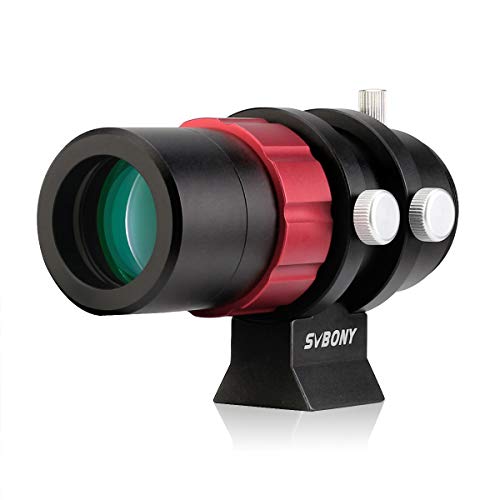
- 30mm aperture and 120mm focal length
- 45mm back focus with 1.25-inch and M42 interfaces
- Designed for compatible autoguiding cameras
Best For: Lightweight separate guide-scope setups
Best Wireless 4K Pick

- 4K video with 8MP CMOS sensor
- Built-in 2.8-inch screen and WiFi
- 23–60mm universal eyepiece mounting
Best For: Beginners wanting wireless, screen-based telescope imaging
Best Dedicated Guide Scope

- 60mm aperture with 240mm focal length
- 48mm helical focusing range
- T-thread and 1.25-inch camera compatibility
Best For: Astrophotographers using a separate guide camera
Best USB Planetary Camera

- 7.05MP IMX415 CMOS sensor
- Up to 30fps at 2K resolution
- USB 3.0 and 1.25-inch telescope interface
Best For: Computer-based lunar and planetary imaging
Beginner Planetary Pick
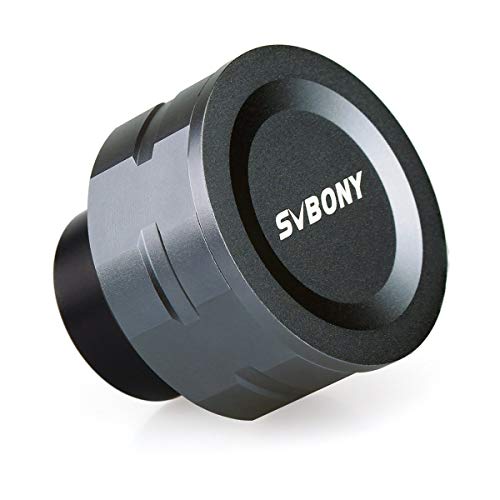
- 1.25-inch USB camera for telescope imaging
- Records up to 1920×1080 at 30 fps
- Best suited to lunar and planetary targets
Best For: Beginners using a computer for Moon and planet imaging
Wireless Observation Choice

- Connects wirelessly to a phone through its built-in hotspot
- Records 2K video and high-resolution stills
- Fits 25mm-to-50mm telescope and microscope eyepieces
Best For: Phone-based viewing, casual imaging, and group sharing
Advanced Planetary Detail

- IMX715 color sensor with 1.45μm pixels for 4K imaging
- USB 3.0 transfer reaches 45.5 fps at full resolution
- Includes an ST4 autoguider interface
Best For: Experienced planetary imagers with computer-controlled setups
Compact Color Guide Camera – SV905C 1.23MP CMOS
The SVBONY SV905C is a compact option for telescope guide cameras, combining a 1.23MP color CMOS sensor with a 1.25-inch form factor. Its small pixels, high peak QE, low read noise, USB 2.0 connection, and ST4 port are suited to autoguiding and planetary imaging.
Best For: Astrophotographers who want a compact color guide camera for PHD2-compatible autoguiding, planetary imaging, or use with an OAG or compatible guide lens.
Pros:
- 1.23MP 1280×960 color sensor with 3.75-micron pixels
- High peak QE and low read noise can help with faint guide stars
- ST4 interface and compatibility with PHD2, MDL, NINA, and SKY-X
- 1.25-inch body with CS interface and CS-C adapter ring
Cons:
- Uses USB 2.0 rather than a higher-speed USB connection
- Not compatible with ASI AIR
The SV905C is a practical, space-saving choice when you need a color guide camera with broad software support. Check your preferred control system first, especially if ASI AIR compatibility is important.
Off-Axis Guiding Upgrade – Celestron Deluxe Off-Axis Guider
The Celestron Deluxe Off-Axis Guider takes a different approach to telescope guide cameras by guiding through the main optical path rather than using a separate guide scope. Its large prism, 48mm clear aperture, and helical focuser are designed for accurate long-exposure astrophotography.
Best For: Schmidt-Cassegrain and EdgeHD users seeking precise off-axis guiding with DSLR, Nightscape CCD, or other compatible astronomy cameras.
Pros:
- Off-axis design avoids the need for a separate guide scope
- 12.5mm multi-coated prism with aluminized backing
- 48mm clear aperture supports full-frame cameras without vignetting
- Includes adapters for DSLR, Nightscape CCD, M42, and M48 connections
Cons:
- Requires a compatible guide camera and suitable optical connections
- Manual focusing may require more setup than a simple guide-scope arrangement
This is an optical accessory rather than a standalone guide camera, but it can improve guiding accuracy by eliminating differential flexure between a guide scope and imaging telescope. Confirm spacing and adapter compatibility before buying.
High-Speed Planetary Guide Camera – SV305C Pro 2MP IMX662
The SVBONY SV305C Pro is a high-speed telescope guide camera built around a 2MP IMX662 sensor. USB 3.0 transfer, 107FPS capture at 1920×1080, low readout noise, an ST4 guiding interface, and a 128MB buffer make it especially capable for planetary imaging and responsive guiding workflows.
Best For: Computer-based astrophotographers who prioritize fast planetary capture, low noise, ROI flexibility, and ST4 or ASCOM-compatible guiding.
Pros:
- IMX662 sensor with high sensitivity and low readout noise
- 1920×1080 capture at up to 107FPS
- USB 3.0 provides high-speed transfers and a 128MB DDR buffer
- Supports ST4, PHD2, ASCOM, HDR, and adjustable ROI capture
Cons:
- Requires a computer and does not support connection to an iPad
- Its strengths are more focused on fast planetary imaging than a basic guide-camera setup
The SV305C Pro is a strong fit when one camera needs to handle both guiding and demanding planetary capture. Its computer-only workflow and 1.25-inch format should be checked against your existing equipment before purchase.
Mini Guide Scope Companion – SV165 30mm F4 Guide Scope
The SVBONY SV165 is a compact 30mm guide scope designed to pair with telescope guide cameras. Its F4 optics, 45mm back focus, fully multi-coated achromatic lens, and 1.25-inch and M42 interfaces provide a straightforward way to build a separate autoguiding setup.
Best For: Astrophotographers assembling a lightweight guide-scope system with SV305C Pro, ZWO, QHY, Orion, or other compatible autoguiding cameras.
Pros:
- 30mm aperture and 120mm focal length provide a wide field of view
- F4 optics and 45mm back focus support target finding and focusing
- 1.25-inch and M42 interfaces suit several guide cameras
- Nylon-tipped thumbscrews help prevent scratches on the scope tube
Cons:
- It is a guide scope, not a camera, so a compatible guide camera is required
- Some camera combinations may need additional focusing accessories
- Not suitable for use with a dielectric mirror star diagonal
The SV165 is a sensible foundation for a separate guide-scope configuration, particularly when paired with a compatible 1.25-inch camera. Verify back focus and mounting compatibility before building the system around it.
Best Wireless 4K Pick – 4K Telescope Camera
If you want telescope guide cameras with built-in viewing and wireless sharing, this 4K model is a flexible option. Its 8MP sensor supports 4K video, high-resolution stills, and low-light compensation, while the universal mounting groove fits eyepieces from 23mm to 60mm.
Best For: Beginners who want an all-in-one camera for astronomy, wildlife observation, and portable recording.
Pros:
- Supports 4K video and up to 64MP image capture.
- Built-in rotatable 2.8-inch IPS screen provides real-time viewing.
- WiFi, app control, time-lapse functions, and support for microSD cards up to 512GB.
- Universal mounting groove fits a wide range of eyepiece diameters.
Cons:
- Manual focus requires hands-on adjustment.
- WiFi remote viewing is limited to a stated 32-foot range.
- Compatibility depends on the eyepiece diameter and mounting setup.
This is the most self-contained choice of the three, combining a screen, battery, storage support, and wireless control. It is especially convenient for casual imaging and shared observing, though users seeking computer-based guiding may prefer a dedicated guide-scope setup.
Best Dedicated Guide Scope – Alstar 60mm Guide Scope
For telescope guide cameras that need a stable optical platform, the Alstar combines a 60mm aperture with a 240mm focal length and a precision helical focuser. It can serve as both a guide scope and finder scope, with T-thread compatibility for direct camera attachment.
Best For: Astrophotographers who need a dedicated guide scope with fine manual focusing and broad guide-star coverage.
Pros:
- 60mm fully multi-coated optical system gathers light for guiding and object location.
- 48mm focusing range includes 10mm of micro-focusing adjustment.
- Includes a Synta-style dovetail plate, pipe clamps, and adjustable dovetail weight.
- T-thread and 1.25-inch compatibility support cameras, autoguiders, and eyepieces.
Cons:
- At about 2 pounds, it adds more weight than a compact camera-only solution.
- Manual operation requires careful focusing and balancing.
- It is an optical guide scope rather than a complete electronic camera system.
This is the strongest fit for users building a traditional guiding setup around a separate camera. Its larger aperture, mounting hardware, and helical focuser prioritize dependable alignment and precise adjustments over wireless convenience.
Best USB Planetary Camera – SVBONY SV205 Telescope Camera
The SVBONY SV205 is a straightforward choice among telescope guide cameras for computer-connected lunar and planetary imaging. Its 7.05MP IMX415 sensor records up to 2K video, and the 1.25-inch machined aluminum barrel is designed for direct telescope connection.
Best For: Users who want plug-and-play USB imaging with a laptop or PC for the Moon, planets, and terrestrial targets.
Pros:
- 7.05MP IMX415 CMOS sensor supports detailed color imaging.
- Records up to 30 frames per second at 1920×1080 in MJPG format.
- Offers USB 3.0 connectivity and supports Windows, Linux, and Android systems.
- Compact 1.25-inch camera barrel connects directly to many telescopes.
Cons:
- Requires a computer or compatible device for viewing and recording.
- Not compatible with Apple phones or tablets; Mac laptops require Astroamx Capture.
- Its 1.25-inch interface may require an adapter for other eyepiece sizes.
Choose the SV205 if you prefer a dedicated USB workflow over built-in screens or wireless controls. It is well suited to live computer viewing and planetary recording, but buyers should confirm operating-system and telescope-interface compatibility before purchasing.
Beginner Planetary Pick – SV105 USB Telescope Camera
For shoppers comparing telescope guide cameras, the SVBONY SV105 is a straightforward USB option for beginning lunar and planetary imaging. Its 1.25-inch format connects directly to compatible telescopes, while the IMX307 sensor records up to 1920×1080 at 30 frames per second.
Best For: Beginners capturing the Moon, bright planets, and terrestrial targets with a Windows, Linux, or compatible Mac computer.
Pros:
- Plug-and-play design with no driver required for basic use.
- Supports lunar and planetary video at up to 30 fps and 1920×1080 resolution.
- 1.25-inch body with M28.5×0.6 threading for telescope filters.
- Dark-light compensation can improve clarity in low-light viewing.
Cons:
- Designed primarily for lunar and planetary imaging rather than broad deep-sky work.
- Requires capture software such as SharpCap, AstroDMx Capture, or USB Camera depending on the operating system.
- Not compatible with Apple phones or tablets.
The SV105 makes sense when affordability and simple computer-based operation matter most. It is a practical entry point for learning capture workflows before moving to more advanced cameras.
Wireless Observation Choice – EP907 WiFi Eyepiece Camera
Among telescope guide cameras, the dgtenk EP907 stands out for wireless, phone-based viewing. It fits 25mm-to-50mm eyepieces on optical telescopes or microscopes and combines a 4-megapixel sensor with 2K video, built-in WiFi, and a rechargeable battery.
Best For: Casual astrophotography, group viewing, bird watching, and users who want to control the camera from a smartphone without a direct USB connection.
Pros:
- Built-in WiFi supports remote control and real-time viewing on a phone.
- Captures 2K video at 2560×1440 and still images up to 24 megapixels.
- Fits eyepieces measuring 25mm to 50mm and works with telescopes or microscopes.
- Includes a 1500mAh battery and 32GB TF card, with interval and time-lapse modes.
Cons:
- Requires the Lercenker app and a WiFi setup process.
- Battery operation limits continuous use to about four hours according to the supplied notes.
- Its eyepiece-mounting approach may be less suitable for users seeking a dedicated 1.25-inch astronomy camera.
The EP907 is a convenient choice for sharing live views and recording without running a laptop beside the telescope. Its wireless workflow is especially appealing for outreach and quick observations.
Advanced Planetary Detail – SC715C IMX715 Camera
For more demanding telescope guide camera setups, the SVBONY SC715C focuses on high-resolution planetary capture. Its IMX715 color sensor uses 1.45μm pixels for 4K imaging, while USB 3.0, onboard DDR3 cache, and software support help maintain smooth data transfer.
Best For: Experienced planetary imagers using a computer, telescope focuser, and compatible astronomy software such as SharpCap, AstroDMx Capture, or NINA.
Pros:
- IMX715 sensor and small 1.45μm pixels target detailed 4K planetary imaging.
- USB 3.0 supports up to 45.5 frames per second at full resolution.
- 512MB DDR3 cache helps reduce delays during high-resolution capture.
- ST4 autoguider interface can connect to an equatorial mount for real-time positional adjustments.
Cons:
- Not compatible with smartphones and requires dedicated computer software.
- Does not include built-in focus adjustment; focusing must be done with the telescope’s focuser.
- Its advanced controls and workflow may be more than beginners need.
The SC715C is the strongest fit here for users prioritizing planetary detail, fast transfers, and guiding connectivity. Plan on a computer-based setup and a telescope with precise focusing capability.
How We Picked These Telescope Guide Cameras
We selected products that cover the main approaches to telescope guiding and electronic observing: dedicated guide cameras, compact guide scopes, off-axis guiding, and multipurpose planetary or wireless cameras. We considered sensor resolution, connection type, compatibility with common 1.25-inch or 2-inch systems, focusing flexibility, portability, and the practical needs of beginners and experienced astrophotographers.
Not every item serves the same role. A guide scope and camera combination is usually the simplest path for beginners, while an off-axis guider can reduce differential flexure for demanding long-exposure setups. Higher-resolution planetary cameras may also be useful for dual-purpose imaging, but they are not automatically better guide cameras.
Quick Comparison
| Setup Type | Best For | Main Advantage | Watch For |
|---|---|---|---|
| Dedicated guide camera | Autoguiding with a guide scope | Simple software integration | Requires a compatible guide scope and mount |
| Guide scope | Building a complete guiding system | Compact and easy to mount | Needs a separate camera |
| Off-axis guider | Long-exposure imaging | Shares the main telescope optical path | More demanding focusing and setup |
| Planetary or wireless camera | Flexible observing and imaging | Can serve multiple purposes | Guiding compatibility may vary |
Key Buying Factors for Telescope Guide Cameras
Sensor Sensitivity and Resolution
Guiding software needs a clear, detectable star more than a very high megapixel count. A sensitive monochrome sensor often performs better for faint guide stars, while color models can be more convenient for general viewing and planetary imaging. Larger pixels may also provide useful low-light performance and a wider practical guide-star choice.
Compatibility and Connection
Check whether the camera works with your preferred guiding software, computer operating system, and mount-control setup. USB 3.0 can help with faster downloads, but guiding usually does not require the highest frame rate. Confirm the camera’s nosepiece size and whether your telescope or guide scope accepts a 1.25-inch or 2-inch accessory.
Field of View and Focusing
A wider field makes it easier to locate a guide star, particularly with a short guide scope. Fine focus adjustment is equally important because slightly soft stars can make calibration and tracking less reliable. Helical focusers and secure locking mechanisms are useful when changing equipment or transporting the rig.
Guide Scope or Off-Axis Design
Guide scopes are straightforward and convenient, but they can be affected by flexure between the guide scope and imaging telescope. An off-axis guider avoids that issue by using light from the main optical path, although it typically requires more careful spacing and may have a narrower guide-star field.
Who Should Buy Which Telescope Guide Cameras?
Beginners: Choose a compact guide scope paired with a compatible dedicated guide camera for the simplest starting point.
Portable astrophotographers: Prioritize lightweight 30mm-class guide scopes, compact cameras, and straightforward USB connectivity.
Long-exposure imagers: Consider an off-axis guider when flexure is limiting tracking accuracy or when using longer focal lengths.
Planetary and multipurpose users: A higher-resolution planetary or wireless camera may offer better value if you also want live viewing, lunar imaging, or bird watching. Just verify that its drivers and software support your intended guiding workflow before buying.