Sharp astrophotography and comfortable visual observing depend on more than good optics. A precise focuser helps you reach critical focus smoothly, minimize image shift, and make repeatable adjustments when conditions are demanding.
These 10 telescope focusers cover compact helical designs, rack-and-pinion options, and electronic upgrades. Use the guide below to match travel, compatibility, control, and load capacity to your telescope and observing style.
Best 10 Telescope Focusers for Precision Picks for 2026
Compact Precision Pick
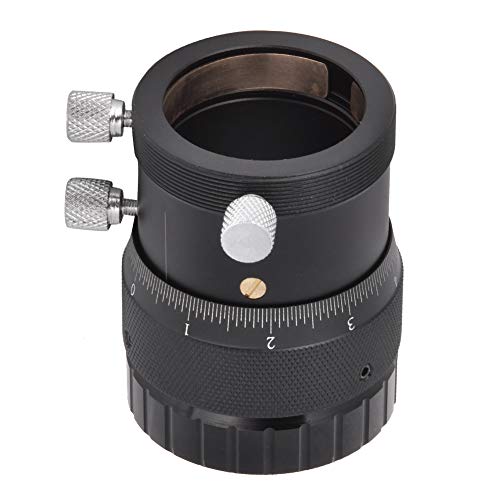
- 10mm focusing stroke
- Lightweight aluminum-alloy body
- Designed for guider or finder scopes
Best For: Portable setups needing fine manual focus adjustment
Remote Control Choice

- Computer-controlled electronic focusing
- Backlash compensation and indexed position
- Two-year US warranty
Best For: Compatible Celestron SCT and EdgeHD setups
Reflector Value Option

- 65mm rack-and-pinion travel
- Brass ring protects eyepiece barrels
- Includes 1.25-inch dust cover
Best For: 114mm and 150mm Newtonian reflectors
Astrophotography Precision Build

- Low-light-leakage design
- Two-speed controls with large hand-wheels
- 360-degree rotation for framing
Best For: Manual astrophotography and visual focusing
Best Orientation-Preserving Pick

- Double-helical design for precise manual adjustments
- Keeps attached accessories oriented while focusing
- All-metal CNC build with 1.25-inch support
Best For: Guide scopes, guide cameras, and orientation-sensitive setups
Best Motorized Convenience
Astromania AccuFocus Electronic Focuser

- Motorized focusing with pushbutton control
- Adjustable speed from coarse to very fine
- Includes mounting hardware and coil cables
Best For: Compatible single-speed refractors and reflectors
Best 2-Inch Micro-Focus Control

- Approximately 0.1 mm precision over 39 mm travel
- Smooth, continuous motion without play
- M48x0.75 camera thread for compatible setups
Best For: 2-inch astrophotography and fine manual focusing
Best Automatic Upgrade
Akozon Electric Telescope Focuser

- Temperature sensor supports focus adaptation
- Automatic or hand-controller operation
- Works with drivers and third-party software
Best For: Astrophotographers wanting automated focusing
Best Guide-Scope Precision
Astromania 1.25-Inch Helical Focuser

- 0.05mm scale and 10mm focusing stroke
- Fixed orientation stabilizes the field of view
- All-metal design helps limit flexure
Best For: Guide scopes and long-exposure imaging
Best Compact Manual Fine-Tuner
Mugast 1.25-Inch Helical Focuser

- 0.05mm precision scale
- 10mm manual focusing stroke
- Lightweight aluminum-alloy construction
Best For: Portable manual focusing on compatible 1.25-inch setups
Compact Precision Pick – Double Helical Focuser
For telescope focusers for precision on a guider or finder scope, this compact double helical model offers a lightweight manual focusing solution. Its aluminum-alloy construction and 10mm focusing stroke suit observers who want smoother adjustment without adding much bulk.
Best For: Guider scopes, finder scopes, and portable telescope setups needing fine manual focus control.
Pros:
- High-precision double-helical focusing design.
- Lightweight aluminum-alloy construction at 4.2 ounces.
- Compact 1.25-inch interface with a 10mm focusing stroke.
Cons:
- Manual focusing rather than computer-controlled operation.
- Its stated 1.25-inch interface may limit compatibility with other setups.
This is a practical accessory for improving sluggish focusing on compatible telescopes or telephoto lenses. Confirm the interface dimensions before buying, especially if you plan to use it outside a guider or finder scope.
Remote Control Choice – Celestron Focus Motor
For telescope focusers for precision during remote or hands-free observing, the Celestron focus motor adds electronic control to compatible Schmidt-Cassegrain and EdgeHD systems. It supports computer operation or control through a Celestron computerized mount hand controller.
Best For: Celestron SCT, EdgeHD, and compatible optical-tube owners who want vibration-free, computer-controlled focusing.
Pros:
- Enables electronic focusing for remote or hands-free observing.
- Offers multiple speed rates, automatic GoTo, indexed focuser position, and backlash compensation.
- Can draw power from a compatible Celestron mount or directly through computer USB.
- Includes a two-year US warranty and support from Celestron.
Cons:
- Compatibility is limited to specified Celestron telescope systems.
- Requires a computerized mount or computer for electronic operation.
This is the strongest option here for users prioritizing repeatable electronic focus and reduced focus vibration. Check Celestron’s compatibility list before purchase, since the motor is designed for particular SCT, EdgeHD, and related optical tubes.
Reflector Value Option – SVBONY SV181 Rack Focuser
The SVBONY SV181 is a manual rack-and-pinion choice for telescope focusers for precision on compatible reflector telescopes. Its adjustable metal gear, dual-knob control, 65mm travel, and internal brass ring are aimed at smoother adjustment and secure 1.25-inch eyepiece retention.
Best For: 114mm and 150mm Newtonian reflector telescopes using 1.25-inch eyepieces.
Pros:
- 65mm focuser travel with gear-based fine adjustment.
- Internal brass ring helps hold eyepieces without marking the barrel.
- Fully threaded interior helps minimize reflections.
- Includes a 1.25-inch dust cover.
Cons:
- Manual focus only, with no electronic control.
- Compatibility details are centered on specific Newtonian reflector sizes.
- At 410g, it is less lightweight than a compact helical focuser.
This focuser balances useful mechanical adjustment with protective details for everyday reflector use. Verify the telescope’s mounting dimensions and optical configuration before replacing an existing focuser.
Astrophotography Precision Build – 16-Bearing Travel Focuser
Telescope Focuser 16-Bearing Travel with Round Adapter Ring for Astrophotography
Check Price On AmazonFor telescope focusers for precision in astrophotography, this TeSeek focuser emphasizes interface accuracy, light control, and ergonomic adjustment. Its two-speed controls, large hand-wheels, 360-degree rotation, and round adapter ring are designed for careful composition and visual inspection.
Best For: Astrophotography and visual telescope users who need fine manual adjustment and rotatable framing control.
Pros:
- Designed to provide almost no light leakage for deep-space photography.
- High-precision locking interface helps maintain coaxial alignment.
- Two-speed components can be quickly removed and adjusted.
- Large coarse and fine hand-wheels improve grip, while 360-degree rotation aids composition.
Cons:
- Manual focus only, with no electronic motor included.
- The supplied notes do not specify broad telescope compatibility or mounting dimensions.
- Its 55.7mm focal-length description may require careful fit checking.
This is a specialized manual focuser for users who value controlled adjustment, low light leakage, and rotational framing. Confirm the adapter-ring fit and telescope connection before ordering, particularly for a camera-heavy setup.
Best Orientation-Preserving Pick – SVBONY SV161 Helical Focuser
For telescope focusers for precision, the SVBONY SV161 is a compact manual option built around a double-helical design. Its all-metal CNC construction, 1.25-inch equipment support, and orientation-preserving action make it useful for fine adjustments with eyepieces, cameras, or guide-scope setups.
Best For: Guide scopes, guide cameras, and users who need precise manual focusing without rotating attached accessories.
Pros:
- Double-helical design supports precise focus adjustments.
- Attached equipment maintains its orientation during focusing.
- All-metal CNC construction with a brass compression ring.
- Includes a female T2-thread and supports 1.25-inch accessories.
Cons:
- Designed for 1.25-inch equipment rather than 2-inch accessories.
- Manual operation may be less convenient than a motorized focuser.
- Its listed focus type is fixed focus, so compatibility should be checked carefully.
The SV161 stands out when orientation control and compact manual precision matter most. Its M42x0.75 male thread and included hardware make checking your telescope and accessory interfaces essential before buying.
Best Motorized Convenience – Astromania AccuFocus Electronic Focuser
The Astromania AccuFocus adds motorized control for telescope focusers for precision, helping you make smooth adjustments from a pushbutton hand controller. Its adjustable speed knob ranges from coarse to very fine, while the included brackets and hardware are intended to simplify installation.
Best For: Single-speed focusing systems in compatible 60–127 mm refractors and reflectors where vibration-free electronic adjustment is useful.
Pros:
- Motorized DC design makes sharp focusing easier to achieve.
- Pushbutton controller provides smooth adjustments without vibration.
- Adjustable speed control supports coarse-to-fine focusing.
- Includes brackets, hardware, and coil cables.
Cons:
- Requires a standard 9V battery for the control box.
- Cannot be used with APO two-speed focusing systems.
- Manual focusing requires loosening the shaft-coupler set screws first.
AccuFocus is a practical choice when remote-style motor control matters more than a purely mechanical focuser. Confirm that your telescope has a compatible single-speed focusing mechanism before purchase.
Best 2-Inch Micro-Focus Control – Alstar Helical Micro Focuser
For telescope focusers for precision in astrophotography, the Alstar 2-inch helical micro focuser offers smooth, continuous movement with approximately 0.1 mm focusing precision. Its 39 mm of travel and M48 camera thread make it a strong fit for compatible 2-inch optical setups.
Best For: Astrophotography users with 2-inch focusers who need fine manual adjustment and an M48 camera connection.
Pros:
- Approximately 0.1 mm focusing precision with 39 mm of travel.
- Rotating mechanism provides smooth, continuous focusing without play.
- Works with refractors and Newtonian telescopes and is especially useful with Schmidt-Cassegrain telescopes.
- M48x0.75 thread supports camera connections.
Cons:
- Requires a compatible 2-inch focuser.
- Manual design does not provide electronic focusing control.
- Camera connectivity is based on the specified M48 thread, so adapters may be needed for other interfaces.
The Alstar is the most directly targeted option here for 2-inch astrophotography and very fine manual control. Its travel and thread specifications should be matched against your telescope and camera train before ordering.
Best Automatic Upgrade – Akozon Electric Telescope Focuser
For astrophotographers seeking telescope focusers for precision, the Akozon electric focuser adds software-controlled adjustment, one-click focusing, and manual hand-controller operation. Its onboard temperature sensor is designed to help compensate for environmental changes during imaging.
Best For: Astrophotography setups that benefit from automated focusing and software integration.
Pros:
- Temperature sensor supports environmental focus adaptation.
- Offers automatic and manual focusing control.
- Compatible with drivers and third-party software.
- Plug-and-play design supports various telescope setups.
Cons:
- Requires software or a hand controller to use its focusing features.
- Its compatibility should be confirmed with your specific telescope and camera setup.
This is the most feature-rich option here for users prioritizing automated, repeatable focusing. Confirm system compatibility before purchasing, especially if your setup uses specialized mounting hardware or software.
Best Guide-Scope Precision – Astromania 1.25-Inch Helical Focuser
The Astromania double helical focuser is a practical choice among telescope focusers for precision, offering a 0.05mm scale and 10mm focusing stroke. Its fixed-orientation design helps keep a guide star’s field of view stable while focusing.
Best For: Guide scopes, finder scopes, and long-exposure astrophotography setups using compatible M42x0.75 connections.
Pros:
- Provides 0.05mm focusing accuracy with 10mm of travel.
- Fixed orientation helps prevent camera or eyepiece rotation.
- All-metal construction is intended to minimize flexure and thermal expansion.
- Accepts 1.25-inch accessories and compatible autoguider cameras.
Cons:
- Compatibility depends on the required M42x0.75 male thread.
- The required M42x0.75 female-to-female adapter is not included for some upgrade applications.
With repeatable travel and a stable orientation, this focuser is particularly suited to guide-scope work. Check the thread and accessory requirements carefully before adding it to an existing optical train.
Best Compact Manual Fine-Tuner – Mugast 1.25-Inch Helical Focuser
The Mugast YZ-18839 offers a straightforward manual approach to telescope focusers for precision. Its aluminum-alloy construction, 0.05mm scale, and 10mm focusing stroke provide fine adjustment for telescope lenses, finders, and guide scopes.
Best For: Users who want a lightweight manual focuser for compatible 1.25-inch optical accessories.
Pros:
- Offers 0.05mm high-precision focusing.
- Provides a 10mm focusing stroke for fine adjustment.
- Aluminum-alloy construction is lightweight and compact.
- Compatible with cameras, smartphones, and tablets according to the supplied details.
Cons:
- Manual operation does not provide automated or software-controlled focusing.
- Compatibility should be checked with the specific lens, finder, or guide-scope connection.
This is a compact, uncomplicated option for hands-on focusing adjustments. It makes the most sense when you value portability and a precision scale more than motorized control.
How We Picked These Telescope Focusers for Precision
We focused on the factors that most directly affect accurate, repeatable focusing: adjustment smoothness, available travel, construction, fine-control design, mounting compatibility, and suitability for visual use or astrophotography. The selection includes manual and motorized models so different telescope types and budgets are represented.
Because focuser fit is highly telescope-specific, verify the drawtube diameter, adapter style, thread pattern, backfocus requirements, and available clearance before ordering. A focuser with excellent mechanics is not useful if it cannot reach focus on your optical system.
Quick Comparison
| Focuser type | Best suited to | Main advantage | Watch for |
|---|---|---|---|
| Helical | Guide scopes, finders, compact refractors | Fine, controlled adjustments | Limited travel or camera rotation |
| Rack-and-pinion | Reflectors and general visual use | Stable, straightforward positioning | Tube and adapter compatibility |
| Electronic | Remote and astrophotography setups | Repeatable, vibration-free control | Power, controller, and mounting needs |
| Long-travel precision | Dedicated imaging systems | More positioning flexibility | Added size and potential weight |
Key Buying Factors for Telescope Focusers for Precision
Travel and Focusing Resolution
Choose enough travel to accommodate your eyepieces, diagonal, filters, and camera train. Helical models can offer very fine movement, while a longer drawtube may be more practical when accessories change frequently. A visible scale can help with repeatability, but actual mechanical smoothness matters more than markings alone.
Load Capacity and Stability
Astrophotography places greater demands on a focuser than visual observing. Check whether it can support your camera, filter wheel, reducer, and adapters without slipping or flexing. A firm lock and low backlash are especially important during long exposures.
Manual or Motorized Control
Manual focusers are simple, affordable, and easy to adjust at the eyepiece. Motorized units are preferable for remote operation, automated focus routines, or setups where touching the telescope could introduce vibration. Confirm power and control-system compatibility before choosing an electronic attachment.
Fit, Threads, and Optical Path
Measure rather than assume. Confirm whether the focuser uses a 1.25-inch or 2-inch interface, whether it requires a round adapter ring, and whether its installed height preserves enough backfocus. Also check clearance around the tube and camera.
Who Should Buy Which Telescope Focusers for Precision?
Choose a compact helical focuser for a guide scope, finder, or lightweight visual setup where precise manual adjustment is the priority. Choose a rack focuser when you want a practical upgrade for a reflector or a more conventional focusing action. Choose a motorized focuser for astrophotography, remote sessions, or repeatable focus routines. Choose a longer-travel or higher-capacity model when your camera train is heavy or your accessories require substantial positioning range.
For the best result, prioritize compatibility first, then mechanical precision, rigidity, and control convenience. That order prevents an attractive feature list from outweighing the requirements of your specific telescope.