Sharp planetary images depend on more than aperture and camera resolution. A focuser with minimal backlash, smooth adjustment, and enough rigidity can make it easier to hold critical focus during high-magnification capture.
This roundup compares 10 telescope focusers for planetary imaging, from electronic upgrades for compatible optical tubes to manual focusers for Newtonian, Dobsonian, reflector, and guide-scope setups.
Best 10 Telescope Focusers for Planetary Imaging Picks for 2026
Best Integrated Electronic Upgrade

- Computer and mount-controlled focusing
- Multiple speeds and backlash compensation
- Two-year US warranty and support
Best For: Compatible Celestron SCT and EdgeHD imaging setups
Best Software-Friendly Temperature-Aware Option

- Onboard temperature sensor
- One-click and hand-controller focusing
- Supports drivers and third-party software
Best For: Software-assisted astrophotography setups
Best Heavy-Load Manual Precision

- Six-point bearing design
- 10:1 dual-speed control
- 5 kg tested load capacity
Best For: Compatible Newtonians and Dobsonians with heavier imaging trains
Best Simple Battery-Powered Motor

- Pushbutton motorized focusing
- Coarse-to-fine speed control
- Runs on a standard 9V battery
Best For: Compatible single-speed 60–127 mm refractors and reflectors
Best Automated Option

- Automatic or manual focusing control
- Temperature sensor support
- Standard 3.5mm interface
Best For: Astrophotographers seeking automated, temperature-aware focusing
Best Manual Rack-and-Pinion Pick
SVBONY SV181 1.25-Inch Focuser

- 65mm focusing travel
- Dual-knob gear adjustment
- Brass ring protects eyepiece barrels
Best For: Compatible Newtonian reflector telescopes needing manual fine focus
Best Compact Precision Option
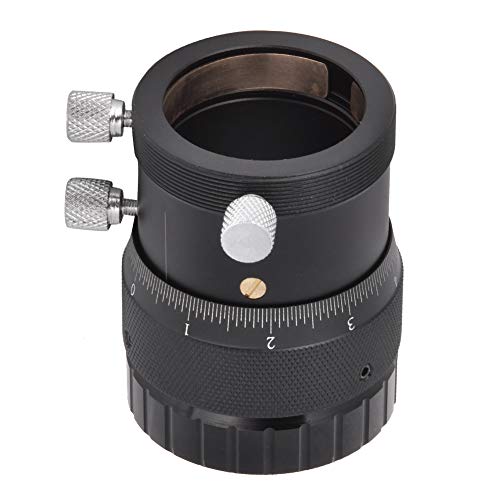
- 10mm precision focusing stroke
- Lightweight 4.2-ounce design
- 1.25-inch inner T interface
Best For: Guider and finder scopes needing compact fine focus
Solid Reflector Upgrade
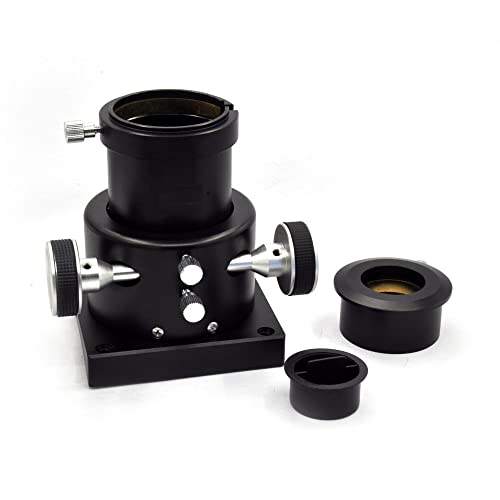
- Fully metal Crayford-style construction
- Supports 2-inch and 1.25-inch accessories
- Threaded interior helps reduce reflections
Best For: 6- to 8-inch reflector telescope owners
Guide-Scope Precision Pick
1.25-Inch Double Helical Focuser

- 0.05mm scale with 10mm travel
- Fixed orientation prevents accessory rotation
- All-metal design for guide-scope imaging
Best For: Compact guide scopes and astrophotography setups
Vibration-Free Control
Alstar AccuFocus Electronic Focuser
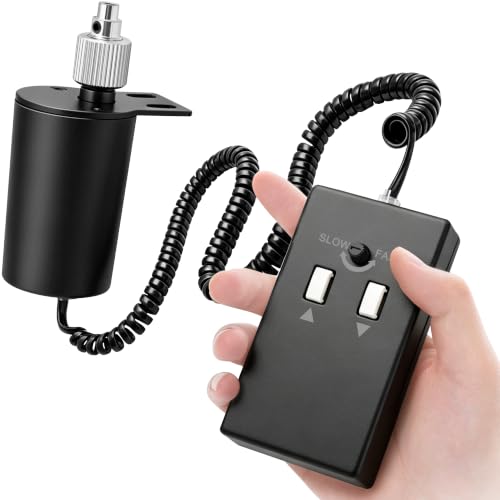
- Adjustable-speed motorized focusing
- Pushbutton control reduces focusing vibration
- Includes brackets for compatible single-speed focusers
Best For: 60-127mm single-speed refractors and reflectors
Best Integrated Electronic Upgrade – Celestron Focus Motor
The Celestron Focus Motor is a strong choice among telescope focusers for planetary imaging when you want computer-controlled focusing on a compatible Schmidt-Cassegrain, EdgeHD, or Rowe-Ackermann Schmidt Astrograph. It supports multiple speed rates, indexed focuser positions, automatic goto, and backlash compensation, helping reduce vibration during fine adjustments.
Best For: Celestron SCT and EdgeHD owners building a remote or hands-free imaging setup.
Pros:
- Enables electronic focusing from a computer or compatible Celestron mount hand controller.
- Supports multiple speeds, indexed positions, automatic goto, and backlash compensation.
- USB or compatible Celestron mount power options simplify installation.
- Includes a two-year US warranty and unlimited support from Celestron.
Cons:
- Compatibility is centered on specific Celestron telescope families.
- Not a universal manual focuser replacement; confirm the optical tube is supported.
For compatible Celestron users, this is a polished electronic focusing solution with useful software integration and a clear support program. Verify your exact telescope model before ordering.
Best Software-Friendly Temperature-Aware Option – Akozon Automatic Focuser
The Akozon automatic focuser is aimed at astrophotographers who want software-assisted focus adjustments and environmental adaptation. Its onboard temperature sensor can work with software to compensate for changing conditions, while the included hand controller preserves the option of manual focusing.
Best For: Astrophotographers seeking automatic focusing with temperature-aware software support across compatible telescope systems.
Pros:
- Onboard temperature sensor supports software-based environmental adaptation.
- Offers one-click automatic focusing and hand-controller manual control.
- Designed for compatibility with drivers and third-party software.
- Supports camera-based astrophotography setups.
Cons:
- Specific telescope and software compatibility should be confirmed before purchase.
- The supplied information does not identify a particular mounting standard or telescope model list.
This focuser offers appealing automation features for imaging workflows, especially where temperature changes can affect focus. Because compatibility details are broad, check the required drivers, software, and mechanical fit first.
Best Heavy-Load Manual Precision – Skyoptikst 6-Point Focuser
The Skyoptikst 6-Point focuser is a manual option for telescope focusers for planetary imaging, combining dual-speed control with a six-point ball-bearing mechanism. Its 10:1 gearing, claimed zero-backlash design, thermal-stable aluminum body, and 5 kg tested capacity suit imaging trains that require firm, repeatable adjustment.
Best For: Skywatcher Newtonians, larger Dobsonians, and compatible 6–12-inch instruments carrying substantial imaging accessories.
Pros:
- Six-point bearing design is intended to reduce focus shift and wobble.
- 10:1 dual-speed gearing provides coarse and fine adjustment.
- Supports a stated 5 kg load and includes M56-to-2-inch adaptation hardware.
- Thermal-stable aluminum body and brass rack help maintain smooth operation.
Cons:
- Manual rather than motorized, so automated focusing requires an additional solution.
- Compatibility is specific; the seller recommends confirming the telescope before ordering.
- The design may be more hardware than needed for lightweight visual setups.
This is the most mechanically focused choice in the group, with useful capacity and fine control for demanding optical trains. Carefully verify the adapter and telescope fit, particularly for non-listed instruments.
Best Simple Battery-Powered Motor – Astromania AccuFocus
The Astromania AccuFocus is a straightforward motorized focuser for users who want smoother, vibration-reduced adjustments without a computer-controlled system. Its pushbutton hand controller offers adjustable speeds from coarse to very fine, and the kit includes mounting hardware, brackets, and coil cables.
Best For: Single-speed focusers on compatible 60–127 mm refractors and reflectors that need simple electronic control.
Pros:
- Motorized operation helps make sharp focusing easier with reduced vibration.
- Hand controller provides smooth adjustments and variable focusing speeds.
- Uses a standard 9V battery in the control box.
- Includes brackets, hardware, and coil cables for installation.
Cons:
- Cannot be used with APO two-speed focusers.
- Designed for single-speed focusers, with compatibility noted for 60–127 mm refractors and reflectors.
- Manual focusing requires loosening the shaft-coupler set screws first.
AccuFocus is a practical entry-level motor option when a hand controller is sufficient and the telescope has a compatible single-speed focuser. Confirm the focuser type and size range before buying.
Best Automated Option – Motorized Telescope Focuser
For astrophotographers comparing telescope focusers for planetary imaging, this motorized model is designed to make precise adjustments without repeatedly touching the telescope. It supports automatic and manual operation, includes a temperature sensor, and connects through a standard 3.5mm interface.
Best For: Astrophotographers who want automated focusing with temperature-aware adjustments and optional hand-controller operation.
Pros:
- Automatic focusing can improve repeatability during imaging and observation.
- Temperature sensor support allows compatible software to adjust focus as conditions change.
- Plug-and-play design and standard 3.5mm interface support many telescope focuser systems.
- Offers both one-click software control and manual control with the included hand controller.
Cons:
- Compatibility should be confirmed with your specific telescope focuser system.
- Electronic operation requires a suitable power and control setup.
This is the most feature-oriented choice of the three for imaging workflows, especially when automated and temperature-compensated focusing are priorities.
Best Manual Rack-and-Pinion Pick – SVBONY SV181 1.25-Inch Focuser
The SVBONY SV181 is a manual rack-and-pinion option for reflector telescopes and a practical choice among telescope focusers for planetary imaging when you prefer direct mechanical control. Its dual-knob gear adjustment, 65mm travel, and brass retaining ring are aimed at smooth, controlled focusing.
Best For: Owners of compatible Newtonian reflector telescopes using 1.25-inch eyepieces who want a manual focuser with fine adjustment.
Pros:
- 65mm of focuser travel provides useful adjustment range.
- Gear adjustment and dual knobs support finer manual focusing.
- Internal brass ring helps hold eyepieces without marking the barrel.
- Fully threaded interior is designed to minimize reflections, and a dust cover is included.
Cons:
- Designed for 1.25-inch accessories rather than larger formats.
- Compatibility is specifically listed for 114mm and 150mm Newtonian reflectors, so other scopes require verification.
- Manual operation does not provide automated focusing or temperature compensation.
Choose the SV181 if smooth, hands-on adjustment matters more than motorized control and your reflector matches its listed compatibility.
Best Compact Precision Option – Double Helical Focuser
This compact aluminum-alloy helical focuser offers a 10mm focusing stroke and a 1.25-inch inner T interface. For telescope focusers for planetary imaging, it is suited to setups where lightweight, precise adjustment is useful, particularly on guider or finder scope interfaces.
Best For: Guider scopes, finder scopes, and telescope or telephoto-lens setups that need compact fine focusing.
Pros:
- Double-helical design is intended to provide high-precision focusing.
- Lightweight construction weighs 4.2 ounces.
- Aluminum-alloy construction is designed for strength while remaining portable.
- Can help address sluggish focusing on compatible telescopes or telephoto lenses.
Cons:
- The 10mm focusing stroke is shorter than the SV181’s 65mm travel.
- Its stated use emphasizes guider and finder scope interfaces, so main imaging-scope compatibility should be checked.
- The supplied notes do not indicate motorized or temperature-compensated operation.
This focuser is a sensible compact choice when precise manual adjustment and low weight are more important than long travel or electronic control.
Solid Reflector Upgrade – 2-Inch Crayford Focuser
For telescope focusers for planetary imaging, this fully metal Crayford-style model is a practical option for compatible 6- to 8-inch reflector telescopes. Its 2-inch format, included 1.25-inch compatibility, and threaded interior emphasize stable, low-reflection manual focusing.
Best For: Owners of 150mm to 203mm reflector telescopes who want a sturdy manual focuser for visual observing and imaging setups.
Pros:
- Fully metal body for a robust upgrade.
- Crayford-style operation is designed for smooth, accurate adjustment.
- Supports both 2-inch and 1.25-inch accessories.
- Threaded interior helps minimize internal reflections.
Cons:
- Designed specifically for 6- to 8-inch reflector telescopes.
- Manual operation lacks electronic focusing convenience.
- Compatibility should be confirmed before purchase.
This focuser is most compelling when solid construction and broad accessory sizing matter more than automated control. Verify your reflector’s mounting requirements and available back focus before ordering.
Guide-Scope Precision Pick – 1.25-Inch Double Helical Focuser
Among telescope focusers for planetary imaging, the Astromania double helical focuser is aimed at guide scopes, finder scopes, and compact astrophotography trains. Its fixed orientation, 0.05mm scale, and 10mm travel help make repeatable adjustments without rotating a camera or eyepiece.
Best For: Guide-scope users and astrophotographers needing compact, repeatable 1.25-inch focusing.
Pros:
- Fixed orientation helps keep the field of view stable while focusing.
- Offers a 0.05mm precision scale and 10mm focusing stroke.
- All-metal construction is intended to minimize flexure and thermal expansion.
- Accepts 1.25-inch accessories and includes M42x0.75 male T-threading.
Cons:
- Its 1.25-inch design is primarily suited to guide or finder scopes.
- The M42 adapter needed to add it to some rack-and-pinion focusers is not included.
- Requires compatible M42x0.75 threading for that upgrade path.
The compact helical design makes this a focused choice for stable guide-camera adjustment rather than a general-purpose primary focuser. Check thread standards and available travel in your optical train first.
Vibration-Free Control – Alstar AccuFocus Electronic Focuser
For telescope focusers for planetary imaging, the Alstar AccuFocus adds motorized control to compatible single-speed focusers. Its handheld controller provides adjustable speed, helping reduce hand-induced vibration during high-magnification lunar or planetary observation and imaging.
Best For: Users of compatible 60mm to 127mm single-speed refractors or reflectors who want battery-powered electronic focusing.
Pros:
- Adjustable speed control supports coarse and fine focusing.
- Pushbutton operation helps reduce manual shaking and vibration.
- Includes brackets for Crayford and rack-and-pinion focusers.
- Installs with supplied hardware and requires only a Phillips screwdriver.
Cons:
- Requires a 9V battery, which is not included.
- Not compatible with Maksutov, Dobsonian, or APO two-speed focusers according to the supplied notes.
- Designed for single-speed systems and a stated 60mm to 127mm aperture range.
This is the most convenience-focused option of the three, particularly for high-magnification work where touch-induced movement is distracting. Confirm focuser type and telescope compatibility carefully before buying.
How We Picked the Best Telescope Focusers for Planetary Imaging
We evaluated these focusers by the features that matter most at planetary image scale: mechanical stability, adjustment precision, backlash control, load capacity, compatibility, and the practicality of electronic operation. We also considered whether each design is intended as a replacement focuser, an add-on motor, or a compact focusing solution for a guide scope or imaging accessory.
Compatibility comes first. A highly precise focuser is not useful if its mounting pattern, drawtube size, travel, or optical-tube interface does not match your telescope. Motorized models also vary in controller requirements, power connections, and automation support, so confirm those details before ordering.
Quick Comparison
- Best for compatible Schmidt-Cassegrain and EdgeHD owners: a dedicated Celestron focus motor.
- Best for electronic focusing on a budget: an add-on motorized or electronic focuser such as the Astromania or Alstar options.
- Best for Newtonian and Dobsonian upgrades: a rigid dual-speed Crayford or six-point ball-bearing focuser.
- Best for compact guide-scope applications: a 1.25-inch helical focuser.
- Best for basic reflector replacement: a metal 1.25-inch or 2-inch rack-and-pinion or Crayford-style model.
Key Buying Factors for Telescope Focusers for Planetary Imaging
Backlash and Fine Adjustment
Planetary focusing is exacting because the sharp zone can be extremely narrow. Dual-speed controls, helical mechanisms, and zero-backlash or low-backlash designs make small corrections easier. If you use an electronic motor, look for fine step control and repeatable movement.
Rigidity and Load Capacity
The focuser must support the camera, filter wheel, Barlow lens, and any adapters without sagging. A metal body and ball-bearing support can improve stability, while a stated load rating helps when building a heavier imaging train.
Travel, Size, and Optical Compatibility
Check drawtube travel, insertion diameter, mounting holes, and whether the focuser is designed for your telescope type. A 2-inch focuser offers more accessory compatibility than a 1.25-inch model, but it may require a different mounting opening or adapter. Helical focusers are compact but may offer less travel than full-size replacement units.
Manual Versus Motorized Control
Motorized focusers reduce vibration from touching the telescope and can support remote or automated imaging. They are especially useful when the scope is mounted on a tracking platform or when you need repeatable focus changes. Manual focusers are simpler, lighter, and often easier to install, but require careful technique during capture.
Who Should Buy Which Telescope Focusers for Planetary Imaging?
Choose a dedicated electronic motor when your telescope has a compatible focusing mechanism and you want vibration-free, computer-assisted adjustment. Choose a dual-speed Crayford or ball-bearing focuser when replacing a Newtonian or Dobsonian unit and prioritizing smooth manual control with a heavier imaging train.
A compact helical focuser is a sensible choice for guide scopes, lightweight cameras, or setups with limited space. For a general reflector upgrade, select the largest compatible metal focuser that provides adequate travel and supports your complete camera train. Before buying, measure the existing focuser opening and confirm backfocus requirements rather than relying only on telescope model names.