The right SSD enclosure can turn a spare NVMe or SATA drive into a fast, portable editing workspace for footage, project files, proxies, and backups. For video editors, sustained performance, heat management, connection speed, and compatibility matter more than headline burst speeds alone.
We selected 10 enclosures across USB 3.2, USB4, Thunderbolt-compatible, and SATA categories so you can match your storage setup to your camera workflow, computer, and budget.
Best 10 SSD Enclosures for Video Editing Picks for 2026
Best Active-Cooling Pick
ACASIS 40Gbps M.2 NVMe Enclosure

- Built-in fan helps manage heat
- USB4 and Thunderbolt-compatible
- Supports multiple M.2 NVMe sizes
Best For: Sustained video editing transfers with an NVMe drive
Best 2.5-Inch SATA Option
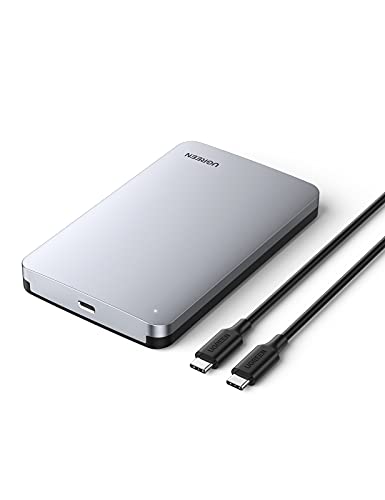
- Supports 2.5-inch SATA SSDs and HDDs
- Aluminum body aids heat dissipation
- Tool-free and bus-powered design
Best For: Portable SATA editing storage and backups
Best Budget SATA Enclosure
SABRENT 2.5-Inch Tool-Free Case
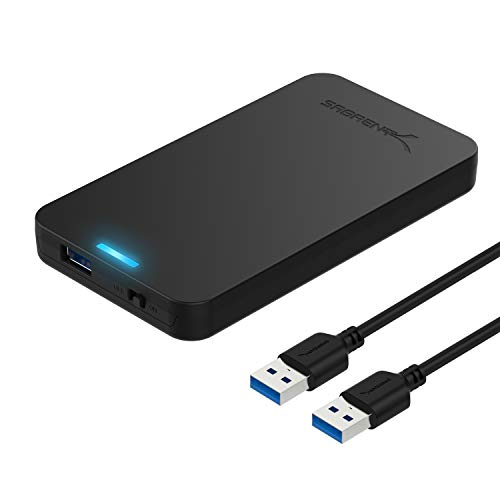
- Tool-free installation
- Up to 5Gbps over USB 3.0
- Supports UASP and 2.5-inch SATA drives
Best For: Basic external SATA storage and backups
Best Silent 40Gbps Option
UGREEN 40Gbps M.2 NVMe Enclosure
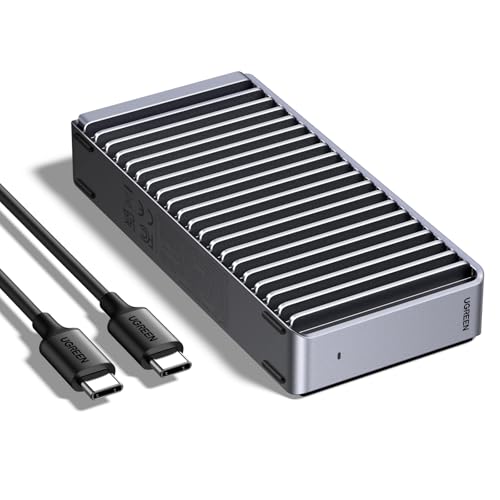
- Up to 3600MB/s with compatible Thunderbolt 4 hardware
- Fanless finned aluminum cooling design
- Supports NVMe drives up to 8TB
Best For: Quiet, high-speed video editing workflows
Best Future-Ready Performance

- Up to 6000MB/s with compatible components
- USB4 V2.0 and PCIe 5.0 support
- Temperature-controlled active cooling fan
Best For: High-bandwidth professional video workflows
Best Simple 10Gbps Choice

- Tool-free flip-open installation
- USB 3.2 Gen 2 speeds up to 10Gbps
- Compact aluminum and ABS construction
Best For: Portable editing storage and routine transfers
Best for Mobile ProRes Workflows

- Cooling fan, aluminum body, and thermal pad
- 4K@60 HDMI and 10Gbps transfers
- Magnetic, compact design for mobile recording
Best For: iPhone ProRes creators and mobile video editors
Best Versatile M.2 Compatibility
SSK 10Gbps NVMe/SATA Enclosure

- Supports NVMe and SATA M.2 drives
- Includes cables, thermal pads, and screwdriver
- UASP/TRIM and bus-powered operation
Best For: Editors working with varied M.2 drive types
Best Tool-Free NVMe Setup
FIDECO Tool-Free NVMe Enclosure

- Tool-free sandwich-style installation
- Supports four common NVMe sizes
- 10Gbps USB 3.2 Gen 2 with UASP
Best For: Editors wanting quick, portable NVMe drive swaps
Best Active-Cooling Pick – ACASIS 40Gbps M.2 NVMe Enclosure
For demanding video editing workflows, this ACASIS enclosure combines a USB4/Thunderbolt-compatible connection with active cooling. It supports several M.2 NVMe sizes and is designed to help maintain performance during sustained transfers and heavy workloads.
Best For: Video editors using M.2 NVMe drives who prioritize cooling and high transfer speeds.
Pros:
- 40Gbps-class USB4 connectivity with Thunderbolt 4 and Thunderbolt 3 compatibility.
- Built-in fan and heat-dissipation openings help reduce thermal throttling during sustained workloads.
- Supports M.2 2280, 2260, 2242, and 2230 drives, with reported speeds up to 2805/2734 MB/s in testing.
Cons:
- The fan must be switched on manually when active cooling is needed.
- Designed for M.2 NVMe drives rather than 2.5-inch SATA drives.
The ACASIS is a strong choice when editing involves frequent large-file transfers and sustained drive activity. Its fan adds useful thermal management, while its compact aluminum design keeps it suitable for a mobile workstation.
Best 2.5-Inch SATA Option – UGREEN USB-C SATA Enclosure
Among SSD enclosures for video editing, the UGREEN USB-C model is a practical choice for editors using a 2.5-inch SATA SSD. Its aluminum construction, UASP support, and USB 3.1 Gen 2 interface provide a straightforward way to turn a SATA drive into portable working or backup storage.
Best For: Editors repurposing a 2.5-inch SATA SSD for portable storage, backups, or project transfers.
Pros:
- Supports 2.5-inch SATA I, II, and III SSDs and HDDs up to 6TB.
- USB-C interface supports up to 10Gbps, while SATA transfer speeds reach up to 6Gbps.
- Tool-free installation, plug-and-play operation, and no separate power supply required.
Cons:
- Limited to 2.5-inch SATA drives, which are slower than high-speed NVMe solutions.
- USB-C-to-USB-A connectivity requires a suitable cable for USB-A-only devices.
This enclosure makes sense for editors who already have a SATA SSD and want an easy external setup. It is less suited to maximum-speed scratch-disk work, but its broad compatibility and simple installation are useful for backups and media transport.
Best High-Speed USB4 Pick – OWC Express 1M2 80G Enclosure
The OWC Express 1M2 is built for editors who want exceptionally fast external NVMe storage. Its USB4 80Gbps connection, claimed real-world speeds above 6000MB/s, and support for PCIe Gen 3, 4, and select Gen 5 drives make it a flexible option for demanding creative projects.
Best For: Professional video editors seeking a fast, upgradeable USB4 NVMe enclosure.
Pros:
- USB4 80Gbps design delivers claimed peak real-world speeds above 6000MB/s.
- Supports PCIe Gen 3.0, Gen 4.0, and selected Gen 5.0 NVMe M.2 SSDs.
- Works with Macs, PCs, iPad Pros, Chromebooks, and Surface devices.
- Patented heat-dissipating design cools the SSD silently while providing rugged protection.
Cons:
- PCIe Gen 5 SSD selection requires attention to sustained power consumption.
- Actual performance depends on the host computer, cable, SSD, and workload.
The Express 1M2 stands out for high-throughput editing, especially when paired with a compatible NVMe drive and USB4 host. Its silent cooling and upgradeable design add practical value for editors who expect storage needs to grow.
Best Budget SATA Enclosure – SABRENT 2.5-Inch Tool-Free Case
The SABRENT EC-UASP is a simple, affordable way to use a 2.5-inch SATA SSD externally. For video editing, it is best suited to file transfers, backups, and older SATA-based workflows rather than the fastest high-resolution editing workloads.
Best For: Editors who need a basic tool-free enclosure for a 2.5-inch SATA SSD.
Pros:
- Tool-free installation with hot-swappable, plug-and-play operation.
- Supports UASP and transfer rates up to 5Gbps over USB 3.0.
- Compatible with Windows and Mac systems, with backward compatibility to USB 2.0 and 1.1.
Cons:
- USB 3.0 bandwidth is lower than USB4 and Thunderbolt enclosure options.
- Plastic construction may offer less heat dissipation and protection than aluminum designs.
- Limited to 2.5-inch SATA and SATA II notebook drives.
The EC-UASP is a convenient option for reusing an existing 2.5-inch SATA SSD or HDD. Its uncomplicated design keeps setup easy, but editors working with large footage libraries may prefer a faster NVMe enclosure.
Best Silent 40Gbps Option – UGREEN 40Gbps M.2 NVMe Enclosure
For editors seeking fast, quiet ssd enclosures for video editing, the UGREEN 40Gbps enclosure combines USB4 and Thunderbolt compatibility with a fanless aluminum cooling design. It supports M.2 NVMe drives up to 8TB and can reach speeds up to 3600MB/s when paired with compatible hardware.
Best For: Video editors who prioritize quiet operation, portability, and high-speed NVMe scratch or project storage.
Pros:
- Up to 40Gbps connectivity and stated speeds of up to 3600MB/s with the required Thunderbolt 4 setup
- Double-sided fins and three-dimensional cooling work without fan noise
- Supports M.2 sizes 2230, 2242, 2260, and 2280, with capacities up to 8TB
- Compatible with Windows, macOS, Linux, and Android
Cons:
- SSD is not included
- Does not support SATA NGFF or mSATA drives
- Some thicker SSDs may require thinner thermal pads for proper fit
The UGREEN is a strong fit for editing desks and mobile workflows where sustained transfers need cooling but fan noise is undesirable. Just confirm that your computer, cable, and SSD can support the advertised performance.
Best Future-Ready Performance – ACASIS 80Gbps NVMe Enclosure
The ACASIS is a high-bandwidth choice among ssd enclosures for video editing, offering USB4 V2.0 connectivity, PCIe 5.0 SSD support, and claimed read and write speeds up to 6000MB/s. Its temperature-controlled fan is designed to help manage heat during demanding file transfers.
Best For: Professional creators and power users with compatible USB4 V2.0 systems who regularly move large video files.
Pros:
- Supports 80Gbps USB4 V2.0 connectivity and PCIe 5.0 SSDs
- Claims speeds up to 6000MB/s with suitable PCIe 4.0 x4 NVMe storage and host hardware
- Automatic fan starts at 55°C and stops at 40°C, with manual control available
- Tool-free installation and included 80Gbps cable, thermal pads, and size adapter
Cons:
- Not compatible with Thunderbolt 3 devices
- Maximum performance requires compatible USB4 V2.0 hardware and SSDs
- Fan and ventilation may be needed during long, large-file transfers
ACASIS offers the highest stated performance of this group, making it appealing for demanding editing and media-transfer workloads. Its compatibility requirements are more specific, so verify your computer and SSD before buying.
Best Simple 10Gbps Choice – SABRENT USB-C NVMe Enclosure
For straightforward portable storage, the SABRENT is a practical entry among ssd enclosures for video editing. Its USB 3.2 Gen 2 connection supports up to 10Gbps, while the flip-open tool-free design and aluminum thermal contact simplify installation and help maintain stable performance.
Best For: Editors who need an affordable, compact NVMe enclosure for project transfers, upgrades, cloning, or troubleshooting.
Pros:
- Tool-free flip-open installation for M.2 NVMe drives
- USB-C plug-and-play operation with no external power or drivers required
- Aluminum construction and direct thermal-pad contact help transfer heat
- Supports 2230, 2242, 2260, and 2280 NVMe drives up to at least 8TB
Cons:
- Limited to 10Gbps USB 3.2 Gen 2 connectivity
- Supports NVMe drives only, not M.2 SATA SSDs
- SSD is not included
The SABRENT is best when ease of use and portability matter more than cutting-edge bandwidth. It is a sensible match for editors working with USB 10Gbps systems and compatible NVMe drives.
Best for Mobile ProRes Workflows – Magnetic 4K NVMe Enclosure
For creators who need ssd enclosures for video editing on the go, the ACASIS combines a 10Gbps M.2 NVMe enclosure with magnetic attachment, active cooling, and an HDMI port. Its iPhone Pro/Pro Max compatibility supports direct 4K@60 ProRes recording to an SSD, while the compact design suits mobile production kits.
Best For: iPhone-based ProRes recording, mobile editors, and short-form video creators.
Pros:
- Built-in cooling fan, aluminum body, and thermal pad form a three-part heat-management system.
- Supports 10Gbps transfers and includes an HDMI port for 4K@60 workflows.
- Magnetic attachment and compact 2230 design make it convenient for travel and event recording.
Cons:
- SSD is not included.
- Requires formatting in exFAT or APFS before connecting a new SSD to a phone.
- External power is recommended for SSDs larger than 1TB or multiple connected devices.
This is the most specialized option here. Choose it when mobile iPhone recording and thermal control matter more than broad M.2 compatibility.
Best Versatile M.2 Compatibility – SSK 10Gbps NVMe/SATA Enclosure
The SSK is a practical pick among ssd enclosures for video editing when you want one enclosure for both NVMe and SATA M.2 drives. Its USB 3.2 Gen 2 interface reaches up to 10Gbps, and the aluminum shell, thermal pads, and included USB-C and USB-A cables make it ready for desktop or mobile setups.
Best For: Editors using multiple M.2 drive types across Windows, Mac, Linux, Android, or iOS devices.
Pros:
- Supports M-Key and B+M M.2 NVMe PCIe and SATA drives in 2242, 2260, and 2280 sizes.
- Includes two thermal pads, USB-C and USB-A cables, and an installation screwdriver.
- Supports UASP and TRIM, with a bus-powered design that needs no external power supply.
Cons:
- Does not support M.2 PCIe AHCI drives, mSATA drives, Wi-Fi or capture cards, or non-M.2 SSDs.
- SSD is not included.
- Actual performance depends on the host port, drive, and file system.
Its broad NVMe/SATA support makes this a flexible choice for editors repurposing different M.2 drives. Verify your drive type before buying, especially if it is an older AHCI model.
Best Tool-Free NVMe Setup – FIDECO Tool-Free NVMe Enclosure
The FIDECO offers a straightforward option for ssd enclosures for video editing, pairing USB 3.2 Gen 2 with a tool-free sandwich-style installation. It supports several NVMe sizes, uses a thermal pad for improved contact, and includes a USB-C cable with a USB-A adapter for flexible computer connections.
Best For: Editors who want quick NVMe installation and a compact enclosure for Windows, Mac, or Linux.
Pros:
- Tool-free sandwich design simplifies installing 2230, 2242, 2260, and 2280 NVMe SSDs.
- USB 3.2 Gen 2 and UASP support provide up to 10Gbps theoretical transfer speed.
- Compact design includes a USB-C cable with an attached USB-A adapter.
Cons:
- Supports NVMe M-Key and M+B drives but not M.2 SATA SSDs.
- SSD is not included and a new drive must be initialized before use.
- Theoretical 10Gbps speed may vary by computer, cable, SSD, and workload.
Choose the FIDECO when easy drive swaps and broad NVMe size support are your priorities. It is less suitable if your editing workflow depends on M.2 SATA drives.
How We Picked the Best SSD Enclosures for Video Editing
We focused on the features that have the greatest impact on real editing workflows: interface bandwidth, NVMe or SATA compatibility, thermal design, sustained transfer performance, portability, installation convenience, and support for common operating systems. We also included a mix of enclosure-only models and options designed for specific use cases, such as high-bitrate recording or legacy 2.5-inch drives.
Advertised speeds represent theoretical interface limits. Actual results depend on the SSD, host port, cable, file sizes, thermal conditions, and whether the computer supports USB4 or Thunderbolt.
Quick Comparison
- Maximum performance: The OWC Express 1M2 and high-speed ACASIS models suit demanding transfers and large editing libraries when paired with compatible USB4 or Thunderbolt hardware.
- Best mainstream NVMe speeds: The 40Gbps ACASIS and UGREEN enclosures offer a strong balance of performance, portability, and availability.
- Affordable SATA storage: The UGREEN and SABRENT 2.5-inch cases work with SATA SSDs and hard drives, though they are considerably slower than NVMe options.
- Flexible drive support: SSK and FIDECO models are useful when you need support for more than one M.2 key type or a simple tool-free installation.
Key Buying Factors for SSD Enclosures for Video Editing
Interface and Real-World Speed
For editing 4K footage, a 10Gbps USB 3.2 enclosure is often sufficient for proxies, standard media, and moderate project transfers. A 40Gbps USB4 enclosure is a better choice for large RAW files, multicamera projects, and faster scratch-disk work. The fastest enclosure cannot exceed the capabilities of your computer’s port.
NVMe Versus SATA
NVMe M.2 drives generally deliver much higher performance than 2.5-inch SATA drives and are the preferred choice for active editing. SATA enclosures remain useful for inexpensive capacity, archives, backups, and older drives. Check whether an enclosure supports NVMe, SATA, or both before purchasing; M.2 form factor alone does not guarantee compatibility.
Cooling and Sustained Performance
Video transfers can keep an SSD busy for long periods, causing thermal throttling. Look for a heatsink, ventilation, or an integrated fan if you regularly move large media files. A sturdy aluminum body can help dissipate heat, but it does not replace active cooling in demanding workloads.
Portability, Cables, and Installation
Tool-free designs are convenient for swapping drives, while magnetic or compact cases are easier to carry with a laptop. Confirm that the package includes a suitable USB-C cable and consider cable quality when using 40Gbps or faster connections. Protect bare drives from static, dust, and physical damage during installation.
Who Should Buy Which SSD Enclosures for Video Editing?
Professional editors and high-bitrate workflows: Choose a USB4 or Thunderbolt-compatible enclosure with effective cooling, provided your computer supports the required interface.
Most laptop-based editors: A 10Gbps or 40Gbps NVMe enclosure offers the best balance of speed, size, and cost for active projects and portable media.
Editors reusing older drives: Select a 2.5-inch SATA enclosure for existing SSDs or hard drives, especially for backups and archives.
Field recording and camera workflows: Consider a compact enclosure with reliable heat management and features such as ProRes recording support, then verify compatibility with the camera, phone, or recorder.