Choosing a solar filter is about more than finding a low price. The filter must be designed for solar viewing, fit your optical equipment securely, and remain in place throughout an observation session.
These 10 solar observation filters under $100 include telescope-specific models, universal filters, and cut-to-size sheets for binoculars, cameras, and custom setups. Use the guide below to narrow the options by compatibility, construction, and intended use.
Best 10 Solar Observation Filters Under 100 Picks for 2026
Best for 8-inch Celestron SCTs
EclipSmart 8-inch Solar Filter

- ISO 12312-2:2015(E) compliant
- Two straps provide a secure fit
- Orange tint supports natural-looking views
Best For: Compatible Celestron 8-inch Schmidt-Cassegrain and EdgeHD telescopes
Best Neutral-Density Option
Optolong ND3 2-inch Solar Filter

- ND-3.0, 0.1% transmission
- Multi-coated Schott glass
- Fits a 48mm, 2-inch format
Best For: Solar-wedge users and lunar, Venus, or double-star observing
Best DIY Sheet
Thousand Oaks 8-by-8 Solar Filter Sheet
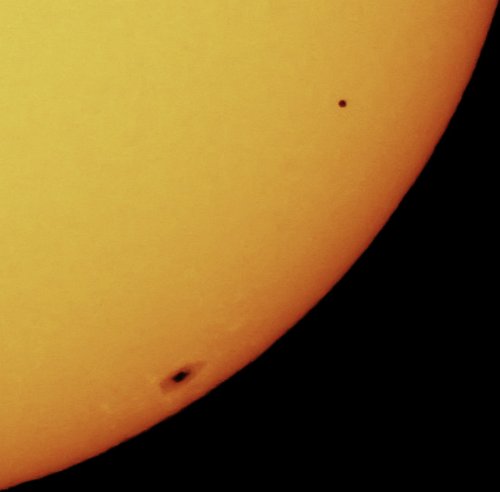
- Flexible 8-by-8-inch polymer sheet
- Can be adapted for three device types
- Produces an orange solar image
Best For: DIY telescope, binocular, or camera filter projects
Best for 127mm and 130mm Reflectors
EclipSmart Reflector Solar Filter

- ISO 12312-2:2015(E) compliant
- Fits select Celestron reflector models
- Includes straps and a protective cap
Best For: Compatible Celestron 127mm and 130mm reflector telescopes
Best DIY Solar Filter Sheet

- Large 12-by-12-inch sheet
- Works with multiple optical devices
- Orange solar image
Best For: Custom filters for larger optics and multiple projects
Best Compact Camera Filter

- 10.1-centimeter size
- Designed for cameras
- Black polymer construction
Best For: Compact camera-based solar observation
Best Small DIY Solar Filter

- 6-by-6-inch sheet
- Fits telescopes, binoculars, and cameras
- Natural orange solar image
Best For: Compact custom filter projects
Best Universal Fit
Celestron EclipSmart Universal

- ISO 12312-2:2015(E) compliant solar viewing
- Fits 75–100 mm objective lenses
- Folds flat with reusable storage bag
Best For: Multiple compatible telescopes, spotting scopes, or DSLR cameras
Best DIY Value
Thousand Oaks 4-Inch Solar Filter Sheet

- 4-by-4-inch black polymer sheet
- Compatible with telescopes, binoculars, and cameras
- Designed for custom filter construction
Best For: DIY solar-filter projects and flexible multi-device use
Best Dedicated Fit
Celestron EclipSmart AstroMaster 70

- Made for specified AstroMaster 70 telescopes
- ISO 12312-2:2015(E) compliant
- Three screws and protective safety cap
Best For: Celestron AstroMaster 70AZ, 70EQ, or LT 70AZ owners
Best for 8-inch Celestron SCTs – EclipSmart 8-inch Solar Filter
For shoppers comparing solar observation filters under 100, this Celestron EclipSmart model is a ready-to-use option for compatible 8-inch Schmidt-Cassegrain and EdgeHD telescopes. It is ISO 12312-2:2015(E) compliant and designed for viewing eclipses, sunspots, and the Sun.
Best For: Owners of compatible Celestron 8-inch Schmidt-Cassegrain or EdgeHD telescopes who want a secure, fitted solar filter.
Pros:
- Conforms to the ISO 12312-2:2015(E) safety standard.
- Two hook-and-loop straps help keep the filter attached.
- Orange-tint solar film provides a natural-looking view and supports image capture.
- Includes a two-year US warranty and access to US-based support.
Cons:
- Compatibility is limited to specified 8-inch Celestron telescope designs.
- It is a telescope filter rather than a general-purpose sheet for custom projects.
This is a practical pick when you want a purpose-built filter for a compatible 8-inch Celestron setup, especially if a secure fit and included manufacturer support matter.
Best Neutral-Density Option – Optolong ND3 2-inch Solar Filter
Among solar observation filters under 100, this Optolong ND3 filter is a specialized brightness-reduction accessory for use with a solar wedge or eyepiece. Its ND-3.0 rating provides 0.1% transmission while retaining color balance, but it should be used only in the appropriate solar-viewing setup.
Best For: Experienced telescope users who need a 2-inch neutral-density filter for a solar wedge or compatible eyepiece, as well as lunar, Venus, or double-star observing.
Pros:
- ND-3.0 rating delivers a stated 1,000 reduction factor and 0.1% transmission.
- Uniform wavelength transmission is designed to preserve true color.
- Multi-coated Schott glass and a CNC-machined black-anodized cell support durability.
- Includes a plastic case with EVA lining.
Cons:
- It is not presented as a standalone front-aperture solar filter.
- Its 48mm thread and 2-inch format may not fit every telescope or eyepiece.
- Using it for solar viewing requires a compatible solar wedge or suitable setup.
This filter suits buyers seeking controlled brightness reduction and optical versatility, but its specialized design makes compatibility and correct solar equipment essential considerations.
Best DIY Sheet – Thousand Oaks 8-by-8 Solar Filter Sheet
For budget-minded shoppers researching solar observation filters under 100, this 8-by-8-inch Thousand Oaks polymer sheet offers a flexible DIY approach. It can be cut and mounted for a telescope, binoculars, or camera, making it useful when a pre-sized filter is not the right fit.
Best For: Makers who want to construct a custom solar filter for compatible telescopes, binoculars, or cameras.
Pros:
- Works across telescopes, binoculars, and cameras when properly mounted.
- Black polymer is intended for observing sunspots and granulation.
- Produces a natural orange solar image.
- The manufacturer states it is stronger than Mylar and guarantees it for five years.
Cons:
- It requires the buyer to create and attach a suitable filter holder.
- The notes warn that the sheet must be secured with sticky tape so it cannot fall during use.
- No factory-made enclosure or coating is included.
This is a cost-conscious choice for experienced users comfortable with careful construction and attachment. Its flexibility is valuable, but the safety of the finished assembly depends on securing it properly.
Best for 127mm and 130mm Reflectors – EclipSmart Reflector Solar Filter
For buyers comparing solar observation filters under 100 for mid-size reflector telescopes, this Celestron EclipSmart model is designed for select 127mm and 130mm instruments. It conforms to ISO 12312-2:2015(E) and includes attachment features intended for eclipse and everyday solar viewing.
Best For: Owners of compatible Celestron PowerSeeker, Astro Fi, NexStar, Omni XLT, SkyProdigy, or StarSense Explorer 127mm and 130mm reflectors.
Pros:
- Conforms to the ISO 12312-2:2015(E) safety standard.
- Two hook-and-loop straps help provide a snug attachment.
- A safety cap helps protect the filter surface when not in use.
- Orange-tint film gives a natural-looking view and supports image capture.
Cons:
- Compatibility is limited to the listed 127mm and 130mm reflector models.
- It is not a universal filter for all telescope apertures.
This is a straightforward choice for owners of the named Celestron reflectors who prefer a fitted filter with a protective cap, manufacturer warranty, and support rather than a DIY sheet.
Best DIY Solar Filter Sheet – 12-Inch Black Polymer
If you need solar observation filters under 100 for several types of equipment, this 12-by-12-inch Thousand Oaks Optical sheet gives you plenty of material to make a custom filter. Its black polymer produces an orange solar image and is designed for telescopes, binoculars, cameras, finders, and pocket eclipse viewers.
Best For: DIY filters for larger optics or multiple observing projects.
Pros:
- Large 12-by-12-inch sheet can be cut for different devices.
- Compatible with telescopes, finders, binoculars, cameras, and pocket eclipse viewers.
- Black polymer is intended for viewing sunspots and granulation.
- Produces a solar-yellow-orange image with a flat surface.
Cons:
- Requires you to build and securely attach the filter yourself.
- Ships in cardboard and does not include a storage case.
- The sight block must be removed or covered if it is unprotected.
This is a flexible option when you want one sheet to support multiple custom builds. Plan carefully for secure mounting and storage before observing.
Best Compact Camera Filter – Rainbow Symphony 101mm
For shoppers comparing solar observation filters under 100 for camera use, the Rainbow Symphony 101mm Black Polymer filter is a compact option. Its listed 10.1-centimeter size is designed for cameras and uses a black polymer filter material.
Best For: Camera users seeking a compact 101mm-class solar filter.
Pros:
- Compact 10.1-centimeter filter size.
- Designed for camera compatibility.
- Uses black polymer filtering material.
- Listed with a multi-coating description.
Cons:
- Its listed camera compatibility may not suit telescope or binocular setups.
- Does not include stated water resistance.
- The supplied details do not specify a storage case.
This filter makes the most sense when its 101mm sizing matches your camera setup. Confirm fit and secure attachment before use.
Best Small DIY Solar Filter – 6-Inch Polymer Sheet
Thousand Oaks Optical 6"x6" Solar Filter Sheet for Telescopes, Binoculars and Cameras
Check Price On AmazonThis 6-by-6-inch Thousand Oaks Optical sheet is a practical choice among solar observation filters under 100 when you need a smaller DIY filter. The silver-black polymer is intended for telescopes, binoculars, and cameras, with the sun appearing orange through the finished setup.
Best For: Smaller telescope, binocular, and camera filter projects.
Pros:
- Compact 6-by-6-inch sheet is suitable for smaller builds.
- Compatible with telescopes, binoculars, and cameras.
- Designed for observing sunspots and granulation.
- Produces a natural orange solar image.
Cons:
- Requires DIY construction and secure attachment.
- Smaller sheet offers less material than a 12-by-12-inch option.
- The filter is not water resistant.
Choose this sheet if you want a budget-conscious, compact material for one appropriately sized custom filter. Follow the supplied warning and use sticky tape to help keep the filter attached during observation.
Best Universal Fit – Celestron EclipSmart Universal
For shoppers comparing solar observation filters under 100, the Celestron EclipSmart Universal is a versatile option for telescopes, spotting scopes, and DSLR cameras with objective lenses measuring 75–100 mm across. Its folding design makes setup and storage straightforward.
Best For: Observers who want one solar filter for compatible telescopes, spotting scopes, or DSLR cameras.
Pros:
- Conforms to the ISO 12312-2:2015(E) safety standard for direct solar viewing.
- Fits objective lenses with outside diameters from 75 to 100 mm.
- Adjustable side panels and an elastic band help secure the filter.
- Folds flat and includes a reusable storage bag.
Cons:
- Compatibility depends on measuring the objective lens diameter accurately.
- The paper enclosure is not water resistant.
Its broad fit range and included securing hardware make this a practical choice for households with more than one compatible optical device. The orange-tinted solar film is also intended for visual observing and imaging.
Best DIY Value – Thousand Oaks 4-Inch Solar Filter Sheet
Among solar observation filters under 100, this 4-by-4-inch Thousand Oaks Optical sheet is aimed at buyers who prefer to make a custom filter. The black polymer material can be used with telescopes, binoculars, or cameras and produces a natural orange solar image.
Best For: Experienced users who need a flexible sheet for building a custom solar filter.
Pros:
- Works with telescopes, binoculars, and cameras.
- Black polymer is designed for observing sunspots and solar granulation.
- Stronger-than-Mylar construction with filtering properties within the substrate.
- Compact 4-by-4-inch sheet can cost less than a factory-made filter.
Cons:
- Requires the buyer to construct a suitable filter mount.
- It must be firmly attached with tape before observing.
This sheet offers customization and economical coverage, but it is not a ready-to-use filter. Careful construction and secure attachment are essential before pointing any optical device at the Sun.
Best Dedicated Fit – Celestron EclipSmart AstroMaster 70
For solar observation filters under 100, the Celestron EclipSmart AstroMaster 70 is a purpose-built choice for specific 70 mm AstroMaster refractor telescopes. Its three safety screws provide a snug attachment, while the included cap helps protect the filter between uses.
Best For: Owners of Celestron AstroMaster 70AZ, 70EQ, or AstroMaster LT 70AZ telescopes.
Pros:
- Conforms to the ISO 12312-2:2015(E) safety standard.
- Designed specifically for compatible Celestron 70 mm AstroMaster telescopes.
- Three safety screws help secure the filter to the objective.
- Includes a safety cap for protecting the filter when stored.
Cons:
- Compatibility is limited to the listed AstroMaster 70 models.
- It is less adaptable than a universal filter for other optical equipment.
If you own one of the specified AstroMaster telescopes, the dedicated fit simplifies installation and provides a more tailored setup than a generic sheet. Verify your exact telescope model before ordering.
How We Picked the Best Solar Observation Filters Under 100
We focused on filters intended for direct solar observation and compared the practical details that matter most: stated safety or compliance information, optical compatibility, filter size, mounting style, material, and likely ease of use. The selection includes dedicated filters for particular telescope apertures, universal models, and solar-filter sheets that can be adapted to different instruments.
Because solar viewing carries serious eye-safety risks, product claims and fit are more important than brand recognition or the lowest price. A filter should be made specifically for solar observation and attached to the front of the telescope, binocular, or camera lens—not placed at the eyepiece.
Quick Comparison
- Best for a matched telescope fit: Celestron EclipSmart models made for specific apertures or telescope families.
- Best for flexible projects: 4-by-4-inch, 6-by-6-inch, and 8-by-8-inch solar filter sheets.
- Best for larger instruments: The BP-12 12-by-12-inch sheet or a properly sized large-aperture filter.
- Best for binoculars and cameras: Cut-to-size sheets, provided each optical path receives its own secure filter.
- Best for experienced observers: The mounted ND3 filter, but only when its specifications and intended solar use match the observation setup.
Key Buying Factors for Solar Observation Filters Under $100
Fit and Front-Mounted Security
Measure the outside diameter of the telescope or lens where the filter will attach. Do not rely only on the advertised telescope model. The filter should fit tightly enough that it cannot slip, tilt, or blow off, while remaining easy to inspect before use.
Material and Stated Solar Suitability
Look for a product explicitly made for solar observation, with clear information about its filtering material and safety standard where applicable. Ordinary neutral-density, photographic, or lunar filters are not automatically safe for viewing the Sun.
Size and Field of Use
Sheets offer flexibility and can work with unusual apertures, binoculars, and camera lenses, but they require careful cutting and secure mounting. A dedicated mounted filter is usually faster and less prone to installation mistakes.
Instrument Compatibility
Check whether the product is designed for refractors, reflectors, binoculars, cameras, or a particular aperture. Reflectors and refractors can have different clearance and mounting requirements, so a universal label does not replace measuring your equipment.
Inspection and Handling
Before every session, inspect the filter for pinholes, scratches, tears, loose edges, or mounting damage. Never use a damaged filter, and never look through an unfiltered optical path at the Sun—even briefly.
Who Should Buy Which Solar Observation Filters Under 100?
Choose a telescope-specific Celestron EclipSmart filter if you own a compatible instrument and want the simplest installation. Select a universal filter when your equipment may change, but confirm the dimensions and attachment method before ordering.
Solar-filter sheets are a good choice for budget-conscious users, educators, and observers with multiple devices. They provide useful size flexibility, though the finished mount must be opaque, secure, and free of gaps. For binoculars, filter both objectives independently. Camera users should also verify that the filter is appropriate for the lens and sensor setup.
If you are uncertain about a filter’s solar rating, fit, or condition, do not use it. A correctly sized, purpose-built filter is worth prioritizing over a cheaper improvised alternative.