The best science experiment sets for high school students turn abstract lessons into hands-on practice. This roundup compares chemistry, physics, microbiology, genetics, DNA, and forensic science kits for different ages, skill levels, and project goals.
Whether you need a structured lab curriculum, introductory equipment, or materials for a specific science fair topic, use the guide below to compare experiment range, included tools, supervision needs, and overall learning value.
Best 10 Science Experiment Sets for High School Students Picks for 2026
Advanced Chemistry Pick

- 333+ experiments across major chemistry topics
- 192-page illustrated laboratory manual
- Includes lab equipment, chemicals, and safety goggles
Best For: Aspiring chemists and advanced, supervised home study
Hands-On Physics Pick
EUDAX Electricity and Magnetism Lab
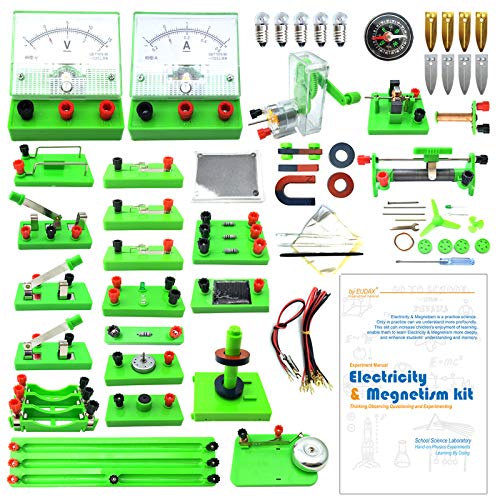
- Builds circuits, electromagnets, and generators
- Includes 79 listed items and a color manual
- Covers introductory electricity and magnetism
Best For: Grades 9–11 physics and electronics projects
Intermediate Chemistry Pick

- Includes 250 experiments in 18 chapters
- Adds an alcohol burner for heat-based activities
- Covers acids, electrochemistry, chromatography, and food chemistry
Best For: Students progressing toward high school chemistry
Microbiology Project Pick
Evviva Sciences Agar Plate Kit

- Includes 10 pre-poured agar Petri dishes
- Comes with swabs, pipette, vial, and eBook
- Designed for focused microbiology projects
Best For: Ages 15+ classroom and science-fair biology projects
DNA Discovery Lab

- 20 guided genetics and DNA experiments
- Includes plant DNA isolation materials and a DNA model
- Full-color 48-page manual supports structured learning
Best For: Biology-focused learners ages 10–16
Forensic Chemistry Investigation
Unknown Substances Analysis Kit

- Supports investigations for 15 groups
- Tests unknown substances using observation and chemistry
- Includes teacher, student, and safety documentation
Best For: Collaborative forensic chemistry classroom activities
Hands-On Chemistry Station

- 57-piece setup with varied lab vessels
- Includes slime, fizzing, bubbles, and chromatography activities
- Non-hazardous chemicals and no borax included
Best For: Colorful introductory chemistry activities
Hands-On Mechanics Lab
26-Experiment Physics Mechanics Kit

- Supports 26 hands-on mechanics experiments
- Includes pulleys, balance, ramp, trolley, and gauges
- Designed for ages 14+ with a detailed manual
Best For: High school physics students studying core mechanics
Classroom Chemistry Essentials
Student Chemistry Lab Utility Set

- Includes test tubes, beakers, petri dishes, and pipettes
- Also supplies a rack, stand, gauze, lamp, and filter papers
- Supports chemistry, biology, and general science activities
Best For: Supervised classroom lab instruction using basic equipment
Extended Mechanics Practice
30+ Experiment Physics Mechanics Lab Kit

- Supports more than 30 classic physics experiments
- Covers forces, fluids, friction, levers, pulleys, and energy
- Includes a manual, varied tools, and organized storage
Best For: Physics labs needing broad, repeatable mechanics activities
Advanced Chemistry Pick – Thames & Kosmos CHEM C3000
For students seeking science experiment sets for high school students with substantial chemistry coverage, the Thames & Kosmos CHEM C3000 offers more than 333 hands-on experiments across inorganic, organic, and electrochemistry topics. Its extensive manual and laboratory-style equipment make it a strong choice for supervised home study.
Best For: Aspiring chemists, homeschoolers, and students preparing for high school chemistry who want a comprehensive, advanced kit.
Pros:
- Includes more than 333 experiments in 27 organized chapters.
- 192-page full-color manual explains concepts such as bonding, acids and bases, redox reactions, and organic chemistry.
- Provides glassware, an alcohol burner, electrochemistry components, safety goggles, and selected chemicals.
- Includes safety, first-aid, labeling, and waste-disposal guidance.
Cons:
- Adult supervision is required throughout use.
- Some experiments require additional common household materials.
- Its advanced scope may be more than younger or beginner students need.
CHEM C3000 is the most expansive option in this group for students who want a genuine chemistry-lab experience. Its breadth and equipment support long-term exploration, provided an adult can supervise chemical handling and safety procedures.
Hands-On Physics Pick – EUDAX Electricity and Magnetism Lab
Students comparing science experiment sets for high school students who prefer building and testing circuits may find the EUDAX electricity and magnetism kit a practical choice. It focuses on foundational physics projects, including circuits, electromagnetism, resistance, and generators.
Best For: Students in grades 9–11 exploring basic electricity, magnetism, and introductory electronics through guided projects.
Pros:
- Supports projects such as series and parallel circuits, fruit batteries, electromagnets, and electric bells.
- Includes 56 electricity items, 21 magnetism items, repair tools, and a color-page manual.
- Offers hands-on practice with Ohm’s law, Oersted experiments, Ampère’s force, and hand-crank generators.
- Comes in a storage bag for organizing the components.
Cons:
- Three AA batteries are required but not included.
- The kit is focused on basic electricity and magnetism rather than a broad physics curriculum.
- Some listed age guidance extends below the high-school range, so advanced students may want more challenging projects.
This EUDAX kit is best suited to learners who understand concepts more readily by assembling models and observing results. It provides a focused introduction to electricity and magnetism rather than a complete laboratory course.
Intermediate Chemistry Pick – Thames & Kosmos CHEM C2000
For shoppers looking for science experiment sets for high school students that balance depth and approachability, the Thames & Kosmos CHEM C2000 provides 250 real chemistry experiments. It builds from foundational concepts into heat-based reactions, electrochemistry, chromatography, and food chemistry.
Best For: Students ready to move beyond beginner chemistry kits and build a strong foundation for high school-level study.
Pros:
- Includes 250 experiments organized across 18 themed chapters.
- 128-page full-color manual provides step-by-step procedures and scientific explanations.
- Alcohol burner and laboratory components enable combustion, evaporation, crystallization, and heated reactions.
- Includes glassware, electrolysis equipment, chemicals, and safety goggles.
Cons:
- Adult supervision is required.
- Some activities involve an alcohol burner and require careful heat-related safety practices.
- Its recommended age range may make it less suitable for older students seeking advanced chemistry.
CHEM C2000 is a practical middle ground between introductory and advanced chemistry sets. It offers meaningful laboratory work and broad topic coverage without the larger experiment count and greater complexity of the C3000.
Microbiology Project Pick – Evviva Sciences Agar Plate Kit
Students looking for science experiment sets for high school students with a biology focus can use the Evviva Sciences Microbiology Science Project Kit to explore basic culture-based activities. The pre-poured agar plates remove the need to melt and pour agar, making setup more accessible for supervised projects.
Best For: Students age 15 and older working on classroom or science-fair microbiology projects with adult guidance.
Pros:
- Includes 10 pre-poured nutrient agar Petri dishes ready for experiments.
- Provides cotton-tipped swabs, a pipette, a plastic vial, instructions, and an educational eBook.
- Thick, prepared agar simplifies setup compared with preparing plates from scratch.
- Compact packaging is convenient for a focused project kit.
Cons:
- It is a specialized microbiology kit rather than a broad science set.
- The recommended age is 15 and older.
- Users should follow the supplied instructions and appropriate supervision for culture-based activities.
This kit is a focused option for students who want a manageable microbiology project rather than a multi-topic laboratory set. Its ready-to-use plates and included guide make it particularly convenient for science-fair or classroom exploration.
DNA Discovery Lab – Genetics & DNA Lab
For shoppers comparing science experiment sets for high school students, the Thames & Kosmos Genetics & DNA Lab offers a focused introduction to genetics through 20 guided experiments. Students can isolate plant DNA, study inheritance, and build a model of DNA while following a 48-page, full-color manual.
Best For: Students ages 10–16 who want a structured, biology-focused lab centered on genetics and DNA.
Pros:
- Includes 20 experiments with a detailed 48-page manual.
- Combines hands-on DNA isolation with inheritance activities and a DNA model.
- Includes specialized materials such as test tubes, filter paper, a petri dish, and an inheritance worksheet.
Cons:
- Its focus is genetics rather than broad chemistry or physics topics.
- Recommended for ages 10–16, so it may not suit every high school learner.
This is a strong choice when the goal is a guided genetics unit with tangible lab activities and visual learning aids. Its narrow theme makes it less versatile than an all-purpose science kit, but useful for biology coursework.
Forensic Chemistry Investigation – Unknown Substances Analysis Kit
Among science experiment sets for high school students, the ALDON Innovating Science Forensic Chemistry kit stands out as a collaborative classroom resource. Students analyze unknown substances using observation and chemical tests, with teacher and student guides supporting a structured forensic science lesson.
Best For: Classroom groups studying forensic chemistry, observation, and evidence-based problem solving.
Pros:
- Provides materials for 15 groups, making it suitable for collaborative activities.
- Centers experiments on identifying unknown substances through observation and chemical testing.
- Includes a teacher’s manual, student study guide, and safety data sheets.
Cons:
- The supplied notes do not describe a broad range of topics beyond forensic chemistry.
- Safety data sheets and controlled handling are required when working with the included chemicals.
This kit is best viewed as a group-oriented instructional resource rather than a casual home science set. Its strongest advantage is classroom scalability, especially when educators want a guided forensic chemistry investigation.
Hands-On Chemistry Station – Ooze Labs Chemistry Station
For learners seeking science experiment sets for high school students with a ready-to-use lab setup, the Ooze Labs Chemistry Station provides 57 pieces for practical chemistry activities. Students can make glowing slime, explore fizzing reactions, create oozing bubbles, and try chromatography using included vessels and non-hazardous chemicals.
Best For: Students ages 6 and up who prefer colorful, activity-driven chemistry with a complete plastic lab station.
Pros:
- Includes 57 pieces, including beakers, test tubes, flasks, pipettes, and other lab equipment.
- Offers varied activities such as slime, fizzing reactions, underwater volcanoes, and chromatography.
- Provides experiment cards plus a 16-page, full-color manual.
- Uses non-hazardous chemicals and does not contain borax.
Cons:
- Its recommended age range begins at six, so advanced students may find the activities less demanding.
- The emphasis is on engaging introductory chemistry rather than high-school-level theory.
This is a convenient pick for younger learners or families wanting an inviting introduction to chemistry. Older students may appreciate the hands-on setup, but those seeking rigorous high school lab work may prefer a more specialized kit.
Hands-On Mechanics Lab – 26-Experiment Physics Mechanics Kit
For shoppers comparing science experiment sets for high school students, this mechanics kit offers a focused way to investigate core physics through hands-on work. Its 26 experiments use tools such as pulleys, a balance, force gauge, trolley, ramp, and pressure gauge to connect classroom concepts with measurable results.
Best For: High school students ages 14 and up studying Newton’s laws, kinematics, gravity, force, pressure, buoyancy, pulleys, and levers.
Pros:
- Includes equipment for 26 mechanics experiments.
- Covers several foundational classical mechanics topics.
- Comes with a professional manual and organized storage box.
- Metal and plastic components are designed for repeated use.
Cons:
- Its subject focus is primarily physics mechanics rather than broad science.
- The kit may be more specialized than needed for introductory general science activities.
This is a practical choice when the goal is structured mechanics practice rather than a collection of unrelated demonstrations. The included tools and manual make it suitable for classroom labs, independent study, or supervised family exploration.
Classroom Chemistry Essentials – Student Chemistry Lab Utility Set
This chemistry utility set is a straightforward option among science experiment sets for high school students, supplying common lab vessels and accessories for structured classroom activities. It includes glass test tubes, beakers, petri dishes, pipettes, a rack, an iron stand, wire gauze, an alcohol lamp, and filter papers.
Best For: Students ages 14 and up who need basic equipment for chemistry, biology, and general science activities in a school or supervised learning setting.
Pros:
- Provides a broad selection of basic laboratory equipment.
- Supports classroom demonstrations and hands-on STEM learning.
- Includes both glass and plastic lab components.
- Compact 12-by-12-by-5-inch package is convenient to store.
Cons:
- The notes do not specify included chemicals or detailed experiment instructions.
- Its equipment-focused format may require a teacher or separate lesson plans.
- Because it includes glassware and an alcohol lamp, appropriate supervision is important.
Choose this set if you primarily need foundational labware rather than a narrowly themed experiment kit. It can support varied instruction, but educators should confirm the exact lesson materials and safety procedures before use.
Extended Mechanics Practice – 30+ Experiment Physics Mechanics Lab Kit
For buyers seeking science experiment sets for high school students with broad mechanics coverage, this kit provides a large collection of measurement and motion tools. It supports more than 30 listed experiments, including density, friction, pressure, buoyancy, levers, pulley groups, mechanical efficiency, energy conversion, and a gravity car activity.
Best For: Physics classrooms, laboratories, and students who want a wide range of guided mechanics investigations with reusable equipment.
Pros:
- Supports more than 30 classic physics experiments.
- Includes balances, weights, pulleys, a spring scale, ruler, cylinder, ramp, trolley, and pressure equipment.
- Covers measurement, motion, forces, fluids, simple machines, and energy.
- Includes a detailed manual and compact storage design.
Cons:
- The supplied details describe it primarily for junior school physics, so advanced students may find some activities basic.
- The large assortment may require careful sorting and setup.
- The notes provide incomplete age information, listing the range as adult.
This is the strongest fit of the three for breadth of mechanics topics. It makes sense for an instructor or learner who values a systematic lab sequence and wants one kit to cover measurement, forces, fluids, and simple machines.
How We Picked the Best Science Experiment Sets for High School Students
We selected these kits for their educational usefulness, subject coverage, experiment variety, and suitability for high school-level learning. The lineup includes broad chemistry sets, focused physics and mechanics labs, electricity and magnetism equipment, microbiology materials, genetics activities, and forensic chemistry projects.
We also considered whether each set provides a usable lab manual or instructions, the type of hands-on equipment included, the likely need for household supplies or protective gear, and how well the kit fits independent study, classroom work, or supervised group projects. Product descriptions and included contents can vary by seller, so confirm the current package before purchasing.
Quick Comparison
| Best For | Look For | Featured Kit Types |
|---|---|---|
| Broad chemistry practice | Many experiments, reagents, glassware, and a detailed manual | Intermediate and advanced chemistry sets |
| Physics fundamentals | Pulleys, balances, force gauges, and repeatable measurements | Mechanics lab kits |
| Electricity and magnetism | Circuits, components, magnets, and clear wiring guidance | Electricity discovery kits |
| Biology and microbiology | Prepared culture materials, sterile handling guidance, and disposal instructions | Microbiology and genetics kits |
| Applied science projects | A defined investigation, sample materials, and group-ready quantities | Forensic chemistry kits |
Key Buying Factors for Science Experiment Sets for High School Students
Subject and Difficulty Level
Choose a kit that matches the student’s current coursework. A broad chemistry set is useful for building laboratory confidence, while a genetics, microbiology, mechanics, or forensic kit is better for focused study or a project. Advanced sets may assume familiarity with measurement, chemical handling, graphing, and lab safety.
Experiment Count Versus Usable Depth
A high experiment count is helpful only when the instructions, materials, and equipment support meaningful repetition. Look for manuals that explain the scientific principle, identify variables, and encourage recording observations rather than simply providing demonstrations.
Equipment, Consumables, and Safety
Check whether the kit includes all essential tools or only specialty components. You may need safety goggles, gloves, distilled water, batteries, cleaning supplies, or common household materials. Chemistry and microbiology activities require particularly careful supervision, ventilation, sanitation, and disposal. Follow the manufacturer’s safety directions and never substitute unknown chemicals or samples.
Teaching Format and Storage
For home learning, compact kits with organized components and clear instructions are easier to use. Classroom buyers should prioritize durable equipment, refill availability, and quantities suitable for multiple students. Prepared biological materials may also have storage limits, so review shelf-life and delivery timing.
Who Should Buy Which Science Experiment Sets for High School Students?
- For a comprehensive chemistry curriculum: Choose a full chemistry set with a substantial manual and a wide selection of tools and reagents.
- For students studying introductory physics: A mechanics kit with a pulley, balance, and force-measuring equipment supports practical work with motion and forces.
- For electricity lessons: Select a circuit and magnetism kit with clearly labeled components and repeatable experiments.
- For biology-focused projects: Microbiology, genetics, and DNA kits offer more targeted activities than general science sets; verify handling and disposal requirements first.
- For group or science fair work: A project-oriented forensic chemistry kit can provide a defined investigation, while larger multi-student packs may offer better value.
Before ordering, compare the included contents, recommended age, safety requirements, experiment instructions, and replacement-material needs. The best choice is the kit that fits the student’s curriculum and can be used safely and consistently.