Photographers need more than raw capacity: a good storage enclosure should protect an expanding library, move large image files quickly, and remain easy to upgrade as drives fill up. RAID enclosures can provide flexible capacity and redundancy without requiring a full network-attached storage system.
We’ve selected 10 options ranging from portable two-bay USB models to large Thunderbolt and five-bay enclosures. The right choice depends on your computer’s ports, preferred RAID level, drive budget, and whether you need simple direct-attached storage or a faster professional workflow.
Best 10 Raid Enclosures for Photo Storage Picks for 2026
Versatile DAS
QNAP TR-004 4-Bay Hardware RAID Enclosure
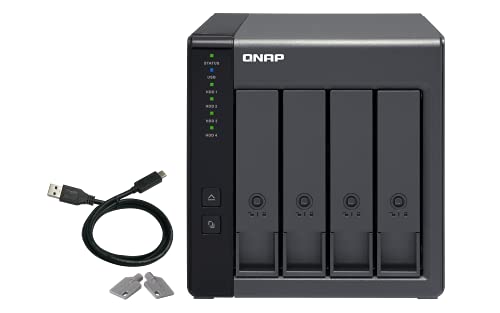
- Four USB-connected SATA drive bays
- Hardware RAID 0, 1, 5, JBOD, and individual disks
- Works with Windows, macOS, and Linux
Best For: Four-bay photo storage and QNAP NAS backup
High-Capacity Workstation
OWC ThunderBay 8 Thunderbolt RAID Enclosure

- Eight bays for 2.5-inch or 3.5-inch drives
- SoftRAID Premium with multiple RAID modes
- Dual Thunderbolt 3 ports support daisy-chaining
Best For: Large photo libraries and fast Thunderbolt workflows
Compact Two-Bay Value
TerraMaster D2-320 USB RAID Enclosure

- Two-bay USB 3.2 Gen 2 DAS
- Hardware RAID 0, 1, JBOD, and Single
- Tool-free trays with intelligent fan control
Best For: Simple mirrored photo backups at a compact size
Balanced Thunderbolt Storage
OWC ThunderBay 4 Four-Bay Enclosure

- Four bays fit 3.5-inch or 2.5-inch SATA drives
- Supports RAID 0, 1, 4, 5, and 10
- Up to 1,527 MB/s sustained performance listed
Best For: Thunderbolt-equipped photo editing desktops
Flexible Capacity Pick

- Four bays for 2.5- and 3.5-inch SATA drives
- Supports up to 80TB and eight RAID modes
- USB-A/USB-C 3.0 and eSATA connections
Best For: Individuals needing configurable, high-capacity direct-attached storage
High-Speed Premium Pick
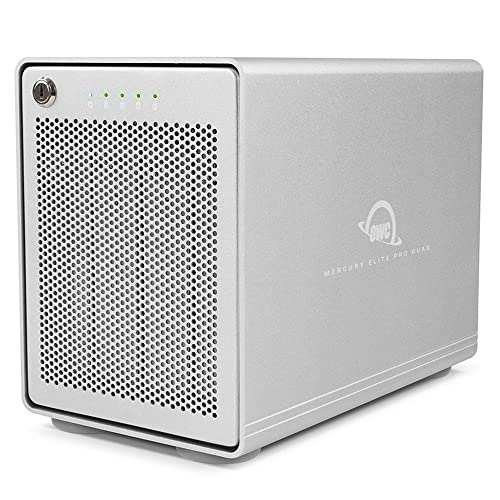
- Four bays support 2.5- and 3.5-inch drives
- USB-C 10Gbps interface for Mac or Windows
- Advertised performance up to 947MB/s
Best For: Users seeking fast USB-C expansion with software RAID support
Large-Project Value Pick

- Up to 88TB across four 3.5-inch drives
- Eight modes including RAID, JBOD, and CLONE
- 150W power supply with 80mm cooling fan
Best For: Large photo libraries and multi-drive backup workloads
Best for Flexible RAID Workflows

- Eight modes, including RAID 1/5/10 and Clone
- Five SATA bays with up to 160TB stated capacity
- Smart cooling and USB-C connectivity
Best For: Photographers needing adaptable RAID and large expansion capacity
Best for Large Photo Archives
Yottamaster PS500RC3 5-Bay RAID

- Supports RAID 0/1/3/5/10, JBOD, and Clone
- Five bays support up to 110TB stated capacity
- Removable trays and temperature-controlled fan
Best For: Large photo libraries and studio storage workflows
Best Non-RAID Simple Storage

- Four bays support up to 80TB stated capacity
- Tool-free and hot-swappable drive access
- USB-A/C 3.0 with Windows, Mac, and Linux support
Best For: Simple multi-drive expansion without built-in RAID
Versatile DAS – QNAP TR-004 4-Bay Hardware RAID Enclosure
QNAP TR-004 4 Bay USB Type-C Direct Attached Storage (DAS) with hardware RAID (Diskless)
Check Price On AmazonThe QNAP TR-004 is a practical choice for photographers seeking RAID enclosures for photo storage without setting up a separate NAS. Its four drive bays, USB Type-C connection, and hardware RAID support make it suitable for expanding desktop storage or backing up a QNAP NAS.
Best For: Photographers who need four-bay, direct-attached storage with flexible RAID modes.
Pros:
- Supports RAID 0, 1, 5, JBOD, and individual disks.
- Four 3.5-inch SATA bays accommodate substantial storage expansion.
- Works with Windows, macOS, and Linux through USB Type-C.
- Lockable drive bays and a metal enclosure add practical durability.
Cons:
- Drives are not included.
- It is a DAS rather than a network-accessible NAS.
- QNAP NAS compatibility has specific model and QTS-version limitations.
The TR-004 offers a balanced mix of capacity, RAID flexibility, and straightforward USB connectivity. Check compatibility carefully if you plan to connect it to a QNAP NAS, especially because its storage pool cannot be combined with the connected NAS.
High-Capacity Workstation – OWC ThunderBay 8 Thunderbolt RAID Enclosure
The OWC ThunderBay 8 is designed for photographers and creative professionals who need high-capacity RAID enclosures for photo storage. Eight universal bays, dual Thunderbolt 3 ports, and bundled SoftRAID Premium support fast, configurable desktop storage.
Best For: High-volume photo libraries and demanding Mac or Windows Thunderbolt workflows.
Pros:
- Eight bays support both 2.5-inch and 3.5-inch SSDs or HDDs.
- SoftRAID Premium supports RAID 0, 1, 4, 5, 10, and JBOD.
- Dual Thunderbolt 3 ports enable daisy-chaining additional devices.
- Includes a Thunderbolt cable and tool-free thumb-screw drive trays.
Cons:
- Drives are not included.
- Thunderbolt connectivity may be excessive for basic backup needs.
- The enclosure is relatively heavy at 7.3 kg.
With eight bays and transfer speeds listed up to 2,586 MB/s, the ThunderBay 8 is built for expandable, performance-oriented storage. Its RAID configuration is software-based through SoftRAID Premium, so it suits users comfortable managing a desktop RAID array.
Compact Two-Bay Value – TerraMaster D2-320 USB RAID Enclosure
The TerraMaster D2-320 is a compact option for photographers comparing RAID enclosures for photo storage on a smaller budget or footprint. Its USB 3.2 Gen 2 connection, hardware RAID, and support for two SATA drives make it useful for mirrored photo backups or expanded desktop storage.
Best For: Home photographers who want a simple two-drive RAID 1 backup enclosure.
Pros:
- Hardware RAID supports RAID 0, RAID 1, JBOD, and Single modes.
- USB 3.2 Gen 2 provides up to 10 Gbps connectivity.
- Supports two 3.5-inch or 2.5-inch SATA HDDs or SSDs.
- Tool-free trays and temperature-controlled cooling simplify use.
Cons:
- Only two drive bays are available.
- Drives are not included.
- The plastic enclosure may feel less substantial than aluminum alternatives.
The D2-320 is a straightforward DAS for users who value easy installation and hardware RAID. RAID 1 can mirror two drives for added protection, while RAID 0 can provide higher listed performance when redundancy is not the priority.
Balanced Thunderbolt Storage – OWC ThunderBay 4 Four-Bay Enclosure
The OWC ThunderBay 4 is a strong middle-ground choice among RAID enclosures for photo storage, offering four drive bays and Thunderbolt 3 connectivity. It supports both 3.5-inch and 2.5-inch SATA drives and can be configured for several RAID layouts.
Best For: Photographers who need faster Thunderbolt storage with room to grow beyond a two-drive enclosure.
Pros:
- Four bays accept 3.5-inch or 2.5-inch drives without an adapter.
- Supports RAID 0, 1, 4, 5, and 10 configurations.
- Offers listed sustained performance up to 1,527 MB/s.
- Aluminum chassis is designed for quiet operation and heat dissipation.
Cons:
- Drives are not included.
- Thunderbolt 3 is required for compatible Mac or PC use.
- RAID configuration is software-based.
The ThunderBay 4 provides useful capacity expansion without the size of an eight-bay enclosure. Its flexible RAID options and dual Thunderbolt 3 ports make it well suited to desktop editing, backups, and growing photo collections.
Flexible Capacity Pick – CENMATE 4-Bay RAID Enclosure
For shoppers comparing raid enclosures for photo storage, the CENMATE offers four bays, broad drive compatibility, and several hardware RAID modes in a compact aluminum enclosure. It accepts 2.5- and 3.5-inch SATA HDDs or SSDs and supports up to 80TB total capacity, making it suitable for expanding a photo library or backup system.
Best For: Individuals who want flexible RAID configurations and high-capacity direct-attached storage.
Pros:
- Supports four 2.5- or 3.5-inch SATA drives and up to 80TB total.
- Offers RAID 0/1/3/5/10, CLONE, LARGE, and NORMAL modes.
- Includes USB-A/USB-C 3.0 and eSATA connectivity.
- Aluminum construction and dual fans help manage heat.
Cons:
- Hot-swapping is not supported.
- The fans produce approximately 40–50 dB of noise.
- eSATA access to multiple bays requires a computer port with RAID support; changing RAID modes can risk data loss.
The CENMATE is a feature-rich option when capacity and configuration flexibility matter more than silent operation. Its USB 3.0 connection is rated up to 5Gbps, while the included power adapter and broad operating-system compatibility support straightforward desktop use.
High-Speed Premium Pick – OWC Mercury Elite Pro Quad
The OWC Mercury Elite Pro Quad is a premium choice among raid enclosures for photo storage, pairing four universal drive bays with a USB-C 10Gbps interface. It is an empty enclosure, so you can add up to four 2.5- or 3.5-inch SATA drives and configure software RAID separately.
Best For: Mac and Windows users prioritizing fast USB-C performance and a polished four-drive enclosure.
Pros:
- Four bays accommodate both 2.5- and 3.5-inch drives.
- USB 3.2 at 10Gbps works with USB-C and Thunderbolt 3-equipped computers.
- Advertised performance reaches up to 947MB/s.
- Supports software RAID configurations.
Cons:
- Drives are not included.
- SoftRAID software is not included.
- The supplied details specify a one-year OWC limited warranty.
Choose the Mercury Elite Pro Quad when fast USB-C connectivity and support for universal drive sizes are central to your workflow. Because it does not include SoftRAID or installed drives, budget for the components and software configuration needed for your photo-storage setup.
Large-Project Value Pick – ORICO 4-Bay RAID Enclosure
The ORICO 9848RU3 is designed for photographers and creators managing large collections through a direct-attached enclosure. Its four 3.5-inch bays support up to 88TB total, while eight RAID modes, a 150W power supply, and active airflow make it a practical option for expansion and backup tasks.
Best For: Users with large 3.5-inch-drive photo libraries, video projects, or backup workloads.
Pros:
- Supports up to 22TB per disk and 88TB total capacity.
- Provides RAID 0/1/3/5/10, JBOD, CLONE, and CLEAR modes.
- USB 3.0 delivers transfer speeds listed up to 235MB/s.
- Includes a 150W power supply, aluminum body, and 80mm cooling fan.
Cons:
- Supports 3.5-inch SATA disks rather than 2.5-inch drives.
- It uses USB 3.0 rather than a faster USB-C 10Gbps interface.
- The enclosure has a one-year warranty.
The ORICO stands out for maximum stated capacity and a broad selection of RAID layouts. Its trayless design and independent safety lock simplify drive access and help prevent accidental ejection, while the cooling system is intended for sustained multi-drive operation.
Best for Flexible RAID Workflows – UGREEN 5-Bay USB-C DAS
For photographers building a large archive, the UGREEN 5-bay DAS is one of the more flexible raid enclosures for photo storage. It accepts up to five 2.5- or 3.5-inch SATA drives, offers eight storage modes, and connects to Windows, macOS, or Linux systems over USB-C at up to 5Gbps.
Best For: Photographers who want multiple RAID and drive-management options in a high-capacity desktop enclosure.
Pros:
- Supports PM, RAID 0/1/3/5/10, Large, and Clone modes for different workflows.
- Holds up to five SATA drives, with stated support for 160TB total capacity.
- Aluminum housing, temperature-based fan control, and drive sleep behavior help with cooling and noise management.
Cons:
- Changing RAID modes requires reformatting, so a backup is essential first.
- USB transfer speed is limited to up to 5Gbps rather than faster USB standards.
- Drives can connect to a NAS for backup and file transfer but cannot join its storage pool.
Its broad mode selection makes this a strong choice for photographers who may alternate between independent drive access, redundancy, cloning, and capacity-focused storage. The five-bay design also leaves room to expand an existing photo library without repeatedly opening a computer.
Best for Large Photo Archives – Yottamaster PS500RC3 5-Bay RAID
The Yottamaster PS500RC3 is a practical option among raid enclosures for photo storage when capacity and flexible redundancy matter. Its five bays accept 2.5- and 3.5-inch SATA HDDs or SSDs, while hardware and software RAID options support several ways to organize a growing photo archive.
Best For: Photographers and video creators who need a five-drive enclosure for large libraries, backups, or studio workflows.
Pros:
- Supports RAID 0/1/3/5/10, JBOD (SPAN), and Clone modes.
- Provides up to 110TB using five drives rated at up to 22TB each.
- Removable trays, aluminum construction, and an intelligent 80mm temperature-controlled fan simplify drive installation and cooling.
Cons:
- Five-drive operation requires total drive power consumption to stay within the stated 78W limit.
- New drives may need formatting and partitioning before the computer recognizes them.
- USB-C transfer speeds are rated up to 5Gbps.
With both hardware and software RAID setup options, the PS500RC3 can fit photographers who prefer straightforward controls or software-based management. Its removable trays are particularly useful when rotating drives or replacing storage in a busy studio workflow.
Best Non-RAID Simple Storage – CENMATE 4-Bay USB Enclosure
The CENMATE 4-bay enclosure is a straightforward alternative for photographers who need extra drive capacity without RAID management. It supports four 2.5- or 3.5-inch SATA HDDs or SSDs, connects through USB-A or USB-C at up to 5Gbps, and is designed as a plug-and-play DAS rather than a RAID or NAS system.
Best For: Users who want accessible multi-drive photo storage and already plan to manage backups or redundancy separately.
Pros:
- Accepts four SATA drives with stated support for up to 80TB total.
- Tool-free, hot-swappable design makes drive access and replacement convenient.
- Includes both USB-A and USB-C connectivity, with Windows, Mac, and Linux compatibility.
Cons:
- It has no built-in RAID or NAS functionality.
- The fan is rated around 40–50 decibels, which may be noticeable in quiet spaces.
- Transfer performance is limited to up to 5Gbps over USB 3.0.
This enclosure is best viewed as a simple expansion hub for separate photo drives rather than a redundancy solution. Its hot-swappable, tool-free design suits users who value easy access and broad compatibility, provided they handle backup and RAID needs through another system.
How We Picked the Best Raid Enclosures for Photo Storage
We focused on diskless enclosures that let you choose the hard drives or SSDs that fit your capacity and performance needs. Our selection covers two-, four-, five-, and eight-bay designs, with USB and Thunderbolt connectivity, hardware or software RAID options, and support for both 2.5-inch and 3.5-inch SATA drives where specified.
We also considered practical details photographers notice every day: sustained transfer potential, expandability, cooling, hot-swap or tool-free access, compatibility with common operating systems, and the balance between redundancy and usable capacity. An enclosure is only part of a safe workflow, so RAID should supplement—not replace—an independent backup.
Quick Comparison
- Two-bay models: A compact starting point for mirrored storage, smaller libraries, or mobile workstations.
- Four-bay models: A versatile middle ground offering better capacity, RAID flexibility, and room to grow.
- Five-bay models: Useful when you want substantial capacity without moving to an eight-bay chassis.
- Eight-bay models: Best suited to large photo and video libraries, high throughput, and professional expansion plans.
- USB DAS: Broadly compatible and generally simple to deploy with laptops and desktops.
- Thunderbolt DAS: The better fit for compatible Macs and workstations handling large catalogs, previews, and RAW files.
Key Buying Factors for Raid Enclosures for Photo Storage
Capacity and RAID Level
Count usable capacity rather than adding the advertised drive sizes. RAID 1 mirrors data across two drives, reducing usable space but improving drive-failure protection. RAID 5 can provide more efficient capacity in a compatible multi-bay enclosure, while RAID 10 favors performance and redundancy at the cost of half the raw capacity. JBOD or single-disk modes may be useful, but they do not provide RAID protection.
Connection Speed and Computer Compatibility
USB 3.x is sufficient for many editing and backup tasks, especially with hard drives. Thunderbolt can deliver a stronger workflow for large RAW batches and SSD arrays, but only when both the computer and cable support the required standard. Check connector type, included cables, driver needs, and whether the enclosure works with your operating system before buying.
Cooling, Noise, and Drive Access
Multiple spinning drives produce heat, particularly during imports and backups. Look for active cooling, ventilation, and a chassis designed to manage sustained workloads. Tool-free trays and hot-swappable bays simplify upgrades, but confirm that hot swapping is supported by the chosen RAID mode and host software.
Who Should Buy Which Raid Enclosures for Photo Storage?
Choose a two-bay enclosure if you want a straightforward mirrored photo archive, a compact desktop setup, or an affordable way to begin using RAID. Choose four bays for the best balance of capacity, flexibility, and upgrade room for most serious enthusiasts.
Choose a five-bay model when your library is growing quickly and you want more usable space without the footprint of an eight-bay unit. Choose an eight-bay Thunderbolt enclosure for professional studios, large catalogs, and demanding multi-drive workflows.
Whichever model you choose, install matched, NAS-rated or otherwise suitable drives when possible, monitor drive health, and maintain a separate backup stored on another device or location. RAID helps keep a failed drive from interrupting work; it does not protect against deletion, theft, malware, or enclosure failure.