Choosing from today’s oscilloscopes can be surprisingly difficult, especially when bandwidth, sample rate, channel count, and decoding features all matter. The right scope depends on what you test most often and how much flexibility you need.
This roundup focuses on practical buying decisions, helping you compare top options for electronics repair, embedded work, education, and general lab use without getting lost in specs you may never use.
Best 10 Oscilloscopes Picks for 2026
Bench-Ready 200 MHz Performer
Siglent SDS1202X-E 200 MHz 2-Channel Oscilloscope
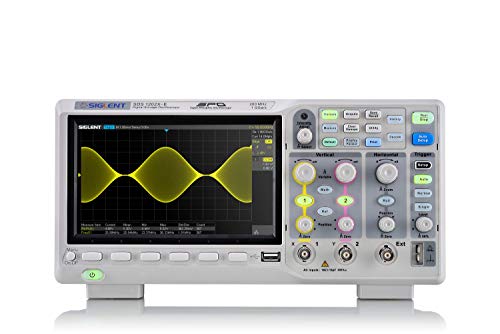
- 200 MHz bandwidth with up to 1 GSa/s sampling
- 14 Mpts record length for longer captures
- Serial decode for I2C, SPI, UART, RS232, CAN, and LIN
Best For: Engineers and technicians needing a capable 2-channel bench scope
Budget Lab Workhorse
Hantek DSO2D15 150 MHz 2-Channel Oscilloscope

- 150 MHz bandwidth with 2 channels
- Arbitrary waveform output and 14 trigger modes
- Serial protocol trigger and decode support
Best For: Budget-minded users needing a feature-rich lab scope
Four-Channel Decode Utility
Siglent SDS1104X-E 100 MHz 4-Channel Oscilloscope
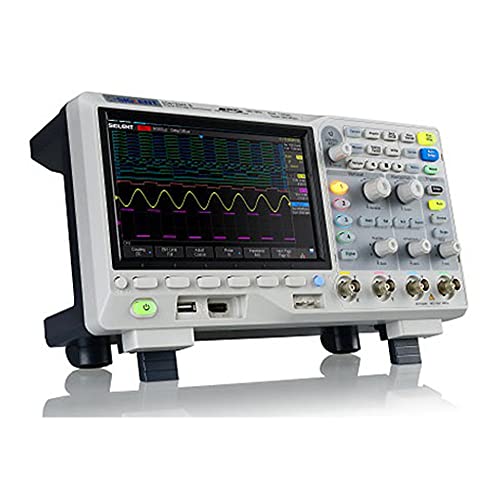
- Four channels for multi-signal work
- 100 MHz bandwidth with standard decoder support
- Includes 4 passive probes and USB cable
Best For: Embedded and repair users needing a 4-channel scope
Handheld 3-in-1 Tester
FNIRSI 2C53T 50 MHz Oscilloscope Multimeter Generator

- Combines oscilloscope, multimeter, and signal generator
- 50 MHz bandwidth with 250 MSa/s sampling
- Battery-powered handheld design with protection module
Best For: Field repair and hobbyists wanting an all-in-one tester
Pro-Grade Deep-Memory Pick
RIGOL DS1202Z-E 200MHz 2CH Scope

- 200 MHz, 2-channel scope with 1 GSa/s sampling.
- Up to 24 Mpts memory and 30,000 wfms/s capture rate.
- USB Host/Device, LAN, and serial decode for RS232/UART, I2C, SPI.
Best For: Students and embedded tinkerers who want deep-memory oscilloscopes with strong capture and decode features.
Budget Commissioning Choice
Hantek DSO2C10 100MHz 2CH Scope

- 100 MHz, 2-channel economy oscilloscope.
- 14 trigger modes plus arbitrary waveform output.
- Serial protocol trigger and decode support.
Best For: Budget-conscious users needing a practical oscilloscope for embedded, education, and commissioning work.
Best-Value Four-Channel Pick

- 4 channels with up to 1 GSa/s sampling.
- 24 Mpts memory and 30,000 wfms/s capture rate.
- Serial decode, FFT, filters, USB, and LAN support.
Best For: Users who want a value-oriented 4-channel oscilloscope for debugging and lab work.
Lab-Ready 70MHz 4-Channel Scope
RIGOL DHO804 70MHz 4-Channel Oscilloscope

- 4 channels with 1.25 GSa/s sampling
- 12-bit resolution and up to 25 Mpts memory
- CAN, UART, I2C, SPI decode with LAN/SCPI
Best For: Embedded bring-up, power rail checks, and multi-signal bench debugging
Portable 4-in-1 Analyzer Scope
FNIRSI DPOS350P 350MHz 2-Channel Scope

- 4-in-1 scope, spectrum analyzer, FRA, and DDS generator
- 350 MHz bandwidth with 1 GSa/s sampling
- 8000 mAh battery plus 7-inch touchscreen
Best For: Portable signal analysis, EMI checks, and quick filter or loop tuning
Deep-Memory Bench Oscilloscope
RIGOL DS1102Z-E 100MHz 2-Channel Oscilloscope

- 100 MHz bandwidth with up to 1 GSa/s sampling
- 24 Mpts memory and 30,000 wfms/s capture rate
- UART, I2C, SPI decode plus LAN and USB
Best For: Students and bench users needing deep-memory debugging on a 2-channel scope
Bench-Ready 200 MHz Performer – Siglent SDS1202X-E 200 MHz 2-Channel Oscilloscope
If you want oscilloscopes that balance bandwidth, memory depth, and everyday usability, the Siglent SDS1202X-E is built for serious bench work. With 200 MHz bandwidth, up to 1 GSa/s real-time sampling, and 14 Mpts record length, it is set up to capture faster signals and longer events than many entry-level scopes.
Best For: Engineers, technicians, and hobbyists who need a capable 2-channel oscilloscope with strong serial decode support.
Pros:
- 200 MHz bandwidth and up to 1 GSa/s real-time sampling rate
- 14 Mpts record length for longer signal capture
- Standard serial bus triggering and decode for I2C, SPI, UART, RS232, CAN, and LIN
- Compact 2-channel design for bench use
Cons:
- Only 2 channels, so it is not ideal for multi-line comparisons
- Built for bench use rather than portable field work
Overall, this model stands out as a practical choice when you need dependable oscilloscope performance plus built-in protocol decoding. It is a strong fit for electronics troubleshooting where capture depth and signal analysis matter.
Budget Lab Workhorse – Hantek DSO2D15 150 MHz 2-Channel Oscilloscope
Among affordable oscilloscopes, the Hantek DSO2D15 aims to cover a wide range of lab and commissioning tasks without a high price point. It offers 150 MHz bandwidth, 2 channels, arbitrary waveform output, and multiple trigger and serial protocol options for practical troubleshooting.
Best For: Budget-conscious users who want a feature-rich lab oscilloscope for education, embedded work, and general testing.
Pros:
- 150 MHz bandwidth with 2-channel input
- Arbitrary waveform output for added test flexibility
- 14 trigger modes and support for serial protocol trigger/decode functions
- Positioned as a cost-effective instrument for research, education, and embedded systems
Cons:
- Economy-focused design may not match premium bench scopes in refinement
- Limited to 2 channels for multi-signal comparisons
For buyers comparing oscilloscopes by features per dollar, this Hantek model offers a lot of utility in a straightforward package. It is especially appealing when you need a versatile lab tool rather than a high-end measurement platform.
Four-Channel Decode Utility – Siglent SDS1104X-E 100 MHz 4-Channel Oscilloscope
Siglent Technologies SDS1104X-E 100Mhz Digital Oscilloscope 4 Channels Standard Decoder, Grey
Check Price On AmazonIf your oscilloscope needs include checking several signals at once, the Siglent SDS1104X-E adds four channels while keeping useful decode features built in. Its 100 MHz bandwidth and standard decoder support for I2C, SPI, UART/RS232, CAN, and LIN make it well suited to mixed-signal troubleshooting.
Best For: Users who want a 4-channel oscilloscope with standard serial decoding for embedded and electronics work.
Pros:
- Four channels for broader signal comparison
- 100 MHz bandwidth for everyday lab and repair tasks
- Standard decoder support for I2C, SPI, UART/RS232, CAN, and LIN
- Includes 4 passive probes and USB cable
Cons:
- Lower bandwidth than the 200 MHz model in this roundup
- 16 digital channels are listed as an option, not standard
This is a practical pick if you often need more than two channels without giving up protocol decode support. For many repair and embedded applications, that combination makes the scope easier to use day to day.
Handheld 3-in-1 Tester – FNIRSI 2C53T 50 MHz Oscilloscope Multimeter Generator
For buyers who want compact oscilloscopes with extra measurement tools, the FNIRSI 2C53T combines a 2-channel scope, multimeter, and signal generator in one handheld unit. It is designed around portability, with a battery-powered build, 2.8-inch LCD, and built-in high-voltage protection module.
Best For: Field repair, hobby work, and users who want an all-in-one handheld test tool.
Pros:
- 3-in-1 design with oscilloscope, 4.5-digit multimeter, and signal generator
- 50 MHz bandwidth and 250 MSa/s sampling rate
- Battery-powered with built-in 3000 mAh battery and up to 6 hours standby
- Supports math operation, cursor measurement, persistence mode, and XY mode
Cons:
- 1 Kpts record depth is modest compared with bench scopes
- 2-channel design limits simultaneous signal comparison
This FNIRSI makes sense when portability matters more than deep bench-level capture specs. It is a flexible choice for quick diagnostics, especially when you want one device to handle multiple measurement jobs.
Pro-Grade Deep-Memory Pick – RIGOL DS1202Z-E 200MHz 2CH Scope
If you want an oscilloscope that balances bandwidth, capture speed, and deep memory, the RIGOL DS1202Z-E is a strong bench-ready option. It’s built for electronics debugging, education labs, and embedded bring-up, with enough performance to catch both long events and short glitches.
Best For: Students, hobbyists, and lab users who need a 200 MHz scope with deep memory and serial decode tools.
Pros:
- 200 MHz bandwidth with 2 channels and up to 1 GSa/s real-time sampling.
- Deep memory up to 24 Mpts helps preserve detail during longer captures.
- Up to 30,000 wfms/s capture rate plus intensity-graded display for intermittent events.
- Serial trigger and decode support for RS232/UART, I2C, and SPI.
Cons:
- Only 2 analog channels, which may be limiting for multi-signal debugging.
- No mention of arbitrary waveform output in the supplied notes.
Overall, this RIGOL model stands out for users who value deep capture, solid decoding support, and a more professional desktop lab feature set. Its mix of memory depth, waveform recording, and LAN connectivity makes it practical for both troubleshooting and documentation workflows.
Budget Commissioning Choice – Hantek DSO2C10 100MHz 2CH Scope
The Hantek DSO2C10 is a cost-effective oscilloscope aimed at practical bench work where you need core test features without paying for extra channels or top-end bandwidth. It fits well for communication, embedded systems, research, and education use.
Best For: Buyers who want an affordable 100 MHz oscilloscope with useful trigger and decode functions.
Pros:
- Cost-effective economy scope for general lab and commissioning tasks.
- 14 trigger modes provide flexible signal capture options.
- Includes arbitrary waveform output.
- Supports serial protocol triggers and decoding for five protocols.
Cons:
- Only 2 channels, so it may be less convenient for multi-signal comparisons.
- Lower 100 MHz bandwidth than higher-tier alternatives in this roundup.
For buyers focused on value, the DSO2C10 covers the essentials and adds handy serial and trigger features that can make troubleshooting easier. It’s a straightforward choice when your priority is capability per dollar rather than premium display or deep-memory specs.
Best-Value Four-Channel Pick – Rigol DS1054Z 50MHz 4CH Scope
The Rigol DS1054Z is a well-known value-focused oscilloscope for users who want four channels and strong capture features at a manageable 50 MHz bandwidth. It’s a useful fit for electronics debugging, teaching labs, and power or embedded bring-up.
Best For: Buyers who need a 4-channel oscilloscope with deep memory and solid trigger/decoding tools.
Pros:
- 4 analog channels make it easier to compare multiple signals at once.
- Up to 1 GSa/s sampling and 24 Mpts memory depth for longer captures.
- Up to 30,000 wfms/s capture rate helps reveal intermittent events.
- Serial bus trigger/decoding plus FFT and filters add troubleshooting flexibility.
Cons:
- 50 MHz bandwidth is lower than the 100 MHz and 200 MHz options here.
- Single-channel sampling tops out at 1 GSa/s, with lower memory in multi-channel use.
In this roundup, the DS1054Z stands out for channel count and a feature set that supports real troubleshooting work. If your projects benefit more from seeing several signals together than from maximum bandwidth, it remains an easy oscilloscope to justify.
Lab-Ready 70MHz 4-Channel Scope – RIGOL DHO804 70MHz 4-Channel Oscilloscope
If you’re comparing oscilloscopes for mixed-signal debugging, the RIGOL DHO804 stands out with 4 channels, 12-bit vertical resolution, and a 70 MHz bandwidth that suits everyday lab work. Its deep memory, fast waveform rate, and serial decode tools make it a practical fit for tracking power rails, timing relationships, and bus activity without losing detail.
Best For: Bench users who need a compact 4-channel oscilloscope for embedded bring-up, power checks, and protocol troubleshooting.
Pros:
- 4 analog channels with 1.25 GSa/s sampling and up to 25 Mpts memory depth
- 12-bit resolution plus UltraAcquire up to 1,000,000 wfms/s for better visibility of small signals and glitches
- Standard decode for CAN, RS232/UART, I2C, SPI, and 4-bit parallel signals
- LAN, USB, HDMI, and SCPI support for remote control and documentation
Cons:
- 70 MHz bandwidth may be limiting for higher-frequency analog work
- Best suited to bench use rather than ultra-portable field carry
The DHO804 is a strong choice if you want modern oscilloscope features in a compact 4-channel format. It leans toward detailed troubleshooting and workflow convenience, especially when signal depth and protocol support matter more than raw bandwidth.
Portable 4-in-1 Analyzer Scope – FNIRSI DPOS350P 350MHz 2-Channel Scope
The FNIRSI DPOS350P is more than a standard handheld oscilloscope, combining scope, spectrum analyzer, frequency response analyzer, and DDS signal generator in one portable unit. With 350 MHz bandwidth, a 7-inch touchscreen, and battery power, it’s built for users who want to inspect signals, run FFT-based checks, and make quick Bode-style measurements in the field or at the bench.
Best For: Engineers and hobbyists who want a portable all-in-one test tool for signal analysis, filter tuning, and EMI checks.
Pros:
- 4-in-1 design adds spectrum analysis, frequency response testing, and signal generation
- 350 MHz bandwidth with 1 GSa/s sampling and 50,000 wfms/s refresh
- 8-16-bit resolution, X-Y mode, zoom, and up to 12 auto measurements
- 8000 mAh battery and USB-C charging support field use
Cons:
- 2-channel design is less flexible than 4-channel bench oscilloscopes
- 47 Kpts depth is modest compared with deeper-memory lab scopes
The DPOS350P is appealing if you value versatility and portability over traditional bench-scope depth. Its combination of measurement modes can simplify troubleshooting when you need more than waveform viewing in a single handheld device.
Deep-Memory Bench Oscilloscope – RIGOL DS1102Z-E 100MHz 2-Channel Oscilloscope
For buyers focused on reliable bench oscilloscopes, the RIGOL DS1102Z-E offers a balanced mix of 100 MHz bandwidth, 2 channels, and deep memory for longer captures. Its 30,000 wfms/s capture rate, intensity-graded display, and built-in serial decode make it useful when you need to spot intermittent issues and review longer events with confidence.
Best For: Students, lab users, and embedded troubleshooters who want a capable 2-channel oscilloscope with deep memory and strong capture performance.
Pros:
- 100 MHz bandwidth with up to 1 GSa/s sampling and 24 Mpts memory
- 30,000 wfms/s capture rate helps expose intermittent glitches
- Serial decode for RS232/UART, I2C, and SPI
- USB Host, USB Device, LAN, and AUX output support bench workflows
Cons:
- 2 channels may be limiting for more complex multi-rail designs
- 8.83-pound weight makes it less convenient for frequent portability
The DS1102Z-E is a practical pick if you want dependable scope performance with the memory and capture tools needed for longer troubleshooting sessions. It focuses on core bench strengths rather than portable extras.
How We Picked These Oscilloscopes
We focused on models that offer a strong mix of performance, usability, and value for real-world bench work. Priority went to useful bandwidth ranges, reliable sampling rates, at least two channels for general troubleshooting, and four-channel options for users who work with buses, timing relationships, or multi-rail systems. We also favored models with clear displays, practical trigger controls, and features that make daily use easier, such as decoding, portability, or multifunction capability.
Quick Comparison
For most users, 50MHz to 100MHz Oscilloscopes cover common repair, hobby, and classroom tasks well. Move into 200MHz or higher if you deal with faster digital signals, switching power supplies, or higher-frequency analog work. Two-channel scopes are often enough for simple diagnostics, while four-channel models are better for complex embedded systems and synchronized signal analysis. If you want a compact all-in-one tool, portable and multifunction units can be appealing, but they usually trade off some bench-focused convenience.
Key Buying Factors for Oscilloscopes
Bandwidth and Sample Rate
Bandwidth determines how accurately the scope can display fast signals, while sample rate affects how well it captures detail over time. As a practical rule, choose more bandwidth than your immediate needs require if you expect to work with faster waveforms later.
Channel Count
Two channels suit many basic measurements, but four channels are a better fit for comparing input and output, checking phase relationships, or debugging digital circuits. If you regularly troubleshoot microcontrollers, motor drives, or power systems, extra channels can save time.
Resolution and Signal Detail
Most buyers will be fine with standard 8-bit scopes, but higher-resolution models can help when you need cleaner visibility into low-amplitude changes, ripple, or noise.
Decoding, Portability, and Extras
Protocol decoding is useful for serial bus work, while portable or battery-friendly designs are better for field service. Multifunction units that combine an oscilloscope with a multimeter or signal generator can be convenient for lightweight setups, though dedicated lab scopes usually offer a more focused experience.
Who Should Buy Which Oscilloscopes?
If you want the best all-around choice for general electronics work, a 100MHz to 200MHz bench oscilloscope is a safe starting point. Beginners and budget-focused buyers can often do well with a value-oriented 50MHz to 100MHz model. Advanced users, embedded developers, and anyone comparing multiple signals at once should strongly consider four-channel Oscilloscopes. If you need one tool for travel, service calls, or compact workspaces, a portable option may be the better fit. The best choice is the one that matches your signal speed, number of test points, and how often you’ll use the scope away from the bench.