The best network switches for audio streaming make it easier to connect streamers, music servers, NAS drives, and other wired components reliably. The right choice depends less on audio branding than on port count, speed, noise control, and system compatibility.
We selected 10 options ranging from simple plug-and-play Gigabit switches to audiophile-focused models and multi-gigabit upgrades. Use the guide below to narrow the list by setup size, network speed, and the features that matter most in your listening room.
Best 10 Network Switches for Audio Streaming Picks for 2026
Premium Clock-Ready Pick

- Five gigabit Ethernet ports plus SFP
- BNC input for an external 10 MHz clock
- Multi-stage, audio-focused power supply
Best For: Hi-fi systems needing fiber isolation or external clock support
Feature-Rich Isolation Choice

- 10 RJ45 ports with SFP, SC, and M12-X connectivity
- Triple-stage galvanic isolation
- TFT display and included noise-cancelling power supply
Best For: Large, specialized audio networks requiring broad connectivity
Best Value Expansion Switch
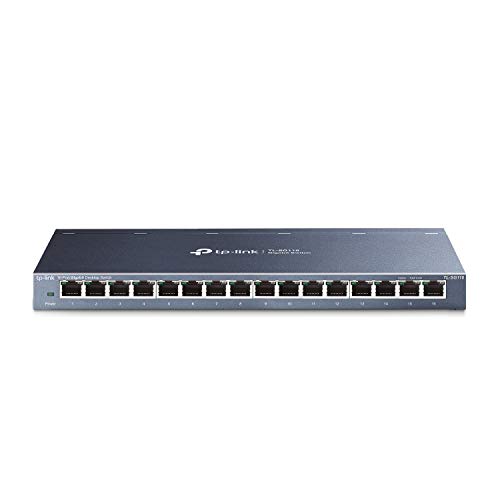
- 16 gigabit RJ45 ports
- Fanless, quiet metal enclosure
- Plug-and-play setup with QoS and IGMP Snooping
Best For: Affordable, quiet expansion of a home wired network
Compact Audiophile Option

- Two gigabit Ethernet and two SFP ports
- Built-in low-noise precision clock
- USB-C power supports future upgrades
Best For: Small hi-fi racks needing RJ45 and fiber connectivity
Best Managed Pick

- Eight 1Gbps gigabit ports
- Web management with QoS and VLANs
- Fanless 0 dBA metal housing
Best For: Managed home audio networks
Best Audiophile-Focused Design

- Five gigabit RJ45 ports and one SFP
- 10MHz BNC external clock input
- Linear power supply and optical isolation
Best For: Dedicated HiFi network setups
Best Multi-Gigabit Value

- Eight 2.5Gbps Ethernet ports
- Automatic 100M/1G/2.5G negotiation
- Fanless metal design with plug-and-play setup
Best For: Simple multi-gigabit home upgrades
Quiet Home Hub
NETGEAR GS308 8-Port Gigabit Switch
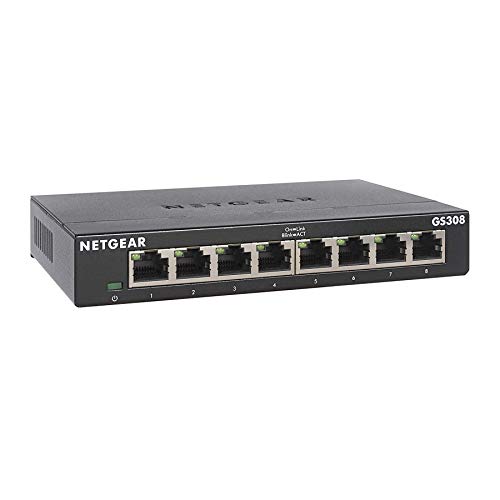
- Eight auto-negotiating 1Gbps ports
- Fanless, energy-efficient operation
- Desktop or wall-mount design
Best For: Quiet plug-and-play expansion for home audio networks
High-Speed Upgrade
NICGIGA 6-Port 10Gb Ethernet Switch

- Two 10Gb and four 2.5Gb ports
- 60Gbps switching capacity
- Silent fanless metal housing
Best For: High-bandwidth networks with compatible faster Ethernet devices
Durable Gigabit Core
NETGEAR GS108 8-Port Gigabit Switch

- Eight 1Gbps Ethernet ports
- Sturdy, fanless metal construction
- Plug-and-play desktop or wall mount
Best For: Standard wired audio systems needing durable gigabit expansion
Premium Clock-Ready Pick – Gustard N18 PRO
For listeners comparing network switches for audio streaming, the Gustard N18 PRO combines five gigabit Ethernet connections with SFP fiber support and a dedicated BNC input for an external 10 MHz clock. Its unmanaged design keeps setup straightforward while its audio-focused power architecture targets clean, stable operation.
Best For: Hi-fi systems that need multiple network connections, SFP isolation, or external clock integration.
Pros:
- Offers five 10/100/1000 Mbps Ethernet ports plus one SFP interface.
- Supports an external 10 MHz clock through a BNC input.
- Uses an audio-specific transformer, multi-stage filtering, and multiple voltage regulators.
- Aluminum construction and an included power cable suit dedicated audio setups.
Cons:
- Its 1.5 kg chassis and 8.66-inch square footprint require dedicated shelf space.
- It is an unmanaged switch, so advanced network-management features are not provided.
- The external clock is not included.
The N18 PRO is a specialized choice for a carefully assembled digital audio system. SFP support and clock compatibility give it more flexibility than a conventional switch, while the plug-and-play unmanaged format avoids configuration overhead.
Feature-Rich Isolation Choice – SilentPower Omni LAN
The SilentPower Omni LAN is a high-end option among network switches for audio streaming, with 10 1Gbps RJ45 ports and additional SFP, SC, and M12-X connectivity. Its managed design adds monitoring and configuration potential, while multiple isolation stages and a supplied iPower power supply focus on reducing noise.
Best For: Large or specialized audio networks that benefit from extensive connectivity, isolation, and real-time status information.
Pros:
- Provides 10 RJ45 ports alongside SFP, SC, and M12-X interfaces.
- Uses triple-stage galvanic isolation and up to 5 kV RMS isolation.
- Includes a GMT femto-precision clock with input and output synchronization.
- Includes an iPower supply with active noise cancellation and a TFT analytics display.
Cons:
- Its managed feature set may be more than a simple streaming setup requires.
- The specialized connectivity and isolation design make it a more complex buying choice.
- The supplied warranty is 12 months.
Omni LAN stands out when port count, connection variety, and isolation are priorities. It is best matched with users prepared to take advantage of its managed controls, display, grounding modes, and broader system-integration options.
Best Value Expansion Switch – TP-Link TL-SG116
For a practical home setup, the TP-Link TL-SG116 is a straightforward contender among network switches for audio streaming. It supplies 16 gigabit RJ45 ports, requires no software installation, and uses a fanless metal enclosure for quiet desktop or wall-mounted operation.
Best For: Expanding a home audio and media network with many wired devices at a reasonable, low-maintenance configuration level.
Pros:
- Offers 16 auto-negotiating 10/100/1000 Mbps RJ45 ports.
- Fanless operation keeps the switch quiet near listening equipment.
- Plug-and-play setup needs no software installation or configuration.
- Includes port-based QoS and IGMP Snooping for traffic optimization.
Cons:
- It has no SFP or fiber interface for optical network isolation.
- It lacks the dedicated clock and audio-specific power features of specialized hi-fi switches.
- All 16 connections use RJ45 Ethernet.
The TL-SG116 is the sensible choice when the goal is dependable wired expansion rather than specialized audiophile hardware. Its large port count, silent fanless design, and basic traffic features make it easy to integrate into a broader home network.
Compact Audiophile Option – ARSY NSW-1
The compact ARSY NSW-1 is designed specifically for hi-fi streaming and combines two 1Gbps Ethernet ports with two SFP ports. For shoppers considering network switches for audio streaming, its USB-C power input, low-noise clock, and fiber-capable design offer a focused way to add network connectivity to a smaller audio system.
Best For: Compact hi-fi systems that need a small four-port switch with both RJ45 and fiber options.
Pros:
- Provides two 1Gbps Ethernet ports and two 1Gbps SFP ports.
- Supports fiber connectivity for electrical isolation from RJ45 connections.
- Uses a built-in ultra-low-noise, high-precision clock.
- USB-C power allows future use with an upgraded audiophile-grade power supply.
Cons:
- Four total ports provide less expansion room than larger switches.
- The product notes do not specify an included upgraded audiophile power supply.
- SFP modules or fiber accessories may be needed to use the optical connections.
The NSW-1 is a focused option rather than a general-purpose network hub. Its small port count suits a dedicated audio rack, while the combination of SFP connectivity, precision clocking, and USB-C power gives enthusiasts room to tailor the setup.
Best Managed Pick – NETGEAR GS308E
For network switches for audio streaming, the NETGEAR GS308E is a practical choice when you want quiet gigabit connectivity plus useful traffic controls. Its eight auto-negotiating ports support up to 1Gbps, while QoS, VLANs, and IGMP snooping help organize network traffic.
Best For: Home audio systems and small networks that need managed features without complicated setup.
Pros:
- Eight 1Gbps RJ45 ports support standard Cat5e/Cat6 gigabit connections.
- Web-based management works on Windows, Mac, and Linux.
- Fanless metal housing operates silently at 0 dBA.
- Includes QoS, IGMP snooping, VLAN support, and network protection features.
Cons:
- It is limited to gigabit speeds rather than multi-gigabit connectivity.
- Managed features may be unnecessary for users seeking a basic plug-and-play switch.
The GS308E stands out for combining silent operation with practical network management. It is a strong fit when stable, organized Ethernet service matters more than speeds beyond 1Gbps.
Best Audiophile-Focused Design – Gustard N18 Pro
The Gustard N18 Pro takes a specialized approach to network switches for audio streaming. It combines five adaptive gigabit Ethernet ports with an SFP interface, a 10MHz BNC clock input, optical isolation, and a built-in linear power supply for audio-oriented setups.
Best For: Dedicated HiFi systems where SFP isolation, external clock support, and audio-specific power design are priorities.
Pros:
- Provides five 10/100/1000Mbps RJ45 ports plus one SFP interface.
- SFP optoelectronic conversion is designed to provide optical network isolation.
- Supports an external 10MHz clock through the BNC input.
- Built-in linear power supply and multi-stage filtering suit dedicated audio installations.
Cons:
- Its specialized features may be excessive for a conventional home network.
- The product has a one-year warranty.
- External C2 clock cables are purchased separately.
The N18 Pro is aimed at listeners building a purpose-focused digital audio system rather than simply adding Ethernet ports. Its connectivity and clock options make it the most specialized choice in this roundup.
Best Multi-Gigabit Value – UGREEN 2.5G 8-Port Switch
If your audio network also supports fast storage, computers, or a Wi-Fi 6/6E router, the UGREEN 2.5G switch offers more bandwidth than standard gigabit models. All eight ports automatically adapt among 100Mbps, 1Gbps, and 2.5Gbps connections, with no configuration required.
Best For: Homes upgrading to multi-gigabit Ethernet while keeping installation simple and quiet.
Pros:
- Eight RJ45 ports support speeds up to 2.5Gbps.
- Auto-negotiates 100Mbps, 1Gbps, and 2.5Gbps connections.
- Plug-and-play unmanaged design requires no software or setup.
- Fanless metal housing includes thermal design features for extended use.
Cons:
- As an unmanaged switch, it does not provide VLAN, QoS, or IGMP configuration.
- It may offer more bandwidth than a basic audio-only network needs.
The UGREEN is a straightforward upgrade for systems that have outgrown gigabit speeds. Its silent, fanless design and automatic compatibility make it convenient, though users needing traffic controls should choose a managed model.
Quiet Home Hub – NETGEAR GS308 8-Port Gigabit Switch
For network switches for audio streaming, the NETGEAR GS308 is a straightforward choice when you need several wired connections without adding configuration work. Its eight gigabit ports, fanless operation, and compact metal housing suit home audio systems and other Ethernet-connected equipment.
Best For: Home audio setups that need quiet, plug-and-play wired expansion.
Pros:
- Eight auto-negotiating 1Gbps Ethernet ports support Cat5e or Cat6 cables.
- Fanless design provides silent operation near listening areas.
- Desktop or wall mounting offers flexible placement.
- IEEE 802.3az support helps reduce power consumption.
Cons:
- Gigabit ports are more suited to standard network traffic than higher-speed installations.
- Unmanaged operation provides no advanced configuration features.
- Listed for use in the U.S. and Canada only.
The GS308 is a practical, low-maintenance option for expanding a home network that supports audio streaming. It focuses on quiet operation and simple connectivity rather than advanced network management.
High-Speed Upgrade – NICGIGA 6-Port 10Gb Ethernet Switch
Among network switches for audio streaming, this NICGIGA model stands out for setups that also move large files or connect faster networking hardware. It combines four 2.5Gb ports with two 10Gb RJ45 ports, making it useful for modern home networks with compatible NAS devices, adapters, or PCs.
Best For: High-bandwidth audio and home networks using 2.5Gb or 10Gb Ethernet devices.
Pros:
- Provides four 2.5Gb ports and two 10Gb RJ45 ports.
- Up to 60Gbps switching capacity supports substantial data traffic.
- Plug-and-play setup includes automatic MDI/MDIX and non-blocking forwarding.
- Fanless metal design supports quiet desktop or wall-mounted operation.
Cons:
- Its higher-speed capabilities require compatible 2.5Gb or 10Gb devices and cabling.
- Unmanaged operation does not provide advanced configuration controls.
- Warranty coverage is listed as one year.
This switch is a stronger fit when audio streaming is part of a broader high-speed network. For ordinary gigabit-only equipment, its extra bandwidth may be more capability than necessary.
Durable Gigabit Core – NETGEAR GS108 8-Port Gigabit Switch
NETGEAR 8-Port Gigabit Ethernet Unmanaged Network Switch (GS108) | Desktop or Wall Mount
Check Price On AmazonThe NETGEAR GS108 is a sturdy option for network switches for audio streaming when you want eight wired gigabit connections and a simple installation. Its metal desktop design, fanless operation, and plug-and-play setup make it suitable for connecting audio equipment and other home network devices.
Best For: Reliable gigabit expansion in a compact home or desktop audio network.
Pros:
- Eight auto-negotiating 1Gbps ports work with Cat5e or Cat6 cables.
- Fanless construction supports silent operation.
- Metal housing provides a sturdy desktop or wall-mountable design.
- Unmanaged plug-and-play setup requires no software or configuration.
Cons:
- Limited to gigabit Ethernet rather than multi-gigabit connectivity.
- Unmanaged design lacks advanced traffic-management features.
- Its listed dimensions and 1.7-pound weight may be less convenient for tight spaces.
The GS108 keeps network expansion simple while offering a durable metal build and quiet performance. It is a sensible match for standard wired audio systems that do not need multi-gigabit speeds.
How We Picked These Network Switches for Audio Streaming
We focused on practical fit for wired music systems: Ethernet speed, port count, installation flexibility, uplink options, management features, and compatibility with common streamers, routers, computers, and NAS devices. The lineup includes affordable unmanaged switches for straightforward setups, smart-managed models for users who want basic traffic controls, and specialist audio products that add features such as optical isolation, SFP connectivity, or external clock inputs.
Because streaming audio uses relatively little bandwidth, a premium switch is not automatically better than a reliable standard model. Build quality, stable firmware, low operating noise, and sensible expansion capacity are generally more important than marketing claims.
Quick Comparison
- Best for simple systems: An unmanaged 5-, 8-, or 16-port Gigabit switch is easy to install and usually all most listeners need.
- Best for audiophile-focused systems: Gustard, SilentPower, and ARSY models add specialist connectivity or isolation features.
- Best for future-proofing: A 2.5GbE or 10GbE switch suits faster internet plans, large local transfers, and newer network storage.
- Best for basic control: A smart-managed switch can provide VLAN, QoS, or monitoring options, depending on the model.
Key Buying Factors for Network Switches for Audio Streaming
Port Count and Expansion
Count every wired device you expect to connect, including a streamer, television, game console, access point, NAS, and future components. Leave at least two spare ports so a small upgrade does not require replacing the switch.
Speed and Uplink Type
Gigabit Ethernet is more than sufficient for lossless audio streaming. Choose 2.5GbE or 10GbE when you regularly move large files, use a fast NAS, or want a higher-speed backbone between network equipment. SFP ports can support fiber or compatible copper modules, but verify transceiver compatibility before buying.
Managed Versus Unmanaged Operation
Unmanaged switches are the simplest option: connect the cables and start streaming. Smart-managed hardware is worthwhile if you need VLANs, traffic prioritization, link monitoring, or more control over a complex home network. These features add setup work and are unnecessary for many dedicated audio systems.
Noise, Placement, and Power
For a listening room, check whether the switch uses passive cooling or a fan. Consider its power supply, chassis size, wall-mounting options, and distance from sensitive equipment. Optical isolation and audiophile construction may appeal to specialized systems, but they should complement—not replace—a properly configured network.
Who Should Buy Which Network Switches for Audio Streaming?
Choose a basic unmanaged Gigabit model if you want dependable wired connections at the lowest cost. Eight ports are suitable for most rooms, while 16 ports provide more expansion space.
Choose a smart-managed switch if your audio equipment shares a network with several demanding devices or you want configuration and monitoring options.
Choose an audiophile-oriented switch if features such as optical isolation, SFP connectivity, a dedicated audio-focused design, or an external clock input fit your existing components and budget.
Choose a multi-gig switch if your wider network already supports 2.5GbE or 10GbE. Otherwise, a Gigabit switch remains the more economical and proportionate choice for streaming music.