The best mineral collection kits with identification cards make geology easier to explore by pairing real specimens with labels, image cards, or simple testing tools. The right set can turn a casual rock collection into a practical science activity.
We compared these 10 kits by specimen variety, identification support, testing equipment, educational value, and intended age or experience level. Use the guide below to match a kit with your learner, classroom, or collecting goals.
Best 10 Mineral Collection Kits with Identification Cards Picks for 2026
Best All-in-One Starter Set
PIBEX 54-Piece Rock Collection

- 54 assorted rocks, crystals, and minerals
- Illustrated ID cards, guidebook, and magnifier
- Compartment storage case with transparent lid
Best For: Beginners and family STEM activities
Best Compact Testing Kit
Toysmith 15-Specimen Mineral Science Kit

- 15 mineral specimens included
- Magnifying viewer, streak plate, and nail
- Identification guide for basic classification
Best For: Young learners and compact science activities
Best Classroom Collection
Geosciences Industries 75-Sample Set

- 75 numbered rock and mineral samples
- Index sheet and introductory study guide
- Includes testing tools and rock-cycle charts
Best For: Classrooms and structured earth science lessons
Best Field-Testing Add-On

- Seven portable mineral-testing tools
- Tests streak, hardness, magnetism, and more
- Zip-bag storage for classroom or field use
Best For: Older learners with specimens to test
Best All-Around Starter Set
30-Piece Rock & Gem Collection

- 30 natural rocks, gemstones, and crystals
- Full-color learning guide included
- Magnifying glass and brushes for observation
Best For: Young beginners and geology-themed gifts
Best for Mineral Testing
Classroom Mineral Identification Kit

- Nine raw mineral samples with specimen key
- Tools for streak, hardness, magnetism, and effervescence
- Reusable box for classroom or field use
Best For: Hands-on geology lessons and field testing
Best Interactive Learning Pick

- 24 real rock and gemstone specimens
- Mohs hardness reference and game cards
- Two- to four-player STEM activity
Best For: Ages 8+ and interactive family or classroom learning
Best Igneous Rock Starter
Eisco 12-Piece Igneous Rocks Kit
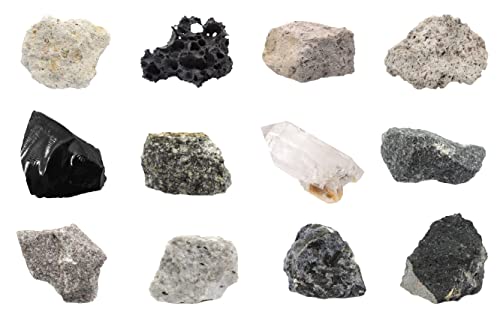
- 12 geologist-selected igneous specimens
- Image ID card for quick matching
- Includes testing activities and padded storage
Best For: Focused igneous-rock lessons and STEM study
Best Hardness Testing Set
Mohs Mineral Identification Kit
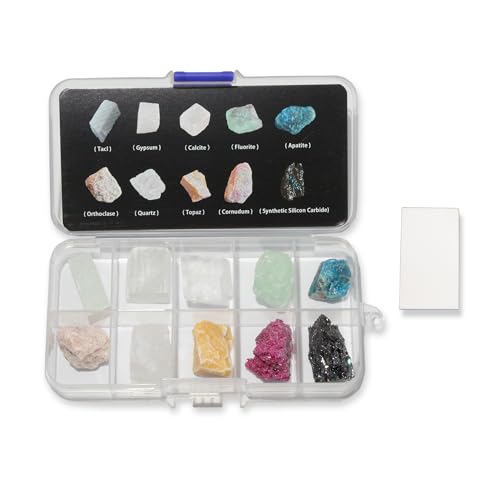
- 10 mineral specimens for Mohs testing
- Includes an unglazed streak plate
- Compact case and beginner-friendly guide
Best For: Portable hardness testing and geology practice
Best All-Around Rock Study Kit
Eisco Rock & Mineral Science Kit

- 12 varied rock and mineral specimens
- Image card supports quick identification
- Five hands-on identification test categories
Best For: General geology study and classroom exploration
Best All-in-One Starter Set – PIBEX 54-Piece Rock Collection
For shoppers seeking mineral collection kits with identification cards, the PIBEX starter set combines 54 assorted specimens with illustrated cards, a learning book, magnifier, and compartment storage case. It offers a broad introduction to rocks, crystals, and gemstones in a display-friendly format.
Best For: Beginners, children ages 8 and up, family activities, and classroom STEM exploration.
Pros:
- Includes 9 polished gems and 45 raw rocks, crystals, and minerals.
- Provides 54 illustrated identification and game cards plus a reference book.
- Comes with a transparent-lid storage case and magnifier.
- Reference material covers origins, hardness, and mining locations.
Cons:
- Individual specimens are assorted, so the exact pieces may vary.
- The set is geared toward introductory exploration rather than advanced testing.
This is the most complete choice here for someone who wants specimens, identification materials, and organized storage in one beginner-friendly package.
Best Compact Testing Kit – Toysmith 15-Specimen Mineral Science Kit
The Toysmith kit is a compact option among mineral collection kits with identification cards, supplying 15 specimens alongside a magnifying viewer, streak plate, nail, and identification guide. Its included tools support basic observation, testing, and classification.
Best For: Young learners ages 8 and up who need a small introductory geology activity.
Pros:
- Includes 15 different mineral specimens.
- Identification guide supports basic mineral recognition.
- Supplies a magnifying viewer, streak plate, and nail for hands-on testing.
- Small 7.5-by-5-by-1.5-inch format is easy to store.
Cons:
- Contains fewer specimens than the larger collection sets.
- The supplied notes do not indicate a dedicated specimen storage case.
This straightforward kit makes sense when portability and simple testing tools matter more than a large display collection.
Best Classroom Collection – Geosciences Industries 75-Sample Set
Geosciences Industries 13357 Introductory Earth Science Classroom Rocks and Minerals Collection
Check Price On AmazonFor a larger teaching collection, this Geosciences Industries set pairs 75 numbered rock and mineral samples with an index sheet and introductory study guide. It is a strong fit for buyers who want identification support plus examples of igneous, sedimentary, and metamorphic rocks.
Best For: Earth science classrooms, older students, and structured rock-cycle lessons.
Pros:
- Includes 75 mineral and rock samples measuring approximately 1 to 2 inches.
- Each sample is numbered and matched to a collection index sheet.
- Covers igneous, sedimentary, and metamorphic rock types.
- Includes a streak plate, magnifier, magnet, and study guide with classification charts.
Cons:
- The larger collection is less compact than smaller beginner kits.
- Its listed recommended age range is aimed at older students.
This is the most classroom-oriented collection in the roundup, especially for lessons that benefit from variety, indexing, and rock-cycle references.
Best Field-Testing Add-On – EISCO 7-Piece Mineral ID Kit
The EISCO kit differs from specimen-focused mineral collection kits with identification cards because it supplies the testing tools used to identify minerals. Its seven-piece set supports checks for hardness, streak, magnetism, appearance, and effervescence when paired with rock or mineral samples.
Best For: Geology classrooms, field activities, and learners ages 14 and up who already have specimens to test.
Pros:
- Includes a streak plate, glass plate, dropper bottle, magnet, nail, copper square, and retractable hand lens.
- Supports several basic mineral identification techniques.
- Pocket-size tools come in a zip-lock bag for portable storage.
- Useful for classroom demonstrations and group activities.
Cons:
- Does not include mineral specimens or identification cards.
- It is intended for basic field testing rather than a complete collection.
Choose this kit as a practical testing companion, not as a standalone mineral collection; its value is in the reusable identification tools.
Best All-Around Starter Set – 30-Piece Rock & Gem Collection
For shoppers comparing mineral collection kits with identification cards, this set emphasizes variety and beginner-friendly exploration. It includes 30 natural rocks, gemstones, and crystals, plus a full-color learning guide, magnifying glass, and brushes for examining specimens.
Best For: Children ages 6–18, beginner collectors, and geology-themed STEM gifting.
Pros:
- Includes 30 named rock, gemstone, and crystal specimens.
- Full-color guide supports learning about each gem.
- Magnifying glass and brushes encourage hands-on observation.
- Packaged as a gift-ready collection box.
Cons:
- The notes mention a learning guide rather than individual identification cards.
- The broad assortment is designed for exploration, not systematic mineral testing.
This is a strong choice when variety and presentation matter most. Its educational guide and included observation tools make it approachable for young collectors, while the 30-piece assortment provides plenty to examine.
Best for Mineral Testing – Classroom Mineral Identification Kit
Among mineral collection kits with identification cards, this Eisco set stands out for shoppers who want testing tools as well as specimens. It combines nine raw minerals with a specimen key and equipment for exploring streak, hardness, magnetism, and effervescence.
Best For: Classroom demonstrations, field geology activities, and learners practicing mineral identification methods.
Pros:
- Includes nine named mineral samples, including quartz, calcite, hematite, and magnetite.
- Specimen key supports identification.
- Testing tools include a streak plate, magnet, hand lens, dropper bottle, nail, and copper square.
- Reusable box is suited to portable classroom or field use.
Cons:
- Samples are relatively small at approximately 0.5 inches.
- It contains nine specimens, so it offers less assortment variety than larger collection boxes.
This kit is the practical pick for learning how mineral properties are tested rather than simply displaying specimens. The included key and testing equipment give it a more structured geology-lab focus.
Best Interactive Learning Pick – Gemstone Battle Card Kit
This option puts an interactive spin on mineral collection kits with identification cards. It pairs 24 real rock and gemstone specimens with Mohs hardness cards, challenge cards, and game instructions, making identification and mineral-property practice part of a competitive activity.
Best For: Kids ages 8+, family game nights, homeschool activities, and classroom STEM groups.
Pros:
- Includes 24 real gemstone and rock specimens, with seven fixed stones tied to the hardness cards.
- Mohs hardness reference card reinforces mineral-property learning.
- Includes 32 game cards, 27 challenge cards, and instructions.
- Supports two- to four-player games lasting about 10–20 minutes.
Cons:
- Seventeen specimens are randomly assorted and cannot be individually labeled.
- The game format may be less suitable for collectors seeking a fully documented specimen set.
- The supplied notes are truncated before the full product details are provided.
This is the most engaging choice for learners who enjoy games and group activities. The fixed specimens and hardness reference provide a foundation for identification, while the random stones add collection variety but reduce labeling consistency.
Best Igneous Rock Starter – Eisco 12-Piece Igneous Rocks Kit
For shoppers comparing mineral collection kits with identification cards, this Eisco set focuses specifically on igneous rocks and combines 12 one-inch specimens with practical testing activities. The included image card and foam-padded box make it suitable for structured geology lessons or organized home study.
Best For: Geology classrooms, STEM demonstrations, and learners who want to practice hardness, streak, magnetic, and effervescence tests.
Pros:
- Includes 12 geologist-selected, hand-processed igneous rock specimens.
- Image identification card supports visual specimen matching.
- Encourages hands-on testing for hardness, streak, magnetic properties, and effervescence.
- Foam-padded storage box helps keep the collection organized and protected.
Cons:
- The set is limited to igneous rocks rather than a broader rock-and-mineral mix.
- The manufacturer recommends it for ages 18 and up.
This is a focused teaching set rather than a general-purpose collection. Choose it when igneous-rock comparison and guided identification are more important than having a wide variety of mineral types.
Best Hardness Testing Set – Mohs Mineral Identification Kit
Among mineral collection kits with identification cards, this compact option stands out for testing mineral hardness. It includes 10 mineral specimens, an unglazed porcelain streak plate, organized case storage, and instructions for exploring mineral properties in class or in the field.
Best For: Students, geology classrooms, and rock collectors who want a portable Mohs hardness testing kit.
Pros:
- Includes 10 listed mineral specimens spanning the Mohs hardness scale.
- Unglazed porcelain streak plate supports additional identification work.
- Lightweight case with compartments is convenient for storage and fieldwork.
- Simplified instructions accommodate beginners and more advanced users.
Cons:
- The supplied notes mention an included guide but do not specify an image-based identification card.
- Its primary emphasis is hardness testing, so it may offer less specimen variety than a broader collection kit.
This kit is a practical choice when portability and Mohs testing are the priority. It is less suited to shoppers specifically seeking a visual-card-centered display collection.
Best All-Around Rock Study Kit – Eisco Rock & Mineral Science Kit
This Eisco set is a strong all-around pick for shoppers seeking mineral collection kits with identification cards. It pairs 12 one-inch rock and mineral specimens with an image card, geology tests, and padded storage, giving learners several ways to compare and identify samples.
Best For: Introductory rock and mineral study, classroom exploration, and collectors who want a varied hands-on sample set.
Pros:
- Provides 12 distinct rock and mineral specimens for comparative study.
- Image card offers a quick visual reference for identification.
- Supports hardness, streak, magnetic, appearance, and effervescence testing.
- Hand-processed specimens and padded storage support repeated study.
Cons:
- The manufacturer recommends the kit for ages 18 and up.
- All specimens are approximately one inch, which may feel small for display-focused collectors.
With a broader mix than the igneous-only set and more testing categories than a basic display collection, this is the most versatile choice of the three for general rock and mineral exploration.
How We Picked the Best Mineral Collection Kits with Identification Cards
We focused on kits that offer a useful combination of authentic rock or mineral specimens and identification help. That may include printed labels, image cards, specimen lists, hardness references, or instructions for basic tests. We also considered the number and variety of samples, whether tools are included, how suitable each kit is for children or classrooms, and whether the contents support learning beyond simple display.
Because these products vary considerably, specimen count was not the only deciding factor. A smaller set with a hand lens, streak plate, magnet, or clear testing guide may provide more hands-on value than a larger assortment with limited documentation.
Quick Comparison
- Best for broad starter collections: Choose a larger assortment with labeled rocks, minerals, crystals, or gemstones.
- Best for younger learners: Look for manageable specimens, visual identification cards, and age-appropriate activities.
- Best for classrooms: Favor durable sets with consistent specimen sizes, organized labeling, and multiple examples.
- Best for testing minerals: Select a kit that includes a streak plate, magnet, hand lens, hardness references, or other testing tools.
- Best for focused geology study: Consider specialized igneous-rock or Mohs-hardness sets with structured identification activities.
Key Buying Factors
Specimen Variety and Size
Check whether the kit includes common minerals, gemstones, crystals, sedimentary rocks, metamorphic rocks, or igneous samples. Larger collections offer more variety, while smaller sets may provide better consistency and easier handling. Product photos can help clarify approximate specimen size.
Identification Cards and Labels
Identification cards should do more than provide names. Look for images, basic properties, geological information, or an organized reference sheet. Labels are especially helpful for beginners, but verify whether they are attached to specimens, supplied separately, or limited to a checklist.
Testing Tools
A streak plate, magnet, hand lens, glass plate, nail, copper piece, or hardness guide can make the collection more interactive. These tools are valuable for learners who want to compare observable properties rather than memorize names.
Age, Safety, and Organization
Follow the stated age recommendation and supervise younger children during testing. Small specimens can be choking hazards, and some kits include sharp or breakable accessories. A compartmented box, pouch, or labeled packaging also makes repeated use easier.
Who Should Buy Which Mineral Collection Kits with Identification Cards?
Parents seeking an engaging introduction should prioritize clearly labeled specimens and visual cards. Teachers and homeschoolers should look for varied samples, repeatable activities, and tools that demonstrate mineral properties. Beginner collectors may prefer a broad starter assortment, while students studying identification should choose a focused testing kit or a set organized around hardness and streak testing. If display matters most, select the collection with the best specimen variety and presentation; if learning matters most, prioritize documentation and test equipment over raw piece count.