Mineral collection kits make geology approachable by putting labeled specimens, identification tools, and simple experiments in one box. The best options help beginners see, test, and compare rocks rather than simply collect decorative stones.
We selected these 10 kits for their specimen variety, learning support, organization, and suitability for first-time collectors, students, and curious families.
Best 10 Mineral Collection Kits for Geology Beginners Picks for 2026
Best Overall
National Geographic 300+ Rock Collection

- More than 300 genuine specimens
- Includes two break-open geodes
- Learning guide, magnifier, and storage bag included
Best For: Beginners wanting maximum variety and hands-on discovery
Best Testing Kit
Toysmith STEM Rock & Mineral Science Kit

- 30 real rocks and minerals
- Includes streak plate, nail, and viewer
- Compact, organized format for ages 8+
Best For: Young learners practicing identification and classification
Best With Reference Book
National Geographic Collection & Expert Book

- More than 300 genuine specimens
- Includes a 100+ page hardcover book
- Two geodes provide hands-on discovery
Best For: Readers who want earth-science facts with their collection
Best for Hardness Testing
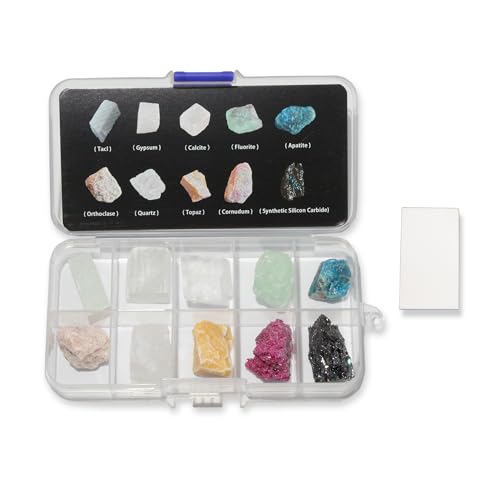
- 10 mineral specimens for Mohs-scale study
- Includes unglazed porcelain streak plate
- Portable case with beginner instructions
Best For: Learners focused on hardness and streak testing
Best Starter Display Set
National Geographic 15-Piece Rock Collection
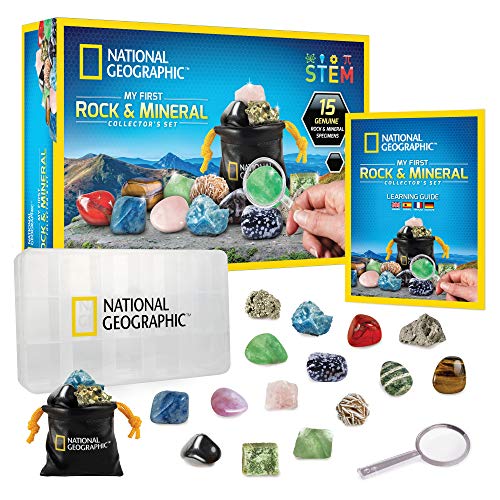
- 15 gemstones and crystals
- Includes guide, case, and pouch
- Designed for ages 8 and up
Best For: Young beginners and gift-giving
Best Classroom-Style Collection
Geosciences Industries 75-Sample Set

- 75 numbered rock and mineral samples
- Includes testing tools and study guide
- Covers three major rock types
Best For: Structured home or classroom geology study
Best Compact Gift Set
Dancing Bear 18-Piece Geology Gem Kit

- 18 rocks and minerals
- Includes plastic collection box
- Comes with educational information
Best For: Casual young collectors and simple geology gifts
Most Comprehensive Starter Set
54-Piece Rock & Mineral Collection

- 54 specimens with 9 polished gems
- Includes cards, guidebook, magnifier, and case
- Good for classroom or family learning
Best For: Beginners wanting the largest set of specimens and learning accessories
Best Classic Collection

- 48 natural rocks, minerals, and gemstones
- Color guide and magnifying glass included
- Named compartments aid organization
Best For: Beginner collectors seeking a simple, well-organized geology set
Best for Hands-On Exploring

- 30 varied rocks, gemstones, and crystals
- Includes magnifier, brushes, and study guide
- Recommended for ages 6–18
Best For: Young beginners who enjoy cleaning and examining specimens
Best Overall – National Geographic 300+ Rock Collection
For shoppers comparing mineral collection kits for geology beginners, this National Geographic set stands out for its sheer variety. It includes more than 300 genuine specimens, two break-open geodes, a magnifying glass, a learning guide, and a storage bag.
Best For: Beginners who want a large, visually engaging collection with hands-on geode activities and basic identification support.
Pros:
- Includes more than 300 genuine rocks, minerals, and crystals.
- Two geodes add an interactive crystal-discovery activity.
- Includes a magnifying glass, learning guide, and storage bag.
- Features a broad range of named specimens, including amethyst, fluorite, quartz, and tiger’s eye.
Cons:
- The large quantity may be more than a beginner needs for focused testing practice.
- The supplied notes do not specify detailed hardness-testing tools.
This is a strong choice when collection size, variety, and display appeal matter most. Its included guide and magnifier make it approachable, while the geodes provide an especially memorable introduction to geology.
Best Testing Kit – Toysmith STEM Rock & Mineral Science Kit
This Toysmith kit is one of the more structured mineral collection kits for geology beginners. Rather than emphasizing sheer quantity, it combines 30 real specimens with identification and testing tools, including a magnifying viewer, streak plate, and nail.
Best For: Young learners ages 8–12 who want to classify samples and practice basic mineral identification at home or in a classroom.
Pros:
- Includes 15 real rock specimens and 15 real mineral specimens.
- Provides a streak plate, nail, and magnifying viewer for hands-on comparisons.
- Organized trays help keep specimens and tools accessible.
- Compact design suits home or classroom learning.
Cons:
- With 30 specimens, it offers less collection variety than the 300-piece sets.
- The supplied components list identifies testing tools but does not mention a hardness scale guide.
Choose this option when learning how to observe, test, and classify matters more than building a very large collection. Its balanced rock-and-mineral assortment supports repeat practice without taking up much space.
Best With Reference Book – National Geographic Collection & Expert Book
For beginners who want context alongside specimens, this National Geographic set pairs more than 300 real rocks, gemstones, and crystals with a full-color hardcover reference book. It also includes two geodes, making it both a collection and an introductory earth-science resource.
Best For: Curious beginners who prefer learning through a detailed reference book as well as hands-on specimen exploration.
Pros:
- Includes more than 300 genuine rocks, minerals, and crystals.
- Comes with the 100-plus-page Absolute Expert: Rocks & Minerals hardcover book.
- Two premium geodes add an interactive activity.
- Covers rocks, minerals, fossils, and broader earth-science topics through the book.
Cons:
- The book is listed in English, which may not suit every learner.
- The supplied notes do not list a magnifying glass or dedicated testing tools.
This is a particularly good fit for children who are motivated by reading and factual background. Compared with a specimen-only set, the hardcover book gives the collection a clearer path for continued independent learning.
Best for Hardness Testing – Moh's Hardness Test Kit
This Mohs kit takes a focused approach to mineral collection kits for geology beginners by pairing 10 mineral specimens with tools for hardness and streak testing. It is less about building a large display collection and more about learning a core mineral-identification method.
Best For: Beginners, geology students, and rock collectors who want a portable kit centered on the Mohs hardness scale.
Pros:
- Includes 10 listed mineral specimens representing the Mohs scale.
- Comes with an unglazed porcelain streak plate.
- Compact case with organized compartments supports storage and fieldwork.
- Includes simplified instructions for beginners and advanced users.
Cons:
- Includes only 10 specimens, so it has less variety than the larger collections.
- It is specialized around testing rather than display or geode activities.
- The supplied notes do not mention a magnifying glass or reference book.
Consider this kit when testing skills are your priority. Its compact format and focused specimen selection make it a practical supplement to a broader collection or a straightforward starting point for hardness-scale study.
Best Starter Display Set – National Geographic 15-Piece Rock Collection
For shoppers comparing mineral collection kits for geology beginners, this National Geographic set is an approachable starter option. It includes 15 named gemstones and crystals, a clear storage case, a pouch, and a full-color guide for learning basic identification.
Best For: Children ages 8 and up who want an attractive, easy-to-organize introduction to rocks and minerals.
Pros:
- Includes 15 varied specimens, including tiger’s eye, rose quartz, pyrite, and fluorite.
- Comes with a storage box, pouch, and full-color learning guide.
- Compact 9.2-by-6.1-by-2.2-inch format makes it easy to store and display.
- Designed as an educational STEM-themed gift.
Cons:
- Has fewer specimens than classroom-oriented collections.
- The listed recommended age begins at 8 years, so it may not suit very young children.
This kit emphasizes presentation and accessibility over collection size. Its labeled learning materials and included storage make it a practical choice for a first geology collection or educational gift.
Best Classroom-Style Collection – Geosciences Industries 75-Sample Set
Geosciences Industries 13357 Introductory Earth Science Classroom Rocks and Minerals Collection
Check Price On AmazonAmong mineral collection kits for geology beginners, this Geosciences Industries set stands out for its breadth and study tools. It provides 75 numbered 1-to-2-inch samples, an index, a study guide, a streak plate, a magnifier, and a magnet for more hands-on investigation.
Best For: Older students, adult learners, and home or classroom study that benefits from many specimens and basic testing tools.
Pros:
- Includes 75 mineral and rock samples covering igneous, sedimentary, and metamorphic rocks.
- Numbered specimens correspond to the included collection index.
- Provides a streak plate, magnifier, magnet, and introductory study guide.
- Study materials include rock classification and rock-cycle charts.
Cons:
- The larger 19.3-by-11-by-1.6-inch package weighs 3.6 pounds.
- Its introductory classroom format may feel more academic than gift-oriented.
- Manufacturer age guidance is listed as 11–13 years, while the details also describe the audience as adult.
This is the strongest choice when specimen variety and investigation tools matter more than a small display case. The numbered samples and reference materials support structured geology lessons and comparison exercises.
Best Compact Gift Set – Dancing Bear 18-Piece Geology Gem Kit
This Dancing Bear kit is a compact option for shoppers seeking mineral collection kits for geology beginners. It combines 18 rocks and minerals with a plastic collection box, description sheet, and educational information for straightforward collecting and display.
Best For: Children ages 4–12, casual collectors, teachers, and rock enthusiasts who want a small boxed assortment.
Pros:
- Includes 18 rocks and minerals in a compact collection.
- Comes with a plastic collection box for storage and display.
- Provides a description sheet and educational information.
- Measures approximately 9.25 by 4.5 by 1.5 inches and weighs 12 ounces.
Cons:
- The supplied notes do not specify individual specimen names or testing tools.
- The plastic box may offer less reference detail than a larger classroom collection.
This set keeps the experience simple: a modest assortment, basic educational information, and a dedicated box. It is a sensible pick for an introductory gift or a child beginning a small rock collection.
Most Comprehensive Starter Set – 54-Piece Rock & Mineral Collection
For shoppers comparing mineral collection kits for geology beginners, the PIBEX Starter Kit stands out for its 54 labeled specimens and substantial learning materials. It combines polished gemstones, raw crystals, rocks, and minerals with identification cards, a guidebook, magnifier, and compartmented display case.
Best For: Beginners, classroom activities, and families wanting a large, organized collection with built-in learning tools.
Pros:
- Includes 54 pieces: 9 polished gems and 45 raw crystals, rocks, and minerals.
- Comes with illustrated identification and game cards plus a colorful reference book.
- Transparent compartment case supports sorting, storage, and display.
- Includes a magnifier for closer observation.
Cons:
- The larger specimen count may be more than casual learners need.
- Recommended ages and age details vary in the supplied listing information.
This is the most feature-rich option of the three, particularly if you want a collection that can support matching activities, presentations, and ongoing reference. Its organized case also makes the many specimens easier to manage.
Best Classic Collection – 48-Piece Gemstone STEM Kit
This 48-piece set is a practical choice among mineral collection kits for geology beginners who want a clearly organized introduction to common rocks, minerals, and gemstones. It includes named specimens such as rose quartz, Desert Rose, red jasper, blue aventurine, and opal, along with a full-color guide and magnifying glass.
Best For: Kids and beginner collectors who prefer a straightforward, labeled set for home study, classroom use, or display.
Pros:
- Provides 48 natural rocks, minerals, and gemstones.
- Full-color guide explains the specimens in the collection.
- Magnifying glass encourages closer examination.
- Individual compartments keep samples organized and visible.
Cons:
- The listing recommends it for ages 12 and up, so it may not suit younger children.
- The supplied details do not mention a brush or additional activity cards.
Choose this kit if you want a balanced collection without the extensive accessory package of the PIBEX set. Its named compartments and guide make it easy to begin identifying specimens immediately.
Best for Hands-On Exploring – 30-Piece Rocks & Crystals Kit
For geology beginners who value hands-on inspection, this 30-piece kit pairs a varied selection of rocks, gemstones, and crystals with a magnifying glass, cleaning brushes, and a full-color study guide. It is a compact way to explore specimen names, surface details, and basic geology concepts.
Best For: Younger learners and beginners who want a manageable collection with simple observation and cleaning tools.
Pros:
- Includes 30 named rocks, gemstones, and crystals, including amethyst, fluorite, obsidian, quartz, and tiger’s eye.
- Study guide provides information about the gems in the set.
- Magnifying glass and brushes support close inspection and cleaning.
- Recommended for ages 6–18 in the supplied details.
Cons:
- Contains fewer specimens than the 48- and 54-piece alternatives.
- The supplied notes do not specify an individual-compartment storage case.
- The extensive specimen list may be more variety than depth for advanced collectors.
This is a good fit when the learning experience matters more than maximizing specimen count. The included brushes and magnifier make it especially approachable for children who enjoy examining and handling their collection.
How We Picked These Mineral Collection Kits for Geology Beginners
We focused on kits that offer a useful starting point for learning mineral identification. Our comparison considers the number and variety of specimens, whether samples are labeled, the quality of included reference materials, and the availability of practical tools such as magnifiers, streak plates, hardness testers, or display boxes.
We also looked for options that match different ages and learning styles. Some kits emphasize a large variety of gemstones and minerals, while others provide a smaller, more structured introduction to testing and classification. Packaging matters too: organized boxes and identification guides make it easier to preserve samples and return to them later.
Quick Comparison
- Best for the largest variety: National Geographic’s 300-plus specimen collection.
- Best for hands-on learning: Toysmith’s kit with viewing, identification, and testing tools.
- Best for reference-based study: National Geographic’s collection paired with an expert book.
- Best for hardness testing: The Moh’s Hardness Test Kit with specimens and a porcelain streak plate.
- Best for a compact starter set: The 15-piece National Geographic collection.
- Best for classroom-style study: The Geosciences Industries introductory collection.
- Best for an organized educational gift: The DANCING BEAR collection with box and information sheet.
- Best for labeled variety on a budget: The PIBEX 54-piece starter kit.
- Best for children’s STEM gifting: The 48-piece gemstone collection or 30-piece rocks and crystals kit.
Key Buying Factors for Mineral Collection Kits for Geology Beginners
Specimen Variety and Labeling
A larger piece count is not automatically better. Beginners benefit from clearly labeled samples representing different minerals, rocks, crystals, and gemstones. Name labels or a matching guide are especially helpful when several specimens look similar.
Identification and Testing Tools
Look for a magnifier, streak plate, hardness-testing materials, or other simple tools if the goal is active learning. Testing features turn the kit into a practical geology lesson, but younger children may need supervision when handling sharp or breakable pieces.
Reference Materials and Organization
A well-written guide, description sheet, or expert book can explain color, luster, hardness, streak, and crystal form. A compartmented case or display box helps prevent lost specimens and supports repeat study.
Age, Size, and Learning Goals
Check the recommended age and specimen size before buying. Compact sets suit casual exploration and gifts, while classroom-style collections are better for structured lessons. Consider whether the recipient wants to display attractive crystals, perform tests, or build a more systematic collection.
Who Should Buy Which Mineral Collection Kits for Geology Beginners?
Choose a high-count collection for a child or family that wants plenty of specimens to sort and display. Pick a tool-rich kit for a student who learns best through experiments. A book-backed set works well for independent readers, while a hardness-testing kit is the strongest choice for learners specifically interested in mineral identification.
For a first gift, prioritize clear labels, an accessible guide, and durable storage over the biggest advertised piece count. Buyers seeking classroom use should favor consistent specimens and educational structure; casual collectors can choose a visually varied set with a compact display box.