The right memory card reader for videographers can make the difference between a smooth offload and a frustrating bottleneck. Fast transfer speeds, broad card support, and dependable connections matter when footage is large and deadlines are tight.
We’ve gathered 10 options spanning SD, microSD, CF, CFast, CFexpress, and multi-card workflows, including compact travel adapters and professional-grade readers for demanding production setups.
Best 10 Memory Card Reader for Videographers Picks for 2026
Professional CFast/SD Workflow

- Reads CFast and SD UHS-II cards
- Up to 1,250MB/s with simultaneous transfers
- Magnetic laptop mounting plate included
Best For: Filmmakers using CFast and SD UHS-II media
Multi-Format Speed

- Supports SD and CFexpress Type A/B
- Three slots for simultaneous card reading
- Up to 10Gbps with passive heat dissipation
Best For: Mixed-media video workflows using SD and CFexpress
Flexible Everyday Transfers

- Reads SD, microSD, and CompactFlash
- Up to 312MB/s for SD and microSD
- Includes USB-C and USB-A cables
Best For: Mixed SD, microSD, and CompactFlash collections
Fast CFexpress Type B Downloads
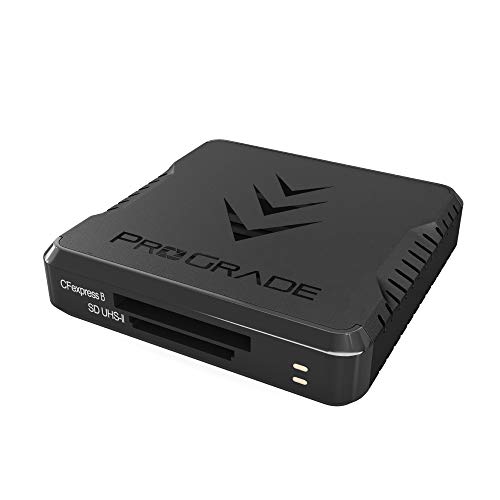
- Supports CFexpress Type B and SD
- Up to 1.25GB/s from both cards simultaneously
- Magnetic mounting system and two-year warranty
Best For: CFexpress Type B and SD video workflows
Best 4-in-1 Value
BENFEI USB-C/USB 3.0 Card Reader

- Supports SD, microSD, MS, and CF cards
- Reads and writes four cards simultaneously
- USB-C and USB 3.0 connectors
Best For: Mixed-format footage workflows and flexible computer connectivity
Best Multi-Format Option
Rocketek 7-in-1 USB-C Card Reader

- Supports seven popular memory card formats
- Reads and writes up to five cards simultaneously
- USB-C and USB-A connectors with 5Gbps USB 3.0
Best For: Videographers managing varied media across multiple devices
Best for CFexpress Workflows
Yeemie Pro 8-in-1 CFexpress Hub

- Includes CFexpress Type B and five additional card slots
- Adds two USB ports rated up to 10Gbps
- Reads and writes six cards and two USB devices simultaneously
Best For: CFexpress Type B video workflows needing extra USB connectivity
Compact USB-C Pick
Anker PowerExpand Dual-Slot Reader
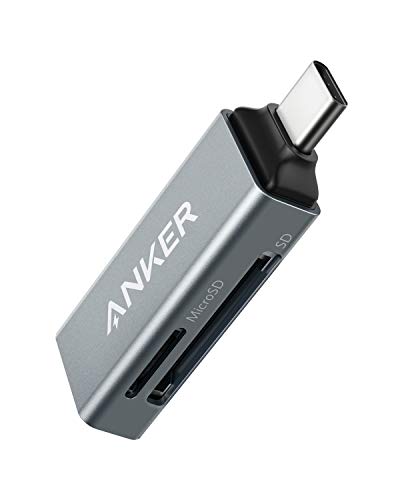
- Dual SD and microSD slots
- USB-C connectivity up to 5Gbps
- Lightweight 9g travel-friendly design
Best For: SD and microSD workflows on USB-C devices
High-Speed Pro Hub
Opluz 8-in-1 CFexpress Type B Reader

- Supports CFexpress Type B and five other card families
- 10Gbps transfers for large media files
- Adds two USB 3.2 data ports
Best For: Multi-format and CFexpress Type B production workflows
Multi-Format Value
Rocketek 7-in-1 USB-C Card Reader

- Supports seven common card interfaces
- Reads and writes up to five cards simultaneously
- USB-C and USB-A connectivity at 5Gbps
Best For: Mixed camera-card setups across multiple devices
Professional CFast/SD Workflow – ProGrade Dual-Slot Reader
For videographers working with CFast and SD UHS-II media, this ProGrade Digital reader combines two high-speed slots with USB 3.2 Gen 2 connectivity. It can transfer both cards simultaneously at up to 1,250MB/s, making it a strong memory card reader for videographers managing large footage files in the field or studio.
Best For: Professional filmmakers and content creators who use CFast and SD UHS-II cards and need a compact dual-card workflow.
Pros:
- Supports CFast and SD UHS-II cards.
- Transfers both cards simultaneously at up to 1,250MB/s.
- Included adhesive magnetic plate helps attach the reader to a laptop.
- Includes a two-year warranty and serialized quality tracking.
Cons:
- Does not read CompactFlash cards.
- Its two-slot format supports fewer media types than a broader multi-card reader.
This is a focused, professional option when your cameras use CFast and SD UHS-II. Its magnetic mounting system is particularly useful for mobile editing setups, while the lack of CompactFlash support makes card compatibility worth confirming before purchase.
Multi-Format Speed – Freewell Pro Card Reader Plus
The Freewell Pro Card Reader Plus is designed for videographers who move between SD and CFexpress Type A or Type B cards. Its three slots support simultaneous multi-card reading, while USB connectivity delivers transfer speeds up to 10Gbps for large video files.
Best For: Photographers and videographers needing one reader for SD and both CFexpress Type A and Type B formats.
Pros:
- Supports SD, CFexpress Type A, and CFexpress Type B cards.
- Three slots allow multiple cards to be read simultaneously.
- Up to 10Gbps transfer speed helps streamline file transfers.
- Passive heat dissipation and an aluminum body support heavy workflows.
Cons:
- No warranty is listed in the supplied specifications.
- USB 3.2 Gen 1 hardware may be a limiting factor depending on the host setup.
With broad card compatibility and three slots, this is a versatile memory card reader for videographers managing mixed media from multiple cameras. Its passive cooling is useful during busy downloads, though buyers should verify that their computer or mobile device can take advantage of the advertised speed.
Flexible Everyday Transfers – Lexar 3-in-1 Card Reader
Lexar’s 3-in-1 reader covers SD, microSD, and CompactFlash cards in a compact desktop or laptop-friendly design. With speeds up to 312MB/s for SD and microSD and up to 160MB/s for CompactFlash, it is a practical memory card reader for videographers using a variety of common formats.
Best For: Videographers who need SD, microSD, and CompactFlash compatibility in one affordable-style, general-purpose reader.
Pros:
- Supports SD, microSD, and CompactFlash cards.
- Reaches up to 312MB/s for SD and microSD cards.
- Includes USB-C and USB-A cables and supports USB 3.1 and 2.0.
- Backwards compatible with SD and microSD UHS-I cards.
Cons:
- CompactFlash transfer speeds are lower, up to 160MB/s.
- It does not support CFexpress or SD UHS-II formats.
This Lexar reader is a sensible choice for mixed SD, microSD, and CompactFlash libraries, especially when broad port compatibility matters. It is less suited to newer CFexpress workflows or users seeking the highest available professional transfer rates.
Fast CFexpress Type B Downloads – ProGrade PG05.5 Reader
The ProGrade Digital PG05.5 pairs CFexpress Type B and SD card slots for fast post-production transfers. USB 3.2 Gen 2 supports speeds up to 1.25GB/s, including simultaneous transfers from both cards, making it a capable memory card reader for videographers working with high-volume footage.
Best For: Videographers using CFexpress Type B and SD cards who want fast dual-slot transfers and a travel-ready setup.
Pros:
- Supports CFexpress Type B and SD cards.
- Transfers from both cards simultaneously at up to 1.25GB/s.
- Magnetic mounting system creates a compact mobile workstation.
- Includes Refresh Pro support and a two-year warranty.
Cons:
- It does not support CFexpress Type A.
- Its two-slot design is less versatile for users with several card formats.
For cameras using CFexpress Type B alongside SD, the PG05.5 offers a focused combination of speed, portability, and support coverage. Its dual-slot workflow can reduce download time, but users with Type A or other media should choose a reader with broader format support.
Best 4-in-1 Value – BENFEI USB-C/USB 3.0 Card Reader
For videographers using a mix of SD, microSD, CompactFlash, and Memory Stick media, this memory card reader for videographers offers a practical four-slot setup. Its USB-C and USB 3.0 connectors work with newer and older computers, while simultaneous card access can simplify file transfers and backups.
Best For: Videographers who need broad card-format support and a compact reader for USB-C or USB-A computers.
Pros:
- Supports SD, microSD, MS, and CF cards.
- Reads and writes four cards simultaneously.
- USB-C and USB 3.0 connectivity with plug-and-play operation.
- Offers UHS-I transfer rates up to 160MB/s, depending on the card and port.
Cons:
- Does not support Memory Stick Standard, Memory Stick Micro, or CF Type I.
- Actual transfer speeds depend on the card and connected USB slot.
- Older operating systems may not support exFAT SDXC cards.
This BENFEI reader is a versatile choice when your workflow spans several common card formats. Its four-card simultaneous access and dual connector design are especially useful for organizing footage across different devices.
Best Multi-Format Option – Rocketek 7-in-1 USB-C Card Reader
This Rocketek model is a capable memory card reader for videographers who work with varied media, including SD, microSD, CF, XD, and MS cards. It combines USB-C and USB-A connectors with up to 5Gbps USB 3.0 transfer capability, making it suitable for laptops, desktops, tablets, and compatible smartphones.
Best For: Videographers who need seven card formats, dual connector options, and simultaneous access to multiple cards.
Pros:
- Supports CF, SD, SDHC, SDXC, microSD, TF, XD, and MS cards.
- Can read and write up to five cards simultaneously.
- Includes both USB-C and USB-A connectors.
- Works across Windows, macOS, Linux, Chrome OS, and Android without drivers.
Cons:
- Listed 5Gbps transfer speed is a theoretical maximum.
- Compatibility depends on the host device and card format.
- Its broad feature set may be unnecessary for users with only one card type.
With seven card slots and five-card simultaneous operation, this Rocketek reader is well suited to busy ingest and file-management sessions. Its dual USB connectors also reduce the need for separate adapters when switching between devices.
Best for CFexpress Workflows – Yeemie Pro 8-in-1 CFexpress Hub
For high-bandwidth footage workflows, this memory card reader for videographers pairs a CFexpress Type B slot with SD, TF, CF, MS, and XD support. Its USB 3.2 Gen 2 interface is rated up to 10Gbps, and two additional USB ports let you connect peripherals or storage while accessing cards.
Best For: Videographers using CFexpress Type B cards who also want legacy card slots and two integrated USB ports.
Pros:
- Includes a dedicated CFexpress Type B slot.
- Supports SD, TF, CF, MS, and XD cards alongside CFexpress.
- Provides two additional USB ports rated up to 10Gbps.
- Can read and write six cards and two USB devices simultaneously.
Cons:
- Not compatible with XQD cards.
- Maximum performance requires compatible USB 3.2 Gen 2 hardware and media.
- Users must insert cards in the correct orientation for reliable contact.
This Yeemie Pro hub is the most specialized option here, particularly for creators moving large files from CFexpress Type B media. Its extra USB ports add useful workstation flexibility, while the included USB-A-to-C or USB-C-to-C cable supports a range of host devices.
Compact USB-C Pick – Anker PowerExpand Dual-Slot Reader
If you need a compact memory card reader for videographers working with SD and microSD media, the Anker PowerExpand offers a simple USB-C setup. Its dual slots support convenient file transfers between compatible cards and devices, while the small design suits laptop or phone use.
Best For: Videographers using SD and microSD cards with USB-C laptops or smartphones.
Pros:
- Dual SD and microSD slots for flexible card access.
- USB-C connectivity with up to 5Gbps transfer speeds.
- Ultra-compact 9g design for mobile workflows.
- Works with a wide range of USB-C devices and includes an 18-month warranty.
Cons:
- Only supports SD and microSD formats, not CF or CFexpress.
- Device cases may need to be removed for a proper connection.
This is a straightforward choice for creators whose cameras use SD-family cards. Its small footprint and USB-C compatibility make it especially practical for travel, though professionals needing broader card support will need a multi-format reader.
High-Speed Pro Hub – Opluz 8-in-1 CFexpress Type B Reader
For demanding camera workflows, this Opluz model is a versatile memory card reader for videographers using CFexpress Type B and multiple legacy formats. It combines a 10Gbps interface with extra USB ports, giving you more flexibility when downloading or organizing high-resolution footage.
Best For: Videographers who use CFexpress Type B alongside SD, CF, microSD, MS, or XD cards.
Pros:
- Supports CFexpress Type B, SD, TF, CF, MS, and XD cards.
- 10Gbps transfer rate is suited to large photo and video files.
- Two USB 3.2 data ports add connectivity for peripherals or storage.
- Includes switchable USB-C and USB-A cables and supports major operating systems.
Cons:
- Its six card slots and added ports may be more than a basic SD workflow requires.
- Maximum performance depends on the host device, card, and connection.
With broad format support and a compact aluminum body, this reader is designed for mobile production setups. It is the strongest fit here for creators moving large CFexpress files, while its hub functionality can help consolidate a travel workstation.
Multi-Format Value – Rocketek 7-in-1 USB-C Card Reader
The Rocketek 7-in-1 is a practical memory card reader for videographers who work across several camera systems. It supports CF, SD, microSD, XD, and MS formats, and its USB-C and USB-A connectors make it easy to use with a broad range of computers, tablets, and phones.
Best For: Creators needing broad card compatibility and flexible USB-A or USB-C connections.
Pros:
- Supports CF, SD, microSD, XD, MS, and related card formats.
- Can read and write up to five cards simultaneously.
- Offers USB-C and USB 3.0 connectivity with up to 5Gbps speeds.
- Plug-and-play operation works across Windows, Mac, Linux, Chrome OS, and Android.
Cons:
- It does not list CFexpress support.
- Its USB 3.0 speed is below the 10Gbps option offered by some newer readers.
This reader is a flexible choice for mixed-card kits and shared editing environments. It makes the most sense when format coverage and simultaneous card access matter more than top-end CFexpress performance.
How We Picked the Best Memory Card Reader for Videographers
We focused on the factors that affect real-world video workflows: supported card formats, interface speed, simultaneous read/write capability, portability, and connection flexibility. The selection includes readers for common SD and microSD media as well as newer CFexpress, CFast, and CFexpress Type A or B cards.
We also considered whether each design suits a specific working style. A compact single- or dual-slot reader may be ideal for a laptop bag, while a multi-format hub can simplify ingest when a production uses several camera systems. Advertised transfer speeds depend on the card, computer, cable, and port, so specifications should be treated as maximum potential rather than guaranteed sustained performance.
Quick Comparison
| Best For | Reader Type to Consider | Key Priority |
|---|---|---|
| CFexpress workflows | Dedicated CFexpress Type B reader | 10Gbps connectivity and sustained transfers |
| Professional mixed media | CFast, SD, or CFexpress multi-format reader | Broad compatibility |
| Travel and everyday editing | Compact USB-C SD or microSD reader | Small size and simple setup |
| Multi-camera productions | 7-in-1 or 8-in-1 card hub | Multiple formats and ports |
| Older and newer computers | USB-C reader with USB-A support | Connection flexibility |
Key Buying Factors for a Memory Card Reader for Videographers
Card Compatibility
Start with the cards used by your cameras. SD readers may support standard SD, SDHC, SDXC, and UHS-II cards, but not every model handles UHS-II at full speed. CFexpress Type A and Type B are different formats, and CFast is separate again. Confirm the exact card type before buying.
Transfer Speed
USB 3.0 is adequate for many HD and moderate 4K workflows, while USB 3.1 or USB 3.2 Gen 2 can reduce offload times when paired with a fast card and compatible computer. A reader’s slot specification matters just as much as its headline USB rating.
Ports and Connectivity
USB-C is increasingly common on modern laptops, tablets, and phones, while USB-A remains useful with older systems. Some readers include adapters or built-in hubs; others require a separate cable. Check whether the included connection matches your editing setup.
Build and Workflow Design
For location work, choose a compact reader with a protected cable or sturdy housing. For a desk-based ingest station, a larger hub with multiple slots may be more convenient. Simultaneous read/write support can also be valuable when handling several cards.
Who Should Buy Which Memory Card Reader for Videographers?
Choose a dedicated CFexpress Type B reader if your camera records to CFexpress and fast offloads are essential. A CFast and SD reader suits filmmakers working with cameras that use those professional formats. For mixed camera kits, an 8-in-1 or 7-in-1 hub offers the broadest coverage, though it may be larger and more dependent on the host device.
If you mainly use SD or microSD cards, a compact USB-C dual-slot reader is usually the simplest choice. Travelers and mobile editors should prioritize low weight and direct device compatibility, while studio users can favor faster interfaces, multiple slots, and a more durable enclosure.