Choosing among the best laser engravers for wood means balancing cutting power, work area, safety, software, and ease of use. The right machine depends on whether you want occasional crafts, personalized gifts, or repeatable production.
Our 2026 roundup compares 10 standout options across enclosed and open-frame designs, different laser powers, and a range of budgets and skill levels.
Best 10 Laser Engravers for Wood Picks for 2026
Best Enclosed Pick

- Enclosed Class 1 design for home crafting
- Dual cameras help with accurate placement
- Optional modules expand printing and engraving
Best For: Beginners and home crafters
Best Large-Format Value
TwoTrees TTS-20 Pro Laser Engraver

- 20W diode laser with at least 19.5W optical power
- Large 418 × 418mm engraving area
- Wi-Fi, USB, and TF-card operation
Best For: Larger wood projects and batch crafting
Best Color-Capable Pick
xTool M2 10W Color Craft Laser Engraver
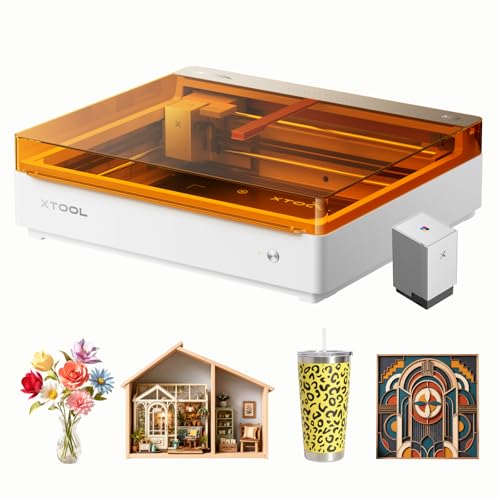
- Includes CMYK color printing module
- Combines printing, cutting, and engraving
- Dual cameras and enclosed Class 1 design
Best For: Colorful personalized crafts and home décor
Best Precision Upgrade

- True 12W laser for engraving and cutting
- Stated 0.01mm positioning accuracy
- Compatible with three major software options
Best For: Detailed signs, ornaments, and small-business projects
Best Power and Speed

- 20W laser output
- Up to 400 mm/s engraving speed
- Safety cover and protective features included
Best For: Frequent makers and small businesses needing faster, stronger processing
Best Beginner Pick

- Beginner-friendly setup with free software and offline control
- 10W output, 15,000mm/min speed, and one-touch focus
- Compact A4 bed with starter accessories included
Best For: Home crafters and small businesses making compact wood projects
Best for Large Projects
Creality Falcon 5W Laser Engraver
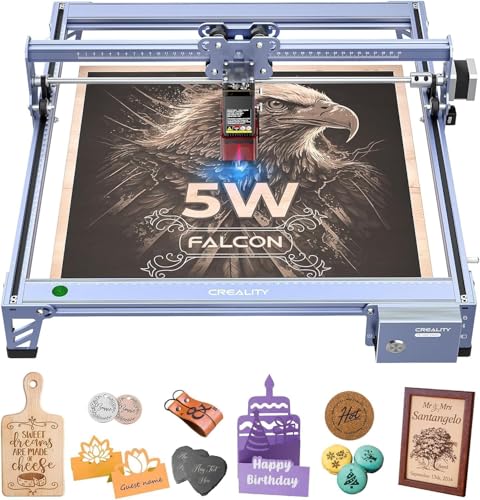
- Large 400 × 415mm engraving area
- Fine 0.06mm compression spot for detailed work
- 10,000mm/min speed with motion-stop protection
Best For: Larger wood panels and higher-volume crafting
Best Enclosed Pick – xTool M2 10W Laser Engraver
If you want one of the more approachable laser engravers for wood, the xTool M2 combines a 10W diode laser, enclosed Class 1 design, and dual-camera positioning. It is especially suited to home crafting, personalized gifts, and projects where easier setup matters.
Best For: Home crafters and beginners who want guided, enclosed laser engraving on wood and other craft materials.
Pros:
- Dual cameras support real-time previews and more accurate material placement.
- Enclosed Class 1 design includes real-time monitoring for home use.
- xTool Studio provides templates and an integrated AI image generator.
- Can be expanded with optional CMYK inkjet and 3W IR laser modules.
Cons:
- The CMYK inkjet module and RA3 Lite Rotary are not included.
- The 10W laser is the included configuration, so deeper cutting may require multiple passes.
- Its larger 36.2-pound body is less portable than open-frame machines.
The M2 is a strong choice when convenience, safety, and design assistance are more important than maximum raw cutting power. Keep in mind that some of its broader capabilities require separately purchased modules.
Best Large-Format Value – TwoTrees TTS-20 Pro Laser Engraver
The TwoTrees TTS-20 Pro stands out among laser engravers for wood with its 20W diode laser and generous 418 × 418mm workspace. It is built for hobbyists and small-scale production users who want room for larger signs, batches, and craft layouts.
Best For: Makers who prioritize a large work area, high diode power, and flexible computer or offline operation.
Pros:
- Stable 19.5W or greater optical output supports engraving and light cutting.
- Large 418 × 418mm working area accommodates bigger projects.
- Supports Wi-Fi, USB, and offline TF-card operation.
- Compatible with LightBurn and LaserGRBL on Windows, macOS, and Linux.
Cons:
- The air assist, honeycomb panel, and touch screen are optional accessories.
- It is an open-frame machine rather than a fully enclosed Class 1 system.
- Some setup and material-control decisions may be better suited to experienced users.
Choose the TTS-20 Pro if workspace and throughput are your priorities. Its expandable design and offline support add flexibility, but budget separately for accessories that can improve cutting and workflow.
Best Color-Capable Pick – xTool M2 10W Color Craft Laser Engraver
For makers who want more than monochrome engraving, this xTool M2 pairs a 10W laser with an included CMYK inkjet printing module. It brings full-color printing, cutting, and engraving together in a fully enclosed workflow for wood crafts and personalized projects.
Best For: DIY creators who want color printing alongside laser engraving for gifts, décor, and craft products.
Pros:
- Includes the CMYK inkjet printing module and a deluxe material kit.
- Combines full-color printing, precision cutting, and engraving in one machine.
- Dual cameras support real-time previews and accurate placement.
- Enclosed Class 1 construction is designed for safer home crafting.
Cons:
- The included laser output is 10W, which may limit deeper cutting compared with higher-power diode machines.
- The 3W IR laser and other expansion options are sold separately.
- At 43.3 pounds, it is not especially easy to move frequently.
This is the most versatile option in the group for projects that blend color and laser work. It costs and weighs more than a basic engraver, but the included inkjet module avoids the separate purchase required by the standalone M2.
Best Precision Upgrade – ACMER S2 12W Laser Engraver
The ACMER S2 is a practical option among laser engravers for wood when detailed results and upgrade potential are important. Its true 12W laser, 300 × 300mm workspace, and stated 0.01mm positioning accuracy suit signs, ornaments, photos, and small-business craft work.
Best For: Detail-focused makers who want a compact machine with multiple software options and room to add accessories.
Pros:
- True 12W laser supports engraving and cutting across more than 100 materials.
- Fine 0.08 × 0.08mm spot and stated 0.01mm positioning accuracy target intricate work.
- Compatible with ACMER Studio, LightBurn, and LaserGRBL.
- Optional rotary, riser, and air-assist accessories support future expansion.
Cons:
- The rotary, riser, and air-assist accessories are optional.
- The 300 × 300mm workspace is smaller than the TwoTrees model’s work area.
- The supplied safety setup uses an anti-UV shield and goggles rather than a fully enclosed Class 1 cabinet.
The S2 offers a useful balance of detail, cutting capability, and expandability in a relatively light package. It is a sensible fit for users comfortable choosing settings and adding accessories as their projects become more demanding.
Best Portable Pick – LaserPecker LP1 Plus
If you want laser engravers for wood that are easy to carry and quick to start, the LaserPecker LP1 Plus is a compact option for casual DIY projects. Its adjustable stand supports 360° multi-angle engraving, while the included app lets beginners import photos or doodles. Set the lens-to-material distance to 200 mm with the included ruler, and use only compatible non-metal materials.
Best For: Beginners who want a pocket-sized engraver for wood, leather, paper, acrylic, and portable crafting.
Pros:
- Pocket-sized 2.4-pound design travels easily.
- Can start engraving in about two minutes and run from a power bank.
- Adjustable stand and magnetic base help secure small items.
- Simple cross-platform app supports photos and doodles.
Cons:
- Metal engraving is not supported.
- Requires a precise 200 mm lens-to-surface distance.
- Its compact design is intended for small projects.
The LP1 Plus is a practical choice when portability and simplicity matter more than a larger work area. It suits personalized wood crafts and small materials, especially for users who want to create away from a permanent workspace.
Best Compact Starter – ACMER S1 6000mW
Among laser engravers for wood, the ACMER S1 offers a compact workstation with a 6000mW diode laser, cutting capability, and beginner-oriented software. It arrives 99% preassembled and supports ACMER Studio, LightBurn, and LaserGRBL, making it suitable for projects ranging from detailed engravings to thin plywood, MDF, and acrylic cuts.
Best For: Beginners, hobbyists, and small businesses needing a compact wood engraver with cutting versatility.
Pros:
- 6000mW laser and up to 10,000 mm/min engraving speed.
- Supports engraving on wood, bamboo, leather, acrylic, and additional materials.
- 99% preassembled with a one-minute laser-head installation.
- Compatible with macOS, Windows, and Linux, plus LightBurn and LaserGRBL.
Cons:
- 130 x 130 mm working area limits larger projects.
- Cutting performance is described for thin plywood, MDF, and acrylic.
- Its Class 4 laser requires appropriate safety practices.
The S1 balances accessible setup with useful control and material flexibility. Its small footprint works well at home, while the software support and cutting function give it more room to grow than a basic engraving-only device.
Best Power and Speed – ATOMSTACK A20 Pro V2
For shoppers comparing laser engravers for wood that emphasize cutting power and throughput, the ATOMSTACK A20 Pro V2 is the high-output option in this roundup. Its 20W laser reaches speeds up to 400 mm/s and is designed for engraving and cutting across wood, acrylic, metal, and leather. The modular aluminum frame, limit switches, and protective features support a more capable workshop setup.
Best For: Makers and small businesses handling personalized gifts, business cards, and higher-volume wood or mixed-material projects.
Pros:
- 20,000mW output supports strong cutting and precise engraving.
- Engraving speeds reach up to 400 mm/s.
- Supports ATOMSTACK software, LightBurn, and LaserGRBL.
- Includes a magnetic protective cover, safety glasses, limit switches, and tilt safety beep.
Cons:
- At 13.67 pounds, it is less portable than compact alternatives.
- The larger frame requires more dedicated workspace.
- Its higher-output laser calls for careful safety setup and operation.
The A20 Pro V2 is the strongest fit for users who value speed, output, and a more substantial machine over portability. Its software compatibility and modular construction make it a flexible choice for frequent crafting or small-business production.
Best Beginner Pick – K15 Pro 10W Laser Engraver
For shoppers comparing laser engravers for wood, the K15 Pro stands out as a compact, beginner-oriented option with a near-A4 work area. Its 10W diode laser is designed for wood, acrylic, leather, and other supported materials, while wireless controls, offline operation, and included starter accessories simplify setup.
Best For: Beginners, home crafters, and small businesses making signs, coasters, gifts, and other compact projects.
Pros:
- Assembles in about three minutes and includes safety glasses, materials, and tools.
- Supports CutLabX, LightBurn, and LaserGRBL, with app and TF-card offline control.
- Verified 10.36–10.58W output, 15,000mm/min speed, and one-touch focusing.
- Compact A4 work area with heightening columns for some taller objects.
Cons:
- The 11.8 × 7.9-inch work area is smaller than the full-size beds on the other options.
- The optional IR laser head and other upgrades cost extra.
- Its broad material claims still require choosing appropriate settings for each project.
The K15 Pro is a practical choice when ease of use, compact size, and included accessories matter most. Consider a larger-bed model if you regularly work on full-size signs or larger sheets.
Best for Large Projects – Creality Falcon 5W Laser Engraver
Among laser engravers for wood, the Creality Falcon is a strong fit for shoppers who need more workspace without moving to a larger laser system. Its 400 × 415mm area accommodates larger pieces in one pass, while the 5W laser focuses on fine detail and speeds up repeat work.
Best For: Makers engraving larger wood panels, leather pieces, acrylic projects, and other materials supported by the machine.
Pros:
- Large 400 × 415mm working area for bigger projects.
- 0.06 × 0.06mm compression spot and stated engraving accuracy within 0.004 inches.
- Engraving speeds up to 10,000mm/min for higher-volume tasks.
- Eye-protective cover and active stop function add safety features during operation.
Cons:
- Rotary roller and raisers are optional purchases.
- The 5W output may be less suitable than a higher-powered machine for demanding cutting work.
- Its 400 × 415mm footprint requires more workspace than a compact A4 model.
The Falcon’s main advantage is its generous bed, making it easier to handle larger wood designs without repositioning. Choose it when project size and fine engraving are higher priorities than compact storage.
Best Connected Option – LONGER Ray5 5W Laser Engraver
The LONGER Ray5 is one of the more flexible laser engravers for wood if you want several ways to load and control projects. It combines a 400 × 400mm work area with USB, TF card, Wi-Fi, and app connectivity, plus compatibility with LightBurn and LaserGRBL.
Best For: DIY users who want a full-size work area, offline workflows, touchscreen controls, and multiple connection options.
Pros:
- 400 × 400mm working area supports a range of project sizes.
- 3.5-inch touchscreen plus USB, TF card, Wi-Fi, and app connectivity.
- Up to 10,000mm/min speed with a stated 0.01mm engraving accuracy.
- Includes emergency shutdown, motion protection, overheating detection, protective covers, and goggles.
Cons:
- The 5W laser is less powerful than the K15 Pro’s stated 10W output.
- Its 0.08 × 0.08mm laser spot is not as fine as the Creality Falcon’s stated spot.
- A larger 400mm bed needs more permanent workspace than a compact engraver.
The Ray5 makes a compelling middle-ground choice for users who value connection flexibility and a spacious bed. Its touchscreen and offline options are particularly useful when you do not want every job tied to a computer.
How We Picked the Best Laser Engravers for Wood
We evaluated these machines by looking at the features that matter most for wood projects: laser output, focusing system, usable work area, enclosure and safety design, camera alignment, software compatibility, offline controls, and overall versatility. We also considered whether each model is better suited to engraving, cutting, beginner experimentation, or more demanding production work.
Laser power is only one part of performance. Beam focus, material thickness, motion accuracy, air-assist support, and suitable settings can have just as much impact on the final result. Product specifications can vary by seller and configuration, so verify the included accessories and regional safety requirements before ordering.
Quick Comparison
| Best For | Look For |
|---|---|
| Beginners and occasional crafts | Simple setup, low-power diode laser, and clear controls |
| Large wood signs and panels | Generous work area and extension options |
| Thicker wood cutting | Higher optical power, air assist, and multiple-pass capability |
| Precise gift personalization | Camera positioning, fine focus, and reliable software |
| Small workspaces | Compact footprint or enclosed desktop construction |
| Frequent production | Strong motion system, ventilation planning, and repeatable alignment |
Key Buying Factors for Laser Engravers for Wood
Laser Power and Material Thickness
Higher-power diode lasers generally cut wood more efficiently, while lower-power models can be excellent for engraving, marking, and thin craft sheets. Check the machine’s optical output rather than relying only on electrical wattage. Cutting results also depend on wood species, resin content, moisture, thickness, speed, and the number of passes.
Safety and Ventilation
Open-frame machines require careful supervision, eye protection appropriate to the laser wavelength, and a controlled workspace. An enclosed Class 1 design can simplify everyday use, but it still needs proper ventilation and safe material choices. Never engrave unknown plastics or materials that may release hazardous fumes.
Work Area and Alignment
Measure your typical projects before buying. A compact machine works well for coasters, ornaments, and small signs, while a larger bed is more practical for panels and batches. Built-in cameras, limit switches, height adjustment, and offline controls can reduce setup time and improve repeatability.
Software and Expandability
Confirm compatibility with your preferred design workflow and operating system. Features such as air-assist support, rotary compatibility, honeycomb beds, enclosure upgrades, and replaceable laser modules can make a machine more useful as your skills grow.
Who Should Buy Which Laser Engravers for Wood?
Choose a compact beginner model if you want to learn engraving, make small gifts, or have limited bench space. A simple interface and adjustable stand may matter more than maximum cutting power.
Choose an enclosed camera-equipped machine if convenience, alignment, and family-friendly operation are priorities. These models are especially useful for repeatable craft projects and mixed materials.
Choose a 12W to 20W-class machine if you plan to cut thicker wood, produce larger pieces, or work more frequently. Budget for ventilation, a stable work surface, air assist, and suitable safety equipment.
Choose a large-format open-frame engraver if you make signs, panels, or batches that exceed a compact bed. Before purchasing, confirm that you have enough clearance and a safe enclosure or controlled operating area.