Choosing among the best laser engravers for leather means balancing clean detail, dependable material handling, ventilation, and ease of use. The right machine can turn hides, patches, wallets, and craft blanks into consistent personalized products.
We selected 10 models spanning compact beginner machines, enclosed systems, camera-assisted designs, and higher-power engravers. Use the guide below to match features and safety requirements to your workspace and projects.
Best 10 Laser Engravers for Leather Picks for 2026
Best All-Around Enclosed Pick

- 10W diode laser for leather and 300+ materials
- Dual cameras support accurate material placement
- Enclosed Class 1 design for home crafting
Best For: Home crafters wanting versatility and upgrade options
Best Portable Workshop Value

- 6W laser engraves leather and many other materials
- 300 × 300 mm work area for larger projects
- Works with LaserGRBL and LightBurn
Best For: Mobile makers and hobbyists needing a larger work area
Best Camera-Assisted Starter Bundle

- 10W laser supports leather and multiple other materials
- Smart camera helps preview and position designs
- Includes enclosure, honeycomb bed, tools, and 13 materials
Best For: Beginners wanting an enclosed, accessory-rich setup
Best for Precision Leather Work

- 5.5W laser with fine spot focus
- 300 x 300mm working area
- Supports air assist and LightBurn
Best For: Detailed leather tags, patches, and light cutting
Best Enclosed All-in-One
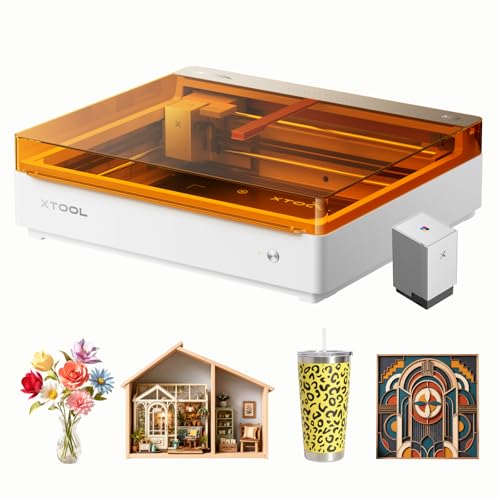
- 10W laser with CMYK inkjet module
- Class 1 enclosed design
- Dual cameras for guided placement
Best For: Home crafters making colorful personalized leather goods
Best Portable 12W Option

- Foldable, space-saving design
- 12W laser for engraving and light cutting
- 0.01mm stated engraving precision
Best For: Portable leather tags, patches, logos, and small gifts
Best Large-Format Speed
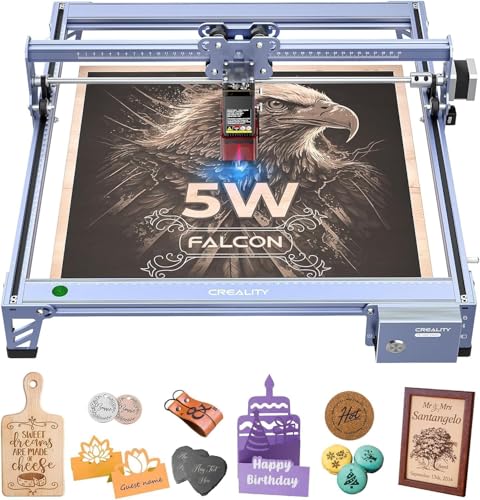
- 400-by-415 mm working area for larger projects
- Up to 10,000 mm/min engraving speed
- Fine 0.06 mm compression spot for detailed work
Best For: Makers needing speed and a spacious leather-engraving area
Best All-Around Enclosed Pick – xTool M2 10W
For makers who want a versatile, home-friendly option among laser engravers for leather, the xTool M2 combines a 10W diode laser with a fully enclosed Class 1 design. Its dual cameras support accurate material placement, while the optional modules expand its capabilities beyond engraving.
Best For: Home crafters and DIY makers who want camera-assisted positioning, templates, and room to add color printing or fine metal engraving later.
Pros:
- Engraves leather and more than 300 other materials, according to the supplied specifications.
- Dual cameras provide real-time previews and support the “Place & Go” workflow.
- Fully enclosed Class 1 design is suited to home crafting.
- xTool Studio includes templates and an AI image generator.
Cons:
- The CMYK inkjet module, 3W IR laser, and RA3 Lite Rotary are sold separately.
- The machine weighs 36.2 pounds, making it less portable than compact alternatives.
The M2 is a strong choice if you value convenience, safety, and upgrade potential more than portability. It is particularly appealing for personalized leather goods and broader craft workflows.
Best Portable Workshop Value – ELIDOR Z6 6W
The ELIDOR Z6 is a compact, open-style option for shoppers comparing laser engravers for leather on a budget-conscious home or mobile setup. Its 300 × 300 mm work area, 6W laser, and broad software support make it practical for detailed craft projects.
Best For: DIY makers, hobbyists, classrooms, and small-business creators who need a lightweight engraver with a relatively generous work area.
Pros:
- 6W laser supports engraving leather, wood, acrylic, cardboard, ceramic, glass, metal, and more.
- 300 × 300 mm working area accommodates larger projects than the mini models listed here.
- Supports LaserGRBL and LightBurn on Windows, macOS, and Linux.
- Lightweight 4.7-pound design suits craft fairs and mobile projects.
Cons:
- The supplied notes do not describe an enclosure or integrated camera.
- Setup and operation may require more hands-on positioning than camera-equipped models.
Choose the Z6 when portability, software flexibility, and work area matter most. Its 6W output is well matched to detailed leather personalization, while the open design means buyers should plan their workspace and safety practices carefully.
Best Mini Desktop Option – Twotrees TS1 Mini 3W
If your leather projects are small and desk space is limited, the Twotrees TS1 Mini is one of the most compact laser engravers for leather in this roundup. It offers smartphone control, a fully enclosed acrylic cover, and a small 80 × 80 mm work area for detailed tags, patches, and other compact items.
Best For: Beginners, classrooms, and home users making small leather crafts who want a lightweight, plug-and-play machine with mobile control.
Pros:
- Fully enclosed design includes safety goggles and requires no complex assembly.
- Bluetooth app control works with iOS and Android devices.
- Compact 80 × 80 mm work area fits small projects and limited workspaces.
- Auto-focus laser head and 0.1 mm positioning accuracy support detailed engraving.
Cons:
- The 3W laser and 80 × 80 mm work area limit project size and cutting capability.
- Its small interior accommodates objects up to 30 mm tall.
- Adult supervision is recommended for family and classroom use.
The TS1 Mini is best viewed as a focused starter machine rather than a general-purpose cutter. It makes sense for small leather goods, quick personalization, and users who prioritize portability and simple phone-based operation.
Best Camera-Assisted Starter Bundle – BlazeX M3 10W
The BlazeX M3 pairs a 10W laser with camera-guided positioning and an included enclosure, making it a practical contender among laser engravers for leather. The bundle also includes a honeycomb bed, tool kit, and 13 engraving materials to help beginners start quickly.
Best For: Beginners and hobbyists who want an enclosed setup, on-material design previews, and included accessories for leather, wood, glass, and metal projects.
Pros:
- Smart camera previews designs on the material to improve placement and reduce waste.
- Class 1 enclosure includes lid and tilt safety sensors, plus smoke and odor exhaust.
- 10W laser is designed for engraving and cutting across several material types, including leather.
- Bundle includes a protective enclosure, honeycomb bed, tool kit, and 13 materials.
Cons:
- Rotary, air-assist, and purifier accessories are optional add-ons.
- The supplied notes do not specify the working-area dimensions.
- Advanced users may need additional accessories for specialized cylindrical or cleaner cutting work.
The M3 is a compelling starter bundle for buyers who want guided positioning and safety features without assembling a system from separate components. Its included extras make it especially convenient for trying leather personalization alongside other materials.
Best for Precision Leather Work – Twotrees TTS-55 Pro
If you want one of the more versatile laser engravers for leather, the Twotrees TTS-55 Pro combines a 5.5W laser with a 300 x 300mm work area. Its fine spot focus and stated ability to cut up to 0.7mm leather make it suitable for leather tags, patches, and other small-batch projects.
Best For: Hobbyists, makers, and small businesses that need a relatively large work area for detailed leather engraving and light cutting.
Pros:
- 5.5W laser with a stated 0.08 x 0.46mm spot focus and up to 0.1mm engraving accuracy.
- 300 x 300mm working area accommodates larger leather pieces and multiple small items.
- Supports air-assist integration for cleaner, deeper cuts and includes a red laser shield.
- Works with LaserGRBL and LightBurn, with Wi-Fi, TF-card, and online engraving options.
Cons:
- The open-style machine requires careful attention to ventilation and laser safety.
- Its stated cutting capacity is limited to light materials, including up to 0.7mm leather.
- LightBurn support may require a compatible Windows, macOS, or Linux setup.
The TTS-55 Pro is a practical choice when leather detail and workspace size matter more than enclosure convenience. Air-assist support and broad software compatibility add flexibility, but users should plan for appropriate safety equipment and material testing.
Best Enclosed All-in-One – xTool M2 10W Color Craft
The xTool M2 is a premium all-in-one option among laser engravers for leather, combining a 10W diode laser with a CMYK inkjet printing module. Its enclosed Class 1 design, dual cameras, and print-to-cut workflow make it especially appealing for home crafters creating personalized leather goods.
Best For: Home users and makers who want enclosed operation, camera-assisted placement, full-color printing, and leather crafting in one system.
Pros:
- Combines 10W laser engraving and cutting with a CMYK inkjet printer.
- Supports leather along with more than 300 listed materials, including felt, fabric, wood, and paper.
- Built-in dual cameras provide workspace previews and support the “Place & Go” workflow.
- Class 1 enclosed design with real-time monitoring is suited to home crafting.
Cons:
- At 43.3 pounds, it is substantially less portable than compact open-frame engravers.
- The feature-rich setup may be more than needed for users who only want basic leather engraving.
- The optional 3W IR module is sold separately.
The M2 stands out for convenience and versatility rather than simple portability. Its enclosed construction and camera features can reduce setup guesswork, while the included CMYK module expands leather projects into colorful personalized products.
Best Portable 12W Option – Artilume T1 Foldable
The foldable Artilume T1 is a space-conscious pick among laser engravers for leather. Its 12W laser, 200 x 150mm work area, and stated 0.01mm engraving precision are suited to leather patches, tags, logos, and other compact projects, while the folding frame makes storage easier.
Best For: Beginners, hobby makers, and small businesses that need a portable machine for detailed leather tags, patches, and gifts.
Pros:
- Foldable design is easy to move between workspaces and store after use.
- 12W laser handles detailed engraving and light cutting on leather and other craft materials.
- Stated 0.01mm engraving precision supports text, logos, QR codes, and clean outlines.
- Offers mobile-app control plus compatibility with LightBurn and LaserGRBL.
Cons:
- The 200 x 150mm work area is smaller than the Twotrees model’s workspace.
- Its compact format is better suited to small leather projects than large panels.
- It still requires ventilation, safety glasses, and supervision during operation.
The T1 makes the most sense when portability and straightforward setup are priorities. It offers strong stated power for small leather projects and includes beginner materials, though its smaller work area limits the size of items you can process.
Best Beginner Ecosystem – Glowforge Aura
The Glowforge Aura is a beginner-friendly option for laser engravers for leather, with a 6W diode laser, a 12-by-12-inch workspace, and an HD camera for positioning designs before engraving. It can also cut and score materials including wood, paper, cardstock, fabric, and dark acrylic.
Best For: Beginners, educators, hobbyists, and small businesses that want guided setup and camera-assisted project placement.
Pros:
- Engraves and cuts leather with a compact footprint.
- HD live preview helps position designs accurately.
- Built-in passthrough slot supports materials longer than the machine.
- Web-based app, tutorials, and Proofgrade material support reduce guesswork.
Cons:
- Not compatible with MDF, PVC vinyl, or white, blue, and clear acrylic.
- Ventilation is required; the optional Glowforge Craft Laser Filter is sold separately.
- Routine cleaning and maintenance are needed for reliable cutting performance.
Choose the Aura if ease of use and guided workflow matter more than broad material compatibility. Its camera and passthrough slot make it especially practical for personalized leather goods and longer decorative projects.
Best Portable Pick – LaserPecker LP1 Plus
The LaserPecker LP1 Plus is a pocket-sized choice for laser engravers for leather when portability is a priority. Its adjustable stand supports 360-degree, multi-angle engraving, while the app lets beginners import photos or doodles for wood, leather, acrylic, and other compatible non-metal materials.
Best For: Mobile makers and beginners engraving small leather items at home, outdoors, or wherever a power bank is available.
Pros:
- Compact 2.4-pound design travels easily in a backpack.
- Can start from a power bank for portable use.
- Adjustable stand and magnetic base help secure small items.
- Cross-platform app supports photos and doodles.
Cons:
- Metal engraving is not supported.
- The lens-to-material distance must be set to 200 mm using the included ruler.
- Its pocket-sized format is better suited to small projects than large workpieces.
The LP1 Plus is a practical match for personalization on small leather goods and for creators who value portability. Buyers should confirm that their materials are non-metal and be prepared to follow the specified working-distance setup.
Best Large-Format Speed – Creality Falcon 5W
The Creality Falcon 5W is a strong option among laser engravers for leather for larger projects and faster production. It combines a 400-by-415 mm working area with speeds up to 10,000 mm/min, a fine 0.06-by-0.06 mm compression spot, and support for more than 200 materials.
Best For: Makers and small businesses that need a larger work area, detailed engraving, and efficient handling of repeat or high-volume tasks.
Pros:
- Large 400-by-415 mm working area accommodates bigger materials.
- Engraving speed reaches up to 10,000 mm/min.
- Fine compression spot supports detailed designs and repeat positioning.
- Eye-protective cover, active stop function, and offline usage add practical flexibility.
Cons:
- Rotary roller and raisers for cylindrical or taller objects are sold separately.
- Its larger 17.32-by-9.33-by-24.8-inch footprint requires dedicated space.
- The product uses a Class 4, 5,000 mW laser, so appropriate safety practices are important.
The Falcon 5W is the better fit when leather projects benefit from a generous bed and faster throughput. Its expandable accessory options may appeal to growing makers, although the machine demands more workspace than compact alternatives.
How We Picked These Laser Engravers for Leather
We focused on features that matter when engraving leather: controllable laser output, fine positioning, software usability, work-area practicality, and safety. The selection includes enclosed and open-frame designs, compact options for occasional crafting, and more capable machines for frequent personalization or small-business work.
We also considered cameras, adjustable stands, foldable construction, cutting capability, and advertised compatibility with leather and other common craft materials. Because leather varies widely in thickness, finish, dye, and treatment, published power ratings should be treated as a starting point rather than a guarantee of identical results.
Quick Comparison
| Best For | Notable Options | What to Look For |
|---|---|---|
| Beginners and small projects | LaserPecker LP1 Plus, Twotrees TS1 Mini | Compact setup, guided positioning, manageable learning curve |
| Enclosed home crafting | xTool M2, Glowforge Aura | Integrated safety features, cameras, ventilation planning |
| More engraving flexibility | ELIDOR 6000mW, Twotrees TTS-55 Pro, Creality Falcon 5W | Adjustable settings, reliable focus, suitable software |
| Advanced creative workflows | xTool M2 Color Craft, BlazeX M3, Artilume T1 | Camera alignment, expanded capabilities, larger or stronger systems |
Key Buying Factors for Laser Engravers for Leather
Laser Power and Control
Leather typically needs controlled surface marking rather than maximum cutting power. A machine with adjustable speed and power settings is more useful than a high-wattage model with limited control. Plan to test on scraps because vegetable-tanned, chrome-tanned, bonded, and finished leather can react very differently.
Safety and Ventilation
Prefer an enclosed machine when possible, especially in a shared home or classroom. Laser engraving leather can produce smoke and unpleasant or hazardous fumes, so use the manufacturer’s ventilation guidance, keep the workspace clear, and never leave an active machine unattended. Avoid unknown, PVC-containing, or treated materials unless the manufacturer explicitly confirms they are suitable.
Accuracy, Focus, and Alignment
Fine detail depends on a stable frame, consistent focus, and accurate material placement. Built-in cameras can simplify positioning on irregular blanks, while adjustable stands and rotary compatibility may help with thicker or curved projects. A smaller spot size can improve detail, but real-world results also depend on optics, motion control, and settings.
Software and Workflow
Check whether the engraver supports the file formats and operating systems you already use. Beginner-friendly software can save time, while broader compatibility may matter more for professional design workflows. Air assist, pass-through space, and removable bases are useful extras when you expect to expand beyond flat leather goods.
Who Should Buy Which Laser Engravers for Leather?
Choose a compact mini engraver if you mainly personalize small patches, labels, tags, or gifts and have limited workspace. Choose an enclosed camera-equipped model if convenience, repeatable placement, and household safety are priorities. Choose a more powerful open-frame machine if you need a larger work area and are prepared to manage ventilation, guarding, and material testing carefully.
For frequent production, prioritize repeatability, dependable support, software efficiency, and accessories over headline wattage alone. For occasional DIY use, an easier setup and safer enclosure may deliver more value than extra cutting power. Whichever of these Laser Engravers for Leather you choose, begin with manufacturer-approved material, run a small test grid, and record the settings that produce the color and contrast you want.