Choosing a laboratory pH meter with temperature compensation is about more than reading pH. You want consistent accuracy, reliable calibration, and a setup that fits your sample volume and testing routine.
This roundup highlights 10 options for bench, portable, and multi-parameter use, so you can quickly narrow down the best meter for lab work, hydroponics, water testing, and QA checks.
Best 10 Laboratory PH Meter with Temperature Compensation Picks for 2026
Best for GLP Data Logging
Apera PH800 Benchtop pH Meter Kit

- 0.01 pH accuracy with automatic temperature compensation
- GLP data storage for 500 readings plus USB output
- Includes electrode, holder, calibration buffers, and software
Best For: Labs and QC teams that want dependable pH readings with easy record keeping.
Best for Harsh Environments
Bluelab pH Pen with Auto Temp Compensation

- 0.1 pH resolution with auto temperature compensation
- Waterproof housing and floating design
- Double-junction probe with easy two-point calibration
Best For: Portable pH testing in hydroponics, pools, aquariums, and brewing.
Best for Multi-Parameter Lab Testing
Milwaukee pH/mV/Temp Bench Meter MW150

- Measures pH, mV, and temperature in one bench unit
- Up to 3-point calibration for dependable readings
- Good fit for lab, classroom, and QC use
Best For: Labs and quality-control users who want a straightforward benchtop meter with temperature compensation.
Best for ATC Accuracy
Portable pH Meter with Large Backlight
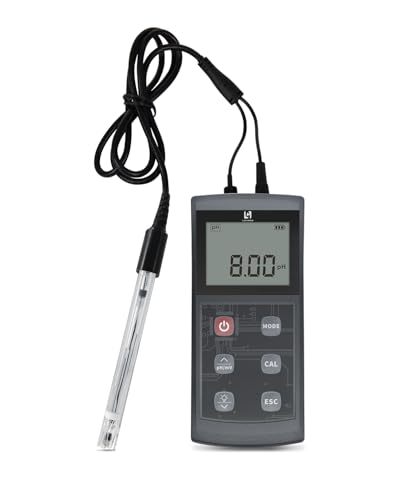
- ATC helps correct readings across changing water temperatures.
- Claims ±0.01 pH accuracy with a large backlit display.
- Includes calibration powder, batteries, and a carrying case.
Best For: Portable water-testing users who want automatic temperature compensation and simple calibration.
Best Multi-Parameter Reader
Milwaukee MW804 pH, TDS & Conductivity Meter

- Reads pH, EC, TDS, and temperature in one compact tester
- User-selectable temperature compensation and EC/TDS conversion
- Good fit for lab, aquarium, pool, and hydroponic testing
Best For: Labs and water-testing users who want a compact pH meter with temperature compensation and extra conductivity/TDS readings.
Best for Calibration Ease
Apera AI501 PH700 Benchtop Lab pH Meter
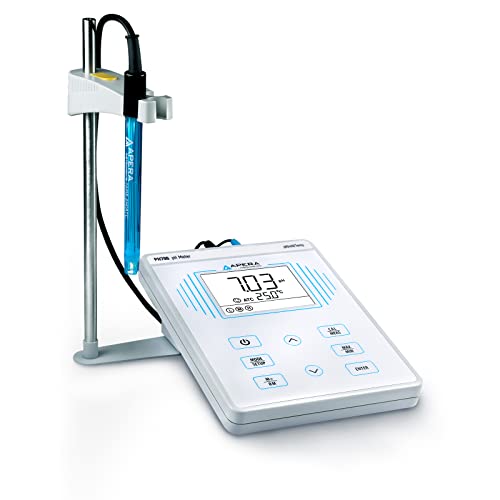
- 0.01 pH accuracy for routine lab work
- 3-in-1 pH/temp electrode with ATC
- Auto calibration and electrode diagnostics
Best For: Small labs and water testing setups that need easy temperature-compensated pH measurements.
Best for Accurate Lab Readings
Milwaukee Portable pH/Temperature Meter MW102

- ±0.02 pH accuracy for precise readings
- Automatic temperature compensation with stainless probe
- Two-point automatic calibration for easier setup
Best For: Labs, classrooms, and field users who need accurate portable pH measurements with ATC.
Best for Remote Sampling
Smart Lab pH Meter with Bluetooth
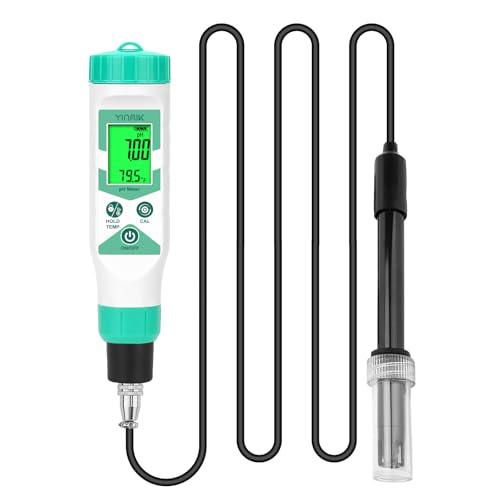
- 1.2 m electrode cable reaches deep or awkward containers
- Bluetooth app stores up to 1,000 readings and exports data
- Automatic temperature compensation with 0.01 pH resolution
Best For: Researchers, growers, and technicians who need portable pH testing with long-cable access and data logging.
Best Multi-Parameter Value
Milwaukee MW803 pH/TDS/Conductivity Meter

- Measures pH, temperature, TDS, conductivity, and ppm
- Built-in temperature compensation improves reading consistency
- Handheld design is convenient for routine testing
Best For: Users who want a single meter for pH and related water-quality checks.
Best Simple Pick

- Automatic temperature compensation for steadier readings
- Full-range pH testing from 0.00 to 14.00
- Includes a calibration kit for easier setup
Best For: Growers and water testers who need a simple pH pen with ATC for routine solution monitoring.
Best for GLP Data Logging – Apera PH800 Benchtop pH Meter Kit
If you need a laboratory pH meter with temperature compensation for routine research or QC work, the Apera PH800 is a practical bench-top option. It combines 0.01 pH accuracy, automatic temperature compensation, and a bundled pH/temperature electrode, so you can get stable readings without piecing together a full setup.
Best For: Labs and quality-control users who want reliable pH measurement, simple calibration, and built-in data logging.
Pros:
- Automatic 1 to 3 point calibration with recognition of five standard buffers
- 0.01 pH accuracy plus automatic temperature compensation for general water solutions
- GLP data management with 500 stored readings and USB output
- Backlit display shows pH and temperature at the same time
Cons:
- Windows-only PC software support limits cross-platform use
- Designed mainly for regular water solutions, not every specialized application
- BNC setup may require a separate electrode for advanced use cases
This is a strong laboratory pH meter with temperature compensation if you care most about dependable day-to-day measurements, easy calibration, and record keeping. It’s especially appealing for users who want a complete kit rather than a meter-only purchase.
Best for Harsh Environments – Bluelab pH Pen with Auto Temp Compensation
If you need a laboratory pH meter with temperature compensation that can handle daily field use, the Bluelab pH Pen is a practical pick. It delivers 0.1 pH readings, automatic temperature compensation, and a durable waterproof body that suits hydroponics, aquariums, brewing, and other water-testing tasks.
Best For: Growers, hobbyists, and water testers who want a rugged handheld pH pen with easy calibration and stable temperature-corrected readings.
Pros:
- Auto temperature compensation helps improve reading consistency
- Double-junction probe resists contamination and supports longer life
- Waterproof design floats if dropped into a tank or solution
- Two-point calibration with included starter sachets
Cons:
- Readings can be slow or unstable in very pure water
- Requires regular calibration and proper storage
- More of a rugged pen-style tester than a full benchtop lab meter
Overall, this Bluelab pen is a strong fit if you value durability and straightforward operation over advanced lab features. For buyers comparing a laboratory pH meter with temperature compensation, it stands out as a tough, portable option that balances accuracy, convenience, and everyday reliability.
Best for Multi-Parameter Lab Testing – Milwaukee pH/mV/Temp Bench Meter MW150
If you need a laboratory pH meter with temperature compensation for routine bench testing, the Milwaukee MW150 is a practical pick that focuses on accuracy, straightforward calibration, and dual pH/mV readouts. Its benchtop format makes it a solid fit for controlled lab environments where repeatable measurements matter more than portability.
Best For: Labs, classrooms, and quality-control workflows that want a simple benchtop meter with pH, mV, and temperature measurement in one unit.
Pros:
- Supports up to 3-point calibration for better measurement reliability
- Measures pH, mV, and temperature in a single bench meter
- Benchtop design is convenient for stable, repeatable lab work
Cons:
- Less portable than handheld laboratory meters
- Basic design may feel limited if you need advanced data features
Overall, the MW150 is a sensible choice if you want a laboratory pH meter with temperature compensation that handles core testing tasks without unnecessary complexity. It is especially appealing for users who value dependable calibration and multi-parameter measurement over extra software or logging features.
Best for ATC Accuracy – Portable pH Meter with Large Backlight
If you need a laboratory pH meter with temperature compensation for water testing, this portable model is built for quick, readable results. It combines ATC, one-click calibration, and a claimed ±0.01 pH accuracy, making it a practical fit for lab samples, pools, aquariums, hydroponics, and drinking water checks.
Best For: Users who want a portable, easy-to-calibrate pH tester with automatic temperature compensation for lab and field water testing.
Pros:
- Automatic temperature compensation helps standardize readings across hot or cold samples.
- High claimed accuracy and a large backlit display make results easier to read.
- One-click calibration and included buffer powder simplify setup.
- Carrying case and included accessories improve portability and storage.
Cons:
- Best suited to water testing; not a general-purpose lab instrument for every fluid type.
- Accuracy claims are strong, but real-world performance depends on calibration and care.
- Battery-powered design may be less convenient than bench meters for daily lab use.
This is a solid pick if you want a laboratory pH meter with temperature compensation that emphasizes convenience and portability over bench-top complexity. It looks especially appealing for mixed-use buyers who need one meter for lab samples, aquariums, pools, and other routine water checks.
Best Multi-Parameter Reader – Milwaukee MW804 pH, TDS & Conductivity Meter
If you want a laboratory pH meter with temperature compensation that also handles EC and TDS, the Milwaukee MW804 is a practical all-in-one pocket tester. It reads pH, conductivity, TDS, and temperature at the same time, with a clear LCD, stability indicator, and user-adjustable compensation settings for more controlled measurements.
Best For: Labs, aquariums, hydroponics, and water-testing setups that need one compact meter for pH plus temperature-aware readings.
Pros:
- Measures pH, conductivity, TDS, and temperature in one unit
- Temperature compensation coefficient is user selectable
- Dual-level LCD and hold function make readings easier to capture
- Useful across lab, pool, aquarium, and horticulture applications
Cons:
- More of a field-ready pocket tester than a full benchtop lab meter
- Not the simplest choice if you only need basic pH readings
For buyers comparing a laboratory pH meter with temperature compensation, the MW804 stands out because it adds conductivity and TDS to the same workflow. That makes it a versatile option when you need broader water-quality data without carrying multiple instruments.
Best for Calibration Ease – Apera AI501 PH700 Benchtop Lab pH Meter
If you want a laboratory pH meter with temperature compensation that’s straightforward to run day to day, the Apera AI501 PH700 is a strong fit. It pairs a 3-in-1 pH/temp electrode with 1-3 point auto calibration, helping you get reliable readings without a steep learning curve.
Best For: Small labs, teaching labs, and routine water testing where easy calibration and temperature compensation matter.
Pros:
- 0.01 pH accuracy for detailed routine measurements
- 3-in-1 ATC electrode simplifies temperature-compensated testing
- Auto calibration, self-diagnosis, and electrode condition display
- Includes calibration solutions, electrode holder, and data storage
Cons:
- Not ideal for highly specialized or advanced lab workflows
- Best suited to general water solutions rather than demanding samples
Overall, this is a practical laboratory pH meter with temperature compensation for buyers who value simple setup, solid accuracy, and useful everyday features over advanced instrumentation.
Best for Accurate Lab Readings – Milwaukee Portable pH/Temperature Meter MW102
If you need a dependable laboratory pH meter with temperature compensation for routine testing, the Milwaukee MW102 is built for accuracy and straightforward operation. It pairs a large digital display with automatic temperature compensation and an included stainless temperature probe, making it a practical choice for labs, classrooms, and field work where readings need to be fast and repeatable.
Best For: Users who want a portable pH meter with strong accuracy, ATC, and easy calibration for general lab work.
Pros:
- High accuracy rating of ±0.02 pH for more dependable measurements
- Automatic temperature compensation with stainless probe for faster setup
- Two-point automatic calibration helps simplify routine use
- Extended pH range from -2.00 to 16.00 for broader testing needs
Cons:
- Not the cheapest option for basic occasional testing
- Lab-grade electrode means replacement costs may be higher over time
Overall, the MW102 is a strong pick if you want a laboratory pH meter with temperature compensation that prioritizes accuracy, speed, and ease of calibration over extra bells and whistles. It is especially appealing for users who want a portable instrument that still feels at home in serious lab workflows.
Best for Remote Sampling – Smart Lab pH Meter with Bluetooth
If you need a laboratory pH meter with temperature compensation for fieldwork, hydroponics, or messy liquid samples, this YINMIK model stands out for its 1.2 m electrode cable, Bluetooth logging, and clear digital readout. It’s designed to make pH checks easier in hard-to-reach containers while still offering the accuracy and calibration features buyers expect from a lab-style tester.
Best For: Researchers, growers, and technicians who need portable pH testing with long-cable access, app-based data tracking, and automatic temperature compensation.
Pros:
- 1.2 m electrode line makes it easier to test deep containers, tanks, and remote samples
- Bluetooth app support stores up to 1,000 readings and can export or share data
- Automatic temperature compensation and 0.01 pH resolution improve day-to-day measurement confidence
- Includes calibration and cleaning solutions for setup and maintenance
Cons:
- The long cable is useful, but the setup is bulkier than a simple pocket tester
- App features add convenience, but they may be unnecessary for buyers who only need basic spot checks
- Designed for water-based testing, so it’s less ideal for users who want a universal all-purpose meter
As a laboratory pH meter with temperature compensation, this unit is a strong fit when you care about reach, logging, and repeatable readings more than ultra-compact size. It’s especially practical for hydroponics, aquariums, wastewater, and other samples where a standard short-probe meter falls short.
Best Multi-Parameter Value – Milwaukee MW803 pH/TDS/Conductivity Meter
If you want a practical laboratory pH meter with temperature compensation that can also check TDS and conductivity, the Milwaukee MW803 is a versatile all-in-one option. It covers pH, temperature, conductivity, and ppm in one handheld unit, making it useful for water testing, nutrient mixing, and general lab work where multiple readings matter.
Best For: Users who need one meter to handle pH plus temperature and basic solution quality checks without buying separate instruments.
Pros:
- Measures pH, temperature, TDS, conductivity, and ppm in one device
- Built-in temperature compensation helps improve reading consistency
- Useful range for common lab, hydroponic, and water-testing tasks
- Simple handheld format is easy to move between samples
Cons:
- Not a dedicated high-end benchtop lab meter
- May be more meter than needed if you only need pH
- Portable design trades some precision features for convenience
Overall, the MW803 is a strong choice if you want a laboratory pH meter with temperature compensation that does more than basic acidity checks. It is especially appealing when you need a compact, multi-parameter tool for routine testing and quick diagnostics.
Best Simple Pick – Elitech PHM-230 pH Pen Meter
If you want a practical laboratory pH meter with temperature compensation for hydroponics, nutrient tanks, or drinking water checks, the Elitech PHM-230 is built around easy pH testing with automatic temperature compensation (ATC). It covers the full 0.00–14.00 pH range and includes a calibration kit, making it a solid pick for buyers who want straightforward setup and dependable daily readings.
Best For: Growers, hobbyists, and water testers who want an easy-to-calibrate pH pen with ATC for routine solution monitoring.
Pros:
- Automatic temperature compensation helps improve reading consistency.
- Full 0.00–14.00 pH range supports a wide variety of testing tasks.
- Includes a calibration kit, which is useful for first-time setup and maintenance.
- Portable pen-style design is convenient for hydroponics and field use.
Cons:
- Not as feature-rich as higher-end lab benchtop meters.
- Best suited to routine checks rather than advanced analytical workflows.
Overall, the Elitech PHM-230 is a good fit if you need a laboratory pH meter with temperature compensation that stays simple, portable, and affordable for everyday solution testing.
How We Picked the Best Laboratory PH Meter with Temperature Compensation
We focused on pH meters that combine temperature compensation with practical lab features: calibration support, measurement stability, readable displays, probe quality, and output options where relevant. We also considered whether each model is better suited to bench use, field checks, or mixed testing workflows.
Quick Comparison
Bench meters tend to offer the best repeatability and are ideal for routine lab testing. Portable pH meters are better when you need mobility or fast spot checks. Multi-parameter meters add conductivity, TDS, or mV functions, which is useful if your testing spans water quality or nutrient monitoring.
Key Buying Factors for a Laboratory PH Meter with Temperature Compensation
Accuracy and Calibration
For most lab tasks, look for fine resolution and straightforward calibration steps. Auto-calibration can save time, while multi-point calibration is helpful if you test across different pH ranges.
Temperature Compensation Performance
Temperature compensation helps reduce reading drift caused by sample temperature differences. Make sure the meter includes either automatic temperature compensation or a reliable temp probe paired with pH measurement.
Probe Design and Maintenance
The probe often determines long-term satisfaction. Replaceable or double-junction probes can improve durability and reduce contamination risk in demanding samples. Storage and cleaning requirements also matter if the meter will see frequent use.
Data Handling and Workflow
If you need records for compliance or repeat testing, features like USB output, GLP data management, and memory functions can streamline documentation. For simpler workflows, a clear display and quick stabilization may matter more than advanced logging.
Who Should Buy Which Laboratory PH Meter with Temperature Compensation?
If you need a benchtop setup for routine QA, teaching labs, or higher-volume testing, choose a bench meter with strong calibration support and stable readings. If portability matters, a compact pH pen or handheld unit is the better fit. For growers, aquaculture users, and water-treatment testers, a meter that adds temperature plus conductivity or TDS can deliver better overall value than a pH-only model.
In short, the best Laboratory PH Meter with Temperature Compensation is the one that matches your accuracy needs, sample type, and daily workflow—not just the one with the longest feature list.