Hygrometers with data logging do more than display current humidity. They record temperature and moisture trends, helping you identify condensation, protect stored goods, manage greenhouses, and maintain more comfortable indoor spaces.
This roundup compares 10 options across Bluetooth, Wi-Fi, gateway-based, and standalone designs. Whether you need simple app tracking or exported records for detailed analysis, the right model depends on coverage, alerts, storage, and sensor placement.
Best 10 Hygrometers with Data Logging Picks for 2026
Best Manual Data Logger
PT6508 Temperature Humidity Meter

- Stores up to 99 readings with min/max recall
- Measures dew point and wet-bulb temperature
- Backlit handheld design with included batteries
Best For: Portable HVAC, building, and indoor environmental checks
Best Bluetooth Logger
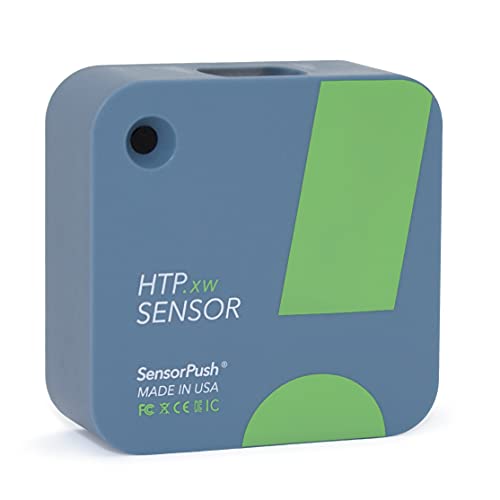
- Logs temperature, humidity, pressure, dew point, VPD, and heat index
- Stores 30 days onboard with unlimited in-app history
- Optional gateway enables remote WiFi access
Best For: Connected monitoring of humidors, greenhouses, and cold storage
Best Long-Term Wireless Logging
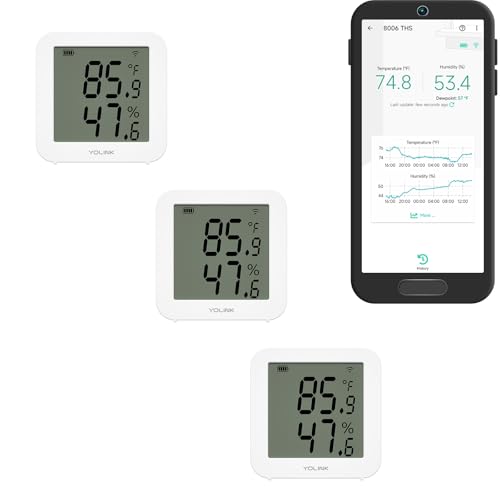
- Stores over 64,000 events locally during outages
- Tracks and exports up to two years of app history
- Long-range LoRa connection and up to five-year battery life
Best For: Multi-location monitoring in hard-to-reach areas
Best WiFi 3-Pack

- Includes three sensors and a WiFi gateway
- Exports up to two years of temperature and humidity data
- App and email alerts with two-second refreshes
Best For: Multi-room indoor monitoring with remote alerts
Best Smart Bluetooth Pick
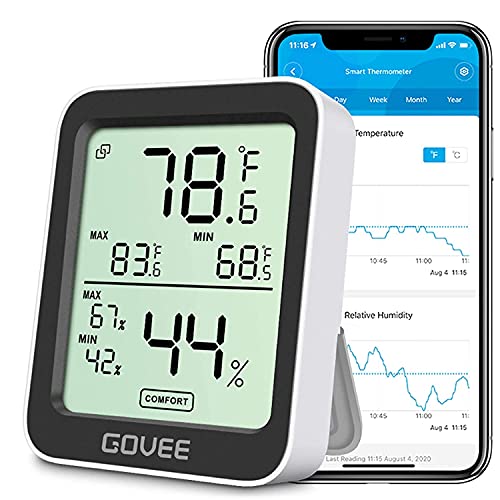
- Two-year data storage with CSV export
- 20-day graphs and app alerts
- Bright display with two-second refreshes
Best For: Indoor spaces needing Bluetooth monitoring and historical trends
Best Professional Wi-Fi Logger

- IP65 enclosure for demanding environments
- PDF/CSV exports and scheduled reports
- Multiple alerts with app and web access
Best For: Continuous monitoring in commercial, agricultural, or industrial settings
Best Privacy-Friendly Bluetooth Logger
TempPro TempAir Bluetooth Hygrometer

- Two-year data storage and export
- Up to 260 feet of unobstructed Bluetooth range
- Registration-free app with backlit display
Best For: Indoor monitoring and greenhouse use with local Bluetooth access
Best WiFi Pick

- WiFi and Bluetooth app monitoring
- 20-day online history with up to 2-year export
- Alerts for preset temperature and humidity ranges
Best For: Remote indoor monitoring with app alerts and historical trends
Best for Large Spaces
Elitech DR-230-THDE Data Logger

- 10.6-inch display for broad visibility
- 30,000-point storage with automatic overwrite
- Dual sensors and app-based chart/report export
Best For: Two-zone monitoring in warehouses, labs, and storage areas
Best Compact 2-Pack

- Two portable Bluetooth sensors
- 20-day storage with up to 2-year CSV export
- 262-foot range and app alerts
Best For: Multi-room, greenhouse, and incubator monitoring
Best Manual Data Logger – PT6508 Temperature Humidity Meter
If you want hygrometers with data logging without relying on an app or wireless hub, the Protmex PT6508 offers a straightforward handheld solution. It measures temperature and humidity while also displaying dew point and wet-bulb temperature, with storage for up to 99 readings.
Best For: HVAC checks, building inspections, wine cellars, offices, and other locations where portable readings and manual data review are useful.
Pros:
- Stores and recalls up to 99 data sets, with min/max hold functions.
- Measures ambient, dew-point, and wet-bulb temperature in addition to humidity.
- Backlit LCD, 0.4-second refresh rate, and included AAA batteries.
- Wide measurement ranges from -4°F to 140°F and 0% to 100% RH.
Cons:
- Data must be reviewed on the device rather than through a phone app.
- Auto-shuts off after 30 minutes without operation.
The PT6508 is a practical choice when you need detailed environmental measurements in the field and prefer a self-contained instrument. Its 99-reading memory is useful for spot checks, though it lacks the remote access and long-term cloud storage of connected sensors.
Best Bluetooth Logger – SensorPush HTP.xw
For app-based hygrometers with data logging, the SensorPush HTP.xw continuously records temperature, humidity, barometric pressure, dew point, VPD, and heat index. It stores 30 days of onboard data, while the app provides unlimited storage and export options for reviewing longer-term trends.
Best For: Humidors, greenhouses, freezers, wine cellars, terrariums, nurseries, and other spaces that benefit from Bluetooth-based monitoring.
Pros:
- Records multiple environmental metrics, including humidity, dew point, VPD, and heat index.
- Includes 30 days of onboard logging and unlimited in-app storage.
- Offers up to 100 m Bluetooth range in line-of-sight conditions.
- Typical battery life is one to two years, and the sensor is splash/water resistant.
Cons:
- Remote access requires the separately sold G1 WiFi Gateway.
- Bluetooth data updates when the sensor is within range of the connected device.
The HTP.xw is a strong fit for buyers who want detailed history and convenient phone access without complicated installation. Add the optional gateway if you need to check readings remotely or use cloud access outside Bluetooth range.
Best Long-Term Wireless Logging – YoLink YS8013 3-Pack
The YoLink YS8013 3-pack is designed for hygrometers with data logging in locations where WiFi coverage may be unreliable. Its sensors can store more than 64,000 events locally, then upload them when reconnected, while the YoLink app provides up to two years of historical data and export tools.
Best For: Basements, barns, storage areas, nurseries, greenhouses, refrigerators, and other hard-to-reach locations needing long-term monitoring.
Pros:
- LoRa wireless communication offers a stated open-air range of up to 2,034 feet.
- Local storage holds more than 64,000 events when the internet is unavailable.
- YoLink app supports up to two years of historical temperature and humidity data.
- Two AA batteries can provide up to five years of operation, depending on conditions.
Cons:
- A YoLink Hub is required for app connectivity and internet access.
- Alerts and connected features depend on the hub and internet connection.
- The three-pack may be more than needed for monitoring a single room.
This kit stands out for distributed monitoring and data continuity. Its local event storage helps protect the record during connection outages, while the long battery life and three sensors make it suitable for several locations at once.
Best WiFi 3-Pack – GoveeLife 2.0 Hygrometer
The GoveeLife 2.0 3-pack combines three compact sensors with a WiFi gateway for remote monitoring and hygrometers with data logging. The app supports trend charts for the past 20 days and data export covering up to two years, with alerts for temperature and humidity changes.
Best For: Wine cellars, bedrooms, basements, drawers, guitar cases, and other indoor areas where several sensors and remote alerts are useful.
Pros:
- Includes three sensors, a WiFi gateway, batteries, and lanyards.
- Provides app and email alerts for preset temperature and humidity thresholds.
- Supports two years of exported data and up to 20 days of in-app trend charts.
- Refreshes readings every two seconds and offers stated temperature accuracy of ±0.3°C.
Cons:
- Works with 2.4GHz WiFi networks only.
- Requires a compatible H5151 or H5042 gateway for WiFi features.
- Humidity accuracy is specified at ±3% RH, which may not suit highly precise applications.
Choose this kit if you want several compact sensors with straightforward remote alerts and exportable history. It is especially convenient for monitoring multiple indoor spaces, provided your network and gateway are compatible.
Best Smart Bluetooth Pick – Govee H5075 Hygrometer
For shoppers seeking hygrometers with data logging, the Govee H5075 combines a readable tabletop display with Bluetooth monitoring, app alerts, and long-term exportable history. It tracks temperature and humidity changes for up to 164 feet over Bluetooth and stores exportable data for up to two years.
Best For: Bedrooms, wine cellars, basements, plant nurseries, and other indoor spaces where remote monitoring and historical trends are useful.
Pros:
- Stores up to two years of data and supports CSV export.
- Provides 20-day curve graphs, preset-range alerts, and max/min records.
- Offers a bright 3-inch LCD with comfort indicators and fast two-second refreshes.
- Lists temperature accuracy of ±0.54°F and humidity accuracy of ±3% RH.
Cons:
- Bluetooth range is limited to 164 feet and may be affected by obstructions.
- Designed for tabletop use rather than a stated wall-mount installation.
The H5075 is a practical choice if convenient app access and multi-year data export matter more than Wi-Fi-based remote access. Its display and alerts also make everyday indoor monitoring straightforward.
Best Professional Wi-Fi Logger – UbiBot GS1-A Smart Hygrometer
The UbiBot GS1-A is built for continuous monitoring when hygrometers with data logging need remote access, reports, and flexible alerts. Its Wi-Fi platform provides historical records, PDF/CSV export, device sharing, and local storage during temporary network interruptions.
Best For: Cold storage, laboratories, server rooms, greenhouses, factories, and other demanding environments requiring ongoing monitoring.
Pros:
- IP65 enclosure helps protect against dust and low-pressure water jets.
- Supports remote app and web-console access with historical data and exports.
- Offers email, app, HTTP, API, Alexa, and IFTTT alert options, with SMS and voice alerts available.
- Includes free 200MB cloud storage without a mandatory subscription and supports device sharing.
Cons:
- Requires 2.4GHz Wi-Fi and a 12-volt power source.
- The GS1-A does not support external sensor expansion.
- Optional private on-premises deployment is available separately rather than included.
Choose the GS1-A when scheduled reports, multiple notification channels, and web-based access are priorities. Its IP65 construction and broad operating range make it more suitable for demanding installations than ordinary room monitors.
Best Privacy-Friendly Bluetooth Logger – TempPro TempAir Bluetooth Hygrometer
The TempPro TempAir is a straightforward option for shoppers comparing hygrometers with data logging for greenhouses and indoor rooms. Its Bluetooth connection reaches up to 260 feet without obstructions, while the app stores and exports two years of temperature and humidity history without requiring user registration.
Best For: Greenhouses, bedrooms, baby rooms, musical-instrument rooms, cigar rooms, and other indoor areas needing local Bluetooth tracking.
Pros:
- Offers up to 260 feet of Bluetooth range without obstructions.
- Stores and exports two years of historical data.
- App does not require user registration.
- Includes a large backlit display and a quick-glance comfort indicator.
Cons:
- Bluetooth performance can be reduced by walls and other obstructions.
- Refreshes every 10 seconds, slower than some faster-refreshing models.
- Its listed lower temperature range is 55°F, limiting suitability for colder spaces.
The TempAir is a sensible fit when long-term exports and a registration-free app are important. Its extended unobstructed Bluetooth range is helpful, but buyers should check the installation environment and temperature requirements before choosing it for a greenhouse.
Best WiFi Pick – Govee H5179 Smart Hygrometer
If you want hygrometers with data logging and remote access, the Govee H5179 combines WiFi and Bluetooth connectivity with app-based monitoring. It refreshes readings every two seconds, stores 20 days of online history, and lets you export up to two years of data through the Govee Home app.
Best For: Homes, basements, baby rooms, and other indoor spaces where remote alerts and historical temperature and humidity trends are useful.
Pros:
- WiFi and Bluetooth connectivity for monitoring through the app.
- Accurate Swiss-made sensor with temperature accuracy of ±0.54°F/±0.3°C and humidity accuracy of ±3%RH.
- Customizable range alerts can notify you when readings move outside preset limits.
- Exports up to two years of historical data and graphs.
Cons:
- Does not support 5G WiFi.
- Online data storage view is limited to 20 days, although longer-term data can be exported.
- Designed for indoor use.
The H5179 is a practical choice when app alerts and WiFi access matter as much as data logging. Its two-second refresh rate and long export history make it especially useful for tracking changing indoor conditions.
Best for Large Spaces – Elitech DR-230-THDE Data Logger
For demanding monitoring setups, the Elitech DR-230-THDE is one of the more substantial hygrometers with data logging. It records up to 30,000 data points, supports dual external sensors, and connects to the Elitech iCold app for charts, configuration, and PDF report export.
Best For: Warehouses, laboratories, workshops, wine cellars, cold storage, and other areas requiring two-zone monitoring and prominent readings.
Pros:
- Large 10.6-inch display is designed for visibility across bigger spaces.
- Dual external sensors monitor two zones simultaneously.
- Stores 30,000 data points with automatic cyclic overwrite.
- Offers configurable alarms, optional 110dB siren, charts, and PDF reports.
Cons:
- Bluetooth range is listed at up to 147 feet, depending on conditions.
- Requires external power and does not use batteries.
- Its larger, industrial-oriented design may be more than needed for a small room.
The DR-230-THDE stands out for capacity, visibility, and two-channel monitoring. Its wall-mount or desktop options add installation flexibility, while adjustable alarm delays can help reduce false alerts.
Best Compact 2-Pack – Govee H5074 Mini Hygrometers
The Govee H5074 two-pack offers an affordable way to place hygrometers with data logging in multiple locations. Each compact sensor tracks temperature and humidity every two seconds, stores 20 days of onboard records, and supports exporting up to two years of data through the Govee Home app.
Best For: Monitoring multiple rooms, greenhouses, incubators, or other spaces where small, portable Bluetooth sensors are convenient.
Pros:
- Two compact sensors can cover separate locations.
- Bluetooth range reaches up to 262 feet without obstacles.
- Swiss-made sensors provide temperature accuracy of ±0.54°F and humidity accuracy of ±3%RH.
- App alerts and CSV export support ongoing monitoring and recordkeeping.
Cons:
- Bluetooth-only; this is not the WiFi version.
- Onboard storage covers 20 days, while longer history requires app export.
- Alerts and data access depend on the Govee Home app and Bluetooth connection.
The H5074 is a sensible multi-point option when portability and quantity are priorities. Its two-sensor format makes it easy to compare locations, though buyers needing direct WiFi access should choose a WiFi-enabled model instead.
How We Picked the Best Hygrometers with Data Logging
We evaluated these models by looking at the features that matter most for continuous environmental monitoring: temperature and humidity measurement, recording and export capabilities, wireless range, remote access, alert options, sensor count, display quality, and setup requirements. We also considered whether each device is better suited to a room, greenhouse, storage area, vehicle, or multi-zone property.
Because logging methods vary, check the product details carefully. Some units store readings internally for later export, while others depend on a phone, Wi-Fi connection, hub, or cloud service to preserve historical data.
Quick Comparison
| Best For | Look For | Typical Strength |
|---|---|---|
| Basic spot checks | Large display and onboard memory | Simple, immediate readings |
| Remote home monitoring | Wi-Fi and phone notifications | Alerts from anywhere |
| Multiple rooms | Several sensors or expandable systems | Zone-by-zone tracking |
| Greenhouses and storage | Long range, durable housing, and reports | Continuous trend monitoring |
| Detailed analysis | Data export and adjustable intervals | Reviewable historical records |
Key Buying Factors for Hygrometers with Data Logging
Logging and Data Access
Determine how readings are saved and how easily you can retrieve them. Internal memory is useful when a sensor operates offline, while app or cloud histories make remote review more convenient. If you need documentation, prioritize CSV export, scheduled reports, or adjustable logging intervals.
Connection Type and Range
Bluetooth is usually convenient and energy efficient, but you may need to be nearby to view data. Wi-Fi models support remote alerts but require reliable network coverage and often consume more power. Gateway systems can extend range and connect multiple sensors without placing Wi-Fi hardware in every location.
Alerts, Accuracy, and Placement
Temperature and humidity alerts are valuable for mold prevention, instrument storage, plants, and sensitive materials. Look for configurable thresholds rather than fixed warnings. Also consider sensor accuracy, calibration options, probe design, and whether the enclosure is appropriate for damp or exposed locations.
Power and Maintenance
Battery life, USB power, replaceable cells, and low-battery notifications affect long-term reliability. A sensor that is difficult to access or frequently loses power can create gaps in your records.
Who Should Buy Which Hygrometers with Data Logging?
Choose a standalone data logger if you want dependable local recording, a visible screen, and minimal dependence on apps or networks. Bluetooth models are a strong fit for apartments, offices, nurseries, and small storage spaces where you check readings nearby. Wi-Fi options make more sense for vacation homes, basements, server rooms, and other locations that need remote notifications.
For whole-home or greenhouse monitoring, select a multi-sensor or gateway-based system so you can compare zones and expand coverage later. If your priority is formal recordkeeping, focus on models with onboard storage, downloadable files, scheduled reports, and clear logging controls. Finally, confirm the sensor’s operating range and placement requirements before buying, especially for greenhouses, outdoor-adjacent areas, refrigerators, or other demanding environments.